
As of 2026-03-27 UTC, the most useful way to watch WHO's 2:23 short "It Might Be Gloves... But It's ALWAYS Hand Hygiene!", published on April 11, 2025, is not as a generic awareness clip about cleanliness.[1] It is a targeted correction aimed at one of the most common workflow substitutions in outpatient care: when staff see gloves as the safety step and stop thinking about the moments before and after patient contact that still require hand hygiene.[1][2]
WHO's own campaign material explains why that correction matters. On the 2025 World Hand Hygiene Day page, the organization says average compliance with hand-hygiene recommendations in intensive care units up to 2018 was 59.6%, with a sharp high-income versus low-income gap (64.5% versus 9.1%).[2] The same page repeats the larger hospital burden estimate: out of every 100 patients in acute-care hospitals, 7 in high-income countries and 15 in low- and middle-income countries acquire at least one health care-associated infection during their stay.[2] This is why the short is so compact and so blunt. It is not trying to teach microbiology from scratch. It is trying to stop a familiar operational drift before it hardens into routine.
The vaccination-clinic setting is especially well chosen. Vaccination is high-volume, repetitive, and visually procedural, which makes it easy for a worker under time pressure to equate visible barrier use with correct infection prevention. But WHO's 2009 hand-hygiene guidance and its enduring Five Moments model organize practice by timing, not by visual reassurance: before touching a patient, before a clean or aseptic procedure, after body-fluid exposure risk, after touching a patient, and after touching patient surroundings.[4][5] The video's teaching logic depends on that distinction. Gloves are sometimes appropriate. They are not a replacement language for the moments themselves.[1][4][5]
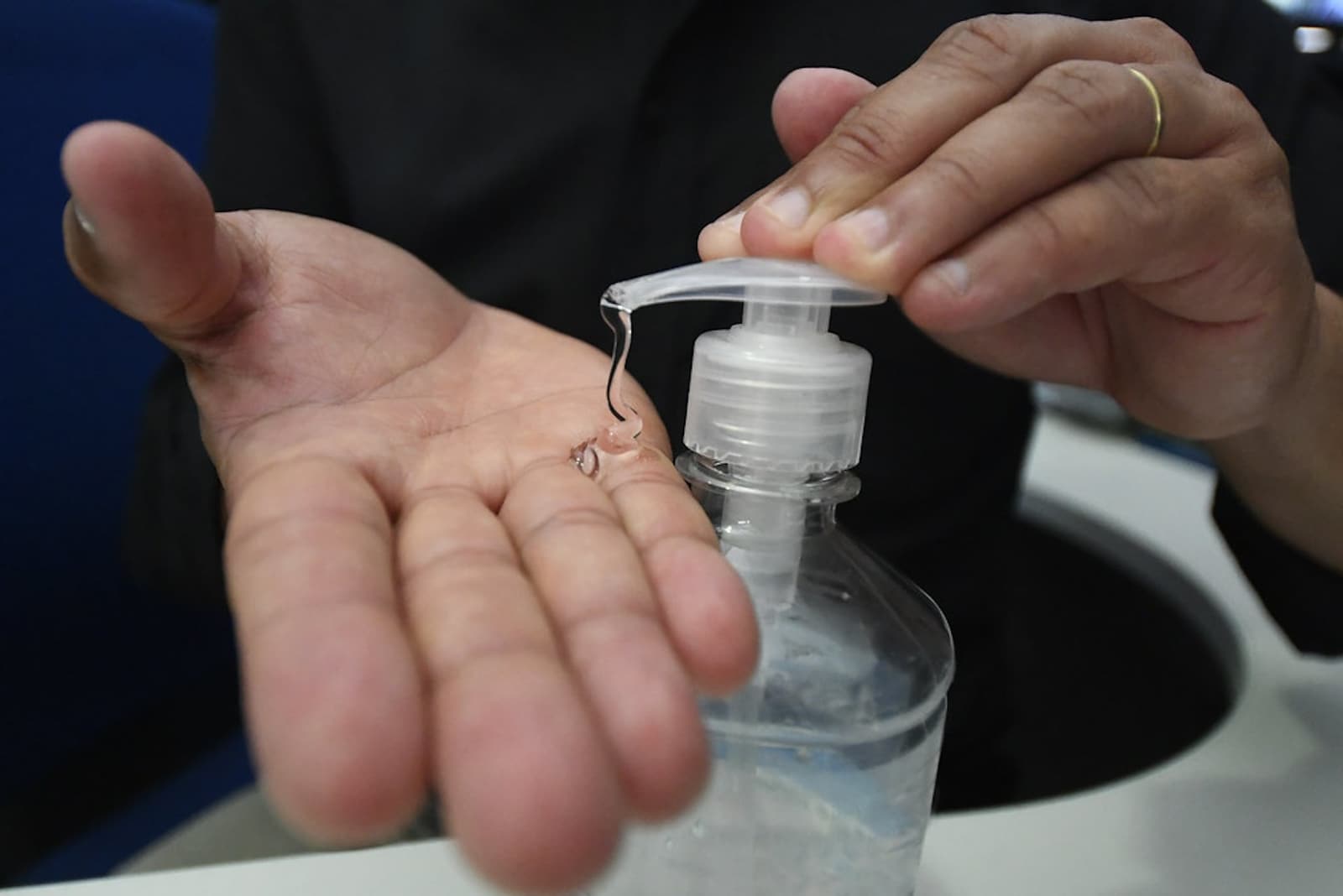
Image context: the cover uses a WHO hand-hygiene photograph showing alcohol-based hand rub dispensed at the point of care. That documentary image fits the article because the video's real claim is that hand hygiene remains the decisive act even in workflows where gloves appear tempting or routine.[3]
Around 0:14, WHO turns a routine vaccination line into a test of mental model
The short introduces two nurses in similar vaccination settings, then immediately separates them by pace and habit.[1] Nurse Lee is calm and deliberate; Nurse Jaime feels rushed and defaults toward gloves.[1] That narrative split matters because WHO is not contrasting a good clinic with a bad clinic. It is contrasting two interpretations of the same task. One interpretation treats infection prevention as a sequence of timed actions. The other treats it as a visible object you put on your hands.
That is exactly where WHO's campaign framing becomes useful. The 2025 materials tell managers and front-line teams to include hand hygiene in standard operating procedures, monitor compliance, and use gloves only when appropriate.[2] In other words, the video is not only about individual vigilance. It is about how a clinic encodes routine work. If the routine message is "gloves first," staff can feel protected while still missing the hand-hygiene moments that WHO treats as foundational.[2][5]
The vaccination setting also strips away one common excuse. Later in the video, the IPC professional states that injections do not usually involve exposure to blood or body fluids, so medical gloves are not routinely required.[1] WHO chose a scene where the wrong mental shortcut can be seen cleanly. The problem is not dramatic contamination. The problem is that a repetitive, low-complexity task invites automatic behavior, and automatic behavior can drift away from evidence without looking reckless.
Around 0:42, the video stages the exact substitution WHO wants clinicians to unlearn
At roughly 0:42, the teaching move becomes explicit. Lee cleans hands after greeting the patient. Jaime puts on gloves instead.[1] The video then interrupts itself with the line that carries the whole argument: glove use does not mean hands are fully protected, and hand hygiene is still required.[1]
That interruption works because it corrects a visual logic many clinical environments quietly reward. Gloves are easy to see, easy to count, and easy to mistake for the entirety of infection prevention. Hand hygiene is less theatrical. It leaves no durable object behind. WHO's Five Moments model exists partly to defend practice from that distortion by tying action to risk transitions rather than to appearances.[5] Before touching the patient is still a moment. After touching the patient is still a moment. The glove cannot erase either one.[1][5]
WHO's broader hand-hygiene programme makes the same point at system level. The organization describes hand hygiene as the "building block" of infection prevention and control and ties safe care to products at the point of care, training, monitoring, and reminders rather than to PPE symbolism alone.[2][3] That is why the short never says gloves are useless. It says something narrower and more operational: gloves have a defined role, but they do not cancel the need to clean hands before and after the encounter.[1][4]
Around 1:04, disposal is shown not as the end of the chain, but as a midpoint
The smartest part of the video comes just after the injection. Lee cleans hands again. Jaime removes and discards gloves.[1] Many training materials would end there, satisfied that the contaminated item has been removed. WHO does not. Instead, the short sends in an infection prevention and control professional to explain why that logic is incomplete.[1]
This is where the article's central lesson sharpens. The campaign is trying to correct not only overuse of gloves, but also a specific after-task omission. If a clinician thinks the disposal step itself completes the safety sequence, the workflow silently loses the post-contact hand-hygiene moment. WHO's own guidance is written to prevent that kind of erosion. The Five Moments model explicitly holds on to the before-and-after structure, while the 2009 guidelines frame hand hygiene as the core measure to reduce transmission of pathogenic microorganisms to both patients and health-care workers.[4][5]
The video also avoids a common policy mistake by keeping the distinction between appropriate glove use and routine glove use intact. Gloves are for anticipated contact with blood or body fluids and for reducing spread risk in the right circumstances; they are not a universal shortcut for every injection, greeting, or touchpoint.[1][2] That distinction is why the short feels more precise than a general cleanliness message. It is about indication discipline inside ordinary work.
In the last 30 seconds, WHO widens the argument from bedside safety to resource design
The closing line adds a second layer: excessive medical-glove use affects the environment.[1] That could sound like an afterthought, but WHO's 2025 campaign says the same thing in writing. It tells managers and leaders to save costs and reduce supply-chain dependence by using gloves only when appropriate, and it tells people receiving care that glove waste affects overall waste generation and the environment.[2] The video's final move is therefore not a detour from patient safety. It is an attempt to show that low-value glove use produces two forms of loss at once: procedural confusion and material waste.
That dual framing is historically interesting. In 2009, WHO's hand-hygiene guideline consolidated the evidence architecture for modern practice.[4] By 2025, the argument has broadened: the organization is still defending the same core hand-hygiene moments, but it is now also arguing against glove overconsumption as a systems problem.[2] This is a sign that IPC drift rarely stays inside one category. When a clinic reaches for visible barriers in place of timed hand hygiene, the cost appears in infection risk, training quality, procurement pressure, and waste streams at the same time.
The short is therefore best read as a workflow correction, not a slogan. It shows how an apparently minor substitution can detach a busy clinic from the logic WHO has been formalizing for years. If you watch it with that in mind, the video's simplicity starts to look deliberate. It is not saying "gloves are bad." It is saying something harder to keep stable under pressure: the core safety act in routine care is still hand hygiene at the right moments, even when gloves are nearby, available, and emotionally reassuring.[1][2][4][5]
Sources
- World Health Organization (WHO), "It Might Be Gloves… But It’s ALWAYS Hand Hygiene! | World Hand Hygiene Day 2025," YouTube, published April 11, 2025.
- World Health Organization, "World Hand Hygiene Day 2025" (campaign theme, glove-use guidance, compliance figures, and prevention claims).
- World Health Organization, "Hand hygiene" (IPC overview, implementation resources, and point-of-care framing).
- World Health Organization, WHO Guidelines on Hand Hygiene in Health Care (2009 guideline overview and recommendation scope).
- World Health Organization, "Five moments for hand hygiene" (the timing model for before/after patient contact and procedural risk).