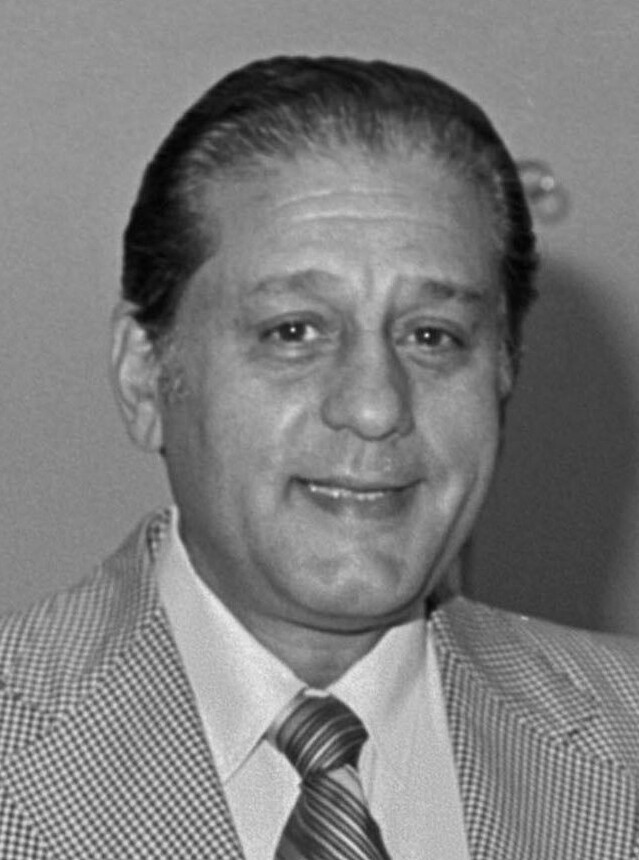
René Favaloro is often remembered as the man who "invented the bypass."[1][2][3] That memory points in the right direction, but it is too blunt for the history. The core fact is that coronary bypass did not begin with one untouched idea suddenly appearing in May 1967. Surgeons had been trying to reroute blood around blocked coronary arteries for years, and several had reached human operations before Favaloro.[3][4] What made his contribution decisive was narrower and stronger. At Cleveland Clinic, he helped turn coronary disease from a dramatic but often inoperable diagnosis into a surgical routing problem that could be seen, planned, repeated, published, and copied.
That is why a biography/microhistory fits better than a hero story. Favaloro's importance sits inside a particular institutional sequence: 1962 coronary angiography made lesions visible with new precision; he arrived in Cleveland the same year and worked his way into cardiac surgery; in 1966 he began focusing on bypass; on May 9, 1967 he performed the first saphenous-vein coronary interposition graft of his own program; by October 19, 1967 he had moved to the aorta-to-coronary configuration that would become the durable template; in April 1968 he published the operative technique; by 1970 Cleveland surgeons had performed more than 1,000 procedures.[1][2][3][4] The speed of that chain is the story.
Image context: the cover image is a real archival Cleveland Clinic photograph of René Favaloro with cardiologist Mason Sones circa 1970.[6] It fits this essay because bypass surgery did not emerge from surgical bravado alone. Sones' angiographic work made the coronary tree inspectable, and Favaloro's vein graft technique turned those images into a route map.
Timeline anchors before the legend hardens
- 1962: F. Mason Sones and Earl Shirey published cine-coronary angiography results at Cleveland Clinic, helping establish a practical diagnostic standard for suspected coronary disease.[1]
- January 1962: Favaloro arrived in Cleveland with a letter of introduction and began working his way from trainee to staff surgeon.[3]
- 1966: his attention turned decisively toward coronary bypass, after experience with other coronary procedures and exposure to saphenous-vein use in vascular surgery.[3]
- May 9, 1967: Favaloro performed his first saphenous-vein coronary graft in Cleveland.[3][4]
- October 19, 1967: after further cases, he carried out the first aorta-to-coronary graft in the sequence that would become the operation's stable modern form.[3][4]
- April 1968: he published "Saphenous vein autograft replacement of severe segmental coronary artery occlusion: operative technique" in The Annals of Thoracic Surgery.[1][5]
- 1970: Cleveland Clinic had surpassed 1,000 CABG procedures, showing that the method had escaped the experimental threshold.[3]
- June 1971: Favaloro left Cleveland to return to Argentina and build an institution that joined care, teaching, and research.[4]
Those dates matter because they separate invention talk from adoption mechanics. The crucial question is not simply who imagined bypass first. It is who made it durable enough for the rest of surgery to believe.
1. Favaloro entered at the moment coronary disease became visible enough to plan
The bypass story does not begin in an operating room. It begins in a catheterization laboratory. Cleveland Clinic's own history page treats 1962 as a threshold because Sones and Shirey showed that cine-coronary angiography could diagnose chest-pain patients with a new level of anatomical confidence.[1] That diagnostic step changed the scale of the problem. Coronary disease was no longer only a syndrome inferred from pain, electrocardiograms, and postmortem findings. It could be drawn as a map.
That map mattered for Favaloro. Jones's 2017 NEJM historical essay says he flew to Cleveland in January 1962 with only a letter of introduction.[3] He did not arrive as a solitary genius carrying the whole operation in his head. He arrived into a setting where coronary anatomy was becoming newly legible, and then learned across a range of procedures: internal thoracic artery implants, endarterectomy, patch grafts, and the interpretive discipline that angiography required.[3] In other words, his surgical imagination developed inside a system that could show him exactly where blood flow failed.
This is the first reason the standard origin myth misleads. Bypass was not a free-floating insight detached from diagnosis. It depended on the prior achievement of making coronary obstructions visible and specific enough that a surgeon could decide where a graft should begin, where it should land, and whether the distal vessel was worth the effort.[1][2][3]
2. The saphenous vein changed the problem from impossible speed to manageable routing
Early coronary surgery had a long prehistory, and Jones reconstructs it well.[3] Alexis Carrel had imagined bypass in dogs as early as 1910, and later surgeons such as Robert Goetz, David Sabiston, Vasilii Kolesov, Edward Garrett, Donald Kahn, and William Longmire all pushed coronary revascularization forward in various forms before or alongside Favaloro.[3] The source states this directly; the inference is that bypass did not wait politely for one inventor.
What Favaloro contributed was a more workable conduit logic. Jones notes that he later said he learned from vascular surgeons who used saphenous-vein grafts for renal artery stenosis.[3] Captur's biographical essay sharpens the sequence: in May 1967 he reconstructed the right coronary artery by saphenous-vein graft interposition, which then set the stage for aortocoronary saphenous-vein bypass grafting in October 1967.[4] The move sounds technical because it is technical. Yet that is exactly why it mattered. The operation stopped being a heroic wager on one-off coronary manipulation and became a method for routing blood from a larger, accessible vessel to a target beyond an obstruction.
The 1968 operative-technique paper fixes that turn in the primary record.[5] Favaloro did not present bypass as mystical salvation. He described a way to replace a severely occluded coronary segment with an autologous vein graft. Read against the earlier failed or delayed attempts summarized by Jones, the paper's force becomes clearer.[3][5] The breakthrough was not merely that blood could be redirected in principle. It was that the redirection could be described as technique.
3. Publication and the case series made the operation socially real
Many medical procedures exist in a strange limbo between first performance and broad belief. Favaloro crossed that gap quickly. Jones writes that after the May 9, 1967 operation he completed another 13 cases before performing his first aorta-to-coronary graft on October 19, and when he published in April 1968 he reported the first 15 patients with an addendum mentioning 40 more.[3] That sequence is easy to skim past, but it is the hinge of the whole microhistory.
One operation can be dismissed as luck. A named technique plus a growing case series is harder to ignore. Cleveland Clinic's own historical materials compress the institutional memory into one sentence: Favaloro pioneered the operation in 1967 and published the world's first reported coronary artery bypass surgery in 1968.[1] The CABG center page adds the long afterlife: the clinic dates the introduction of CABG to 1967 and notes more than 100,000 procedures performed there since inception.[2] Those later numbers are not evidence for 1967 itself; they are evidence that the procedure became a stable surgical lane.
This is where the distinction between being first and being formative matters. Jones explicitly argues that Favaloro's May 1967 operation was not the first bypass idea and not even the first human attempt, but the beginning of the process by which an existing innovation won acceptance.[3] That judgment fits the evidence best. Favaloro's real triumph was to orchestrate diagnosis, conduit choice, operative description, and rapid case accumulation tightly enough that other American surgeons could adopt the procedure without feeling they were entering pure experimental fog.
4. Why the biography points back to teamwork, not lone genius
Captur's "Memento for René Favaloro" is especially useful because it refuses to shrink the story to one man alone, even while honoring him.[4] The abstract says plainly that when he moved to Cleveland in 1962, he arrived "with a wind of change" and worked alongside Effler, Sones, Proudfit, Groves, Sheldon, and others.[4] Later in the essay it quotes Favaloro's own conviction that "We" is more important than "I."[4] That line is not ceremonial garnish. It matches the procedure's actual history.
The cover photograph makes the point visible. Favaloro stands beside Mason Sones, and that pairing matters.[6] Angiography without surgery would have left coronary disease newly visible but not necessarily newly treatable. Surgery without angiography would have left the operator navigating with far less anatomical certainty. The bypass breakthrough required both. It also required perfusion support, postoperative care, patient selection, publication, and the willingness of colleagues elsewhere to test the method on their own patients.[2][3][4]
This is also why Favaloro's later return to Argentina matters in biographical terms.[4] He left Cleveland in June 1971 not after a single glamorous victory lap, but to build an institution combining medicine, research, and teaching.[4] The move is consistent with the rest of the record. He thought in systems. His best-known operation only makes full sense once it is placed inside that larger habit of institutional construction.
The strongest two interpretations
Interpretation A: Favaloro was simply the first true inventor of bypass surgery
This interpretation survives because his name is so tightly attached to the modern operation, and because Cleveland's results quickly made CABG globally visible.[1][2]
Interpretation B: Favaloro's decisive achievement was to standardize and legitimize a procedure that had earlier roots and parallel claimants
This interpretation fits the sources more fully. Jones documents prior ideas and operations by Carrel, Goetz, Sabiston, Kolesov, Garrett, Kahn, and Longmire, then argues that Favaloro's importance lay in turning a preexisting innovation into an accepted one through technique, case series, and publication.[3] Captur's biographical account reinforces that the work was collaborative and sequential.[4]
Current assessment: Interpretation B is stronger. Favaloro's special place in history comes from making bypass reproducible, legible, and adoptable.
What would change the assessment: evidence that all meaningful human bypass attempts before May 1967 were either apocryphal, technically unrelated, or unknown to the wider field would strengthen Interpretation A. The sources used here point the other way.[3][4]
Why this microhistory still matters
Favaloro's story still reads sharply in 2026 because it shows how medical breakthroughs often work in practice. The world remembers a named operation and a date. The harder truth is that medicine changes when a diagnosis becomes precise enough to guide action, when a technique becomes clear enough to teach, and when a case series becomes persuasive enough that strangers start repeating it in other hospitals.
That is the cleanest way to read Favaloro. He did not create coronary disease, invent vascular grafts from nothing, or perform the only early bypass anyone had imagined.[3][4][5] He did something both less romantic and more durable. He joined angiographic seeing, saphenous-vein routing, team-based execution, and rapid publication tightly enough that coronary revascularization crossed from daring experiment into standard cardiac surgery.[1][2][3]
Sources
- Cleveland Clinic, "1960s: Revolutionizing Surgical & Clinical Care" - institutional history covering the 1962 cine-coronary angiography publication and the 1967-1968 bypass milestone.
- Cleveland Clinic, "State of the Art: Coronary Artery Bypass Surgery Center" - current institutional overview noting F. Mason Sones's 1958 angiography breakthrough, Favaloro's first vein-from-the-leg bypass nine years later, and the clinic's long CABG program history.
- David S. Jones, "CABG at 50 (or 107?) - The Complex Course of Therapeutic Innovation" (The New England Journal of Medicine, 2017; PMC) - historical reconstruction of pre-Favaloro attempts, Favaloro's January 1962 arrival in Cleveland, the May 9 and October 19, 1967 milestones, and the 1968 publication sequence.
- Gisela Captur, "Memento for René Favaloro" (Texas Heart Institute Journal, 2004; PMC) - biographical essay on Favaloro's Cleveland years, his collaborative surgical program, the 1967 graft sequence, the 1971 return to Argentina, and his emphasis on teamwork.
- René G. Favaloro, "Saphenous vein autograft replacement of severe segmental coronary artery occlusion: operative technique" (The Annals of Thoracic Surgery, 1968) - primary operative-technique paper that fixed the method in the surgical literature.
- Wikimedia Commons, "File:Drs Rene Favaloro and Mason Sones c1970 A0353 (cropped).jpg" - source page for the archival Cleveland Clinic photograph used as the article image.