A bowl of popcorn can carry an unexpectedly durable medical warning. For years, people with diverticular disease were advised to avoid it, along with nuts and seeds. That advice has outlived its original rationale: the US National Institute of Diabetes and Digestive and Kidney Diseases now says that most people with these conditions do not need to exclude particular foods.[1]
The interesting question is how much that reversal establishes. It removes a reason for routinely banning familiar foods. It does not turn popcorn into a treatment, or make the menu during an acute attack identical to the menu after recovery.
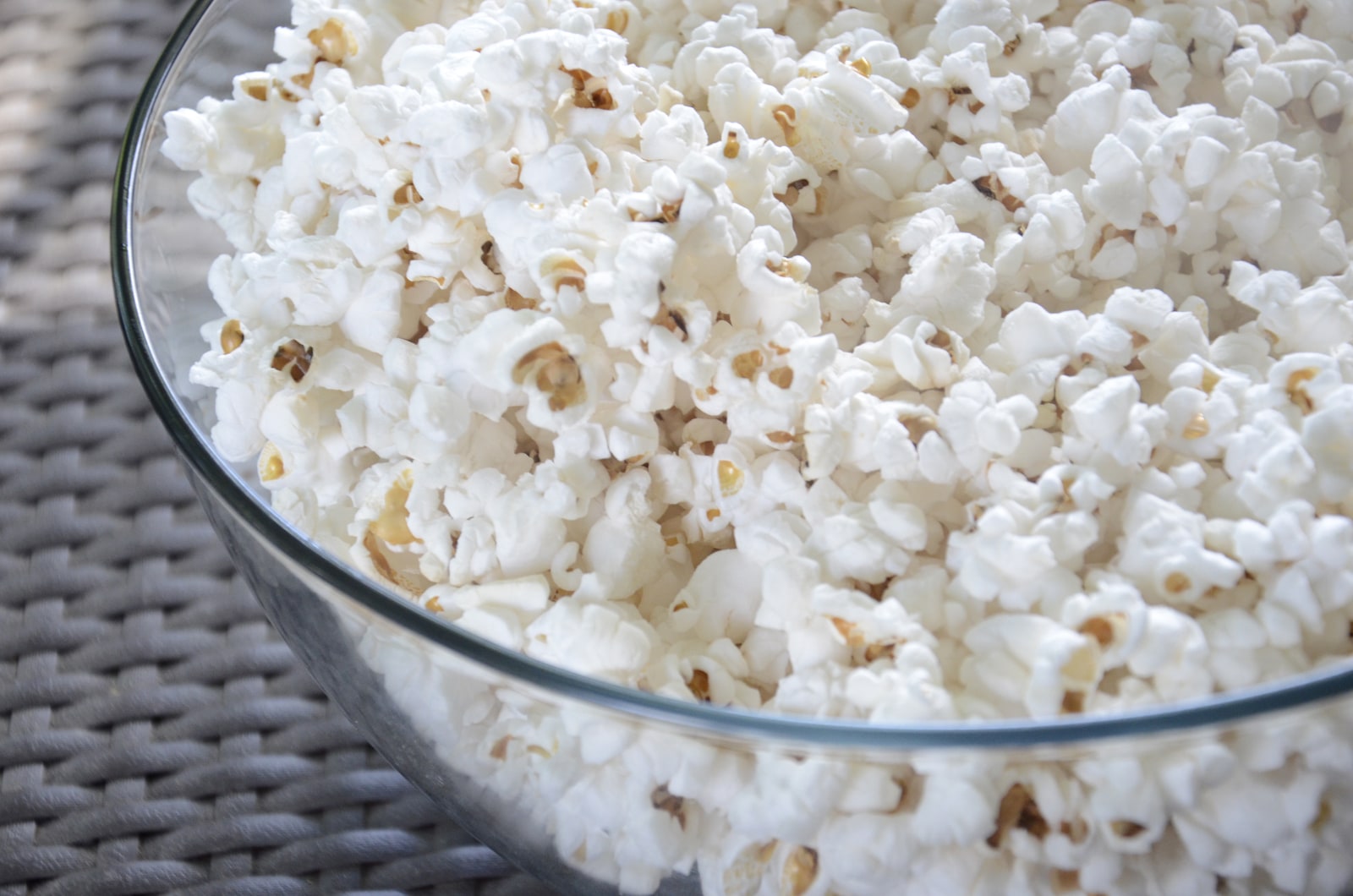
A plausible picture of the bowel
The vocabulary matters. Diverticulosis means that small pouches have formed through weak spots in the colon wall. Diverticulitis means inflammation of those pouches. Most people with diverticulosis have no symptoms or problems; discovering a pouch is different from diagnosing an inflammatory episode.[3]
The old dietary theory suggested that coarse fragments could lodge in those pouches or injure their lining. Lisa Strate and colleagues described that rationale, and its lack of supporting evidence, in their 2008 JAMA paper.[4]
An imaginable hazard still needs evidence that it occurs more often among people exposed to it.
The prediction meets a cohort
Strate's team followed 47,228 men without known diverticular disease at entry from 1986 to 2004, identifying 801 diverticulitis cases. Frequent nut and popcorn consumption did not predict increased risk.[4]
For popcorn at least twice weekly versus less than monthly, the adjusted hazard ratio was 0.72, with a 95% confidence interval of 0.56–0.92. For nuts, it was 0.80, with an interval of 0.63–1.01. Corn showed no association with diverticulitis.[4]
Dietary habits were observed rather than assigned randomly, so the popcorn association cannot establish prevention. The nut estimate leaves room for no difference. These findings weaken the rationale for avoidance without prescribing increased consumption.[4]
That distinction prevents a familiar mistake in interpreting nutrition research: reversing the direction of the headline while retaining too much certainty. A food can lose its suspected-danger status without earning the status of medicine.
Women supplied another test
A study published in 2025 extended the question to 29,916 women in the Sister Study. Trevor Barlowe and colleagues identified 1,531 first episodes of diverticulitis. Comparing the highest with the lowest quarter of peanut, nut and seed consumption, the adjusted hazard ratio was 1.07, with a 95% confidence interval of 0.91–1.25.[5]
That range includes no difference and some possible increase or decrease. It is evidence against treating these foods as an established population-wide hazard, not proof that their effects are exactly zero. The study assessed diet at enrollment and grouped peanuts, other nuts and seeds together. It cannot settle the effect of every individual seed or preparation.[5]
The researchers also acknowledged possible confounding, selection and measurement bias. Their analysis concerned first episodes among women without previous diverticulitis at entry. It was not a randomized test of dietary restriction after an attack.[5]
Taken together, the studies make the old blanket warning harder to defend. They leave a narrower question open: whether particular restrictions benefit particular people with recurrent disease. A recommendation can change before every possible version of that question has been answered.
An acute attack asks a different question
The American Gastroenterological Association's 2021 expert review advised a clear-liquid diet during acute uncomplicated diverticulitis for comfort, with food advanced as symptoms improve. It also noted that a small study suggested liquids were not necessary for everyone. The immediate concern was what a patient could comfortably tolerate while ill.[6]
This is compatible with dropping a lifelong food ban. A temporary adjustment during an inflammatory episode has a different purpose from avoiding seeds for years in the hope of preventing one.
The review advised prompt follow-up if patients could not advance their diet after three to five days. It also emphasized investigating persistent symptoms for ongoing inflammation and other causes. Continuing pain should not automatically be assigned to yesterday's handful of nuts.[6]
For an individual recovering from diverticulitis, the useful conversation with the treating clinician therefore concerns the stage of illness, ability to eat and course of symptoms. A population study cannot replace that assessment.
What replaces the blacklist
The American College of Gastroenterology's 2026 guideline highlights explicitly advise against routine avoidance of nuts, seeds, corn and popcorn. The same prevention guidance emphasizes a diet rich in fiber and plant foods, regular physical activity and smoking cessation. Food advice sits within a broader approach to risk.[7]
NIDDK likewise discusses the overall pattern of eating, including fiber and red meat, and recommends working with a clinician or dietitian on changes. Increasing fiber gradually can help the body adjust. Removing the old restriction creates room for a more varied diet; it does not oblige anyone to force down a food they cannot tolerate.[1]
The enduring lesson is about what a restriction needs to earn its place. An appealing mechanism generated a warning. Studies then tested its prediction and failed to find the expected excess risk. The resulting freedom is modest but useful: meals after recovery need not be organized around an unsupported lifelong popcorn ban, while symptoms during illness still deserve their own attention.
Sources
- National Institute of Diabetes and Digestive and Kidney Diseases, “Eating, Diet, & Nutrition for Diverticular Disease” (reviewed August 2021)—food restrictions, dietary patterns and gradual fiber changes.
- Alex Munsell, “Bowl of Popcorn” (2015), Unsplash via Wikimedia Commons—photograph and CC0 provenance.
- National Institute of Diabetes and Digestive and Kidney Diseases, “Definition & Facts for Diverticular Disease” (reviewed August 2021)—diverticulosis, inflammation and complications.
- Lisa L. Strate et al., “Nut, Corn, and Popcorn Consumption and the Incidence of Diverticular Disease,” JAMA (2008)—cohort study.
- Trevor Barlowe et al., “Diet and Risk for Incident Diverticulitis in Women: A Prospective Cohort Study,” Annals of Internal Medicine (2025)—Sister Study population, dietary measurement, results and limitations.
- Anne F. Peery, Aasma Shaukat and Lisa L. Strate, “AGA Clinical Practice Update on Medical Management of Colonic Diverticulitis: Expert Review,” Gastroenterology (2021)—acute diet, symptom progression and persistent-symptom assessment.
- American College of Gastroenterology, “Diagnosis and Management of Diverticulitis: ACG Guideline Highlights” (2026)—official summary of prevention and management recommendations.