Ernest Codman is easy to flatten into a modern slogan. Once he is reduced to "the founder of outcomes measurement," he sounds tidy, inevitable, and safely absorbed into present-day hospital language.[3][6] The sharper story is much more uncomfortable. Codman wanted hospitals to follow every patient long enough to find out whether treatment had actually worked, and then to name the reasons when it had not.[1][2] That demand sounds ordinary now because a century of quality rhetoric has made it sound ordinary. In Boston in the 1910s, it was abrasive enough to cost him status, income, allies, and institutional shelter.
That matters because Codman was not mainly asking for more paperwork. He was asking for a different moral arrangement in medicine. Trustees already audited money; he wanted them to audit clinical output. Promotions already followed rank; he wanted them to follow results. Hospitals already enjoyed public esteem as charitable institutions; he wanted patient-by-patient follow-up, explicit error analysis, and visible responsibility.[1][2] The health story here is not abstract management history. It is the moment when one surgeon tried to force outcome accountability into everyday hospital life and discovered how fiercely the existing culture defended vagueness.
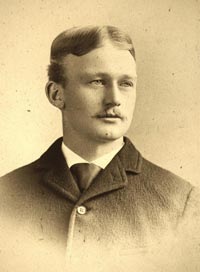
Image context: the cover uses an archival photographic portrait of Ernest Amory Codman.[7] That is the right visual for this piece because the "end result" idea began as a stubbornly personal campaign before it hardened into broader standards. Codman did not inherit a ready-made quality apparatus. He tried to build one by making his own profession answer a question it preferred not to hear: what happened to the patient afterward?
Timeline anchors
- Summer 1910: Codman later fixed the origin point of the "end result" idea to a hansom-cab ride back from the Frimley tuberculosis sanatorium with Edward Martin, when both men linked measurable results to the standardization of surgery in hospitals.[2]
- Late 1911: frustrated by the limits of implementation at Massachusetts General Hospital, Codman opened a small private hospital of his own in Boston so he could run the system directly.[2]
- 1914: after 15 years of service, he resigned from Massachusetts General Hospital and theatrically reapplied for appointment as surgeon-in-chief, explicitly protesting the seniority system as incompatible with end-result accountability.[2][3]
- 1915: at a Suffolk District Medical Society meeting on hospital efficiency, he unveiled his notorious Back Bay cartoon and triggered the reaction that pushed him further into local isolation.[2]
- 1917-1919: the American College of Surgeons converted Codman's logic into the Hospital Standardization Program and then into the one-page Minimum Standard for hospitals.[4][5]
1. The end result idea was a follow-up discipline, not a prestige exercise
Codman's central thought was less statistical than procedural. In the reprinted 1918 text of A Study in Hospital Efficiency, he argues that charitable-hospital trustees know how to examine financial accounts but do not "take inventory" of the clinical product their institutions are turning out.[1] The provocation is plain. If hospitals never follow treatment results to completion, then reputation floats free of evidence. A respected surgeon may remain respected; a handsome institution may remain handsome; neither fact proves that patients were helped as much as they should have been.
This is why Codman's idea does not fit comfortably inside modern dashboard language. He was not first asking for averages, rankings, or abstract performance indicators. He was asking for a chain of custody from case to consequence. Each patient had to be traced far enough for the staff to determine whether the treatment was successful, unsatisfactory, or a failure, and if it had failed, why.[1][3] That sequence turns outcome into learning rather than ornament. It also turns medical authority into something less insulated, because once bad outcomes are not merely suffered but recorded and analyzed, promotion and prestige can no longer rely on custom alone.
The Milbank essay by Avedis Donabedian captures how totalizing this became for Codman. What began as a strong conviction hardened into a "dominant idea," almost a monomania, because he understood that without follow-up the hospital could always congratulate itself too early.[2] In that sense, the health significance of the idea was immediate. Codman was trying to change how clinicians learned from error and how institutions justified trust.
2. Boston resisted because Codman was attacking the rules of advancement
The local fight was not merely about personality, though Codman had enough edge to make enemies quickly.[2][3] The deeper conflict lay in what the end result idea would do to hierarchy. At Massachusetts General Hospital, advancement followed the seniority system. Codman wanted something much harsher: clinical responsibility that could be compared, criticized, and used in promotion decisions.[2][3] Once you make outcomes visible, prestige is no longer inherited by waiting your turn.
His 1914 resignation and same-day reapplication as surgeon-in-chief made that challenge explicit. According to Donabedian's reconstruction, Codman wanted the trustees to notice his protest against a promotion system that rewarded sequence rather than demonstrated results.[2] That was already a public embarrassment strategy. The next year's cartoon escalated it further. At a Suffolk District Medical Society meeting dedicated to hospital efficiency, he arranged to unveil an image showing Boston's Back Bay interests as an ostrich with its head in the sand, kicking out golden eggs of remunerative surgery while elites hesitated to face the truth about inappropriate interventions.[2]
The reaction matters because it reveals what kind of nerve he had hit. Donabedian records an audience first aghast and then in uproar, with some walking out and others protesting angrily.[2] Afterward came practical consequences: loss of friends, resignation from local society leadership, separation from his Harvard post, and diminished income.[2] Codman had discovered the political core of hospital quality. A system built on eminent names and discretionary judgment can tolerate private criticism much more easily than public traceability.
3. The little hospital was his proof that accountability had to live in the workflow
Codman did not retreat into essay-writing alone. He opened a small private hospital because he believed the argument had to be operational, not merely rhetorical.[2] Donabedian describes the place as a sharp contrast to the marble charitable institutions Codman liked to criticize: a cramped, modest, partly improvised hospital where he could become "his own master" and test the superiority of an end-result system in daily practice.[2] That move is what makes the story a true microhistory rather than a biography of ideas. The idea had to survive real admissions, real discharges, and real follow-up work.
His self-published case reports were therefore not decorative appendices. They were the mechanism. Britannica's summary of his hospital experiment notes that all patients treated there were followed after discharge, with results reported patient by patient and published at his own expense.[6] That detail is more radical than it first appears. Codman was shifting error out of anecdote and into record form. Once failures are written down in a structure that links case, outcome, and cause, they stop behaving like private bad luck. They become evidence about the institution itself.
The 1918 reprint shows how far he pushed that logic. He did not pretend that improvement began with brilliance. He argued that improvement began when a staff agreed to admit imperfection and record the lack of perfection in treatment results.[1] That remains a stringent claim. Many hospitals will discuss excellence more comfortably than they will document error with enough specificity to fix responsibility or redesign practice. Codman insisted that the painful part was exactly where learning had to begin.
4. He lost locally, but his logic escaped into national standards
This is the part of the story that rewards reading beyond the legend of the lonely crank. Codman did not simply fail and wait for posterity to be kinder. His ideas were already being absorbed into organized surgery. The ACS archives page on the Minimum Standard states that as early as 1910 he had been pointing out the poor state of hospital records, and by 1913 the newly founded American College of Surgeons had put him in charge of a committee on hospital standardization.[4] That means the fight was never only between one dissident and one Boston hospital. It was also about whether surgery as a profession would adopt outcome-linked records as a national expectation.
By 1917, according to the ACS's recent history of accreditation, the College formally launched the Hospital Standardization Program, and by 1919 the first one-page Minimum Standard had been adopted.[5] The most revealing figure comes immediately after: when ACS surveyors visited hospitals in 1918, only 89 of 692 surveyed institutions met the standard.[5] That number is not an incidental embarrassment. It shows how weak the baseline had been and why Codman's agitation mattered. Hospital quality in this period was not waiting patiently for better measurement technology; it was waiting for someone to insist that records, organized staffs, diagnostic capacity, and traceable treatment standards were non-optional.
In other words, Codman's local social defeat and his institutional afterlife happened simultaneously. Boston could marginalize him as a troublemaker while the profession quietly converted his core intuition into survey criteria and standards language.[3][4][5] That is why the story does not end as a moral fable about a visionary whom no one understood. Some people understood him very well. They just preferred his logic once it had been translated from personal provocation into organizational machinery.
5. Why this still reads alive in 2026
Codman matters now for a reason narrower and stronger than generic admiration. Contemporary health systems already know how to count a great many things. They can produce compliance reports, throughput dashboards, benchmarking packets, registry exports, and accreditation binders on demand. Codman's challenge cuts through all of that because it is simpler. Did the institution follow the patient far enough to know what happened? If the result was poor, did someone name the cause clearly enough to learn from it?[1][3]
That question still has edge because measurement can easily detach from responsibility. A hospital may satisfy external reporting requirements and still let the most useful patient-level causal story go cloudy. Codman's end result idea keeps pressing in the opposite direction. It asks for specific follow-up, explicit ownership of failure, and a willingness to let reputation answer to outcome rather than the other way around.[1][2] He made the proposition abrasive on purpose. Good care, in his view, should not need mystique to defend it.
That is why the biography still belongs under health rather than under administrative nostalgia. Codman was not trying to polish management. He was trying to change what kind of knowledge a hospital owed its patients. The standards movement that followed mattered because it institutionalized a fragment of that demand. The harder unfinished part is still recognizable: not whether medicine can generate more numbers, but whether it can remain honest enough to let results rearrange status.
Sources
- Ernest A. Codman, A Study in Hospital Efficiency: As Demonstrated by the Case Report of the First Five Years of a Private Hospital (1918; 2013 PMC reprint/abridgment) - Codman's own argument that hospitals should inventory treatment results, record failures, and analyze their causes.
- Avedis Donabedian, "The End Results of Health Care" (The Milbank Quarterly, 1989) - historical reconstruction of the 1910 cab conversation, the MGH conflict, the cartoon episode, and the private hospital experiment.
- American College of Surgeons, "Ernest A. Codman, MD, FACS (1869-1940)" - ACS archival summary of Codman's career, resignation from Massachusetts General Hospital, and long-term influence on surgical quality.
- American College of Surgeons, "The 'Minimum Standard' Document" - ACS archival page on Codman's early record-keeping critique and the 1919 adoption of the first one-page hospital standard.
- Lenworth M. Jacobs Jr., "75 Years of Accreditation Reflect a Surgical Legacy that Helped Shape Modern Healthcare Quality and Safety" (ACS Bulletin, May 6, 2026) - current ACS historical overview noting the 1917 Hospital Standardization Program and the finding that only 89 of 692 surveyed hospitals met the early standard.
- Encyclopaedia Britannica, "Ernest Amory Codman" - biographical summary noting that Codman followed patients after discharge and published results case by case at his own expense.
- Wikimedia Commons, "File:Ernest Amory Codman.jpg" - source page for the archival portrait used as the article image.