The Baby-Friendly Hospital Initiative, or BFHI, is often described in public argument as if it were a single idea that one must either applaud or reject. In practice it is a bundle: anti-marketing rules derived from the International Code of Marketing of Breast-milk Substitutes, a set of maternity-ward routines called the Ten Steps, and an institutional theory about what the first hours and days after birth can accomplish.[1][2][3][4] That bundled quality explains why the initiative produces so much cross-talk. People are rarely arguing about the same thing.
One camp is defending a hospital-systems intervention. From that angle, BFHI matters because it tries to stop the maternity ward from quietly steering parents toward formula through free samples, company materials, nursery separation, or staff routines that leave breastfeeding support to chance.[1][3][4] The other camp is criticizing what happens when those same routines harden into a purity script: rooming-in without enough practical help, delayed supplementation when it is medically needed, or an institutional tone that treats deviation from exclusive breastfeeding as moral failure rather than bedside judgment.[2][5]
That distinction is the useful map. The literature does not mainly divide between people who think breastfeeding has benefits and people who deny them. It divides between different readings of what BFHI is supposed to do inside a real hospital, under real staffing, with tired parents, hungry newborns, and clinical exceptions that never arrive in neat ideological form.[2][5][6]
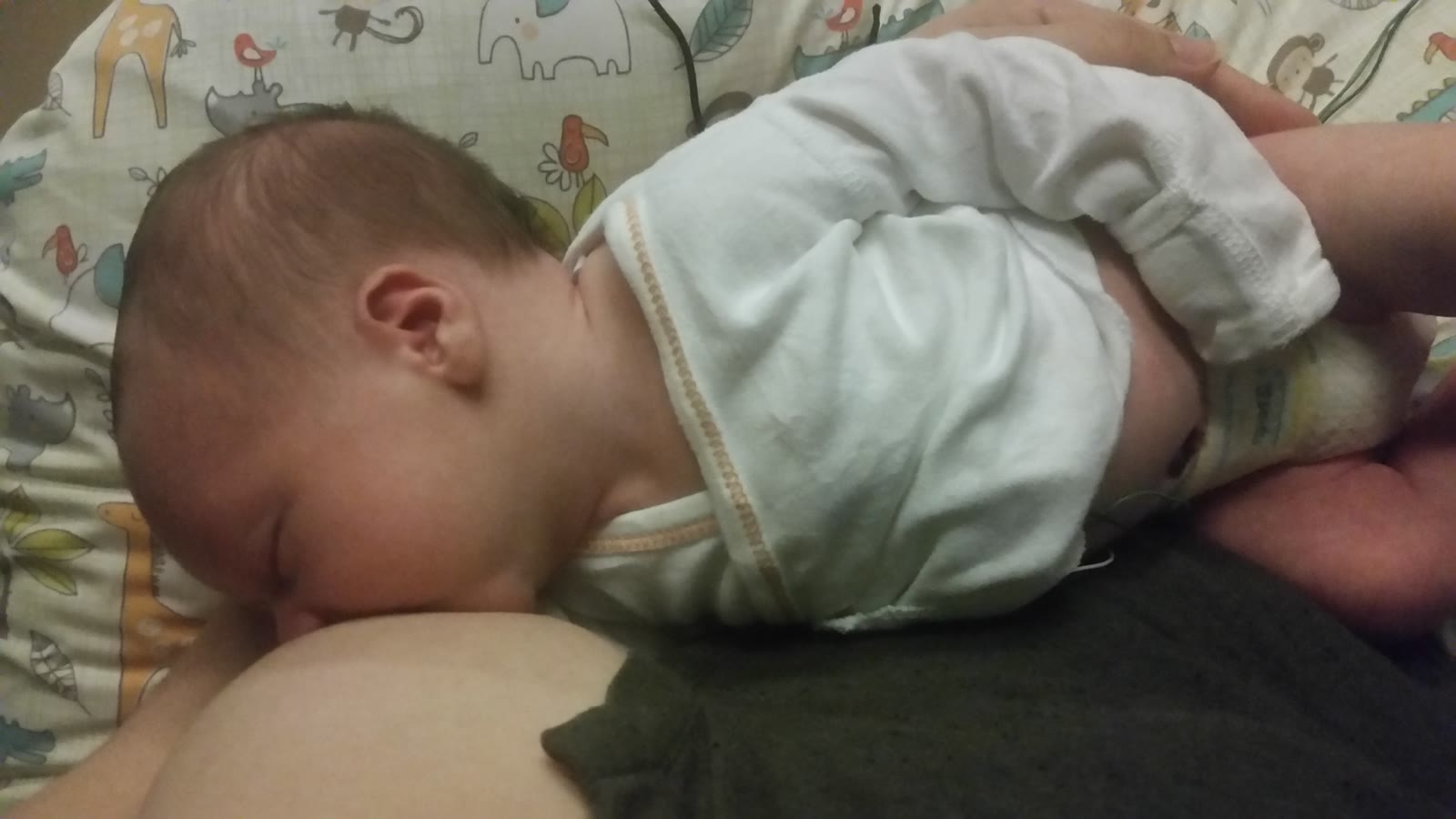
Image context: the cover shows a newborn breastfeeding in a hospital intensive-care setting.[7] It belongs here because the history of BFHI is not abstract. Its claims live or fail at the bedside, in the first latch, the first few feeds, the first questions about supplementation, and the first moments when a policy meets exhaustion or medical complexity.
Timeline anchors
- 1981: the World Health Assembly adopted the International Code of Marketing of Breast-milk Substitutes, trying to curb formula marketing practices inside health systems and public culture.[3][4]
- 1989: WHO and UNICEF issued Protecting, Promoting and Supporting Breastfeeding: The Special Role of Maternity Services, which gave the Ten Steps their institutional frame.[4]
- 1991: WHO and UNICEF launched the Baby-Friendly Hospital Initiative, linking those steps to hospital designation and public accountability.[4]
- 2007-2009: BFHI documents were revised and expanded, reflecting new guidance and a stronger emphasis on implementation tools, self-appraisal, and monitoring.[2][4]
- 2018: UNICEF and WHO released revised implementation guidance that folded full compliance with the Code and ongoing monitoring directly into Step 1, making governance less of an afterthought.[1][2]
The strongest pro-BFHI reading: change the hospital, not the mother
Read sympathetically, BFHI begins from a simple institutional observation. The first days after birth are a narrow but consequential window. UNICEF's overview states that these days are critical not only for the child but also for giving mothers the support needed to breastfeed successfully, and it presents the Ten Steps as the route to better clinical care rather than as a lifestyle sermon.[1] That framing matters. BFHI is not built on telling mothers to want breastfeeding more intensely. It is built on changing what the hospital does.
The historical materials make that even clearer. The NCBI Bookshelf version of the WHO/UNICEF training materials summarizes BFHI's two main goals as transforming maternity facilities through the Ten Steps and ending the distribution of free or low-cost breast-milk substitutes in maternity wards and hospitals.[4] In other words, the initiative treats early feeding as a systems problem: policy, purchasing, staff competence, skin-to-skin contact, rooming-in, cue-based feeding, and discharge support are all part of the same chain.[1][2][4]
That systems reading is where the strongest supportive evidence sits. The 2019 systematic review in Maternal & Child Nutrition examined 58 reports from 19 countries and concluded that adherence to the Ten Steps has a positive effect on breastfeeding outcomes across short, medium, and longer horizons.[6] More importantly, the review found a dose-response pattern: the more BFHI steps women were exposed to, the more likely breastfeeding outcomes improved, while post-discharge support appeared essential for durability.[6] That finding fits the initiative's original institutional logic. A label alone does little; a coherent environment can do more.
This is also why the Code remains central to the pro-BFHI case. The WHO materials do not present it as a side issue. They treat it as the mechanism that keeps commercial pressure from disguising itself as routine clinical advice.[2][3][4] If a maternity ward is flooded with samples, gift packs, branded educational materials, or company-sponsored feeding cues, then "choice" is already being shaped before a parent can meaningfully evaluate it.[3][4]
The strongest critical reading: a script can outrun the bedside
The sharpest criticism of BFHI does not usually deny the benefits of breastfeeding. It argues that an institutional program can overshoot its evidence when administrators or staff confuse a support framework with a purity test. The 2018 Journal of Perinatology critical review says this directly: alongside implementation, extensive research has continued to evaluate both the benefits and the dangers of the suggested practices.[5] That article is useful not because it abolishes BFHI, but because it forces the reader to separate the initiative's strongest evidence from its most brittle enactments.
The brittle points are familiar. Step 6 says breastfed newborns should receive no food or fluids other than breast milk unless medically indicated.[1] Step 7 supports rooming-in 24 hours a day.[1] Step 9 calls for counseling on the use and risks of bottles, teats, and pacifiers.[1] All three are intelligible in a hospital culture that once normalized separation, nursery feeding, and quiet formula drift.[1][4] All three can also become crude when implemented without enough labor, clinical flexibility, or respect for variation in maternal recovery and infant status.[5]
That is the heart of the critical line in the literature. BFHI is most persuasive when it blocks commercial distortion and guarantees skilled help; it is least persuasive when its metrics pressure staff to defend exclusive breastfeeding as a badge even in situations that call for medically indicated supplementation, closer feeding assessment, or a less doctrinaire reading of rooming-in.[1][2][5] In that sense the controversy is not really about whether institutions should support breastfeeding. It is about how institutions keep support from becoming coercive performance.
Why the two sides often talk past each other
The supportive and critical literatures frequently measure different things. Supportive papers often ask whether Baby-Friendly designation or Ten Step exposure increases initiation, exclusivity, or duration.[1][2][6] Critics often ask what happens when a hospital policy meets a specific bedside constraint: postoperative exhaustion, delayed milk transfer, hypoglycemia risk, jaundice risk, NICU complexity, or understaffed nights when rooming-in becomes an instruction without matching assistance.[5]
Once those questions diverge, the arguments can start missing each other. A systematic review can show real breastfeeding gains without settling every concern about how an individual nursery handles exceptions.[6] A critique can expose genuine harms in rigid implementation without proving that the entire institutional model is misguided.[5] The better historiographic reading keeps both facts in view. BFHI was designed as a corrective to a hospital culture shaped by formula marketing and routine separation.[3][4] It is now judged in a later era where the risk is less invisible promotion than uneven implementation and an occasional drift from support into pressure.[2][5]
Where the evidence lands now
The most defensible conclusion is narrower than either camp's slogan. BFHI works best when read as hospital-governance infrastructure rather than as a moral identity. Its strongest elements are the ones that standardize high-value support: trained staff, immediate skin-to-skin contact, help with latch and common difficulties, freedom from commercial formula promotion, clear rules for medically indicated supplementation, and coordinated follow-up after discharge.[1][2][3][6] Its weakest moments appear when accreditation logic outruns bedside judgment and the initiative's means begin to masquerade as ends.[5]
That reading also restores the place of the Code. The initiative was never only about breastfeeding technique. From the beginning it was also about the political economy of the maternity ward: what gets displayed, distributed, subsidized, normalized, and quietly recommended.[3][4] Remove that layer and BFHI looks like culture war. Put it back, and the initiative becomes easier to read as a contested but serious attempt to redesign the feeding environment at birth.
In 2026, that is the cleaner map. Baby-Friendly is neither a sham nor a sacrament. It is a hospital intervention with a real historical rationale, meaningful supportive evidence, and a failure mode that appears when staff, metrics, and ideology stop distinguishing between strong breastfeeding support and inflexible breastfeeding enforcement.[1][2][5][6]
Sources
- UNICEF, Baby-Friendly Hospital Initiative - Ten Steps overview and current framing of the initiative.
- World Health Organization, Implementation guidance: protecting, promoting and supporting breastfeeding in facilities providing maternity and newborn services: the revised baby-friendly hospital initiative (2018).
- World Health Organization and UNICEF, International code of marketing of breast-milk substitutes (1981).
- National Library of Medicine Bookshelf, The baby-friendly Hospital Initiative - WHO/UNICEF training materials with BFHI history, key dates, and Code-related implementation notes.
- Enrique Gomez-Pomar and Robert Blubaugh, "The Baby Friendly Hospital Initiative and the ten steps for successful breastfeeding. a critical review of the literature," Journal of Perinatology (2018).
- Rafael Pérez-Escamilla et al., "Impact of the Baby-friendly Hospital Initiative on breastfeeding and child health outcomes: a systematic review," Maternal & Child Nutrition (2019).
- Wikimedia Commons, File:Newborn breastfeeding in the NICU.jpg - bedside hospital image used for the article cover.