Child-resistant packaging is easy to misunderstand because it looks too ordinary to be a major health intervention. The amber prescription vial, the aspirin bottle, the cap that tells an adult to push down and turn: these objects do not look like surveillance, vaccination, sanitation, or emergency medicine. Yet the public-health claim behind them is unusually precise. The package is supposed to turn a child's brief unsupervised access into a failed attempt, while still letting an adult open and resecure the medicine without abandoning the safety feature.[1][2]
That balance was the hard part. The system that emerged after the Poison Prevention Packaging Act of 1970 did not promise a child-proof household. It built a timed engineering standard around the moments before a poisoning: the first 5 minutes, the full 10 minutes, the adult's ability to reclose the container, and the list of drugs and household substances that had to meet the rule.[1][2] The achievement was not that children stopped being curious. The achievement was that federal regulation began treating curiosity, hand strength, imitation, boredom, adult frustration, and mass packaging as one preventable injury chain.
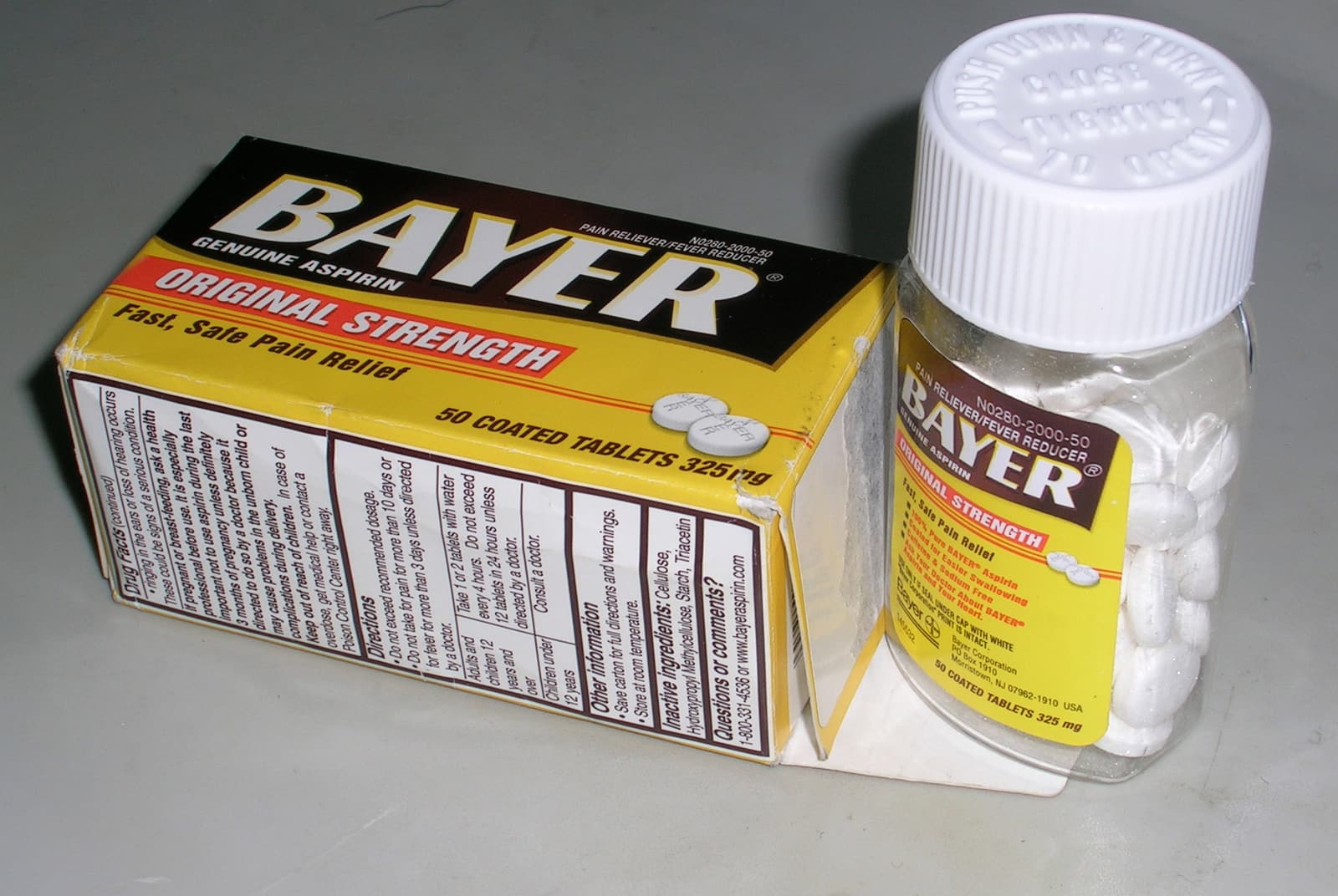
Image context: the cover photograph shows an aspirin bottle whose cap carries the familiar instruction "push down & turn to open." That is the right visual anchor because aspirin was one of the products used to measure whether child-resistant packaging was actually changing pediatric poisoning outcomes, not merely adding inconvenience to a bottle.[4][6]
Before the cap became a test
Poison prevention had a public calendar before it had a packaging regime. National Poison Prevention Week was created by Congress in the early 1960s as an education campaign, built around warnings, local poison-control contacts, and household caution.[3] Education mattered, but it had a structural weakness: it depended on the perfect adult every time. The medicines and cleaners stayed in ordinary containers. The failure point remained the same cabinet, table, purse, or bathroom shelf where a young child could find a product during a short lapse in supervision.
By 1970, Congress moved the problem from advice into product design. The Poison Prevention Packaging Act required certain hazardous drugs and household substances to be sold in child-resistant packaging. CPSC's current description keeps the original bargain clear: the package must be significantly difficult for children under 5 to open within a reasonable time, while not being difficult for normal adults to use properly.[1] That sentence is doing more than defining a cap. It is defining a public-health compromise. A package too easy for a preschooler is a failed safety device. A package too hard for adults invites workarounds: leaving caps loose, transferring pills, requesting easier containers, or skipping the design entirely.
The early law also recognized that households differ. CPSC notes that some regulated products sold on store shelves may have one noncomplying size if it carries a warning that it is not recommended for households with children, while regulated prescription drugs can be dispensed in non-child-resistant packaging on a physician's or patient's request.[1] Those exceptions are not loopholes in the moral sense. They expose the governing problem: safety packaging had to protect children without making medicines practically inaccessible to adults who could not open the closures.
1973: the safety idea becomes a protocol
The public-health intervention became concrete when the regulation translated "child-resistant" into a test. The eCFR version of 16 CFR 1700.20 lays out a protocol that is almost striking in its behavioral detail. Children are tested in age bands from 42 through 51 months, in groups that can run from 50 up to 200 children depending on results. A failure is not a bad label or a weak warning; it is a child opening the package or gaining access to the contents within the test window.[2]
The timing matters. The child test gives children up to 5 minutes with the package, then demonstrates opening without verbal instruction, then gives them another 5 minutes. The tester may tell them they can use their teeth before the second period; if that happens, the protocol requires the tester to warn afterward that they should not put such packages in their mouths and should never open such packages alone.[2] This is a very specific model of risk. The standard assumes that children imitate, persist, talk to each other, get bored, get frustrated, and may use their teeth. It does not pretend children will behave like small adults reading warning text.
The adult side is just as important. CPSC's FAQ summarizes the pass logic plainly: for child resistance, at least 85% of tested children must fail to open the package in the first 5 minutes, and at least 80% must fail over the full 10 minutes. For adult friendliness, at least 90% of adults must open the package within 5 minutes and, where relevant, properly resecure a second package within 1 minute.[7] That is the central design insight. The cap has to fail the child's time budget and pass the adult's routine.
This also explains why the phrase "child-proof" is wrong. The system is not built on impossibility. It is built on probabilities, test panels, time delays, and resecuring behavior. A capable child, an improperly closed cap, a transferred pill organizer, a loose bottle in a purse, or a product outside the regulated list can still defeat the safety layer. The public-health gain comes from lowering the number of successful openings across millions of ordinary encounters.
What changed after implementation
By the early 1980s, CDC's account of unintentional poisoning among young children showed the pattern that regulators had hoped to see. For regulated products ingested by children under 5 that led to emergency-room visits, CPSC estimates fell from 48,000 in 1974 to 34,000 in 1981. During the same period, estimated ER visits from ingestion of unregulated products rose from 51,000 to 56,000.[3] That contrast is important because it argues against a simple story in which all household poisoning risk was falling equally. The regulated category moved differently.
Aspirin and aspirin substitutes became especially useful measures because they were common, dangerous in overdose, and strongly affected by packaging rules. CDC reported that poison-control-center reports of such ingestions by young children had declined 65% since the act was introduced, while mortality among children under 5 declined from 58 deaths in 1970 to 18 in 1978, a 69% reduction.[3] Those numbers do not prove that the cap alone did all the work. Warning labels, changing drug use, poison-center access, and later recognition of aspirin's link to Reye syndrome all mattered. But they show why child-resistant packaging became more than a consumer nuisance.
The more careful later analysis reached a bounded version of the same conclusion. Gregory Rodgers's 2002 study in Archives of Pediatrics & Adolescent Medicine estimated that child-resistant packaging was associated with a 34% reduction in the aspirin-related child mortality rate after controlling for covariates. In that model, the reduction equated to about 90 fewer child deaths during the 1973-1990 postregulatory study period.[4] The study also treated the result as partial, not absolute. Packaging reduced risk; it did not make further prevention unnecessary.[4]
That is the right reading of the evidence. Child-resistant packaging belongs to the same family of health interventions as seat belts, smoke alarms, and safe-sleep rules: it changes the default outcome of a predictable mistake. It does not require every adult to become flawless. It makes a common failure less likely to become fatal.
The 1993 reminder: the cap was never the whole system
By 1993, CPSC could say that child-resistant packaging for aspirin and oral prescription medicine may have saved about 700 children's lives since requirements took effect in the early 1970s.[5] The same release immediately narrowed the celebration. In 1989, 55 children under age 5 still died from accidental poisoning with medicines or household chemicals, and nearly a million consumers called poison-control centers about actual or near-miss child poisonings.[5]
That tension is the event's real legacy. The package worked best as one layer in a system: regulated design, adult resecuring, storage out of reach, poison-control access, and product-specific updates as new hazards appeared. The 1970 act did not end poisoning any more than a lock ends theft. It changed the odds at the moment when a child had found a container and an adult was not in the room.
The distinction from tamper-evident drug packaging also matters. Tamper-evident seals responded to malicious interference and public trust after the 1982 Tylenol murders; child-resistant packaging responded to young children gaining access to ordinary household products. Both made packaging part of health policy, but they solved different failure modes. One asks whether someone altered a product before purchase. The other asks whether a preschooler can obtain a toxic amount after purchase.
What the bottle learned
The lasting idea is that prevention can live inside a small mechanical delay. A child-resistant cap does not educate a toddler, detoxify aspirin, replace poison control, or excuse careless storage. It makes the first unsupervised attempt less likely to succeed, and it does so through a testable standard that includes adult use rather than treating adults as irrelevant to safety.[2][7]
That is why the humble cap deserves a place in health history. It turned a domestic accident into a design question: which substances are dangerous enough to regulate, which closures can resist children's real behavior, which adults can still use the package, and how many minutes are enough to change an emergency into a near miss? The Poison Prevention Packaging Act's most durable contribution was not the phrase "push down and turn." It was the idea that a household product could be required to defend against the moment before anyone realized prevention was needed.
Sources
- U.S. Consumer Product Safety Commission, "Poison Prevention Packaging Act" - current CPSC summary of the 1970 act, child-resistant/adult-usable standard, exceptions, and regulated framework.
- Electronic Code of Federal Regulations, "16 CFR 1700.20 - Testing procedure for special packaging" - child and adult protocol details, age bands, time windows, failures, and test instructions.
- Centers for Disease Control and Prevention, "Unintentional Poisoning Among Young Children - United States," MMWR - 1983 summary of ER visits, aspirin-ingestion trends, mortality decline, and continuing prevention gaps.
- Gregory B. Rodgers, "The Effectiveness of Child-Resistant Packaging for Aspirin," Archives of Pediatrics & Adolescent Medicine 156(9), 2002 - regression estimate of aspirin-related mortality reduction after packaging rules.
- U.S. Consumer Product Safety Commission, "National Poison Prevention Week: Child-Resistant Packaging Saves Lives" (March 16, 1993) - CPSC statement on estimated lives saved and continuing child-poisoning burden.
- Wikimedia Commons, "File:Aspirin1.jpg" - real photograph of an aspirin bottle with a child-resistant cap labeled "push down & turn to open," used as the article cover image.
- U.S. Consumer Product Safety Commission, "Special Packaging (PPPA) FAQs" - concise explanation of child-resistant and adult-friendly pass thresholds and certification responsibility.