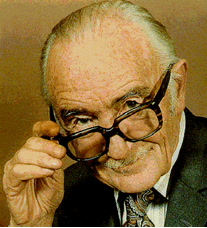
Archie Cochrane is easy to shrink into a label. Call him a founder of evidence-based medicine, attach his name to Cochrane Reviews, and the biography seems finished. But the label is too smooth. Cochrane's importance was not that he discovered that evidence is good and anecdote is weak. Many physicians already knew that in the abstract. His sharper contribution was to make effectiveness feel like an obligation of public service.
That distinction matters. A health service can be compassionate and still wasteful. A clinician can be sincere and still wrong. A hospital can spend scarce money, beds, staff time, and patient trust on treatments whose benefits have not been shown. Cochrane's career kept returning to that uncomfortable point: health care was not justified by professional confidence alone. It had to ask whether an intervention worked, how reliably anyone knew that it worked, and whether limited resources should be spent on it rather than on something better supported.[2][3]
The microhistory begins before the famous book. Archibald Leman Cochrane was born in 1909 and died in 1988.[1] He trained through Cambridge and University College Hospital, passed through European psychoanalytic circles in the 1930s, worked with an ambulance unit during the Spanish Civil War, and qualified just before the Second World War pulled him into military service.[1] In 1941 he was captured in Crete. For much of the war, the Royal College of Physicians biography records, he was the British officer in charge of prison hospitals, where scarcity was not a budget line but a daily clinical condition.[1]
That wartime experience did not automatically produce a method. It produced pressure. Cochrane saw what medicine looked like when doctors had too little food, too few drugs, too many patients, and no comfortable illusion that every intervention could be offered to everyone.[1][3] Cochrane's later argument about evidence was therefore never only technical. It had a moral edge. If resources are finite, then using them on ineffective care is not neutral. It crowds out care that might help.
A Timeline Of Pressure
Three dates are enough to show the arc, but the spaces between them matter as much as the dates. In 1941, Cochrane became a prisoner of war after capture in Crete, and his medical work in prison hospitals forced questions about therapeutic confidence under deprivation.[1] In the postwar years, he joined the Medical Research Council's pneumoconiosis research unit and worked in South Wales, studying coal miners, dust exposure, tuberculosis, and the measurement problems that made occupational disease difficult to understand.[1] In 1972, the Nuffield Trust published Effectiveness and efficiency: Random reflections on health services, the short book that set out his case for randomized controlled trials in assessing treatments.[2]
A fourth date completes the public afterlife. In 1993, five years after Cochrane's death, the Cochrane Collaboration was established with systematic reviews at the center of its work.[3] The organization was not a memorial society in the usual sense. It turned a professional habit into an infrastructure: gather trials, assess them, synthesize them, update the answer, and make the result usable for patients, clinicians, and policymakers.[3][4]
That is why Cochrane's biography should not be told as a sudden conversion to randomized trials. It is better read as the accumulation of situations in which unsupported certainty became too expensive.
The POW Doctor Learned The Cost Of Plausible Care
The prison-hospital episode can be romanticized too easily. It should not be. A wartime camp was not a clinical trial unit with clean protocols and abundant safeguards. It was a place of coercion, disease, hunger, trauma, and uneven survival. But it did teach Cochrane something that later became central to his public-health argument: a doctor's intention is not the same as a patient's benefit.
The RCP biography says Cochrane had first-hand experience of Nazi brutality and carried out his first controlled experiment while seeking a cure for famine oedema.[1] That detail has a particular force. Famine oedema was not an abstract endpoint. It was swelling in bodies damaged by deprivation. In such conditions, the temptation to act from theory, hope, or urgency is overwhelming. Cochrane's later skepticism toward untested medical custom was not coldness. It was a way of respecting patients enough to ask whether the confident act actually helped.
This is the first boundary of his legacy. Cochrane was not arguing that clinicians should do nothing until perfect proof arrives. He had worked in situations where perfect proof was impossible. The issue was different: when health systems had the chance to learn systematically, they should not retreat into authority, tradition, or personal impression.[1][2]
Coalfield Epidemiology Made Evidence Operational
After the war, Cochrane's work moved from emergency scarcity to population measurement. He studied preventive medicine, encountered Austin Bradford Hill's influence, and joined the MRC pneumoconiosis research unit.[1] The South Wales coalfield gave him a problem that was scientific, occupational, and social at once. Pneumoconiosis was a disease of work. Understanding it meant dealing with miners, dust, x-rays, tuberculosis, follow-up, industrial conditions, and the reliability of measurements.
The RCP biography credits Cochrane with showing a quantitative correlation between pneumoconiosis and exposure to dust by studying "random colliers" whose exposure was measured by team members who shadowed them at work.[1] The phrase sounds plain, but it carries a method. He was trying to get away from impressionistic disease stories and toward observable exposure, reproducible readings, and follow-up that did not quietly lose the people most inconvenient to count.
That field discipline mattered for the later book. A randomized trial is not magic by itself. It is one answer to a broader problem: how can medicine prevent bias, wishful thinking, selective memory, and professional prestige from becoming evidence? Cochrane's epidemiology taught him that data did not become useful merely because someone collected it. It had to be designed, checked, and interpreted against error.[1]
The same biography says he set new standards by refusing to accept follow-up lapse rates of more than five percent and by checking the reproducibility of measurements and histories.[1] That is not a glamorous detail, but it is central to the microhistory. Cochrane's legacy was built as much from boring safeguards as from famous slogans.
The 1972 Book Turned Scarcity Into A Test
When Effectiveness and efficiency appeared in 1972, it did not present itself as a giant treatise. The Nuffield Trust page describes it as a report on randomized controlled trials and says Cochrane's text set out the vital importance of RCTs in assessing treatment effectiveness.[2] The shortness was part of its force. Cochrane was asking health services a simple question that was difficult to evade: if treatments are being delivered at public cost, why should they not be evaluated properly?
The word "efficiency" can sound hostile in health care, as if the goal is to save money at the expense of patients. Cochrane's argument was harder and better than that. The Cochrane organization summarizes his view this way: because resources are always limited, they should be used equitably to provide forms of care that properly designed evaluations have shown to be effective.[3] Efficiency, in this sense, was not penny-pinching. It was the ethical consequence of taking effectiveness seriously.
That matters because ineffective care has multiple harms. It can expose patients to side effects without benefit. It can delay better care. It can consume staff time. It can create false confidence. It can fill beds, budgets, and guidelines with rituals. Cochrane's demand for randomized evidence was therefore not an academic preference for neat methods. It was a way of asking health systems to stop confusing activity with benefit.[2][3]
The book also made a second move. It challenged the social status of clinical judgment without pretending that judgment had no role. Randomized trials were valuable because they could reduce certain kinds of bias better than uncontrolled observation. They did not replace all forms of knowledge, but they did unsettle the habit of accepting tradition as if it were proof.[2][3]
Why The Name Became An Organization
The later Cochrane Collaboration made sense because the trial was only one part of the problem. A single trial can be underpowered, badly designed, narrowly applicable, or later contradicted. A useful health system needs synthesis. It needs to know what all the relevant evidence says, how strong that evidence is, and where uncertainty remains.
Cochrane's own name-and-logo page points to this shift. It says the Collaboration was established in 1993, with systematic reviews at the heart of its work.[3] Cochrane's current "What we do" page describes systematic reviews as standardized reviews of data and results from research on a health question, intended to give an objective overview of the relevant evidence; it also says Cochrane writes reviews so health professionals, patients, and policymakers can make accurate, trustworthy decisions.[4]
That is the institutional form of Cochrane's question. Do not ask only whether a respected clinician believes a treatment works. Do not ask only whether one study looked promising. Ask what the accumulated evidence shows, how it was gathered, how biased it may be, what outcomes matter, and whether the answer is current enough to guide care.[4]
The Cochrane logo itself encodes this idea through a forest plot, a visual summary of studies and their combined estimate.[3] The logo can look technical, but the ethical message is plain: patients and public services deserve decisions based on more than scattered confidence.
What Cochrane Did Not Solve
Cochrane's legacy is strongest when its limits are kept visible. Randomized trials are not feasible for every question. Some harms are rare or delayed. Some interventions depend heavily on context, skill, infrastructure, preference, or equity. Some urgent situations require action before definitive evidence is available. Some trial populations do not represent the patients who later receive care.
Those limits do not weaken Cochrane's demand. They refine it. The point is not that every health question has to be reduced to a trial result. The point is that claims about effectiveness should carry a burden of proof appropriate to their consequences. When a treatment is widely used, expensive, risky, or built into public policy, the burden grows. When uncertainty remains, the honest response is not to hide it. It is to say what is known, what is not known, and what kind of evidence would improve the decision.
This is where Cochrane's biography still has bite. Modern medicine often uses the language of evidence while drifting back toward the habits he challenged: adopting interventions before outcomes are clear, confusing surrogate markers with patient benefit, treating publication volume as knowledge, or letting expensive novelty outrun comparative proof. A Cochrane-shaped question remains useful because it is blunt: effective for whom, compared with what, measured how, and at what opportunity cost?
The Durable Lesson
Archie Cochrane's life joined several forms of discomfort. He saw wartime medicine under deprivation. He worked in coalfield epidemiology, where exposure, disease, measurement, and follow-up had to be made visible. He wrote a 1972 book that insisted health services should test the effectiveness of what they provided. After his death, an organization bearing his name turned the demand for reliable evidence into a global review infrastructure.[1][2][3][4]
The cleanest lesson is not "RCTs good, doctors bad." It is that care is not automatically justified by being well meant. Health systems owe patients sympathy, skill, and access, but they also owe them tested claims. Cochrane's achievement was to make that obligation difficult to ignore.
Sources
- Royal College of Physicians, "Archibald Leman Cochrane" - biographical profile covering Cochrane's life dates, medical training, wartime prison-hospital work, postwar epidemiology, and pneumoconiosis research.
- Nuffield Trust, "Effectiveness and efficiency: Random reflections on health services" - source page for Archie Cochrane's 1972 report on randomized controlled trials and treatment effectiveness.
- Cochrane, "Our name and logo" - organizational account of why Cochrane took Archie Cochrane's name and how his 1972 book framed limited resources and effectiveness.
- Primary Anatomy, "Archie Cochrane" - biographical article page used as the source page for the Archie Cochrane portrait image.
- Cochrane, "What we do" - current explanation of Cochrane's systematic-review work and its role in health decisions by patients, clinicians, and policymakers.