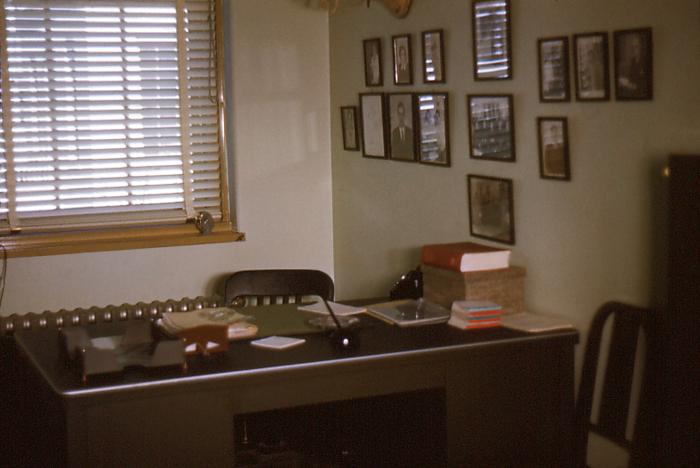
Carville is easy to misremember as a medical curiosity: an old leprosy hospital in rural Louisiana, tucked beside the Mississippi River, made obsolete by modern drugs. That version is too small. The former National Hansen's Disease Center matters because it preserves a whole public-health argument in physical form: what happens when a treatable infection is governed through fear, exile, secrecy, and then, slowly, through names chosen by patients themselves.
The site began as a Louisiana state leprosarium in 1894 and became a federal institution in 1921, when the U.S. Public Health Service took over what would become the national center for Hansen's disease treatment and research.[1][3] It was not simply a clinic. For much of its life, Carville was a place of compulsory separation. People diagnosed with the disease could be sent there for years, often under pseudonyms, because the stigma attached to "leprosy" could damage families, jobs, marriages, and ordinary civic identity long after symptoms were treated.[1][2][4]
That is why Carville's memory is not only about medicine getting better. It is about medicine learning how much harm can live in the social wrapper around a diagnosis.
The first memory layer: a hospital that behaved like a border
The National Park Service's historic documentation treats Carville as architecturally and socially unusual: a campus with hospital buildings, dormitories, recreation spaces, work areas, religious life, and a boundary between the residents and the outside world.[3] That boundary is the key to the site's emotional force. Carville did not only treat bodies. It reorganized lives.
Patients entered a world where medical care, social community, surveillance, and separation were fused. The hospital supplied treatment, but the institutional bargain was severe: admission could mean distance from children, spouses, hometowns, and public names. The current National Hansen's Disease Museum, run on the former campus, keeps that history visible by preserving patient-made objects, photographs, medical equipment, and the record of daily life inside the institution.[2]
The timeline matters. In the late nineteenth and early twentieth centuries, compulsory isolation reflected a world with poor treatment options and high public fear.[1][3] By the mid-twentieth century, sulfone therapy and then multidrug therapy changed the medical basis for permanent segregation.[1][5] But a public-health system does not shed its memory as fast as it changes its formulary. Buildings, policies, habits, and language can keep an old disease imaginary alive after the disease itself has become clinically manageable.
The second layer: The STAR turned patient life into public argument
Carville's most important commemorative object may not be a ward or a laboratory. It may be a newspaper. The STAR, founded by patients in 1941, became a voice from inside the leprosarium and later a campaign against the stigma surrounding Hansen's disease.[4] Stanley Stein, one of its best-known editors, wrote from Carville while pressing for better language, better public understanding, and an end to the social punishment attached to the diagnosis.[4]
That publication history changes how the site should be read. Carville was not only a place where authorities acted upon patients. It was also a place where patients acted back. They documented daily life, argued with public language, and insisted that the old word "leper" carried a social sentence that medicine should not endorse.[4] The shift toward "Hansen's disease" was therefore not cosmetic. It was part of a struggle over whether a person would be remembered as a diagnosis, a threat, a moral symbol, or a citizen receiving care.
The museum's job is difficult because it has to preserve the evidence of confinement without turning confinement into atmosphere. The old buildings can tempt a visitor into Gothic distance: strange disease, remote campus, vanished world. The stronger reading is more contemporary. Carville shows how quickly a medical category can become a social identity imposed from outside, and how much work it takes to undo that identity once fear has made it feel natural.
The third layer: cure did not automatically cure stigma
Current public-health guidance makes the clinical boundary clear. Hansen's disease is caused by Mycobacterium leprae and is now curable with multidrug therapy; early diagnosis and treatment can prevent disability, and the disease is not spread by casual contact such as shaking hands, sitting together, or sharing a meal.[5] Those facts are essential because they reveal the gap between evidence and memory.
Carville's older regime rested partly on uncertainty, but it also rested on the symbolic weight of leprosy as a feared biblical and cultural category. Even when treatment improved, that older imagination did not vanish. The HRSA history notes Carville's transition across federal control, research, outpatient treatment, and eventual relocation of services, but the site remains important precisely because a policy change does not erase the private consequences of having once been sent away.[1][2]
This is the public-health lesson Carville still teaches. A disease can be rare, treatable, and poorly transmitted in ordinary contact, yet still carry a stigma strong enough to alter family life and public behavior.[5] The memory problem is not solved by one fact sheet. It requires institutions that can show how fear was built, how patients answered it, and how language helped move care away from exile.
Why the museum matters now
The former Carville site now asks visitors to hold two truths together. First, the hospital did real medical work. It became a national center for Hansen's disease care and research, and it helped move the United States toward better treatment.[1][2] Second, its history is inseparable from coercion, pseudonymity, and the long social afterlife of diagnosis.[3][4]
That double memory is more useful than a simple apology story or a simple progress story. A progress story says: medicine advanced, the leprosarium closed, the problem ended. An apology story says: isolation was cruel, so the institution is only evidence of error. Carville is harder and more valuable than either. It shows a health system trying to manage fear with the tools it had, then slowly discovering that some of those tools had become harms in their own right.
The most important commemorative turn is that patients are no longer only the subjects of inspection. Through The STAR, oral histories, museum displays, and preserved campus material, they become interpreters of the system that confined them.[2][4] That changes the moral geometry of the place. The visitor is not looking at a vanished disease colony from a safe modern distance. The visitor is being asked to recognize a recurring public-health risk: once a diagnosis is turned into a mark of permanent social suspicion, clinical facts alone may not be enough to bring the person back.
Carville's enduring value is therefore not nostalgia for an unusual hospital. It is a warning about memory. Public health needs isolation, quarantine, and infection control in some circumstances. But those measures leave traces, and the traces can outlive the risk that justified them. The former leprosarium matters because it preserves the full sequence: fear, confinement, treatment, patient speech, renaming, and partial return. Remembering that sequence is one way to keep future disease control from confusing people with the fear attached to their disease.
Sources
- Health Resources and Services Administration, "History of the National Hansen's Disease Program" - official timeline of Carville, federal control, treatment, and program transition.
- Health Resources and Services Administration, "National Hansen's Disease Museum" - official museum page on the former Carville campus and its preserved collection.
- National Park Service, National Register of Historic Places Registration Form: Gillis W. Long Hansen's Disease Center - historic documentation of the Carville campus, institutional design, and significance.
- National Library of Medicine, "Stanley Stein and The STAR: The Miracle at Carville" - patient publication history and anti-stigma advocacy from inside Carville.
- World Health Organization, "Leprosy" - current public-health overview of Hansen's disease, transmission, treatment, disability prevention, and stigma.
- CDC Public Health Image Library, "PHIL ID #8916" - historic interior of a doctor's office at the Carville, Louisiana leprosarium, used as the article cover image.