Beriberi is easy to misremember as a quaint disease from the age of steamships and colonial hospitals, usually reduced to one sentence about white rice.[2][3] That shorthand misses the more exact failure. Beriberi appears when a diet keeps delivering carbohydrate energy but stops delivering enough thiamine to process that carbohydrate through the enzymes that turn food into usable cellular work. The person is still eating calories. The bottleneck lies in the cofactor system that lets glucose move cleanly into oxidative metabolism.[3][4]
That is why the disease can look so different in different organs. In one patient it arrives as numb feet, weak legs, and wasting. In another it arrives as edema, tachycardia, dyspnea, and high-output heart failure. The underlying problem is the same: thiamine-dependent metabolism is failing in tissues that cannot tolerate an energy shortage for long.[1][2][4]
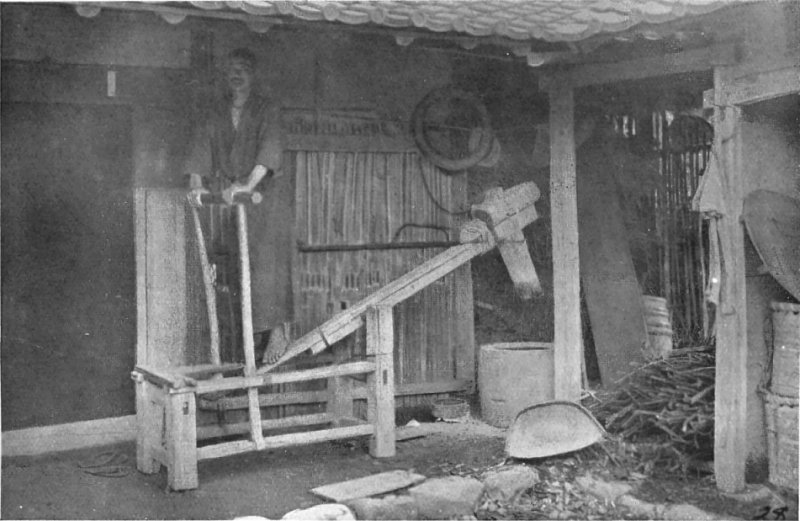
Image context: the cover uses a real archival photograph of rice being polished by foot power around 1920. It belongs here because the article's central claim is mechanical before it is moral. Beriberi spread not because rice itself was inherently dangerous, but because milling stripped away the thiamine-rich outer layers while preserving the starch that kept glucose demand high.[5]
Timeline anchors before the mechanism
- Late 19th century: beriberi was still widely argued over as a possible infectious disease, especially in crowded military and prison settings.[3]
- Early 20th century: polished-rice experiments and population observations linked the disease to milling and to the loss of what researchers first called the anti-beriberi factor.[3]
- 1920s: thiamine was isolated from rice polishings, turning the dietary clue into a named chemical deficiency.[3]
- 2026: NIH still describes beriberi as the most common classic effect of thiamin deficiency, with neurologic and, in rare cases, heart-failure presentations.[1]
1. Why polished rice changed the disease map
The historical clue was not simply that people ate rice. It was that they increasingly ate rice after the grain had been heavily milled.[2][3] Merck's current manual still states the point in blunt modern language: thiamin deficiency is most common in people subsisting on white rice or other highly refined carbohydrates in settings of food insecurity.[2] The newer clinical and historical reviews explain why that mattered. The outer layers removed by polishing carry much of the thiamine, while the remaining white grain still provides abundant starch.[3][4]
That combination is the trap. A population can look calorie-supplied and still be thiamine-poor. Beriberi therefore was never best understood as starvation in the simple sense. It was a mismatch between macronutrient load and micronutrient machinery.[3] The diet continued asking the body to process carbohydrate at scale, but the cofactor needed to run key oxidative steps had been milled away.
The Japanese and Dutch East Indies histories matter because they exposed that mismatch in two different ways. In one line of evidence, clinicians noticed that beriberi clustered where polished rice had become routine. In another, Christiaan Eijkman's chicken experiments showed that birds fed polished rice developed paralytic illness while those fed unpolished rice did not.[3] The disease stopped looking like a mystery of crowding alone and started looking like a manufacturing problem inside the staple itself.
2. Thiamine's real job is upstream of strength, sensation, and circulation
The clinical name "vitamin B1 deficiency" can sound smaller than the disease it causes. What matters is not the label but the biochemical role. The active intracellular form, thiamine diphosphate or pyrophosphate, is required for pyruvate dehydrogenase, alpha-ketoglutarate dehydrogenase, transketolase, and other enzyme systems that sit close to the center of carbohydrate oxidation and energy production.[3][4]
When thiamine runs short, pyruvate cannot move efficiently into the acetyl-CoA lane, Krebs-cycle throughput drops, ATP synthesis falters, and lactate tends to rise.[3][4] The body is still receiving glucose, but it cannot use that glucose with normal metabolic efficiency. That is why beriberi is better described as an energy-routing failure than as a vague nutritional weakness.
The timeline of deficiency is also tighter than many people expect. The 2024 beriberi overview notes that body stores are small and can last only about 18 days without replenishment, while adult requirements are roughly 1.1 to 1.2 mg/day and rise in pregnancy and lactation.[3] A person living on a refined, carbohydrate-heavy diet can therefore move into clinically important shortage much faster than the word "vitamin" might suggest.
3. Why dry beriberi reaches the legs first
The nervous system and peripheral nerves are expensive tissues to run. The clinical-perspective review emphasizes that thiamine is delivered to areas of high metabolic demand, including nerves, muscle, brain, and heart, so those systems become the first to fail when ATP generation is compromised.[4] NIH's fact sheet puts the bedside version simply: the classic presentation of beriberi is peripheral neuropathy with impaired sensory, motor, and reflex function.[1]
That is the logic behind dry beriberi. The long nerves to the feet and legs are especially exposed to chronic metabolic shortfall. Patients lose distal sensation, strength, and gait stability; over time they waste.[1][4] The disease can look orthopedic from a distance because the patient walks badly or cannot rise well, but the deeper problem is metabolic and neurogenic, not joint-based.
This also explains why beriberi can be mistaken for other neurologic syndromes if the diet story is missed. The weakness is real. The numbness is real. But the machinery failing underneath is cellular fuel handling.[4]
4. Why wet beriberi behaves like a circulation crisis
Wet beriberi is the same deficiency translated into hemodynamics. Merck describes peripheral vasodilation, edema, and eventual high-output heart failure.[2] The newer review expands the mechanism: vasodilation lowers effective vascular resistance, compensatory systems retain sodium and water, and the circulation moves toward hypervolemia while the myocardium is also operating under thiamine-poor metabolic conditions.[3]
That is why the syndrome can look paradoxical. The patient is fluid-overloaded, yet the root problem is still deficiency. Thiamine shortage also promotes lactate accumulation and metabolic acidosis, which further worsens myocardial performance in severe cases.[3][4] At the far end of the spectrum sits Shoshin beriberi, an acute, rapidly collapsing form that can present with cardiogenic shock.[3]
NIH's fact sheet captures the practical stake: in rare cases beriberi causes congestive heart failure leading to leg edema and sometimes death, but supplemental thiamin can reverse the disorder quickly when it is recognized.[1] That speed of response is another clue that the disease is mechanistic rather than degenerative in the slow irreversible sense. The system is starved of a cofactor, not missing a whole organ.
5. What the mechanism changes
Once beriberi is understood this way, the history of polished rice stops sounding like a food fad and starts sounding like an industrial metabolism error.[3][5] Milling improved storage, appearance, and consumer preference, but it quietly separated starch from the cofactor that starch metabolism depended on. The resulting illness was not caused by "rice" in the abstract. It was caused by refined carbohydrate arriving without enough thiamine support.
That lesson still travels in 2026 because modern thiamine deficiency is not locked in the past. ODS and the clinical reviews still identify risk in alcohol use disorder, malabsorption states, bariatric surgery, and other settings where intake, absorption, or metabolic handling break down.[1][4] The biology has not changed. High-demand tissues still fail first, and treatment still works best when the deficiency is recognized before shock, severe neuropathy, or persistent cognitive injury take hold.[1][3][4]
Beriberi therefore deserves to be remembered not as a historical curiosity, but as a precise warning about metabolic bottlenecks. Calories are not enough when the enzymes that unlock them are waiting for a missing cofactor.
Sources
- NIH Office of Dietary Supplements, "Thiamin - Health Professional Fact Sheet" - official overview of deficiency effects, including peripheral neuropathy, rare heart-failure presentations, and current risk groups.
- Merck Manual Professional Edition, "Thiamin Deficiency" - clinical summary of refined-carbohydrate risk, dry and wet beriberi, and the high-output heart-failure pattern.
- Sergio de Oliveira Silva et al., "An Overview of Beriberi" (Current Developments in Nutrition, 2025) - open-access review covering polished-rice history, thiamine stores, enzyme roles, lactate, and wet-versus-dry clinical forms.
- Daniel H. Hiffler et al., "Thiamine deficiency disorders: a clinical perspective" (Annals of the New York Academy of Sciences, 2021) - open-access review on thiamine-dependent enzymes, ATP failure, lactate elevation, and why high-demand tissues fail first.
- Wikimedia Commons, "File:RICE POLISHING BY FOOT POWER.jpg" - source page for the archival circa-1920 rice-polishing photograph used as the article image.