On 9 March 2000, a Wake Forest announcement described an unusual interruption to a large blood-pressure trial. About 9,000 participants taking doxazosin, an alpha blocker, were being offered an alternative medicine. The rest of the trial would continue. Its steering committee chairman, Curt Furberg, explained that doxazosin had provided less protection against cardiovascular complications than the older diuretic chlorthalidone.[1]
The report published in JAMA on 19 April 2000 makes the apparent puzzle visible: the trial's primary outcome had shown no significant difference between those two treatments.[4] Why stop an arm when the main result looked neutral? Reading ALLHAT closely means keeping three things in view: the outcome chosen to answer the principal question, the other events patients experienced, and the treatment against which each result was measured.
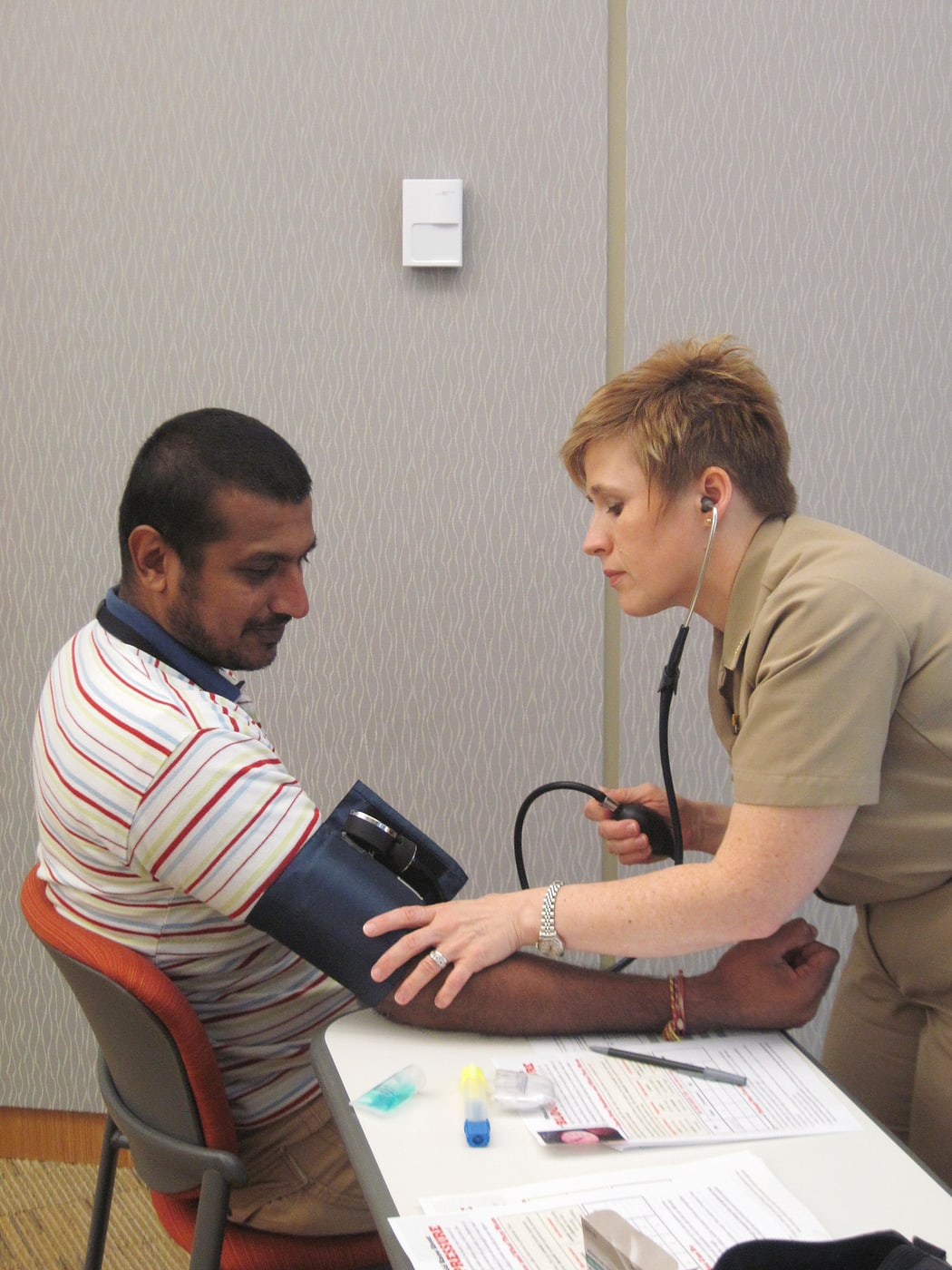
ALLHAT began in 1994, after diuretics had lost prescribing ground during the 1980s and early 1990s. Its blood-pressure component compared three alternatives—amlodipine, lisinopril and doxazosin—with chlorthalidone. Participants were at least 55, had hypertension and had another coronary risk factor. Random assignment and concealed treatment identities made the comparison possible; additional medicines could be used when the initial treatment did not control blood pressure.[3]
That design gave the older medicine an active job. Chlorthalidone was the control treatment, so a newer drug had to earn its place against an available therapy. The practical question concerned what happened after starting one treatment strategy rather than another. A medicine's ability to lower the reading on a cuff was part of that question, but patients' subsequent illnesses supplied the more consequential test.[3]
The initial doxazosin report covered 24,335 participants: 9,067 assigned to doxazosin and 15,268 to chlorthalidone. The primary outcome combined death from coronary heart disease with nonfatal myocardial infarction. Its relative risk was 1.03, with a 95% confidence interval of 0.90–1.17, for doxazosin versus chlorthalidone. All-cause mortality also showed no significant difference.[4]
Heart failure told a different story. The estimated four-year cumulative rates were 8.13% with doxazosin and 4.45% with chlorthalidone, a gap of about 3.7 percentage points. The report's time-to-event analysis gave a relative risk of 2.04 (95% confidence interval 1.79–2.32).[4] Keeping the absolute rates beside the relative estimate helps a reader see both the scale of the problem and the comparison that produced the warning.
The decision to stop drew on more than that striking number. Independent reviews in January 2000 considered the excess in the broader cardiovascular outcome, together with the low probability that doxazosin would eventually show a benefit on the primary outcome. Heart failure belonged to the prespecified secondary outcomes, and the excess remained when investigators restricted it to fatal events and hospital admissions.[5]
A primary outcome disciplines a trial's central claim; it does not make everything else that happens to participants irrelevant. Nor does a statistically nonsignificant difference establish that treatments are interchangeable. Here, the evidence offered little reason to expect a compensating primary-outcome advantage while other clinically important events were accumulating. Those are compatible findings, even if a headline built around only one of them would suggest otherwise.[4][5]
The heart-failure result also needed checking. A large community-based trial relies on diagnoses made across many clinics, and a reported event is only as convincing as the evidence supporting it. In November 2002, Linda Piller and colleagues published a validation study examining diagnostic records, subsequent treatment, measures of heart function and survival after reported heart failure.[5]
Its small blinded review covered 50 fatal or hospitalized events across the four treatment groups. Eleven lacked enough information for a definitive assessment; 33 of the remaining 39 were confirmed by one or both reviewers. The wider checks supported the original signal. The authors nevertheless acknowledged the limits of incomplete discharge summaries and modest confirmatory documentation. This was corroboration through several checks, with visible gaps in the records.[5]
The next question was why the difference occurred. New Zealand's medicines regulator, Medsafe, summarized an important complication in February 2001: systolic pressure had averaged about 3 mmHg higher in the doxazosin group. The trial authors judged that difference insufficient to explain the doubling of heart-failure risk.[6] That judgment was an interpretation of the evidence. The trial had compared treatment strategies; it had not separately randomized their effects on pressure and every other biological pathway.
Medsafe also emphasized the boundary that easily disappears when a trial is described as having stopped for harm. ALLHAT had no placebo group in this comparison. It therefore could not establish whether doxazosin produced more, fewer or the same number of heart-failure events as would have occurred without antihypertensive treatment. The finding concerned initial treatment in older people at elevated cardiovascular risk. It did not settle doxazosin's balance of benefits and risks for a different indication, such as symptoms of an enlarged prostate.[6]
The investigators' public explanation had preserved that distinction from the start. In the March announcement, NHLBI's Jeffrey Cutler described the drug as less effective than the diuretic and urged people taking an alpha blocker to discuss treatment with their doctors rather than simply stop it.[1] Translating a comparative result into care required an alternative treatment, not an empty medicine cabinet.
The 2003 final report added 9,232 participant-years and 939 cardiovascular events to the earlier account. It again found no significant difference in the primary outcome, while the broader cardiovascular outcome still favoured chlorthalidone: the relative risk with doxazosin was 1.20 (95% confidence interval 1.13–1.27).[7] The updated estimate strengthened the practical conclusion without turning the comparison into a universal verdict on the drug.
ALLHAT's stopped arm is valuable precisely because its answer has edges. A neutral result on one outcome could sit beside a persuasive reason to change the initial treatment. The comparator supplied both the standard doxazosin failed to meet and the limit on what failure meant. Reading the warning accurately requires keeping chlorthalidone in the sentence.
Sources
- Wake Forest University Baptist Medical Center, “Study Stopped Early: High Blood Pressure Drug Less Effective than Diuretic” (9 March 2000) — contemporary announcement and investigators' explanation of the treatment change.
- CDC Public Health Image Library, ID 14869, blood-pressure screening photograph (2012) — image provenance, named participants and credit to Yvonne Green.
- National Heart, Lung, and Blood Institute, “Antihypertensive and Lipid-Lowering Treatment to Prevent Heart Attack Trial (ALLHAT)” — prescribing context, trial design, eligibility and supplementary treatment.
- ALLHAT Collaborative Research Group, “Major Cardiovascular Events in Hypertensive Patients Randomized to Doxazosin vs Chlorthalidone,” JAMA 283:1967–1975 (19 April 2000) — original report, primary outcome and heart-failure results; PubMed record and abstract.
- Linda B. Piller and colleagues, “Validation of Heart Failure Events in the Antihypertensive and Lipid Lowering Treatment to Prevent Heart Attack Trial (ALLHAT) Participants Assigned to Doxazosin and Chlorthalidone” (14 November 2002) — stopping rationale, diagnostic review and ascertainment limitations.
- Medsafe Editorial Team, “Doxazosin and the ALLHAT study,” Prescriber Update 20:31–32 (February 2001) — historical regulatory interpretation, blood-pressure difference and limits of the active comparison.
- ALLHAT Collaborative Research Group, “Diuretic versus alpha-blocker as first-step antihypertensive therapy: final results,” Hypertension 42:239–246 (September 2003) — additional outcome data and final cardiovascular comparison.