When Fergus Henderson lifts the last meringue out of the milk, most of his dessert appears to be sitting in the slotted spoon. The islands are already white and plump. The pan still holds the milk. That milk is worth keeping. Henderson scrapes the seeds of half a vanilla pod into it, drops in the pod as well, and puts the pan back on the heat. By the time the islands reach the table, the milk they cooked in will be the sauce moving around them. [1]
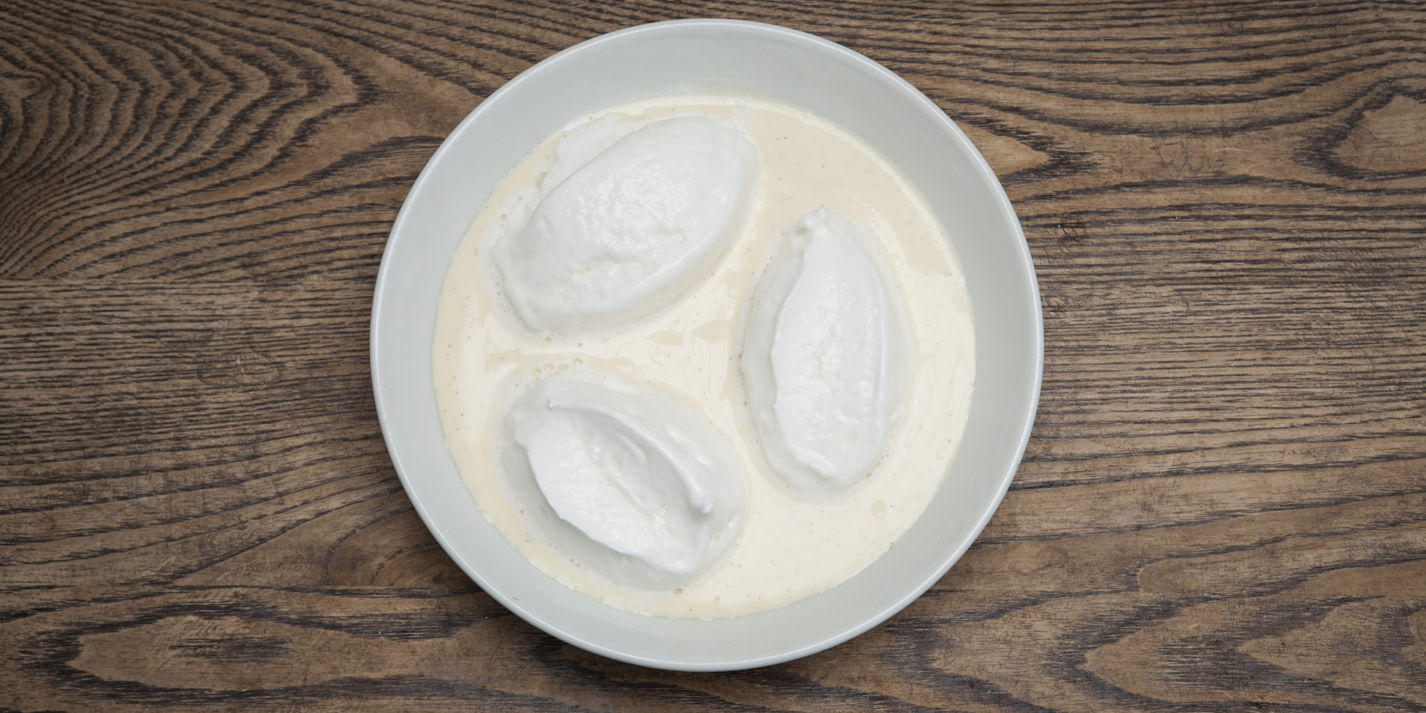
At the start, the milk has a fairly rough job for such a delicate-looking dish. It has to cook something too soft to pick up with fingers. Henderson whisks the whites until they hold soft peaks, adds sugar in stages and folds a little cornflour into the glossy foam. A spoonful perched on the surface of gently simmering milk keeps its rough contours. After two minutes the cook can turn it over. Another two and it is firm enough for the trip from saucepan to spoon to cooling dish. Three small islands make a serving, each with a different outline. [1]
The shape depends on who has hold of the spoon. In the Bon Appétit version, two large spoons pass the raw meringue back and forth until it takes the smooth oval shape called a quenelle. The ovals puff as they poach, then settle a little on a towel as the milk drains away. Rick Stein takes the shaping out of the cook’s hands almost entirely. He pipes the foam into lightly oiled ramekins and stands them in a covered pan of simmering water. The ramekin gives each serving its walls. You can tell a good deal about the equipment in the kitchen by the silhouette in the bowl. [2][3]
The moment to lower the heat
Back at Henderson’s pan, the four yolks left from making the meringue have been whisked with sugar. In goes the hot vanilla milk a little at a time, with the whisk moving. Now the whole mixture goes back on the stove. The cook who waited patiently for a simmer a few minutes ago has to catch the custard before it bubbles. Stirring into the corners matters here. Those are easy places to leave a little yolk mixture sitting against hot metal while the rest sweeps round the pan. [1]
Henderson’s test takes a second. Lift the spoon, then draw a finger across the film of custard on its back. If the two banks hold and the track stays clear, pour the sauce into a bowl to cool. What matters at the table is the degree of thickening that small mark records. A spoon slipped under an island should come up with vanilla custard clinging to its underside. There should still be enough movement in the sauce for it to run into the hollow left behind. [1]
A pastry cook can also uncouple the two jobs. Richard Bainbridge makes the custard first, enriching the milk with double cream and chilling it well ahead. He sets out the bowls of cold custard while a fresh pan of milk comes to a simmer for the whites. That extra pan changes the rhythm of service. The sauce can be ready before anyone picks up a spoon to shape the first island. A drizzle of caramel and toasted almond flakes give the diner something to crunch. [4]
Henderson stops at custard and meringue. It’s a particularly good version for the curious eater. Take the edge off one of the little heaps and let it sit on the spoon with just enough sauce to cover the tip. In the white there’s still a suggestion of the air the whisk put there. The yellow slips past it. Both halves of the egg have passed through the same pan, and you can feel exactly where one ends and the other begins. [1]
Sources
- Fergus Henderson, “Floating islands,” Great British Chefs.
- Bon Appétit, “Floating Islands,” on shaping and draining the poached meringues.
- Rick Stein, “Floating islands with caramel sauce,” Good Food.
- Richard Bainbridge, “Ultimate floating islands (îles flottantes),” Great British Chefs.