Coconut bake in a checked cloth; windows opened for the breeze; furniture painted in bright colors. Architect Vernelle Noel's account of a 2014 lunch at Veni Mangé supplies a vivid introduction to Woodbrook, the Port of Spain neighborhood around Ariapita Avenue.[2] To understand the meal, begin with the house.
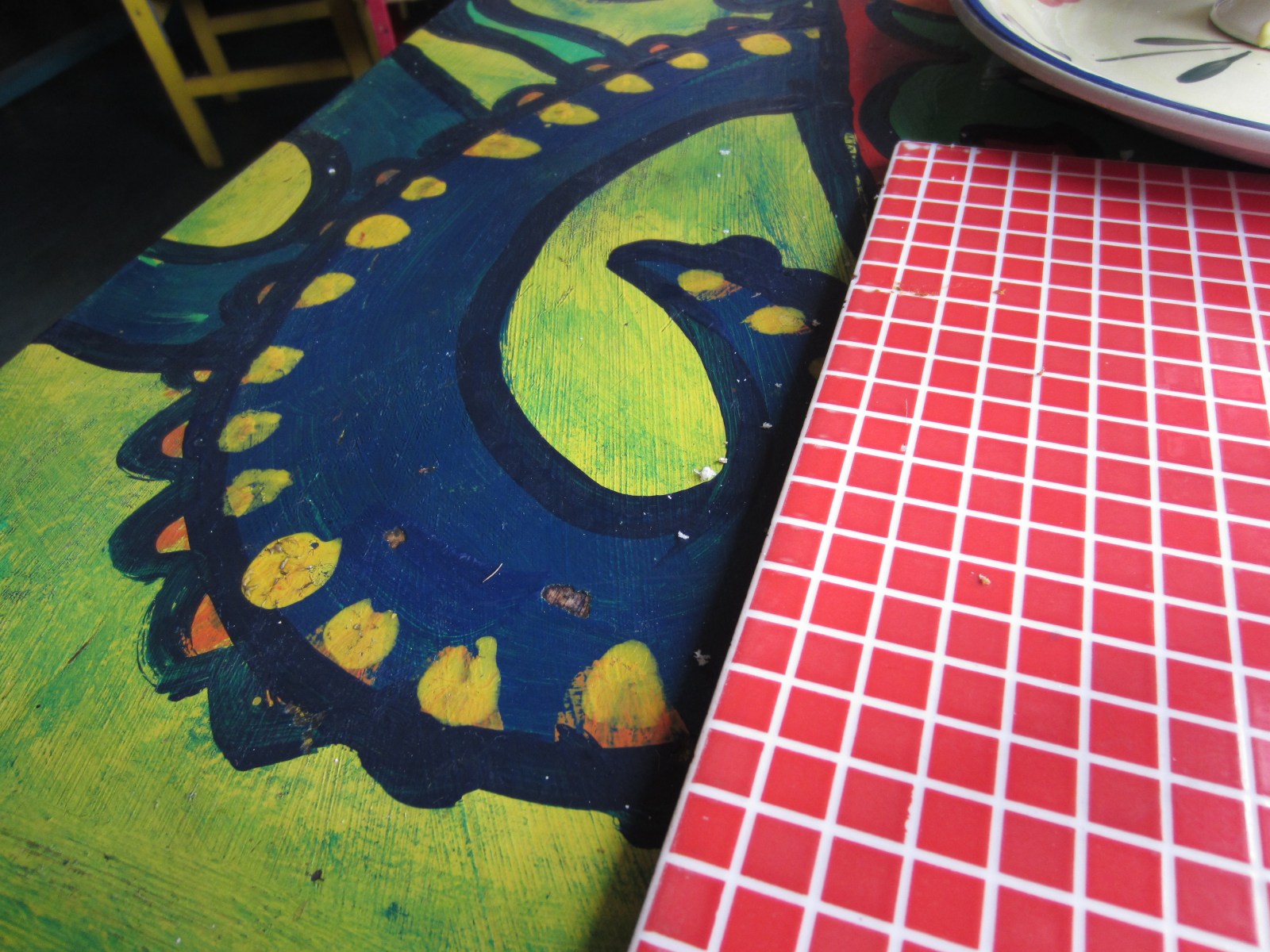
A Creole restaurant and a chocolate workshop offer two entrances into that story. Veni Mangé's Ariapita Avenue room belongs here through dated accounts; a September 2024 visitor report says the restaurant had left that address and was doing occasional pop-ups elsewhere. That report does not establish a current service schedule.[9] Cocobel, meanwhile, presents its Fitt Street home as a place for chocolate, a café and a gallery.[7] Read them together and a neighborhood emerges through the uses people have found for its rooms.
The house beneath the restaurant
Woodbrook's domestic scale has a particular history. The National Trust describes the conversion of the Siegert family's sugar estate into residential lots, with streets taking family names such as Carlos, Alfredo, Petra and Luis. Part of the estate passed to the colonial government in 1911. The Trust also draws attention to the decorative wooden fretwork around verandas, galleries and entrances in Woodbrook and nearby districts.[1]
Those details help explain why a meal here can have an architectural setting more intimate than a purpose-built restaurant. A window, a covered edge or a room facing the street gives hospitality something to work with. The building already contains places to pause and look out.
At Veni Mangé, Noel's lunch included shrimp with chadon bene sauce and stewed beef with dumplings, accompanied by bhagi rice, red beans and plantains. She found the custard on her trifle too dominant.[2] That reservation keeps the remembered meal human: the welcome and the abundance left room for an imperfect dessert.
More people around the table
The room's relationship with art extended beyond decoration. In April 2021, Newsday announced a Veni Mangé exhibition bringing together ten local artists working across photography, painting and other media. Owner Rosemary “Roses” Hezekiah framed the event around the country's creative talent.[3] A restaurant could give that talent an audience already prepared to stay a while.
There is an appealing change of attention in that arrangement. Between looking down at a plate and across at a companion, a diner can look up at a work made nearby. The room becomes more specific with each of those encounters. Its identity comes from people as well as recipes.
Another Newsday notice, from June 2022, announced a Woodbrook Community Council artisan market at the restaurant, with food and drinks available alongside makers' displays.[4] These are dated events, not a standing calendar. Even so, they show the practical value of a dining room that can accommodate other kinds of gathering. An exhibition needs viewers; a maker needs a conversation; a kitchen gives people another reason to remain.
Chocolate has its own house
At Cocobel, the connection between making food and making space is unusually direct. Founder Isabel Brash trained as an architect and designed the Woodbrook house containing her chocolate kitchen. Her account dates the first experiment to 2008, when her brother offered beans from his Rancho Quemado estate in southern Trinidad.[5]
The journey to Fitt Street matters. A 2022 business profile describes beans arriving from Rancho Quemado and other Trinidad estates, then being sorted, roasted, winnowed and refined at the workshop.[6] The countryside supplies the crop; the neighborhood contains another substantial part of its transformation. Buying a finished chocolate there brings a diner into contact with a local manufacturing story as well as a flavor.
Cocobel's catalog makes the culinary connections easy to imagine: dark chocolate with guava cheese, rum-raisin dragées, and a bark combining candied sorrel with white and dark chocolate.[8] These are several different invitations to the same pantry. Fruit, spice and familiar preparations can give the chocolate a local accent without requiring every confection to taste alike.
Brash's stated ambition is for the country's fine-flavor cocoa to be enjoyed in its many forms within Trinidad and Tobago itself.[5] The shop gives that ambition a neighborhood address. A chocolate can be carried away, brought to someone else's table or eaten in the place where the maker's choices become visible.
A room below the sweets
Cocobel's café page identifies Medulla as a contemporary Caribbean art gallery in the building's basement. It describes public participation and art education as part of the gallery's purpose, and traces its first presentation to a New Media program for the 2011 Trinidad and Tobago Film Festival.[7]
The arrangement brings the Woodbrook story into focus. Chocolate making, conversation and looking at art occupy different parts of one address. At Veni Mangé, exhibitions and an artisan market similarly expanded what a restaurant room could do. The connection is spatial and social; it does not require a shared menu or a single definition of luxury.
A memorable dining neighborhood needs places where appetite can meet other interests. Here, the evidence is wonderfully concrete: a cloth around bread, a workshop receiving cocoa beans, walls offered to artists, a basement given over to looking. Woodbrook's contribution to the meal is the room it makes around it.
Sources
- National Trust of Trinidad and Tobago, Heritage Newsletter, March 2016, pages 7–8 — wooden fretwork, the Woodbrook estate and residential development.
- Vernelle Noel, “Veni Mangé – Port of Spain, Trinidad,” The Thinking Insomniac, July 8, 2014 — firsthand meal account and archival interior photograph.
- Trinidad and Tobago Newsday, “Veni Mange celebrates culture with art,” April 8, 2021 — the restaurant's group exhibition and its stated cultural purpose.
- Trinidad and Tobago Newsday, “Mini artisan market for Woodbrook,” June 30, 2022 — the community council's planned market at Veni Mangé.
- Cocobel Chocolate, “About Us” — Isabel Brash's account of the 2008 experiment, the house and her aims for Trinidad and Tobago cocoa.
- CatholicTT, “Business Spotlight: Cocobel,” June 22, 2022 — estate sourcing and chocolate processing at the Fitt Street workshop.
- Cocobel Chocolate, “Cafè” — the Cocoa Café and Medulla Art Gallery at 37 Fitt Street, including the gallery's first presentation.
- Cocobel Chocolate, official shop — product examples linking chocolate with guava, rum-soaked raisins and sorrel; catalog consulted October 18, 2026.
- Tripadvisor, Veni Mange reviews — “No longer at listed location,” posted September 17, 2024; a visitor's report used to distinguish the former dining room from current booking information.