
The easiest way to flatten Tatemó is to call it a Mexican tasting menu with very good tortillas. That description is not false, but it puts the tortilla in the wrong grammatical position. In Eater's Mise En Place film, chef Emmanuel Chavez does not treat maize as the warm sidekick to luxury proteins. He treats it as the thing that decides what the restaurant is allowed to become: masa, tostada, tortilla, mole, plantain dough, corn milk, ice cream, and even the pacing logic of the menu all start from the same premise.[1][2]
That premise has institutional weight now. Tatemó's own site describes the restaurant as a maiz-driven concept established in 2020 by Chavez and co-owner Megan Maul, first through heirloom maize tortillas and masa sold at farmers markets and underground dinners, then through the brick-and-mortar restaurant that opened in early 2022.[3] MICHELIN's current listing places the restaurant in an almost anti-monumental setting, an empty strip mall near a brewery and a doughnut shop, while emphasizing Chavez's beautifully pitched experience built around heirloom corn from across Mexico.[4] The contrast is the point. Tatemó's luxury is not architectural awe. It is a chain of small material decisions made around corn until the room starts to feel inevitable.
That makes Annotated Viewing the right mode for this video. The film is useful because it gives a day-in-the-kitchen view of how the maize claim is enforced. A restaurant can put heritage corn in a mission statement and still use it as branding. Tatemó has to do something harder: make corn behave differently across the meal without turning every course into the same argument.[1][2] Watch for how often the team changes maize's physical state. Sometimes it is a crisp foundation. Sometimes it is a flexible wrapper. Sometimes it is a sauce-thickening memory. Sometimes it is dessert. The through-line is not repetition. It is transformation.
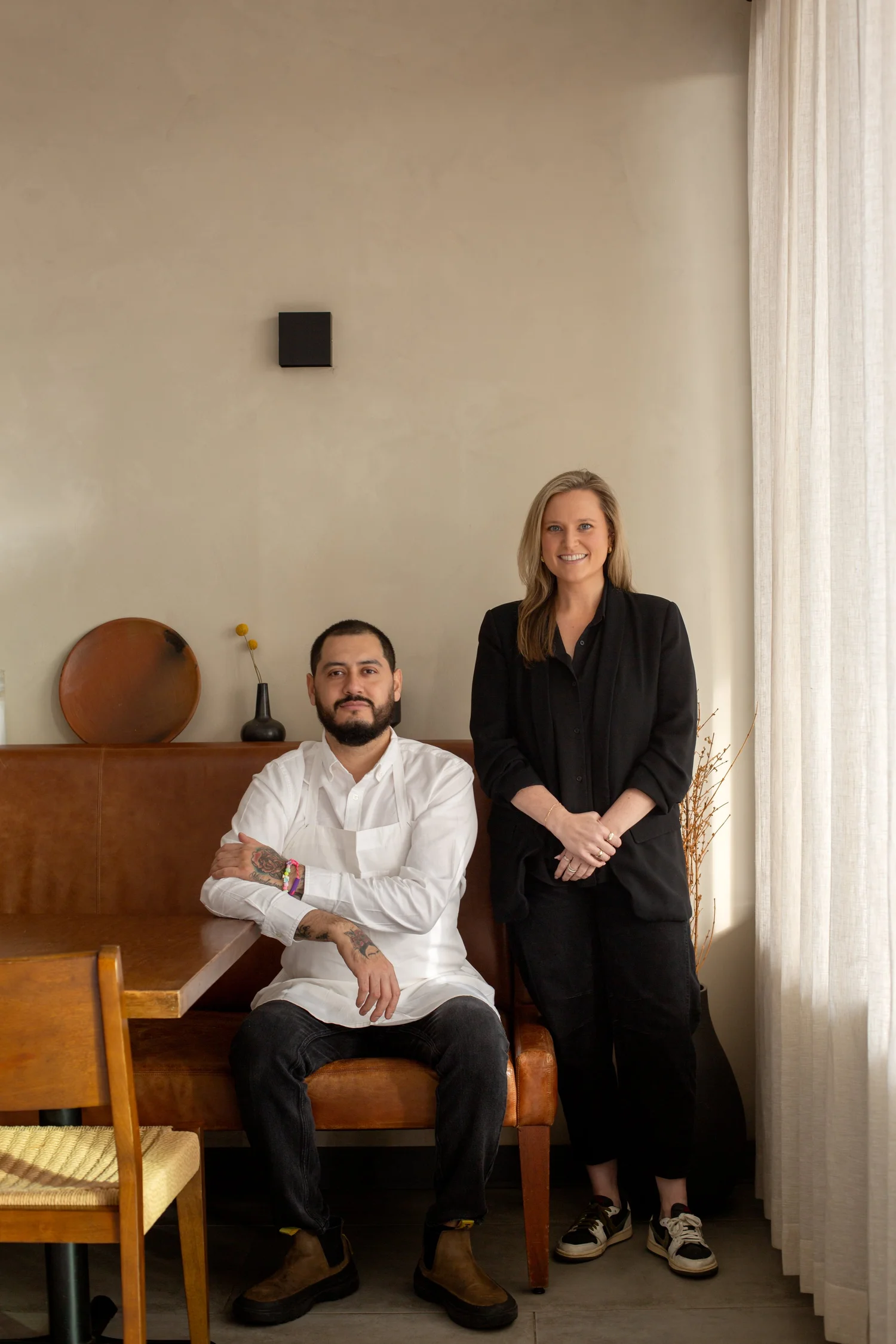
Image context: the cover uses a real Tatemó dining-room photograph by Studio Rivera, served from the restaurant's official site. A portrait of Chavez and Maul is the right lead because the article is about authorship and operating structure, not a single hero plate isolated from the restaurant that makes it possible.[3][6]
Maize is the control surface, not the theme
The opening sections of the video are most valuable when watched as process rather than as romance.[1] Chavez begins with nixtamalization and masa because that is where Tatemó's authority is located. Food & Wine's 2023 Best New Chefs profile gives the scale behind that choice: Chavez was nixtamalizing 80 pounds of masa a week, with maize appearing in pancakes, ceviche, enmoladas, mole, and dessert.[5] That number matters less as volume than as discipline. If a restaurant builds itself on fresh masa, it cannot outsource its central grammar to a bagged commodity and still make the same claim.
Nixtamalization is often described as tradition, but in this context it is also technology. The alkaline cooking and soaking step changes aroma, texture, workability, nutrition, and flavor; it lets maize become masa rather than merely ground corn. Tatemó's fine-dining move is to make that transformation visible without turning it into a lecture. The video shows the kitchen using corn varieties for different purposes, then moving that masa through forms that diners recognize and forms they may not.[1][2] The result is a tasting menu where the technical baseline is not French sauce, Japanese dashi, or Nordic preservation, but the Mexican maize cycle.
That is why the strip-mall setting described by MICHELIN is not incidental.[4] A grander room might make the food easier to misread as prestige theater. Tatemó's small space keeps pulling the meal back toward the work itself. Corn arrives, is nixtamalized, ground, pressed, cooked, fried, folded, sauced, and sweetened. The meal's refinement comes from controlling those transitions, not from hiding the humble starting point.
The tortilla becomes a tasting-menu instrument
Around the middle of the film, the tortilla stops looking like a vehicle and starts behaving like an instrument.[1] This is the most important viewing adjustment. In many restaurants, bread service or tortillas sit outside the conceptual center: they are comfort, generosity, or a way to move sauce. At Tatemó, the tortilla is often the plate's logic. A tostada can make tuna and caviar feel sharp because the corn base brings roasted bitterness and brittle architecture. A tlacoyo can hold suadero and Mexican XO because masa has enough density to carry fat, chile, and umami without disappearing.[1][4]
Eater's written companion piece reinforces that the restaurant uses a 16-course structure and makes tortillas from different colors and preparations of maize, including blue and red for fried items and tostadas, yellow for tacos and soups, and plantain tortillas for a duck carnitas enmolada.[2] That color coding is not decorative if the cook is serious. Different maize choices change flavor, texture, water absorption, and how a bite reads against acid, fat, chile, seafood, or broth. The menu becomes a sequence of corn decisions.
The video also makes clear why Chavez's work avoids the common trap of "elevating" Mexican food by distancing it from its base.[1] The tasting-menu frame brings caviar, precise seafood handling, wagyu, black-light inspection, composed sauces, and careful plating, but those luxury gestures do not replace masa. They have to answer to it. That reversal is the article's central claim: Tatemó is not using corn to legitimize a tasting menu. It is using the tasting menu to show how much corn can already do.
Mole, waste, and memory tighten the argument
The mole section is one of the better tests of whether the restaurant's maize language is genuinely structural.[1][2] Food & Wine notes an enmolada in which maize appears both in the tortilla and in the mole negro, which uses blackened leftover tortillas alongside dashi, chiles, and galletas Maria.[5] That is a different kind of luxury from abundance. Leftover tortilla is not waste when the kitchen knows how to turn it into depth. It becomes body, bitterness, memory, and economy at once.
That logic matters because fine dining can be wasteful when every course demands pristine product and discards the rest as invisible cost. Tatemó's maize system gives the kitchen a better vocabulary. A tortilla can be fresh service item, fried structure, sauce ingredient, or memory of fire. Corn can enter dessert as ice cream or mousse rather than being trapped in savory identity. The same base keeps returning, but each return changes its role.
StarChefs' profile is helpful here because it frames Chavez's current menu as a celebration of heirloom corn and indigenous techniques while reimagining regional Mexican cooking.[7] The word "reimagining" is important. Tatemó is not a museum of fixed dishes. It is also not a restaurant trying to escape its sources. The stronger reading is that Chavez treats traditional technique as a living engine. Nixtamalization gives the menu its rules; fine-dining sequencing gives those rules a contemporary stage.
Why the video is worth watching now
The Michelin-starred Houston story could easily become a novelty headline: a tiny strip-mall room wins a star, a chef makes corn important, diners rush the reservation book. The Eater film is better than that because it slows the story down to work.[1] You see prep, repetition, inspection, timing, and the way one ingredient family has to keep changing form to sustain a whole menu. That makes Tatemó useful beyond Houston. It offers a model for how a restaurant can be personal, regional, technically exact, and legible without flattening itself into a luxury version of a familiar cuisine.
The lesson is not that every serious restaurant needs one ingredient as a thesis. The lesson is that a thesis only matters if it changes operations. At Tatemó, maize changes purchasing, prep schedule, station work, course design, sauce logic, and dessert. It changes what "fine dining" is allowed to mean inside a room that began with masa and tortillas rather than with imported prestige. Seen that way, the video is not just a kitchen tour. It is a compact argument that corn was never the side. It was the architecture.[1][3][4]
Sources
- Eater, "Why Michelin Gave a Star to This Tiny Mexican Restaurant in a Strip-Mall - Mise En Place," YouTube video.
- Eater, "This Michelin-Starred Mexican Restaurant Is Tucked Inside a Houston Strip Mall" - written companion article on Tatemó's tasting menu, prep work, and maize-centered dishes.
- Tatemó official site - restaurant story, Chavez and Megan Maul partnership, maize-driven concept, opening history, and awards list.
- MICHELIN Guide, "Tatemó - Houston" - current guide listing, one-star status, strip-mall setting, and heirloom-corn description.
- Khushbu Shah, "From Masa Pancakes to Corn Ice Cream, Emmanuel Chavez Is All About the Maize," Food & Wine, 2023 - Best New Chefs profile and maize-process context.
- Tatemó official Studio Rivera photograph used as this article's lead image.
- StarChefs, "Profile - Chef Emmanuel Chavez of Tatemó" - chef profile and context on heirloom corn, indigenous techniques, and regional Mexican cooking.