Québec terroir can become vague very quickly in fine dining. A restaurant says local, says boreal, says season, says foraged, and the diner is left with a blur of righteous nouns plus a few expensive plates. Tanière³ is more interesting because it refuses to leave that language floating above the room. The useful way to read the restaurant in 2026 is as an operations story. It takes a blind tasting menu, splits it across historic stone spaces, tightens the guest count at the chef's counter, and uses movement itself to keep "edible Québec" from becoming a slogan.[1][2][3][4][5]
The official material already points in that direction. The restaurant's current English homepage places Tanière³ inside the historic vaults of the Leber and Charest houses, between the St. Lawrence River and Place Royale, and frames the meal as a single tasting menu built as a reflection of Québec terroir, season, and the restaurant's culinary universe.[1] The same page adds the producer infrastructure behind that claim: five foragers in different regions of the province, meats from selected farms, and vegetables grown by a childhood friend of chef François-Emmanuel Nicol.[1] That is the ingredient side. The more revealing point is what the house does with it spatially. Tanière³ offers two distinct experiences, the dining room cellar and the chef's counter cellar, turning the same local-product thesis into two different ways of receiving the night.[1][2]
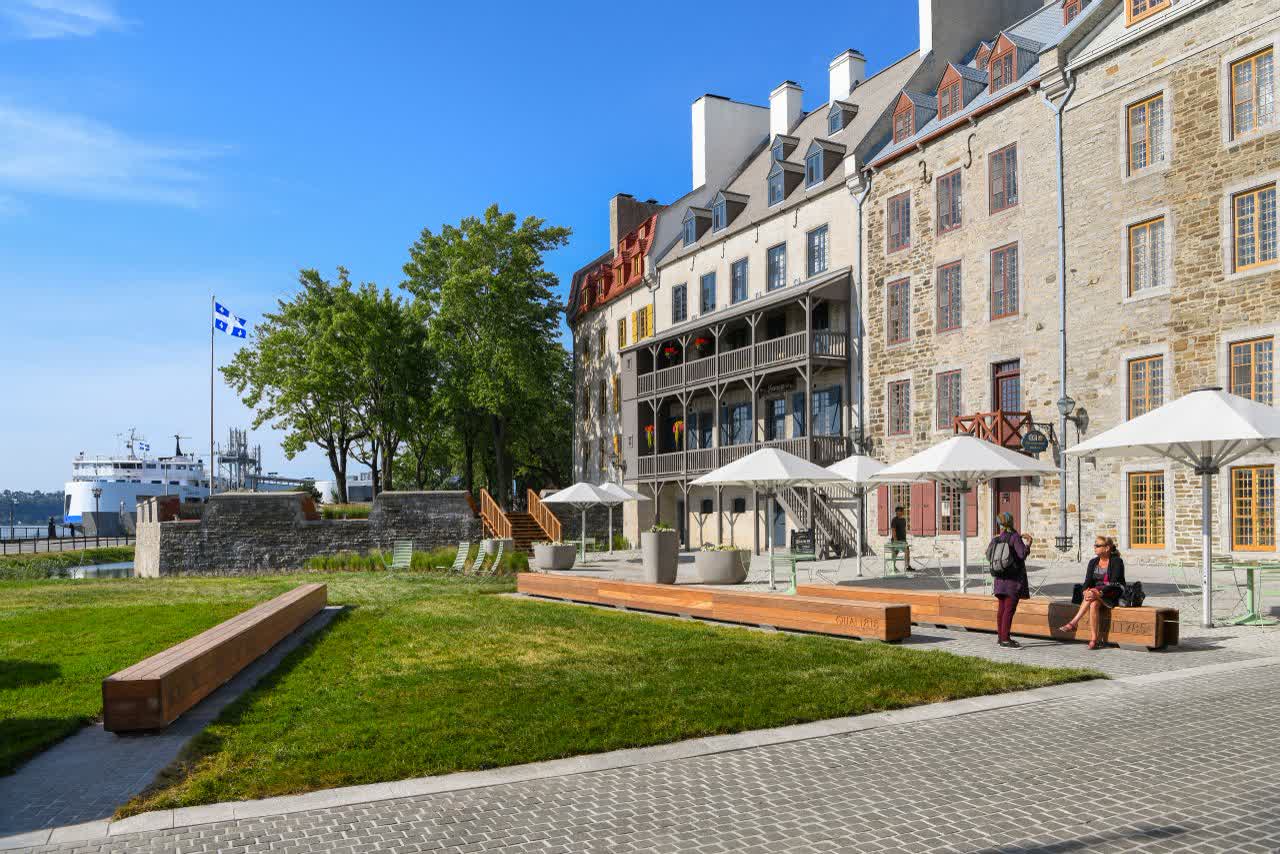
Image context: the lead image uses an official room photograph rather than a plated dish because this article is really about sequencing. Before a guest tastes anything, Tanière³ has already started directing mood, tempo, and attention through the vault itself.[6]
1. The blind menu works here because the room keeps changing around it
Blind tasting menus can fail when they become pure submission rituals. The diner surrenders choice, but nothing in the environment repays that surrender except secrecy. Tanière³ avoids that deadness by making the night feel physically progressive. Québec City's tourism guide, in its February 24, 2026 update on the city's Michelin-starred restaurants, describes Tanière³ as a blind tasting menu served in a unique den-like space of ancestral stone, with remarkable service and special praise for both the sommelier and the mixologist.[3] That description matters because it shifts the emphasis away from surprise alone. The menu is blind, yes, but it is also housed inside a setting built to make each reveal land with a different pressure.[3]
The restaurant's own press copy is even clearer. In a current Tanière³ piece about visiting nearby Old Québec, the house says the restaurant occupies 17th-century underground vaults and that, over the course of 15 to 20 services, guests move from one vault to another, each with a distinct atmosphere ranging from cocoon-like intimacy to something more playful.[4] That is an operational decision, not an atmospheric afterthought. Movement resets the palate without needing louder plating or more aggressive narration. It lets the restaurant change the emotional register of the dinner while keeping the cuisine inside one consistent boreal-Québécois vocabulary.[1][4]
This is why the blind format feels earned here. Instead of merely withholding information, Tanière³ keeps rebuilding the frame around the information. The diner is not only waiting for the next course; the diner is being repositioned to receive it.
2. The chef's counter is small enough to turn terroir into contact, not just messaging
The restaurant's homepage and FAQ make a useful distinction between its two experiences. The dining room cellar is described as an intimate immersion into local riches, while the chef's counter cellar offers direct access to François-Emmanuel Nicol's universe and a firsthand view of the brigade at work.[1][2] The FAQ then adds the hard operational limit: the chef's counter has a maximum capacity of 10 people, and pricing varies depending on whether the guest chooses the dining room cellar or the chef's counter cellar.[2]
That ten-seat cap matters because Tanière³ is trying to do more than serve local ingredients beautifully. It is trying to make those ingredients feel handled by identifiable people rather than by an abstract luxury system. The chef's counter gives the restaurant one lane where that human chain stays visible. The nearby-activities press piece says guests can exchange with the cooks in the chef's counter vault.[4] In practice, that means the local-product argument does not stop at sourcing rhetoric. It passes through labor, explanation, and witness.
This is also where scale becomes part of the quality story. A larger counter could still be theatrical, but it would be harder to keep personal. Ten seats is close to the size where every gesture still reads as directed rather than broadcast. For a restaurant whose official language keeps returning to five foragers, selected farms, seed choices, and careful transformation, that intimacy is not decorative. It is structural.[1][2]
3. The arrival sequence tells you this house wants immersion without stiffness
Tanière³ seems unusually aware that luxury can either welcome or freeze. Its own press-rewards writing makes a point of refusing the cold version. In the same Old Québec article, the house says the experience includes a code at the door, artisanal tableware, dark conifers between tables, and a range of emotions it wants the guest to feel, but it also insists that, despite its awards and Relais & Châteaux status, the service does not aim to be stiff. The goal is warm hospitality inside a multisensory environment.[4]
That balancing act is harder than it sounds. Too much informality and the whole coded-entry vault drama collapses into gimmick. Too much stiffness and the terroir story starts sounding like a museum label. Tanière³ appears to be threading the middle: the entry is controlled, the setting is theatrical, but the service language is meant to stay human.[4] That helps explain why the Michelin-adjacent tourism summary praises service so strongly, and why it singles out not only the food but also the sommelier and mixologist.[3]
The point is not that every ambitious tasting menu needs a keypad or a room switch. The point is that Tanière³ has decided immersion should be paced, not improvised. The guest is guided from threshold to threshold, and the room keeps doing interpretive work before the staff needs to say very much.
4. The drinks program is part of the choreography, not a sidecar
The current Tanière³ wine-list feature adds the final operational piece. It describes the restaurant as a culinary journey through several rooms under 17th-century vaults in Old Québec and recommends the pairings because they are carefully curated, with not only wine but other forms of alcohol used where appropriate. The same piece gives special mention to mixologist Simon Faucher for highlighting local products in his creations.[5] Read beside the tourism page, which also calls out both sommelier and mixologist, the message is plain: drinks are not bolted on after the menu is written.[3][5]
That matters in a restaurant built around room changes. Once a meal is staged as progression, beverages become pacing tools as much as flavor companions. They can mark transitions, soften a move from one vault to another, or sharpen the contrast between one chapter and the next. A weaker restaurant would treat that choreography as visual and let the glassware lag behind. Tanière³ appears to keep the liquid program inside the same dramaturgy as the food.[3][5]
This is why the restaurant feels worth reading as a service-operations case rather than only as an ingredient shrine. Plenty of high-end kitchens can tell you they work with local producers. Fewer can build a whole evening in which architecture, guest movement, counter scale, entry ritual, and beverage sequencing all keep making the same argument. Tanière³ can. It turns blind tasting into guided motion, and guided motion is what keeps the idea of Québec terroir vivid instead of merely virtuous.[1][2][3][4][5]
Sources
- Tanière³ homepage - official overview of the historic Leber and Charest vaults, the single tasting-menu philosophy, five foragers, selected farms, chef François-Emmanuel Nicol, and the two cellar experiences.
- Tanière³ FAQ - official page covering the distinction between the dining room cellar and chef's counter cellar, the chef's counter maximum capacity of 10 people, and pricing by experience.
- Québec City Tourism, "MICHELIN Star Restaurants in Québec City" (updated February 24, 2026) - current city guide summary describing Tanière³ as the province's only two-star Michelin restaurant, emphasizing the ancestral-stone setting, blind tasting menu, and praise for service, sommelier, and mixologist.
- Tanière³, "Suggestions d'activités près du restaurant Tanière³ dans le Vieux-Québec" - official article describing the 17th-century underground vaults, 15-to-20-course movement between rooms, coded entry, chef's-counter exchange, and warm multisensory hospitality.
- Tanière³, "La Tanière³ Wine List" - official press/rewards page describing the culinary journey through several rooms, curated pairings, and mixologist Simon Faucher's use of local products.
- Official Tanière³ room photograph used as this article's lead image.