Sherry is easy to misuse in fine dining because the old signals are so loud. The word can still make diners think of a dusty sweet glass, a cooking splash, or a ritual that belongs beside a cigar tray. That is exactly why a good sherry pairing can feel so modern when it is handled without nostalgia. It does not need to behave like a prestige white Burgundy substitute. It works better when the sommelier treats it as liquid seasoning.
The useful question is not "Which sherry goes with this course?" in the broad wine-list sense. The sharper question is "What does the dish need: salt, yeast, almond, bitter peel, mushroom depth, oxidation, sweetness, or a reset after fat?" Sherry has enough range to answer that question course by course, but only if the pour stays disciplined. A tasting menu does not need a heavy lecture on Andalusia. It needs a glass that changes the next bite.
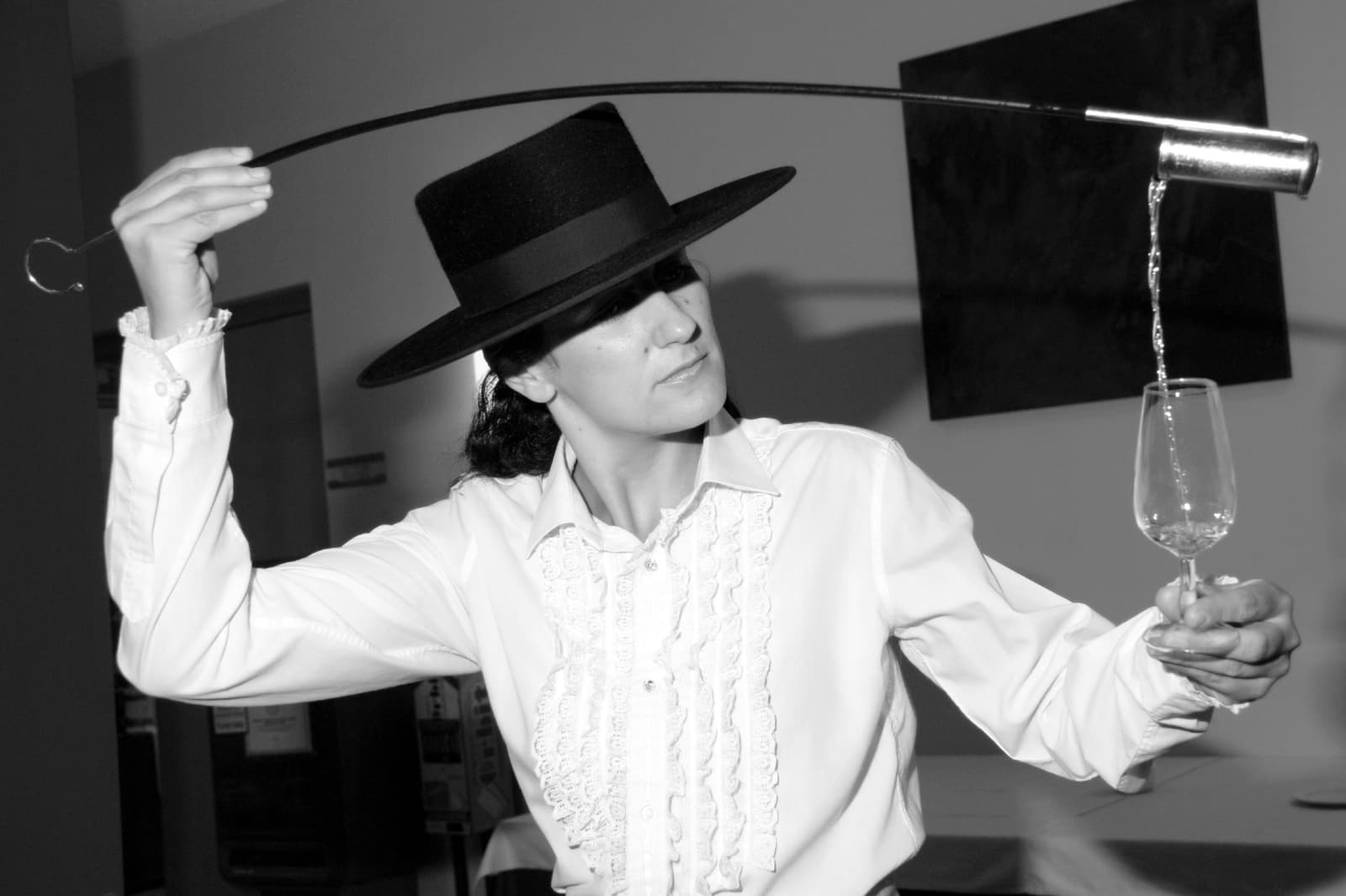
The photograph used here shows a venenciadora pouring sherry from a venencia into small glasses.[7] It is theatrical, but the theater has a technical point. The pour aerates, scents the room, and emphasizes proportion. In a restaurant, that is the whole beverage-pairing argument in miniature: the wine should enter the meal visibly, precisely, and then get out of the way before it becomes the subject.
The first glass should cut, not coat
Fino gives sherry its strongest tasting-menu opening move because it is built around dryness and biological ageing rather than sweetness. The Consejo Regulador's official Fino page describes a palomino base wine fortified to about 15 percent alcohol by volume to favor the veil of flor, a yeast film that protects the wine from oxidation and gives the style its distinctive character; the minimum biological ageing period is at least two years in American oak casks through the criaderas and solera system.[1]
That sounds like production detail, but it explains the pairing behavior. Fino is not there to add perfume in the floral-white-wine way. It sharpens. The official serving guidance puts it cold, around 6 to 8 degrees C, and names olives, nuts, Iberian ham, shellfish, salty fish such as anchovies, raw fish, vinaigrette, marinades, gazpacho, and ajo blanco among its natural partners.[1] In tasting-menu language, that means fino belongs near the places where chefs often reach for brine, acid, or a clean knife edge.
Think of a raw scallop with a little seaweed oil, a razor clam with almond, a tomato water course, a fried anchovy snack, or a chilled cucumber and green almond soup. A still white wine can be lovely with those dishes, but it may either echo freshness too politely or fight acidity too directly. Fino brings a different tool: saline dryness with enough yeast and almond texture to make the dish taste more savory, not just more refreshed.
This is why the pour size matters. Too much fino becomes tiring at the start of a long menu. A short, cold glass can make the first bites snap into focus.
Amontillado is the bridge course
The middle of a tasting menu is harder. The meal has moved past raw brightness, but it may not yet be ready for red wine weight. Vegetables get darker. Mushrooms arrive. Shellfish gains butter. Poultry, consommé, artichoke, asparagus, or blue fish can make ordinary pairing logic wobble. Amontillado earns its place here because it is not a single-speed wine.
The official Amontillado page defines the style by two ageing phases: first under flor, as with fino and manzanilla, and then oxidative ageing after the flor disappears.[2] That double history is the point. The wine keeps some of the earlier sharpness and yeast memory while adding amber color, hazelnut, herbs, tobacco, wood, concentration, and a dry finish.[2] It is served warmer than fino, around 12 to 14 degrees C, and the official pairing list includes soups and consommes, white meat, blue fish such as tuna, wild mushrooms, semi-cured cheeses, asparagus, and artichokes.[2]
Those last two vegetables are not incidental. Asparagus and artichoke are famous pairing troublemakers because they can make many wines taste metallic, sweet, or thin. Amontillado has enough savory architecture to stand beside them instead of pretending they are easy. It also gives chefs a way to move from marine courses into earthier food without making the pairing progression feel like a gearshift from white wine to red wine.
The best amontillado course should feel like a hinge. Mushrooms in broth, grilled tuna, a chicken wing lacquered with sherry vinegar, a warm asparagus custard, or a small cheese course can all use the same logic: dry intensity, nut skin, controlled oxidation, and enough acidity to keep the plate from becoming brown-on-brown comfort.
The pairing range is wider than the cliche
The strongest case for sherry in fine dining is not that it pairs with tapas. That is true, but it is too small. The official Sherry Wines recipe database places fino with scallops in Asian dressing, fino with Korean tapas, manzanilla with clams and tuna empanada, and amontillado with gyozas and chicken-liver pasta, among other examples.[3] The useful signal is range. Sherry can work with iodine, soy, smoke, cured fat, vinegar, shellfish sweetness, organ-meat savor, and spicy edges without asking every dish to become Spanish.
Copa Jerez makes that point institutional rather than anecdotal. The international competition is built around chef-and-sommelier teams designing three-course menus with wines from the Jerez-Xeres-Sherry and Manzanilla-Sanlucar de Barrameda designations, then presenting the pairing logic to judges.[4] That format matters because it treats sherry as a working haute-cuisine language, not as a heritage drink poured after the meal.
The Institute of Culinary Education's report on a StarChefs sherry-pairing competition gives a similar practical cue: chefs and sommeliers explored sherry across multiple courses, with Scott Carney evaluating the combinations through a service-and-flavor lens rather than treating the wines as curiosities.[5] For a modern dining room, that is the more useful standard. A sherry pairing should justify itself in the bite.
Service decides whether it feels old or sharp
The wine can be right and the experience can still fail. Sherry asks for confident service because many guests arrive with the wrong mental category. If the server says "sherry" and lets the guest imagine syrup, the pairing has already lost momentum. The room has to name the specific style quickly: fino, manzanilla, amontillado, oloroso, palo cortado, or Pedro Ximenez are not interchangeable mood words.
Temperature is the second service test. Fino should be properly cold, not cellar-tepid.[1] Amontillado should be slightly chilled rather than treated like a warm after-dinner pour.[2] Glassware should help aroma without making the serving feel precious. The official venencia page explains that the tool's cup holds about 50 cubic centimeters and that the art of using it opens the wine to show its nuances.[6] A restaurant does not need to stage every pour with a venencia, but it should absorb the lesson: small measure, visible freshness, and a clear reason for the height of the gesture.
The third test is sequencing. Do not use sherry as a novelty interlude and then return to a conventional pairing arc unchanged. If fino opens the palate, let it set up the menu's saline logic. If amontillado bridges a mushroom or asparagus course, let the next wine respond to the darker register it introduced. If a sweet sherry appears at dessert, make sure it is not merely matching sugar with sugar. The pairing should still behave like seasoning: intensify, contrast, lengthen, or clean up.
The best use is modest and exact
Sherry does not need a comeback speech. It needs better deployment. In a tasting menu, the right glass can solve problems that ordinary pairings often hide: raw seafood that wants salt more than fruit, vinegar-led dishes that bruise delicate whites, artichokes and asparagus that distort many wines, mushroom and poultry courses that need depth without red-wine tannin, desserts that want bitterness or dried-fruit gravity instead of more cream.
That is why sherry belongs in fine dining when the sommelier stops selling it as charm and starts using it as structure. Fino can make the opening bites cleaner. Manzanilla can keep seafood marine without making it icy. Amontillado can connect vegetables, broth, mushrooms, and cheese. Oloroso and palo cortado can carry roast, nut, and game notes when the menu gets darker. Pedro Ximenez can work at the end if sweetness is treated as pressure, not decoration.
The best sherry pairing is not a museum piece. It is a small, cold, dry, fragrant, or nut-brown correction at the exact moment the plate needs it. When that happens, the glass does not announce that sherry is back. It simply makes the food taste more finished.
Sources
- Consejo Regulador / Sherry Wines, "Fino" - official style page covering flor ageing, fortification, serving temperature, sugar/acidity ranges, and food-pairing guidance.
- Consejo Regulador / Sherry Wines, "Amontillado" - official style page covering biological plus oxidative ageing, serving temperature, ABV range, tasting notes, and pairings with mushrooms, blue fish, asparagus, artichokes, and cheese.
- Consejo Regulador / Sherry Wines, "Pairings & Recipes" - official recipe and pairing database showing fino, manzanilla, amontillado, palo cortado, oloroso, and sweet sherries across seafood, Asian-influenced dishes, vegetables, meat, and dessert.
- Consejo Regulador / Sherry Wines, "Rules for participating in the Copa Jerez Competition" - official competition format requiring a three-course menu paired with Jerez-Xeres-Sherry and Manzanilla-Sanlucar de Barrameda wines and justified to judges.
- Scott Carney, "Competitive Sherry Pairing," Institute of Culinary Education, May 14, 2021 - professional account of chefs and sommeliers testing sherry pairings across multiple courses in a StarChefs competition setting.
- Consejo Regulador / Sherry Wines, "What is a Venenciador? The Instrument and its Origin" - official explanation of the venencia, its cup size, shaft, use in cask service, and role in opening sherry's aromas.
- Wikimedia Commons, "File:Venenciadora serving Sherry.jpg" - source page for the article's real photographic image of sherry service with a venencia.