Sauternes has a public-relations problem hiding inside a luxury reputation. It is often introduced as dessert wine, which sounds tidy and almost guarantees misuse. Put a heavy sweet wine beside a heavy sweet dessert and the last course can become a sugar-on-sugar traffic jam. The better fine-dining question is sharper: when does sweetness behave like seasoning?
That is where Sauternes becomes interesting again. The glass is not valuable simply because it is golden, rare, or French. It is valuable because, at its best, it can put honeyed sweetness, citrus lift, saffron-like perfume, bitter peel, stone fruit, and acidity into one small pour. Used well, it can season salt, fat, liver, blue cheese, roasted fruit, spice, or custard. Used badly, it turns the menu's final stretch into syrup.
The pairing lesson begins before service. The Sauternes and Barsac appellation sits around a particular autumn machine: the Garonne, the cooler Ciron, morning mist, and sunny afternoons that let Botrytis cinerea develop as noble rot rather than destructive grey rot.[1][5] The official appellation account describes harvest as selective and repetitive because botrytis does not arrive evenly; pickers may pass through the vineyard three to five times, choosing the most affected grapes at each moment.[1] That labor matters at the table. Sauternes is not merely sweet wine. It is a glass built from concentration and selection.
The Glass Is Already A Sauce
A strong Sauternes pairing usually works when the wine is allowed to do a sauce's job. It adds sweetness, yes, but also length, gloss, aroma, and contrast. That is why the classic match with foie gras survives even though it has become almost too familiar to think about.
Foie gras is dense, cool or warm, often gently salty, and easily flattened by the wrong drink. A young tannic red can make the fat feel metallic. A very dry, sharp white can seem correct for one sip and then leave the liver exposed. A Sauternes with enough acidity changes the problem. Its sweetness meets the liver's richness; its acid cuts back through the fat; its apricot, citrus, honey, and spice notes can echo chutney, brioche, onion confit, fig, pepper, or seared crust without requiring all of those things on the plate.[4]
This is why the pairing is most persuasive when the kitchen keeps the garnish disciplined. If the foie gras course already carries fig jam, brioche, caramelized apple, candied nuts, and a sweet reduction, the Sauternes has nowhere to go except louder. The wine becomes redundant. The better version gives the glass a role: salt on the liver, restrained fruit, maybe a bitter or acid detail, and enough warm bread or pastry to let the wine stretch across texture.
FAUCHON's pairing guide is useful here because it frames Sauternes with foie gras not as a mandatory law but as one option among sweet white, dry white, red wine, and Champagne, with preparation and accompaniments changing the choice.[4] That flexibility is the modern lesson. Sauternes should not be poured because tradition demands it. It should be poured because the course needs a golden sauce that the kitchen did not put on the plate.
Botrytis Gives Sweetness Edges
The reason Sauternes can do more than sugar comes from botrytis. In plain terms, noble rot makes ripe grapes lose water while concentrating the remaining material. But the science is stranger and more useful than raisin logic alone. A PubMed-indexed UC Davis-led study of noble rot in Semillon found that Botrytis cinerea changes berry metabolism, activating stress and ripening pathways and increasing compounds tied to the distinctive flavor and aroma of botrytized wines.[2]
That matters for pairing because the wine's sweetness carries edges. It is not the simple sweetness of syrup added at the end. Sauternes can bring candied citrus, orchard fruit, tropical fruit, spice, flowers, dried fruit, and nutty complexity, while still needing acidity to stay alive.[1][2] Château Suduiraut's explanation of its terroir says the optimal pattern is cool nights and morning autumn mists followed by fine sunny daytime weather; under those conditions the fungus makes grape skins porous, evaporation concentrates sugar, and aroma complexity builds.[3]
For a sommelier, those details translate into menu mechanics. Sauternes can hold a course with high fat because the wine is not only sweet. It can hold a course with salt because salt makes sweetness feel more articulate. It can hold mild bitterness because bitter peel, toasted nut, coffee, chicory, or browned pastry can stop the wine from reading as dessert syrup. It can even hold gentle heat or spice if the dish is fragrant rather than aggressively hot.
The mistake is to think of Sauternes as a flavor family instead of a structural tool. A young, vivid bottle may be more about fruit, acidity, and lift. An older bottle may move toward marmalade, saffron, dried apricot, tea, caramel, and mushroom. The menu should notice the difference. A seared foie gras escalope, a poultry liver parfait, a blue-cheese course, and a quince dessert do not ask the same thing of the glass.
Where It Belongs In The Meal
The old answer is simple: Sauternes with foie gras at the beginning, or Sauternes with dessert at the end. Fine dining can do better.
At the beginning of a meal, a small pour can make sense if the course is rich but compact. A foie gras terrine with a salty crust, a duck-liver mousse with brioche, or a small custard with poultry jus can take Sauternes as a bright opening accent. The pour should be modest, because a large glass of sweet wine early in a tasting menu can fatigue the palate. The point is to create a flash of luxury and then move on.
In the middle of the meal, Sauternes becomes more interesting and more dangerous. It can work with roasted poultry if the sauce has liver, spice, honeyed root vegetables, or fruit without becoming sticky. It can work with shellfish in a rich preparation if acidity and salt are clear. It can work with a cheese trolley, especially blue cheese or salty aged cheeses, because the glass can act as both fruit paste and acid line. But it struggles when the savory course is already sweet, heavily glazed, or crowded with too many luxury signals.
Near dessert, the pairing should usually be less sweet than the plate or more complex than the plate. A tart with bitter citrus, roasted pineapple, quince, almond, or saffron has a better chance than a caramel cake with caramel sauce and caramel ice cream. Sauternes needs resistance. If the dessert simply mirrors sweetness, the wine loses shape.
That is why "dessert wine" is too small a phrase. Sauternes often belongs at a threshold: between savory and sweet, between cheese and fruit, between liver and chutney, between pastry and custard. The best placement is not always last. It is where the menu needs sweetness to organize fat and salt without ending the conversation.
The Pour Size Is Part Of The Pairing
Restaurants sometimes sabotage Sauternes by pouring it as though it were a normal still white. It rarely needs that much volume. A small, cold-enough but not icy pour can be more persuasive because the wine expands as it warms and as food brings out its edges.
Temperature matters. Too cold, and the wine becomes only sugar and acid. Too warm, and it can feel heavy before the food arrives. The service target should let aroma open while preserving snap. Glassware matters less as luxury theater than as portion control: enough bowl to smell the wine, not so much that the pour becomes a dessert in itself.
Pacing matters too. If a menu uses Sauternes early, the next course needs a reset: broth, citrus, bitterness, herbs, bubbles, or something mineral. If a menu uses Sauternes late, the kitchen should avoid following it with an even heavier sweet course. The wine can be a bridge, but bridges need somewhere to land.
The vineyard labor behind Sauternes explains why it can feel expensive and why producers often struggle to place it in contemporary dining. The appellation's own description emphasizes microclimate, hand sorting, slow pressing, fermentation, aging, and the fact that every wine expresses a different mix of soil, grape variety, vintage, and vinification.[1] That complexity deserves more than a reflexive final pour with any dessert on the menu.
The Better Rule
The better rule is simple: pour Sauternes when the dish needs sweetness with structure, not sweetness as decoration.
That means foie gras only if the plate leaves room for the wine. It means cheese when salt and blue-veined intensity need fruit and acid. It means desserts with bitterness, spice, citrus, or roasted-fruit depth rather than desserts that are already complete sugar systems. It means savory courses where the glass can behave like a sauce: tightening fat, lifting aroma, and making luxury feel lighter rather than heavier.
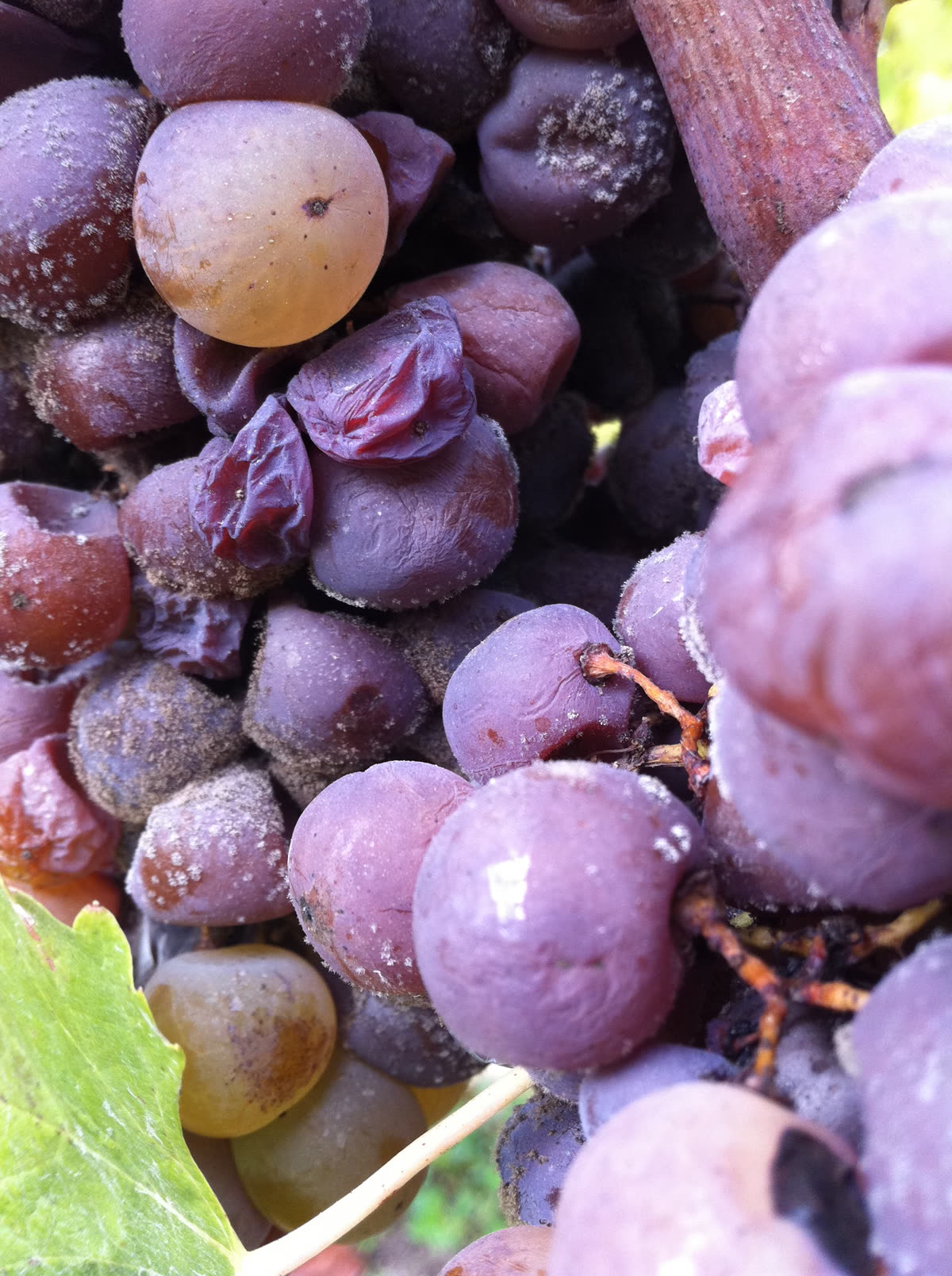
The photograph of botrytised grapes is a useful corrective because it makes the wine's origin look almost un-luxurious.[6] The berries are shriveled, spotted, purpled, dusty, and uneven. They do not look like polished dessert. They look like weather, risk, and selection. That is the point. Sauternes belongs in fine dining when a sommelier remembers that the wine is not a golden afterthought. It is a concentrated ingredient, and the most elegant use of it is often the one that lets sweetness season the meal instead of ending it.
Sources
- Sauternes Barsac, "The Wines" - official appellation guide to microclimate, noble rot, selective sorting, grape varieties, and aroma families.
- Blanco-Ulate et al., "Developmental and Metabolic Plasticity of White-Skinned Grape Berries in Response to Botrytis cinerea during Noble Rot," Plant Physiology / PubMed record, 2015.
- Château Suduiraut, "The magic of Botrytis Cinerea" - estate explanation of Ciron/Garonne conditions, noble rot versus grey rot, sugar concentration, aroma development, and hand harvesting.
- FAUCHON Paris, "Which wine to choose with your foie gras" - pairing guide covering Sauternes, sweet white, dry white, red wine, Champagne, accompaniments, and service context.
- Bordeaux.com, "The Secrets of Sauternes" - explanation of mist, warm afternoons, noble rot, grape skin perforation, water loss, concentration, and acidity balance.
- Wikimedia Commons, "File:Botrytis infected grapes in Sauternes.jpg" - real 2010 photograph by davitydave used as the article image.