Plenty of high-end restaurants use heritage as a decorative word. Samrub Samrub Thai uses it as working material. The official site still describes the restaurant as a small private kitchen of chef Prin Polsuk serving progressive Thai food that rethinks national cooking traditions.[1] That claim could have landed as familiar fine-dining branding. The stronger evidence around the restaurant points somewhere narrower and more interesting. Asia's 50 Best describes Samrub Samrub Thai as an educational platform built around nearly forgotten ingredients and ancient Thai recipes, while Tatler says the kitchen is focused on reviving rare and forgotten dishes with careful technique and high-quality local produce.[2][5]
That difference matters. In 2026, Samrub Samrub Thai does not read like a Bangkok room borrowing old recipes for prestige. It reads like a place trying to return archival Thai cooking to the table as living service. The menu changes on a fixed rhythm, the ingredients shift with what can actually be sourced, and the room stays small enough that explanation is part of hospitality rather than a speech layered over it.[1][2][4][5]
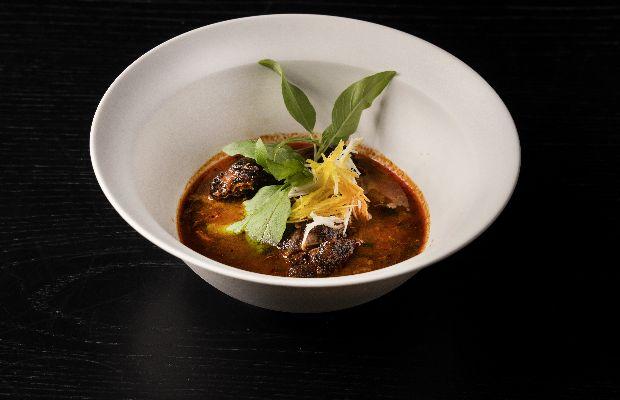
Image context: the lead image uses a 50 Best dish photograph because this profile is about concentration rather than spectacle. Samrub Samrub Thai's food is meant to feel researched, seasonal, and specific, so one tightly framed bowl says more than a generic dining-room glamour shot would.[2][3]
The archive is the operating system
The clearest way to understand Samrub Samrub Thai is to start with its research burden. Asia's 50 Best says Polsuk and his team spend long hours working through indigenous ingredients and forgotten Thai recipes, drawing on a large cookbook collection that includes volumes from the Rama VI era.[2] The World Gourmet Festival profile sharpens the same point from a chef-bio angle: Polsuk's cooking combines historical research with refined technique, using regional ingredients, royal influences, and Thai culinary heritage as active material rather than static reference.[6]
The Michelin Guide Thailand 2024 press release pushes that idea into service format. It described Samrub Samrub Thai's menu as a truly original tasting menu, changed bi-monthly, with ancient recipes reproduced in ways that trace older aromas and craft traditions.[4] That bi-monthly cadence is important because it stops "heritage" from becoming a frozen concept. The restaurant is not presenting one canonical Thai museum menu every night. It is running a recurring act of selection: what from the archive should return now, and what present-season supply can support that return?
That is why the restaurant feels more rigorous than places that simply say they cook from memory. Memory here has to survive procurement, menu editing, and repeated explanation at the table. The archive is not garnish after the food decisions are made. It is the thing making the food decisions harder.[2][4][6]
The room keeps scholarship from turning cold
Samrub Samrub Thai would read very differently if it staged that research inside a remote palace of luxury. Instead, nearly every source returns to the room's intimacy. Tatler describes a cosy space with an open kitchen where diners can watch the cooking closely and engage with the chef.[5] Asia's 50 Best goes further, saying the restaurant feels like dining with family because Polsuk and his wife Mint live right upstairs, giving the chef's-table-like room an unusual warmth from the moment guests walk in.[2]
That domestic scale is not a side note. It is central to the concept. Historical cooking can become intimidating very quickly when every dish arrives as a lesson. Samrub Samrub Thai appears to have solved that problem by shrinking the distance between research and reception. Mint works the front of house, explaining the menu and specialty drinks, while the open kitchen keeps the guest close to the labor turning archival material into actual dinner.[2][5]
The result is that the restaurant's authority feels earned rather than announced. Bangkok has no shortage of rooms that can project exclusivity. Samrub Samrub Thai seems more interested in legibility. It wants diners to understand why a recipe, an ingredient, or a flavor combination has returned, and it does that best by making the space feel hosted instead of ceremonial.[2][5]
Thai heritage stays regional and seasonal
The other reason the restaurant feels sharp is that its idea of "Thai cuisine" does not flatten the country into one Bangkok-friendly flavor set. The Discovery profile says the kitchen works with hyper-seasonal menus and pulls from the culinary traditions of different peoples across the nation, naming ingredients such as bee larvae and pointing to dishes shaped by the Srivijaya Kingdom, the Urak Lawoi people, and fishing villages in Satun.[3] Asia's 50 Best adds more concrete examples from the current rhythm: jungle stir-fried rice-field eel, northern Thai duck laab, and Thai rice wine from Isaan.[2]
That spread is what keeps the restaurant from sliding into generic "old Thai" nostalgia. Samrub Samrub Thai is not treating the archive as a royal-court monoculture or as one set of polished central dishes. It is using regional memory, older manuscripts, and seasonal sourcing to build a wider map of Thai cooking than many luxury restaurants attempt.[2][3][6]
Tatler's description of bold flavors, intricate spice blends, and delicate textures helps explain how that map becomes elegant rather than folkloric.[5] The food still has to land as dinner, not as annotation. So the restaurant's modernity arrives downstream of the archival work. Technique is there to clarify and pace the return of these dishes, not to replace them with something globally interchangeable.[3][5]
Why it matters now
Samrub Samrub Thai feels important in 2026 because it makes a very specific argument about what contemporary Thai fine dining can be. The official site remains almost stubbornly small-scale, still framing the restaurant as a private kitchen rather than a hospitality empire.[1] Yet the outside record shows that the room now carries serious weight: No. 47 on Asia's 50 Best Restaurants 2025, Tatler recognition, and Michelin-star validation after the guide highlighted its bi-monthly archive-driven tasting format.[2][4][5]
The stronger reason to care, though, is internal. Samrub Samrub Thai suggests that culinary modernity does not always mean invention by rupture. Sometimes it means recovering a recipe carefully enough that it can live again under present conditions. That requires research, supply discipline, and a room willing to teach without freezing over. Polsuk's kitchen seems to understand all three burdens at once.[2][4][6]
In a city where fine dining can easily drift toward louder theater or international polish detached from place, Samrub Samrub Thai pushes in the opposite direction. It makes the archive edible, keeps the house personal, and lets seasonality decide when old knowledge can return convincingly. That is a narrower achievement than generic luxury. It is also a more durable one.[1][2][3][5]
Sources
- Samrub Samrub Thai, official website - current address, contact details, reservation link, and official description of the restaurant as a small private kitchen serving progressive Thai food that rethinks national cooking traditions.
- Asia's 50 Best Restaurants 2025, "Samrub Samrub Thai" - Silom relocation context, family-upstairs hospitality, cookbook research, bi-monthly menu rhythm, and examples such as rice-field eel, duck laab, and Isaan rice wine.
- 50 Best Discovery, "Samrub Samrub Thai - Bangkok - Restaurant" - hyper-seasonal menu framing, nearly national ingredient range, and examples including bee larvae, banana fritters, and regional references from Srivijaya, Urak Lawoi, and Satun.
- MICHELIN Guide Thailand 2024 press release PDF - one-star award context and Michelin's description of Samrub Samrub Thai's bi-monthly tasting menu built from ancient Thai recipes.
- Tatler Asia, "Samrub Samrub Thai" - profile covering Prin Polsuk's focus on forgotten recipes, local ingredients, meticulous technique, and the cosy open-kitchen room.
- World Gourmet Festival, "Prin Polsuk" - chef profile covering historical research, regional ingredients, royal influences, and Samrub Samrub Thai's heritage-driven culinary position.