The easiest lazy read of Saison is that it is a famous San Francisco fire restaurant with a giant wine list attached. The restaurant's own materials point somewhere more precise.[1][2][3][4] Saison still defines itself through open wood fire cooking, California terroir, and the leadership of Richard Lee.[1][2] But it also insists, again and again, that the beverage side is not a sidecar. The about page says the room is paired with a Grand Award-winning wine list; the same page says the cellar is one of the country's largest selections of Old and New World wine with a special emphasis on Burgundy, established by Mark Bright and now curated by Beverage Director and Assistant General Manager Molly Greene.[2] The wine-program page then explains what that award is supposed to mean: breadth, mature vintages, large-format bottles, harmony with the menu, and superior presentation.[3] That is not trophy language. It is service architecture.
The useful claim, then, is not simply that Saison has a lot to drink. It is that the wine program makes live-fire cooking read slower and more exactly. Fire can flatten a meal into one register if the liquid side is too blunt: smoke, char, reduction, fat, and heat can turn "serious cooking" into a monotone. Saison's cellar is built to prevent that outcome.[2][3][4]
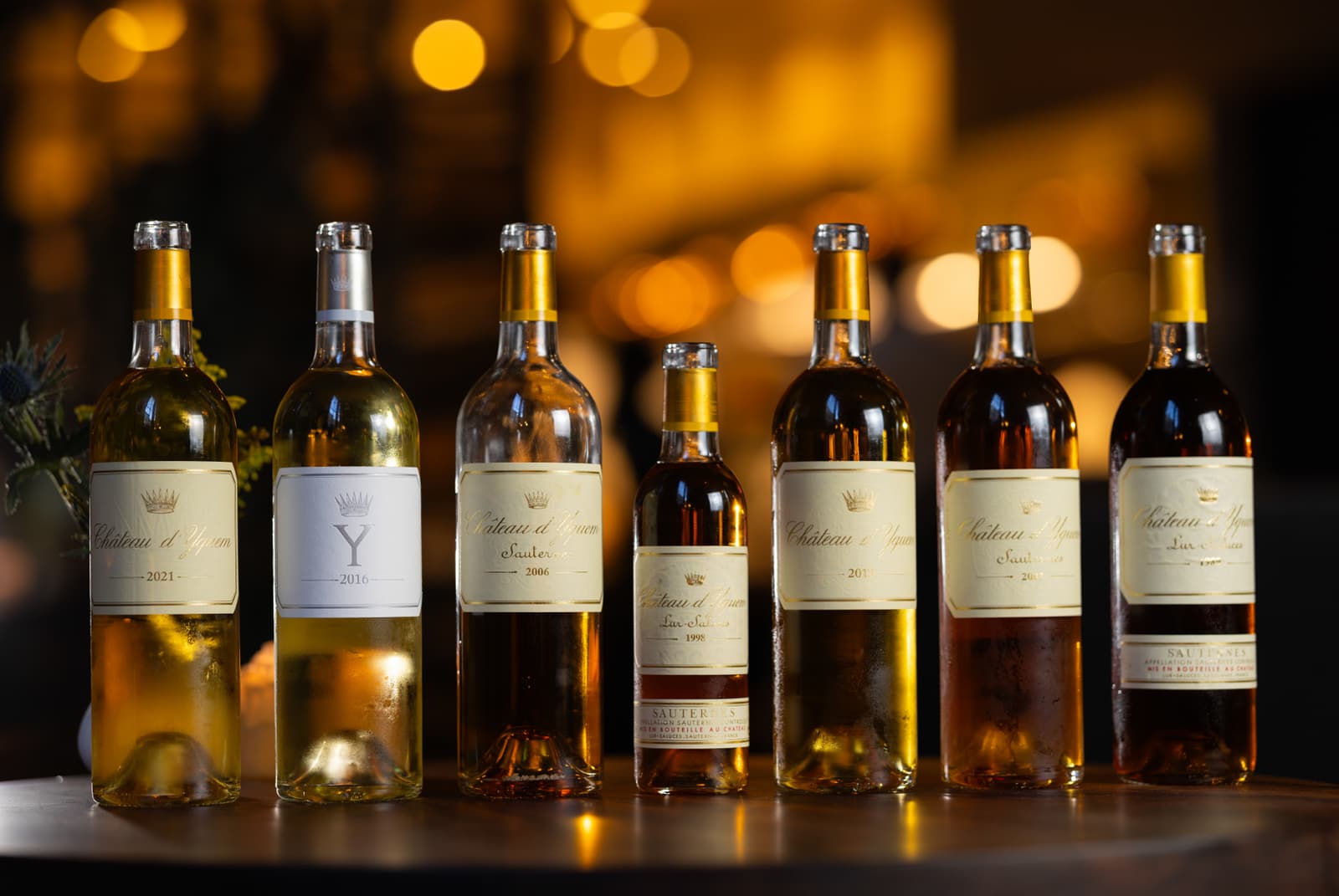
Image context: the lead image uses an official Saison bottle photograph rather than a plated course because this article is about what the beverage program does to time. The point is not decorative abundance. It is the way cellar depth can stretch a wood-fired meal into different speeds and different levels of attention.[1][4]
1. Grand Award logic matters here because it describes how the room wants to work
The strongest evidence is on Saison's own wine-program page. It does not merely advertise a prestigious honor. It defines the Grand Award as the highest level of program recognition and says it belongs to wine programs that show serious breadth of top producers, outstanding depth in mature vintages, large-format bottles, harmony with the menu, and superior presentation.[3] That wording matters because it shifts the conversation away from prestige as decor.
In a live-fire restaurant, "harmony with the menu" is a practical challenge, not a romantic slogan.[1][2][3] Fire intensifies sweetness in proteins and vegetables, hardens edges through char, and can make a tasting sequence feel heavier than its official course count. A cellar built around mature bottles, format choice, and Burgundy authority is one way of restoring contour. Age can soften force. White Burgundy or Chablis can keep smoke from becoming mud. Large formats can make the same wine feel calmer, more gradual, and less aggressive over a long dinner. The article's key point is that Saison's beverage logic is built for exactly this kind of control.[3][4]
That reading also fits the house's culinary self-description. Saison does not present itself as a French temple that happens to sit in California. It presents itself as a wood-fire restaurant emphasizing the bounty and culinary diversity of California's evolving terroir.[1][2] A Burgundy-centered cellar therefore does not cancel the food's local argument. It gives that argument a disciplined lens.
2. The published wine list proves the program is not one prestige lane
The PDF matters because it turns vague acclaim into actual structure.[4] The table of contents alone tells you the program is trying to do more than impress collectors. It includes cocktails, wine by the glass, beer and cider, half bottles, large formats, long sections for Champagne and Burgundy, deep runs through California Chardonnay, California Pinot Noir, Cabernet Sauvignon, sake, sweet and fortified wine, and spirits.[4] That is not a cellar arranged to force every guest into one ceremonial script.
The by-the-glass page is especially revealing.[4] It lets a guest move from Taittinger or Krug in Champagne to Gérard Duplessis Montmains 1er Cru Chablis, Sancerre, Folk Machine Chardonnay, Chateau d'Issan Margaux, and a Saison Winery Merlot from Regan Vineyard in the Santa Cruz Mountains.[4] Sake is present too, with bottles like Joto One With 72 Clocks Daiginjo and Shiratake Uonuma Noujun Junmai offered in the same published by-the-glass architecture.[4] This is the important practical point: Saison has built a program where a guest can read the food through mature European prestige, California proximity, or Japanese rice-wine texture without leaving the core logic of the room.
That makes the article's "beverage pairing feature" frame more useful than a simple wine-list praise piece. The pairing intelligence is not trapped inside a single fixed accompaniment. It is distributed across formats and access points. A guest can do a full dinner, a bar experience, glasses, half bottles, or a more eccentric cross-register path and still remain inside the house vocabulary.[2][4]
3. Burgundy leads, but California keeps the program from becoming imported theater
Saison's own pages are careful about this balance. The about page says the list has a special emphasis on Burgundy, but it also connects the program to Mark Bright's winery work and names Molly Greene as the person currently curating the cellar.[2] The wine-list PDF makes the California side impossible to miss. Beyond the Old World depth, there are dedicated sections for California Chardonnay, California Pinot Noir, California Syrah and Grenache, Cabernet Sauvignon, Merlot and Cabernet Franc, and Zinfandel.[4] The same PDF also opens with a section on Saison Cellar, Saison Winery, and related membership programs, making clear that wine here is not only a buying exercise but part of a broader in-house ecosystem.[4]
That matters because it keeps Saison from reading like a room that imports seriousness from Europe while cooking local ingredients over American fire.[1][2][4] The beverage program is more balanced than that caricature. Burgundy provides one axis of calibration: age, acidity, texture, hierarchy, and classic producer depth.[2][3][4] California provides another: proximity, vineyard familiarity, and a direct bridge back to the restaurant's own terroir language.[1][2][4]
Seen this way, Saison's beverage program is not "Old World versus New World." It is a method for deciding how much historical gravity to place beside a meal whose cooking method is physically immediate. Fire is now. The cellar supplies duration.
4. Service format is part of the beverage argument
The operational details on the about page help explain why the list is built this way.[2] Saison serves dinner Tuesday through Saturday beginning at 5:00 PM, and it also runs a Bar Experience Tuesday through Thursday, with walk-ins welcomed when possible.[2] That split is important. A room that supports both a full formal dinner and a lower-friction bar lane needs a beverage program that can scale up and down without losing identity.
This is where the by-the-glass depth, half-bottle sections, and format variety become more than collector bait.[2][4] They let the same culinary worldview survive different levels of commitment. If you arrive for the bar experience, you can still meet the house through Champagne, Chablis, Burgundy, Santa Cruz Merlot, or sake without pretending you are doing the entire cathedral version of the meal.[2][4] If you book the full dinner, the list has enough maturity and breadth to make the fire-led kitchen feel articulated course by course rather than relentlessly smoky or rich.[2][3][4]
That is why Saison's beverage program is worth isolating in 2026. The real achievement is not that the cellar is enormous, nor even that Burgundy holds so much authority inside it. The achievement is that the list makes Richard Lee's California wood-fire cooking legible at multiple speeds: ceremonial or casual, mature or bright, European or local, wine-first or sake-inclusive.[1][2][3][4] In a room built around flame, that kind of beverage control is not optional polish. It is one of the main instruments of meaning.
Sources
- Saison official homepage, covering the restaurant's current positioning as a two-Michelin-star open wood fire restaurant in San Francisco led by Richard Lee and inspired by California terroir.
- Saison official About and FAQ page, covering the restaurant's 2009 pop-up origins, current Townsend Street location, Grand Award-winning wine list, Burgundy emphasis, Molly Greene's role, and dinner/bar service details.
- Saison official Wine Program page, covering the program's Burgundy emphasis and the restaurant's own definition of the Wine Spectator Grand Award standard: breadth, mature vintages, large formats, harmony with the menu, and presentation.
- Saison official wine-list PDF, covering the published structure of cocktails, by-the-glass wine, half bottles, large formats, Burgundy, California sections, sake, sweet wine, and the broader Saison Cellar / Saison Winery ecosystem.