

Benu is easy to summarize too quickly. The public facts are already polished: a fixed tasting menu, about three hours at the table, a wide range of seafood and vegetables with a few meat courses and sweets, a deep wine list, sake and beer by the glass, and an optional beverage pairing.[3] Reservations release daily on Tock up to 30 days ahead, the room is explicitly framed as quiet, and the cancellation rules are strict enough to remind guests that this is not a casual swing-by dinner.[4] Those details matter, but they do not yet explain why Benu still reads as one of San Francisco's hardest restaurants to flatten into a trend label.
The more useful answer appears when these two videos are watched together. The first is a CNA Insider profile of Sebastian Wong, the Singaporean chef who became Benu's chef de cuisine in 2025.[1] It shows pressure, relay, and the daily management problem of keeping a three-star kitchen smooth without making it timid. The second is a short Hestan Culinary back-of-house piece led by Corey Lee himself.[2] It is partly branded cookware content, but the branded frame turns out to be less important than the small things Lee says in passing: diners have to trust the kitchen in a tasting-menu format, traditional preparations still shape the restaurant's identity, and the fermentation jars in the courtyard feed a soy-sauce program that matters to what happens on the plate.[2]
That pairing is strong because Benu is a restaurant of controlled contradiction. It wants slowness and speed at once. The team page still centers Corey Lee's long arc from The French Laundry to the opening of Benu in August 2010, but it also shows a much wider operating bench: Jeong-In Hwang across the group, Sebastian Wong arriving from Singapore's fine-dining circuit, and a dining-room leadership team built through years of internal progression.[5] Eater's early account of Benu's ascent to three Michelin stars framed the restaurant as an almost unattainable level of precision.[6] San Francisco Travel's more recent summaries keep stressing that Benu became the first restaurant in the city to win three Michelin stars and that its tasting menu still turns on seafood, vegetables, and a long, immersive service arc.[7]
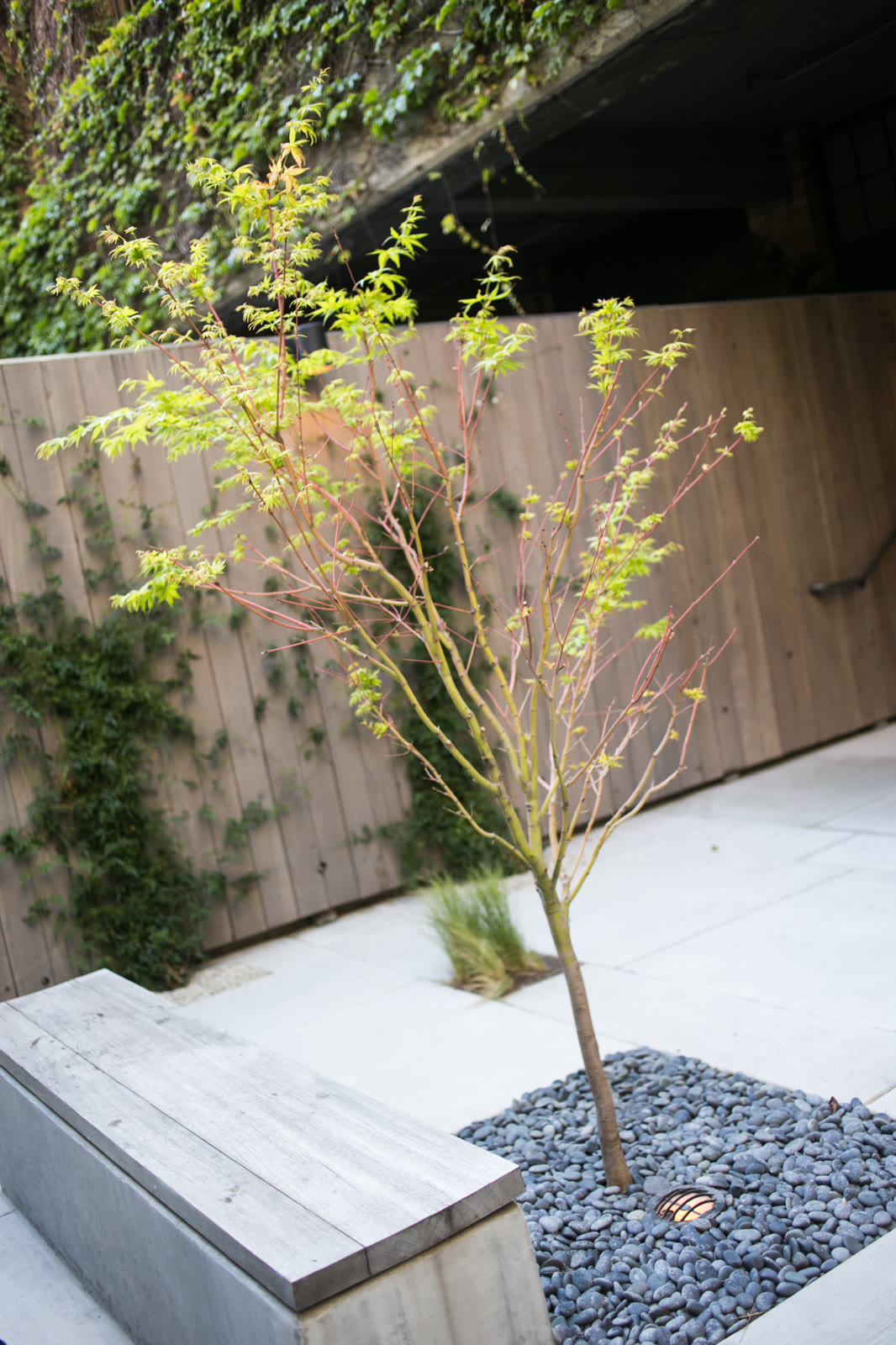
Image context: the lead photo uses a real 2013 Wikimedia Commons photograph of Benu's courtyard rather than a glossy plated dish. That is the right anchor for this article because the second video makes the courtyard part of the restaurant's culinary argument: the large brown jars outside are tied to soy sauce production, so the meal's refinement begins in an outdoor fermentation space before it reaches the pass.[2][8]
Video one: pressure is managed as relay, not theater
The CNA video is useful because it does not treat promotion to chef de cuisine as a glossy prize.[1] Sebastian Wong says plainly that he never expected to become head chef of a world-renowned three-star restaurant, and the surrounding footage keeps turning that statement into labor rather than sentiment.[1] The kitchen shown here is not loud for effect. It is dense with checking, tasting, and mutual dependence. Wong describes Benu as "mise-plus heavy," then explains the operational consequence in a sentence that matters more than any glamorous plating shot: when the room feels quiet, the team still wants service to move fast, because speed is part of the guest experience.[1]
That combination of quiet surface and compressed work is the real point. Many luxury restaurants use silence as a sign of seriousness, but silence by itself can also hide slackness. Benu's version looks different. The CNA footage shows Wong tasting with teammates, correcting, and deciding in motion.[1] One short exchange over fish and peppers says more than a long chef interview could. A plate is not released into abstraction; it is released after someone else has cooked, someone else has checked, and Wong has literally put the work in his mouth.[1] Trust in this kitchen is therefore not a soft cultural value. It is a tasting loop.
The video also helps explain why Benu has lasted through more than one leadership phase. Wong describes the chef de cuisine role as taking care of the whole kitchen "like you take care of the home."[1] That line lands because the official team page suggests the same structural truth from another angle: Benu no longer depends on one gifted pair of hands alone, but on a house that can absorb talent from Singapore, Korea, Australia, Taiwan, Hawaii, and elsewhere while keeping one style legible.[5] If Benu were only Corey Lee's personal museum, succession would feel dangerous. The CNA piece implies something stronger. The kitchen has a relay logic. Responsibility moves, but the standard keeps its shape.
This is why the first video belongs in a collection instead of functioning as a standalone profile. It makes Benu's luxury look administrative in the best sense. The restaurant's difficulty is not inventing one exquisite dish. It is making quietness, speed, and pressure coexist every night without the dining room feeling the strain.[1][4]
Video two: the courtyard jars keep the house style from becoming generic polish
The Hestan video is short and promotional, but it gives away more than it intends.[2] Lee starts with format. A tasting menu, he says, creates a special dynamic because diners have to trust the chef and the restaurant to deliver an experience that satisfies them.[2] That line could sound generic if it floated by itself. It becomes specific a few seconds later, when he says Benu is informed by traditional preparations and traditional ingredients, then points directly to the courtyard: the big urns outside are part of the soy-sauce-making process, and making soy sauce is an important part of the program.[2]
That is the moment the restaurant stops reading like "contemporary Asian fine dining" in the broad, flattened way the phrase is often used. The menu page already tells you Benu serves seafood, vegetables, meat, sweets, and beverages across a long fixed progression.[3] The team page tells you Lee's background is global and that key lieutenants come from restaurants such as Odette, Attica, Restaurant Gordon Ramsay, and Per Se.[5] Those are impressive credentials, but they could still produce a technically brilliant restaurant with no center of gravity. The soy-sauce jars give Benu a center. They suggest that the house style is not only about refinement, but about deciding which traditional East Asian flavor logics deserve to be made rather than merely purchased.
Lee pushes that further when he says very few people have tasted real soy sauce made in a traditional way.[2] The claim is modest on the surface, but its consequence is large. Benu's refinement is not trying to erase the everyday ingredient; it is trying to bring the ingredient back to first principles. In other words, the restaurant does not use fermentation as decorative authenticity. It uses fermentation to sharpen the difference between a common label and a fully realized flavor.
The cookware talk matters for the same reason. Lee describes equipment as important because it touches the food, transfers heat, and helps deliver consistency in a professional setting.[2] Read narrowly, that is a product endorsement. Read alongside the first video, it becomes a second statement about Benu's method. Quiet luxury here depends on control of mediums: fermentation vessels outside, pans and heat inside, tasting and correction at the pass, and a dining room that only receives the finished calm. The guest sees a composed sequence. The videos show how many material systems have to cooperate before that calm becomes believable.[1][2]
What the collection reveals when watched together
Taken together, the two clips argue that Benu's real distinction is not novelty and not severity by itself. It is the way the restaurant joins slow flavor-building to fast service relay. The courtyard jars ask for patience, season, and repetition.[2][8] The pass asks for judgment in real time, with Wong and the team tasting, adjusting, and moving quickly enough that the room feels serene rather than delayed.[1] One side of the restaurant ferments; the other side fires.
That is a better explanation of Benu's endurance than generic prestige language. The restaurant keeps the trust burden of a tasting menu high on purpose.[2][3] It keeps the room quiet enough that the guest notices pacing rather than noise.[4] It keeps a deep team around Lee rather than pretending institutional continuity happens automatically.[5] And it keeps one set of traditional flavor questions alive in the courtyard, which prevents technical polish from drifting into neutrality.[2]
For a reader who cannot book Benu this month, that is the payoff of the collection. The first video teaches you how the restaurant manages pressure without turning pressure into spectacle. The second teaches you that the restaurant's polish starts in specific ingredients and specific processes, not in luxury mood alone. Put them side by side and Benu becomes easier to read: a house where trust is earned by material discipline, and where the quietest parts of the meal begin outside, in jars, before the first course lands.
Sources
- CNA Insider, "This Singaporean Heads A 3-Michelin-Starred Restaurant In San Francisco | Singapore Hour," YouTube.
- Hestan Culinary, "Back of House: Benu, San Francisco | Chef Corey Lee with Hestan Culinary," YouTube.
- Benu, "Menu" - official page covering the fixed tasting menu, three-hour dinner length, beverage pairing, and wine-list scope.
- Benu, "Reservations" - official page covering daily Tock release timing, late-arrival policy, cancellation fees, child policy, and private-dining threshold.
- Benu, "Team" - official page covering Corey Lee's opening timeline and the backgrounds of Jeong-In Hwang, Sebastian Wong, and the wider leadership group.
- Eater, "How Benu's Corey Lee Attained the 'Unattainable' Third Michelin Star" - reporting on Benu's rise to three stars and the restaurant's precision culture.
- San Francisco Travel, "Epicurean Delights: Tasting Menus Showcase San Francisco Chefs' Passion and Artistry" - Benu overview covering the 2010 opening, first-in-San-Francisco three-star status in 2014, and current tasting-menu framing.
- Wikimedia Commons, "File:Benu's courtyard.jpg" - the real courtyard photograph used as this article's lead image.