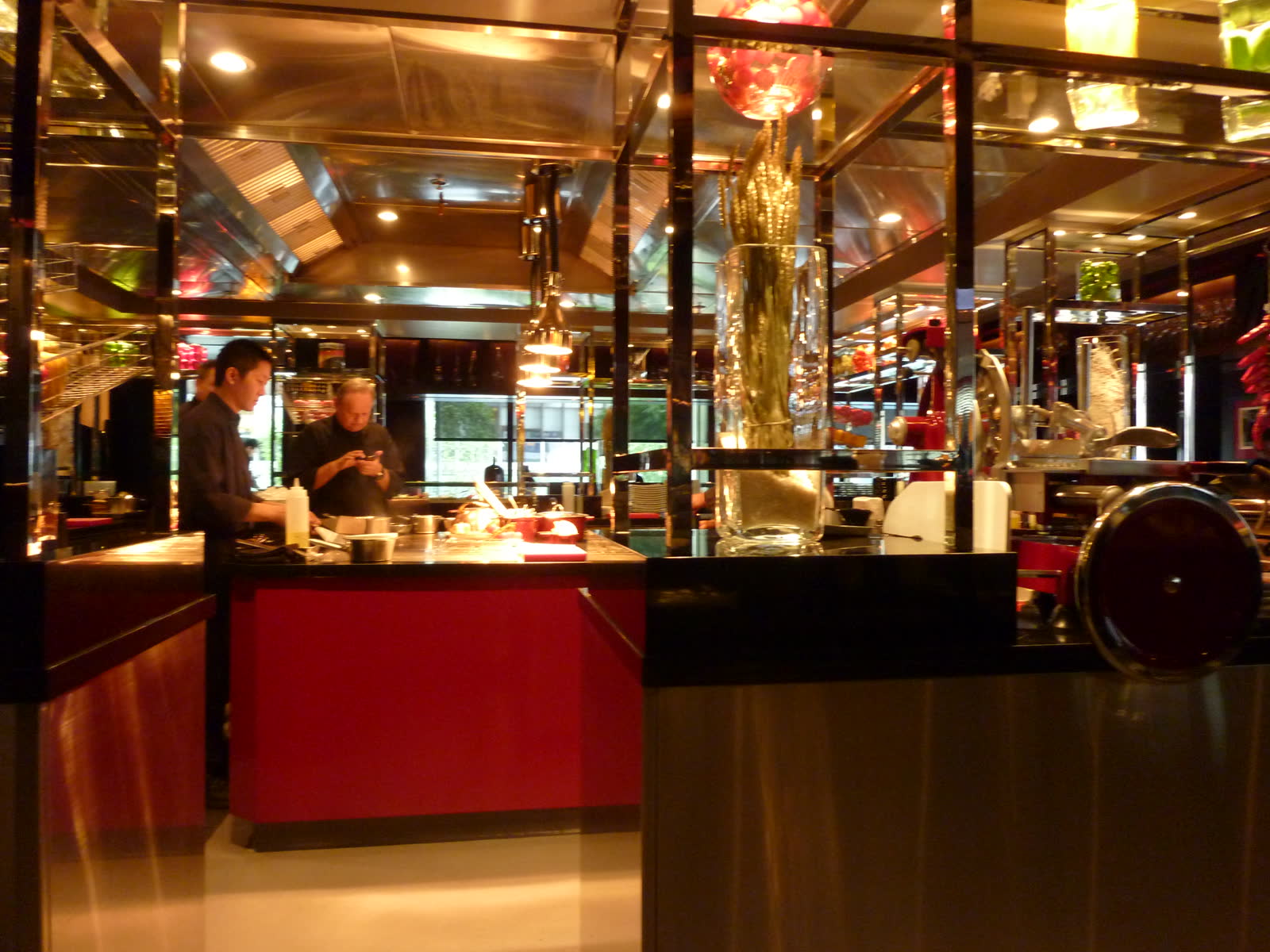
Joel Robuchon's potato puree is famous for a reason that can sound almost comic: it is mashed potatoes with too much butter. That description is true enough to be memorable and wrong enough to miss the dish. The puree became a fine-dining signature because it turns excess into control. Butter is not simply added. It is absorbed, stabilized, smoothed, and made to behave.
That is why the dish still has force. Many luxury preparations announce themselves through rare ingredients. Robuchon's puree goes the other way. Cookbook-style versions frame it around potatoes, butter, milk, salt, and sometimes pepper, with the method doing more work than the ingredient list.[2] Eater's legacy account gives the more notorious ratio: two pounds of ratte potatoes to one pound of butter, plus a small amount of whole milk.[3] The glamour is not in the shopping list. It is in the way the list is handled.
Butter is the test, not the trick
The butter ratio is the part everyone remembers, but the better question is why the puree does not eat like melted butter with potato in it. Cook Savor Celebrate's practical reconstruction starts with ratte, yellow fingerling, or Yukon Gold potatoes and stresses ricing, drying, chilled butter, hot milk, and final sieving rather than treating the dish as butter dumped into starch.[1] In other words, the potato is not a neutral carrier. It is the structure that lets the fat become texture.
This is the first fine-dining lesson. Richness has to be organized. If butter separates, the dish becomes greasy. If the potato is overworked in the wrong way, starch turns the puree gluey. If the milk is careless, the texture loosens without becoming elegant. The dish succeeds only when the kitchen finds the narrow lane between plush and heavy.
The classic sequence is deliberately severe. The Food Dictator's version, attributed there to The Complete Robuchon, starts the potatoes in salted cold water, peels them after cooking, sends them through a ricer or food mill, dries the flesh over heat, then adds well-chilled butter bit by bit before very hot milk enters in a thin stream.[2] Eater's Robuchon legacy piece describes the same logic: whole potatoes, food mill, low-flame drying, gradual butter incorporation, and a final texture that is smooth, soft, and barely holds its shape.[3] Every step removes an excuse. There is no garlic, cheese, cream cloud, herb shower, or brown butter perfume to hide weak texture.
Drying makes room for luxury
The least glamorous step may be the most important one: drying the potato over low heat after milling. It sounds like a small housekeeping move, but it decides whether the puree will accept the butter cleanly. Excess water dilutes the fat phase, loosens the potato body, and makes the finished dish taste rich and watery at the same time. Robuchon's method treats moisture as a design problem.
That drying step also separates puree from ordinary mash. Home mashed potatoes often chase comfort: visible softness, rustic lumps, enough dairy to smooth dinner along. Robuchon's puree chases a different pleasure. It wants a surface so continuous that the spoon moves through it without interruption. The diner should not think "potato plus butter." The diner should think "silk that tastes like potato."
This is where the dish becomes more modern than its reputation. It is not an old-fashioned side inflated by fat. It is a study in texture engineering before the phrase became fashionable. The puree has one job: make a humble ingredient feel exact without making it feel abstract.
The sieve is a philosophy
Passing potatoes through a food mill or ricer is already a choice against brute force. The Food Dictator's version specifically advises a food mill or ricer instead of a blender or processor, then recommends a very fine sieve for an even lighter puree.[2] Cook Savor Celebrate makes the same finishing standard visible with the ricer-and-drum-sieve sequence.[1] Robuchon's puree takes that restraint further. The point is not only to remove lumps. The point is to make texture a standard that can be inspected.
That standard fits the broader Robuchon kitchen. L'Atelier Miami's biography describes him as a chef of impeccable technique and exacting mentorship, named Meilleur Ouvrier de France and later "Chef of the Century" by Gault & Millau.[4] Eater's remembrance is more visceral: cooks describe a culture in which details were corrected in real time, and where signatures such as the puree, sauce dots, caviar, quail, and tarts became repeatable across restaurants because sourcing, training, and perfectionism were treated as infrastructure.[3]
The puree belongs to that system. It is not spectacular in the way a duck press, flambe, or pastry-sealed soup is spectacular. Its spectacle is internal. The guest sees an apparently simple spoonful, but the kitchen has already passed through the decisions that make simplicity credible: potato variety, skin-on boiling, heat, milling, drying, butter temperature, incorporation speed, milk temperature, seasoning, and holding.
Why it became a signature
The irony is useful: Robuchon built a global fine-dining name, but one of the dishes most attached to him is a side dish. That says something important about his style. Eater argues that the puree demonstrates his ability to heighten basic food through precision and attention to detail.[3] The dish is not a retreat from luxury. It is an argument about what luxury should mean.
At the table, the puree often works by contrast. Beside meat, quail, or another polished main, it absorbs sauce and gives the plate a quiet center of gravity. It can be served as a sidecar, not only as a smear, which matters because generosity is part of the experience.[3] The diner is not given a tiny intellectual sample. The diner is given enough to feel the texture repeat.
That repetition is the final test. A spoonful of very buttery potato can impress once. A proper Robuchon-style puree has to stay compelling through the second and third spoonful. It needs enough salt to keep the butter awake, enough potato flavor to avoid becoming anonymous dairy, and enough smoothness to make the richness feel intentional rather than indulgent for its own sake.
This is also why simplified copycat versions often miss the point. The recipe is short, so it looks easy to reproduce. But the dish is not protected by complexity. It is exposed by simplicity. A cook cannot hide behind a long ingredient list or a dramatic plate. If the puree is gummy, greasy, bland, cold, or watery, the failure is immediate.
Robuchon's potato puree endures because it makes an ordinary ingredient bear an extraordinary standard. It turns butter from abundance into discipline, potato from starch into structure, and a side dish into a statement about craft. The result is not humble exactly. It is too rich for that. But it is clear. It says that fine dining can still begin with a potato, provided the kitchen is willing to make the potato answer for everything.
Sources
- Cook Savor Celebrate, "Joel's Pommes Puree" - practical reconstruction covering ratte/yellow-fingerling/Yukon Gold choices, ricing, drying, chilled butter, hot milk, and drum-sieve finishing.
- The Food Dictator, "Joel Robuchon's Mashed Potatoes" - recipe attributed to The Complete Robuchon, including ricer or food mill, drying over heat, chilled butter, hot milk, and optional fine sieving.
- Daniela Galarza and Ryan Sutton, "Joel Robuchon's Legacy Explained in Eight Dishes." Eater, 2018 - Robuchon legacy essay covering pommes puree, technique, global repeatability, and kitchen perfectionism.
- L'Atelier de Joel Robuchon Miami, "Joel Robuchon" - official biography covering his awards, career path, L'Atelier concept, and global restaurant system.
- Wikimedia Commons, "File:Atelier Joel Robuchon in Hong Kong.JPG" - 2010 real photograph by Ohconfucius of Joel Robuchon in the open kitchen of L'Atelier de Joel Robuchon in Hong Kong, used as this article's image.