The easiest way to misread PAZ is to treat it as one more remote Nordic trophy room: difficult to reach, newly decorated with stars, and wrapped in enough landscape drama to make any meal feel fated. The more useful reading is technical. PAZ matters because it makes Faroese conditions taste specific. Wind, salt, cold water, fermentation, and seafood availability are not background ideas here. They are the production logic.[1][3]
That logic is unusually visible in the restaurant's current public materials. As of April 30, 2026, PAZ publishes a single tasting menu at 3400 DKK, with a wine pairing at 2400 DKK and a non-alcoholic pairing at 1400 DKK.[2] The menu page also states the constraint plainly: the house is seafood-focused, cannot provide vegetarian or vegan menus, and may struggle to accommodate seafood allergies because the menu is built around what the islands and surrounding waters actually give.[2] This is not the language of infinite luxury choice. It is the language of a kitchen that wants the dining contract to match the material world it cooks from.
Michelin's current listing fills in the service side of that contract. Chef Poul Andrias Ziska, having returned from Greenland, is described as having settled into his own restaurant inside an unassuming Faroese hotel, where the team serves a sequence of dishes based on produce from the surrounding land and sea and on reinterpretations of local recipes.[3] Michelin's 2025 Nordic Countries awards piece goes further: PAZ entered the Guide directly with Two Michelin Stars.[4] That fast recognition matters, but the better question is what the stars are recognizing. The answer sits in craft, not mystique.
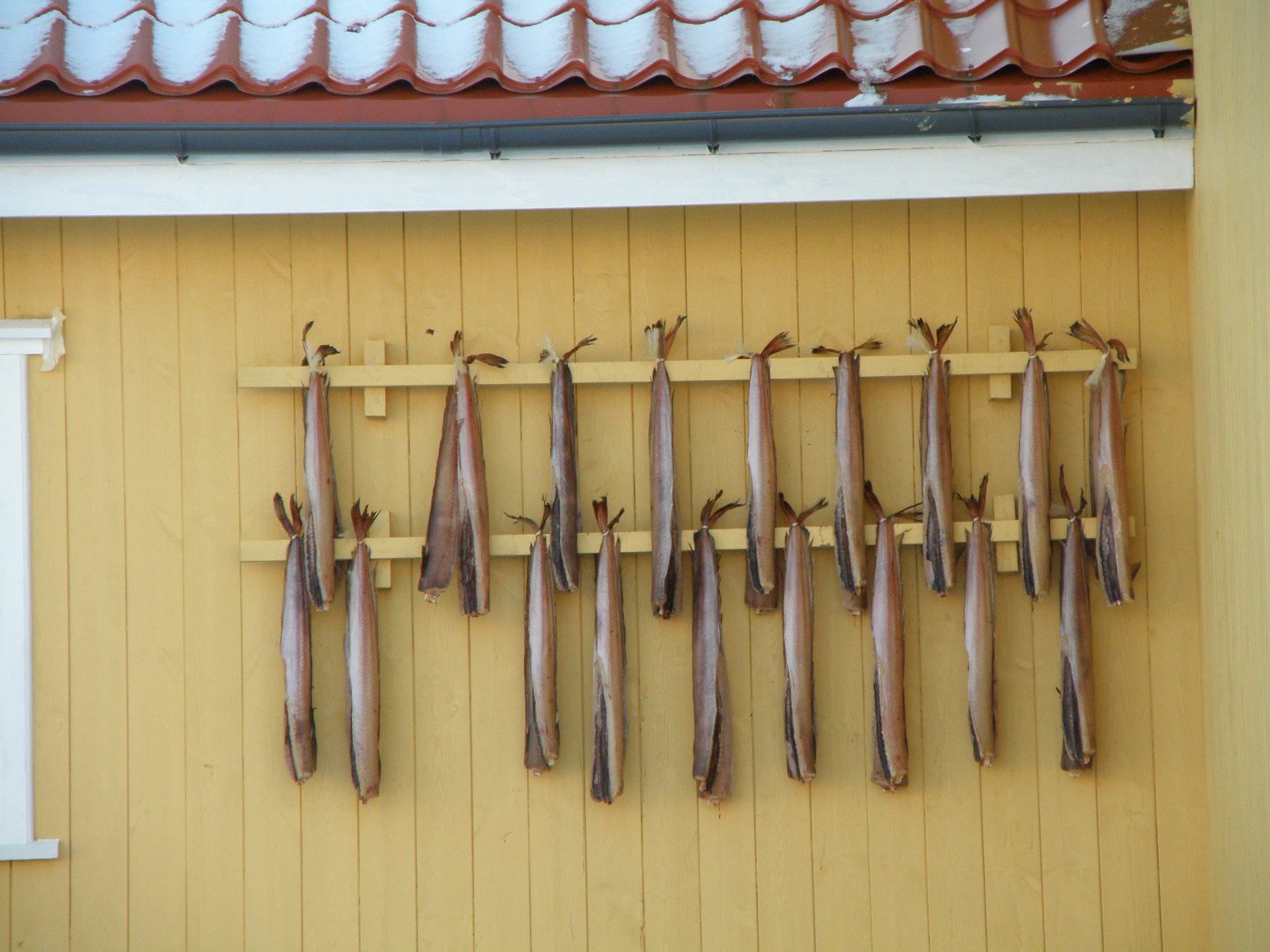
Image context: the lead photo shows dried fish in the Faroe Islands rather than a plated course. That choice is deliberate. This article is about a restaurant whose taste begins with exposure: damp air, cold sea, salt, and a preservation culture that shapes ingredients before the kitchen touches them.[6]
1. PAZ cooks the Faroe Islands as a cold system
PAZ's own about page is concise and revealing. Ziska says the menu draws from the raw beauty of the Faroe Islands, the surrounding land and sea, and local traditions handled with respect for sustainability.[1] That could sound generic if the page stopped there. It does not. It immediately narrows the field to the islands' cold, pristine seafood, then to Faroese food culture and methods such as ræst, the local fermentation process driven by cool, salty air.[1]
That phrasing tells you what kind of craft PAZ values. The restaurant is not mainly trying to prove that it can import luxury codes into a rugged location. It is trying to show that the location already contains its own technical vocabulary. Cold water slows growth and changes texture. Salt air becomes an active tool. Fermentation is treated as an environmental method rather than a decorative flourish. Local fishermen, farmers, and artisans are part of the same sentence because the restaurant needs them to keep that vocabulary accurate.[1]
This is why PAZ reads differently from a lot of "nature-led" fine dining. In weaker versions of the genre, landscape appears mostly as branding while the plate still behaves like a globally interchangeable luxury object. PAZ's current public language is tighter. It tells you up front that the menu is built inside scarcity, seasonality, and marine dependence.[1][2]
2. Ræst gives the restaurant its depth line
For diners outside the Faroe Islands, ræst is the key term. PAZ defines it as a unique fermentation process shaped by the islands' cool, salty air.[1] That matters because it shifts fermentation away from the urban laboratory image many modern tasting rooms now prefer. At PAZ, fermentation is less about intellectual surprise than about climate capture.
In practical taste terms, ræst does two things for a restaurant like this. First, it adds depth to a pantry that cannot depend on abundance in the usual metropolitan sense. Second, it creates continuity between old preservation logic and modern plate design. Michelin's listing explicitly praises the restaurant for paying homage to local traditions through reinterpretations of local recipes.[3] That single sentence is doing heavy work. It suggests that PAZ is not preserving Faroese cooking behind glass, nor stripping it into anonymous refinement. The kitchen is translating old methods into present-tense elegance.
The inspector's own reported dishes support that reading. Michelin's review of PAZ highlights a cod tartare inside a seaweed tuile with sea urchin, oyster leaf, and Icelandic wasabi; a queen scallop served with a light buttermilk and caviar; and a langoustine course in which tail, shell, and head are each used to generate different textures and layers of flavor.[5] Even without a full menu transcript, the pattern is clear. The restaurant likes clean marine sweetness, but it rarely leaves it alone. It folds in lactic sharpness, seaweed salinity, roasted-shell intensity, and precise bitterness or heat. That is a cold-climate palate with depth, not a purity fetish.
3. The seafood focus is a craft choice with consequences
PAZ's menu page is useful because it does not disguise inconvenience.[2] The seafood emphasis makes some allergies hard to handle, and vegetarian or vegan menus are off the table.[2] At many restaurants, that sort of disclosure is treated as housekeeping. Here it is central to understanding the cuisine.
The same page says the tasting menu changes with the seasons of the Faroe Islands and with what land and sea offer at a given moment.[2] The about page reinforces that local abundance begins with the ocean on PAZ's doorstep.[1] Put together, those pages describe a kitchen whose strongest technical asset is concentration. The restaurant narrows its field so it can work ingredients more deeply.
That concentration shows up in the Michelin listing's short example dish: cod on cabbage mousseline with seaweed tare.[3] You can read the whole house style from that one line. A familiar cold-water fish is given a soft vegetal base, then tightened with a seaweed reduction or seasoning that reconnects the dish to the marine environment. The cooking does not need ten luxury signals when it already has one strong ecosystem and the discipline to read it clearly.
This is also why PAZ's non-alcoholic pairing matters almost as much as the wine.[2][3] A seafood-heavy menu full of saline, fermented, and lactic notes needs liquid structure that can keep edges vivid. Michelin specifically notes that both the wine and non-alcoholic pairings match the dishes well.[3] In other words, the drink program is not there merely for hospitality completeness. It helps the restaurant keep sharpness in focus instead of smoothing everything into generic luxury roundness.
4. The room is quiet so the technique can stay audible
Another reason PAZ landed so quickly is that the service frame seems designed to keep the cuisine legible. Michelin describes an unassuming hotel entrance and a bell at reception that initiates an immersive sequence.[3] That image matters. PAZ does not appear to be selling spectacle first and technique second. It uses a subdued entry to clear attention for the food.
That choice fits the cuisine. When a menu depends on subtle marine sweetness, fermented depth, and seasonally narrow ingredients, too much decorative noise would blur the point. The Faroe Islands already supply enough drama. The room's job is compression. Michelin's inspector review describes the meal as a magical journey through ingredients from across the islands and praises dishes that are both refined and full of personality.[5] The most persuasive reading is that PAZ uses luxury to edit, not to inflate.
This is where the restaurant's rapid two-star arrival starts to make sense. Michelin's 2025 awards page did not reward PAZ for simply being new or remote.[4] The listing and inspector notes point to something more exacting: a restaurant that makes local traditions and local ingredients feel finished without sanding away their strangeness.[3][5]
What PAZ's technique actually buys
The biggest mistake a diner can make with PAZ is expecting generic Nordic minimalism plus expensive remoteness. The sources point to a stronger, narrower promise. PAZ offers a Faroese tasting menu in which climate is converted into method: seafood from cold surrounding waters, ræst as an air-borne depth mechanism, pairings that preserve tension, and recipe reinterpretations that keep local memory alive at high precision.[1][2][3][5]
That is what makes the current pricing easier to read.[2] You are not paying for optional abundance. You are paying for compression, selection, and clarity under geographic constraint. By the standards of big-city luxury, PAZ's menu rules may look restrictive. Inside the restaurant's own craft logic, those limits are the point. They are what let the Faroe Islands arrive on the plate as more than an atmosphere.
Sources
- PAZ, "About" - official statement on Faroese inspiration, cold-water seafood, ræst fermentation, and collaboration with local fishermen, farmers, and artisans.
- PAZ, "Menu" - current tasting-menu pricing, wine and non-alcoholic pairing pricing, seafood-focused dietary policy, and seasonality framing.
- MICHELIN Guide, "PAZ - Tórshavn" - current two-star listing on chef Poul Andrias Ziska's return from Greenland, the hotel setting, produce from surrounding land and sea, recipe reinterpretation, and pairing quality.
- MICHELIN Guide, "All the Winners in The MICHELIN Guide Nordic Countries 2025!" - awards coverage noting that PAZ in Tórshavn entered the Guide directly with two Michelin stars.
- MICHELIN Guide, "PAZ: An Inspector’s Visit to the Faroe Islands’ Two-Star Masterclass" - inspector account highlighting specific dishes and the way PAZ turns ingredients from across the islands into a coherent tasting sequence.
- Wikimedia Commons, "File:Dried fish in the Faroe Islands 2010.JPG" - source page for the Faroese dried-fish image used as the article cover.