Nobelhart & Schmutzig is easiest to misread if you stop at the phrase local sourcing. Plenty of ambitious restaurants now use locality as mood: a farm name on the menu, a seasonal garnish, a few careful words about producers. The Berlin restaurant is sharper because it turns locality into a room rule. The guest sits where the kitchen can be watched, the sourcing boundary narrows what can appear on the plate, and the service terms ask the diner to enter the same discipline instead of simply admiring it from a white tablecloth distance.[1][2][3]
That makes Nobelhart useful in 2026 because it shows how a fine-dining idea survives contact with operations. The official homepage says the restaurant opened in February 2015 with the ambition of putting local food producers in the spotlight, then describes a large counter for up to 28 people around the open kitchen and a large back table for another 15.[1] The current reservation page is even plainer: there is no separation between dining room and kitchen; guests sit at a long counter or the large table at the heart of the action.[3] Those facts are not decorative. They are the architecture of the restaurant's ethics.
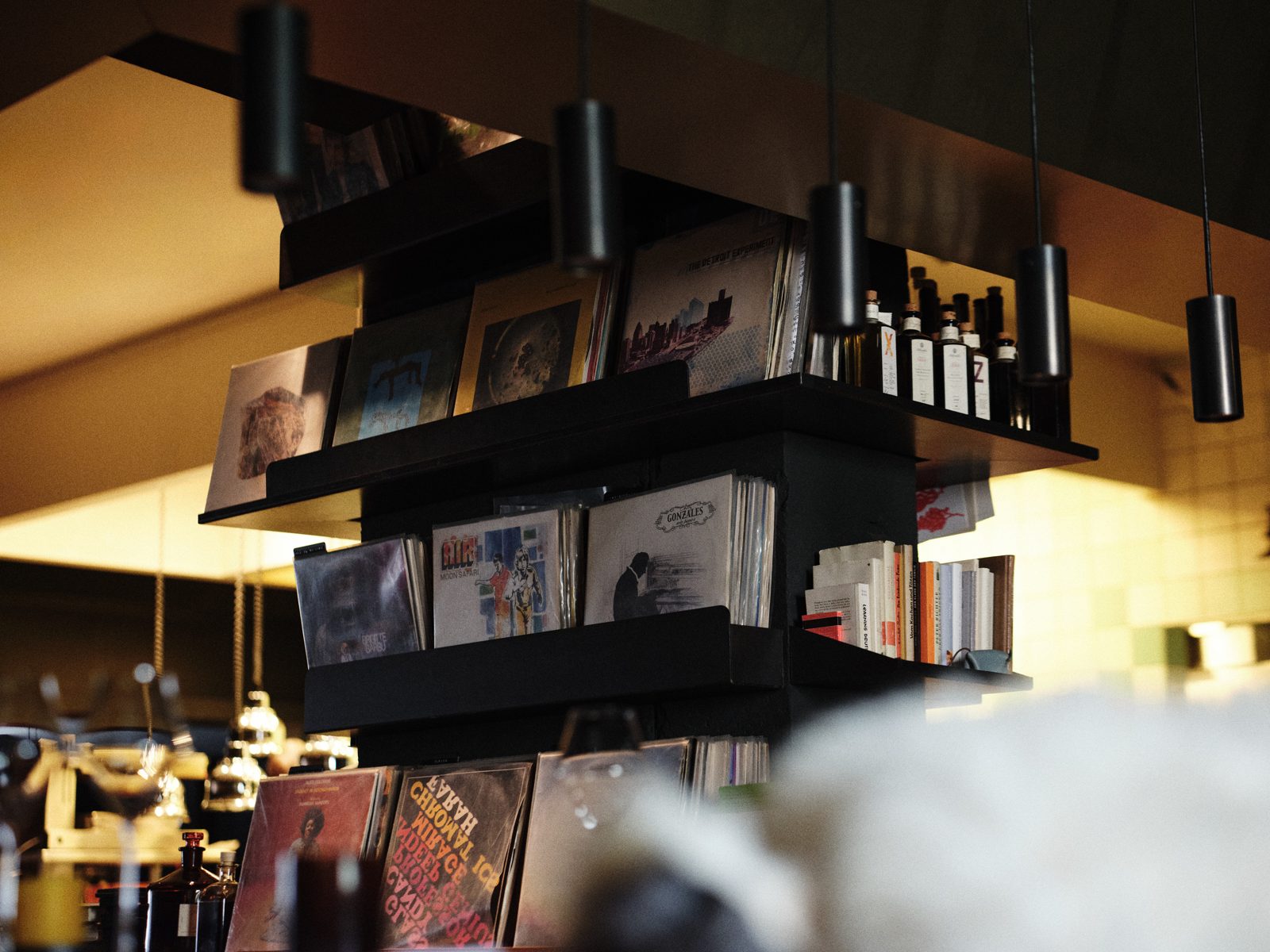
Image context: the cover photograph shows the counter and open kitchen rather than a finished plate. That matters because this article is about service structure. At Nobelhart & Schmutzig, the room itself keeps the sourcing argument under pressure: if the restaurant says the producer matters, the guest is placed where that claim has to be explained in real time.[8]
1. The counter removes the hiding place
The counter is the first operational choice that changes the meal. In many luxury rooms, the kitchen remains a controlled rumor. Food appears complete, servers translate it, and the guest receives a polished result with the labor mostly concealed. Nobelhart's counter format does something different. It places the guest next to the work and makes social contact part of the product.[1][3]
That matters because the restaurant is not selling comfort in the usual sense. The homepage says an evening there is social rather than a table-for-two experience in shared isolation, and that guests come into contact with the whole team.[1] The reservation page reinforces the same point by putting counter and table at the center of the action.[3] The meal therefore cannot rely only on atmosphere. It has to withstand questions. Why no lemon? Why this dairy? Why this bread? Why this producer? Why this waiting period for asparagus?
This is the first reason Nobelhart's locality feels less like branding than a guest contract. A kitchen can say "regional" from behind a wall and hope the word sounds virtuous. A counter restaurant has to keep the word conversational. The cooks and servers become interpreters of a system, and the guest has less room to treat the dinner as a private luxury bubble.
2. The menu is constrained before it is creative
The food rule is deliberately severe: if something does not grow in or around Berlin, it does not belong at Nobelhart.[2] The supper page says diners should not expect chocolate or lemon, and that meat plays a limited role while vegetables and dairy move forward. It also describes recipes using no more than three or four ingredients, with availability of local produce setting the pace.[2]
This is not the soft version of seasonality, where a chef buys beautiful produce and then reaches for global pantry reflexes whenever the local landscape gets awkward. Nobelhart's own asparagus example is telling: if the preferred asparagus needs another six weeks, the menu waits.[2] The point is not self-denial as theater. The point is that time becomes part of quality control.
The current PDF menu makes the reduction visible in practical form. A recent six-course supper names bread, linden leaves with mustard seeds, potato with apple and horseradish, veal with quince, babka with pumpkin seeds, and a cream puff with caramelized milk; it prices the format from 120 euros Tuesday to Thursday, 135 euros on Fridays and evenings before bank holidays or in December weekday service, and 140 euros on Saturday, including filtered table water.[7] The list reads almost plain until you notice the discipline behind it. There is no imported escape hatch. Flavor has to come from proximity, preservation, fermentation, dairy, grains, fruit, roots, herbs, and restrained meat.
Michelin's current page frames the same logic from outside the restaurant, listing Nobelhart as one-star, farm-to-table, and committed to seasonal produce from the region.[5] The World's 50 Best Discovery profile keeps the punch line blunt: no tuna, chocolate, or lemon if Berlin and the surrounding region cannot produce them.[6] These sources matter together because they show both the inside rule and the outside recognition. The restaurant's reputation is built on narrowing the pantry until the region has to speak.
3. Service rules protect attention
Nobelhart's most revealing hospitality decisions are not all on the plate. The reservation page bans photos and videos inside the restaurant, explicitly tying the rule to time, privacy, and the chance to enjoy craft without constant capture.[3] It also asks guests to avoid intense perfume or eau de toilette, a small line that reads like etiquette until you remember how fragile a reduced, dairy-and-vegetable-heavy menu can be around scent.[3]
The seating mechanics are equally frank. The six-course menu runs at 120 to 140 euros depending on day and season, while the eight-course menu runs from 200 euros Tuesday to Thursday to 215 euros on Saturday.[3] Early arrivals between 6:00 and 7:00 p.m. may have the table reassigned after 2 hours and 15 minutes because double seating is part of making the economics work; reservations after 8:30 p.m. keep the table until midnight.[3]
That degree of specificity is refreshing because it treats hospitality as a real operating system. Many restaurants hide tradeoffs behind softness. Nobelhart publishes them. If the guest wants the lower entry price, the restaurant may need the table again. If the guest wants the full eight-course evening, the table becomes theirs for the night. The policy is not romantic, but it is coherent. It lets the restaurant protect wages, producer prices, and a small-room model without pretending those costs disappear.
4. Producers are named as part of the room
The producer list is where the restaurant's social claim becomes more than atmosphere. Nobelhart's people page says the restaurant wants producers to receive recognition and remuneration, then lists farms, mills, dairies, growers, and other partners with addresses and links.[4] That public list changes the status of a supplier. The producer is no longer only back-office procurement. The producer becomes part of the restaurant's visible cast.
The same page also connects the producer argument to staff culture. It points to a 2023 Guide of Conduct and says the team wants a respectful environment where staff are paid a living wage.[4] Nobelhart's 2024 note on winning The World's 50 Best Sustainable Restaurant Award extends that claim into audit language: the restaurant says it was assessed under the Food Made Good standard across society, sourcing, and environment; it reports 84 points overall and 97 points in the "Treat Staff Fairly" category.[7]
This is where the restaurant's politics become operational rather than decorative. A values-driven restaurant can easily become unbearable if the sermon outruns the service. Nobelhart is more interesting because the sermon is tied to levers a diner can inspect: producer names, menu boundaries, work culture, price tiers, photo rules, seating duration, and a counter that keeps the team present.[1][3][4][7]
5. The pleasure is in accepting a narrower bargain
None of this means Nobelhart is the right room for every expensive dinner in Berlin. A diner who wants caviar logic, soft privacy, a long global wine-and-luxury arc, and a photographic souvenir of every dish will probably feel pushed around. The restaurant is explicit about that push. Its own language describes a local, reduced, sometimes hard-edged version of luxury, and Michelin notes that chefs are happy to talk guests through dishes at the table or counter.[1][5]
The better way to read the restaurant is as a service system built around one question: what if locality had to shape guest behavior, not just kitchen purchasing? The answer is the whole room. Sit at the counter. Put the phone away. Accept the missing lemon. Notice the producer names. Let the evening's value come from relationships that are usually hidden: farmer to kitchen, cook to guest, service policy to wage structure, preservation jar to winter menu.
That is why Nobelhart & Schmutzig still feels sharp. It does not merely claim Berlin-Brandenburg as a pantry. It turns the region into a set of obligations, then asks the guest to dine inside them.[2][4][6] The room is warm, but the idea has edges. Locality is not a garnish here. It is the operating contract.
Sources
- Nobelhart & Schmutzig official homepage - opening history, producer spotlight, counter capacity, large-table capacity, social dining format, address, and current opening hours.
- Nobelhart & Schmutzig, "Supper" - current food philosophy, Berlin-region rule, no chocolate/lemon framing, vegetables and dairy emphasis, local availability, preservation, and producer dialogue.
- Nobelhart & Schmutzig, "Reservation" - counter/table format, photo and video ban, perfume guidance, group seating, six-course and eight-course prices, double-seating rules, and timing boundaries.
- Nobelhart & Schmutzig, "People" - producer list, public supplier visibility, workplace claims, and the 2023 Guide of Conduct context.
- MICHELIN Guide, "Nobelhart & Schmutzig - Berlin" - current one-star listing, farm-to-table classification, regional sourcing description, current menu-size note, and counter/table service context.
- 50 Best Discovery, "Nobelhart & Schmutzig - Berlin" - profile describing the open-kitchen counter, no tuna/chocolate/lemon rule, regional menu logic, preservation, and Friedrichstraße address.
- Nobelhart & Schmutzig, "We're #43 and the winner of the Sustainable Restaurant Award at The World's 50 Best Restaurants 2024!" - restaurant account of the Food Made Good audit, 84-point result, staff-fairness score, sourcing assessment, and award context.
- visitBerlin, "Micha Schäfer and Billy Wagner know what tastes good" - official tourism page with Marko Seifert's Nobelhart & Schmutzig interior photograph used as the article image, plus local-products context.