
It is easy to praise Mingles in a way that says almost nothing. Call it modern Korean fine dining, mention a calm room in Cheongdam, add a line about refinement, and the job appears done. The problem is that this vocabulary is so broad it can make a very specific restaurant sound interchangeable with dozens of globally fluent tasting rooms. Mingles is more exact than that. On its own site, the restaurant starts with seasonal ingredients from Korea's land and sea and with direct collaboration with producers across the country.[4] The 50 Best profiles then add the structural part of the argument: this is a restaurant where traditional Korean fermented sauces and vinegars are not decorative references but the backbone of a menu designed to feel minimalist, current, and unmistakably Seoul-based at the same time.[5][6]
That balance matters because Mingles has been asked to do more than cook well. Since opening in 2014, Mingoo Kang has spent years in the awkward but necessary position of translator: making Korean flavors legible to an international fine-dining audience without sanding them into generic luxury.[5][7] The 50 Best story about Kang is useful on this point because it shows him thinking less like a purity fetishist than like a strategist. He wants to introduce Korean food to diners who may still approach it through borrowed frames, familiar menu terms, or a global luxury setting.[7] That makes Mingles interesting. It is not performing untouched tradition, and it is not chasing fusion for applause. It is building a room where Korean culinary grammar can travel without dissolving.
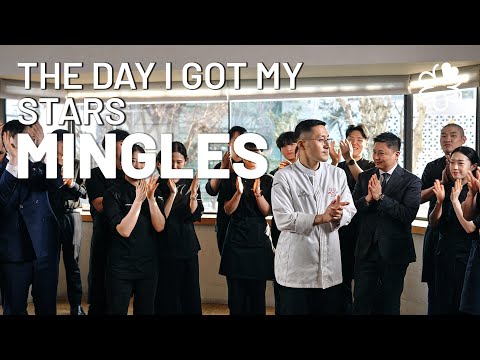
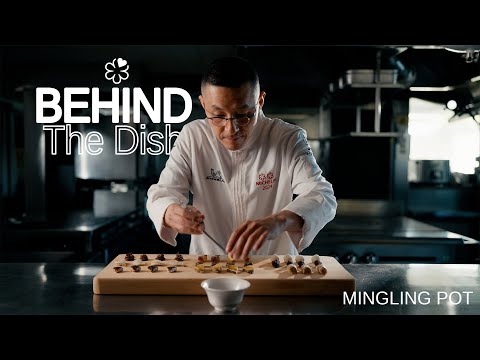
Three short videos reveal that grammar better than one long documentary would. The 50 Best clip on Kang explains the missionary side of the project: why he keeps talking about Korean cuisine as something that still needs introduction beyond its home market.[1][7] Michelin's three-star ceremony short shows the institutional turn, the point where Mingles stops being merely a respected standard-bearer and becomes a fully ratified member of the top tier.[2] Michelin's Behind the Dish film then drops from symbolism to plate level, using the restaurant's Mingling Pot to show what Kang means by harmony when the idea has to become dinner rather than rhetoric.[3] Put side by side, the clips tell a cleaner story than any prestige label can.
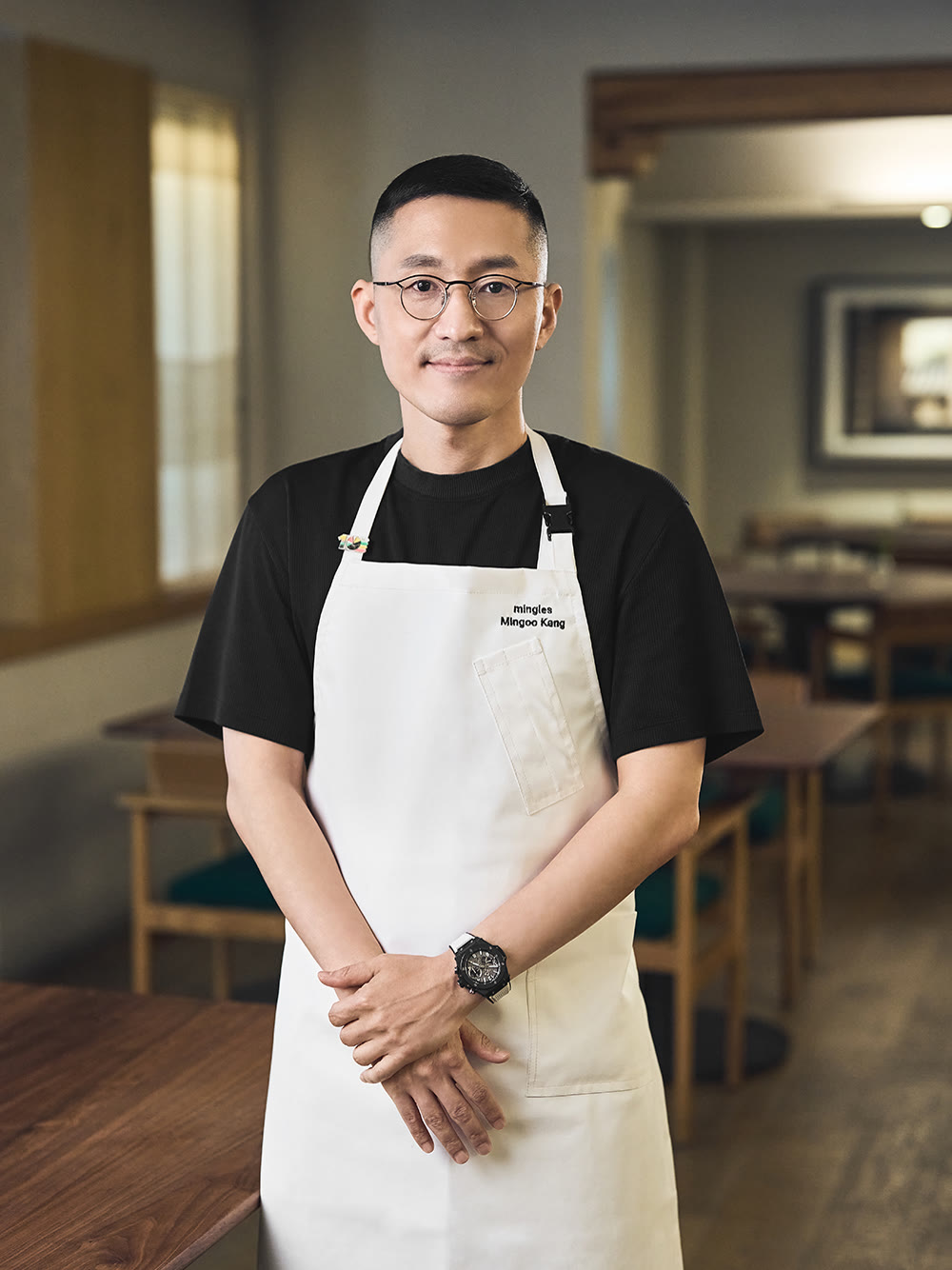
Image context: the cover uses Mingles' official portrait of chef Kang Mingoo rather than a plated dish. That choice fits the article because the central subject here is authorship made durable. The videos are less about one photogenic course than about how Kang's personal language of fermentation, seasonality, and calm has hardened into a whole-house identity.[4]
Video 1: the 50 Best profile shows Kang treating Korean cuisine as something to be introduced, not merely defended
The first clip is short, but it does a useful job: it frames Kang not just as a successful chef, but as someone carrying an explanatory burden.[1] The video's description says he is pushing the boundaries of Korean cuisine, and the accompanying 50 Best interview makes the point in fuller prose. Kang says Korean food is only beginning to become widely known, describes returning home after formative years abroad, and explains that he learned to make unfamiliar dishes more approachable without giving up their Korean base.[7] That combination matters. Mingles is not built on the fantasy that global diners will arrive pre-trained in the logic of jang, temple-cuisine restraint, or heirloom Korean recipes. Kang has to lead them in.
This is why the restaurant's name matters more than it first seems to. "Mingles" could suggest a lazy cosmopolitan blend, as though the house were simply mixing East and West because that is what upscale restaurants are supposed to do.[6] The evidence points somewhere stricter. The 50 Best pages describe a menu driven by in-season Korean fish, meat, vegetables, fermented sauces, and vinegars, plus a produce presentation that makes the diner confront ingredients before abstraction takes over.[5] Kang's 2021 interview sharpens the same idea from another direction: when he borrows familiar language or plating discipline, he does it as a bridge into Korean flavor, not as an exit from it.[7] The video is therefore valuable less for biography than for positioning. It tells you Mingles is a restaurant designed to translate Korean cuisine forward, not to neutralize it.
Video 2: the Michelin three-star clip marks the moment when Mingles stops sounding like a promise
Michelin's three-star ceremony short is not a craft explainer, and that is exactly why it belongs in this collection.[2] The clip is built around the emotional force of the announcement itself. Michelin's own description calls the award a defining moment for Korean fine dining, and that phrasing is not just promotional inflation.[2] By the time Mingles earned the third star in 2025, the restaurant had already spent years on Asia's 50 Best list, had climbed into the World’s 50 Best ranking, and had become one of the most legible Korean fine-dining addresses for international diners.[5][6] What changed with the third star was the burden of proof. Mingles no longer had to sound like the future of Korean fine dining. It had to behave like an institution that had already arrived.
That shift is worth naming because institutional recognition can flatten a restaurant as easily as it can honor it. A room built around fermentation, seasonality, and Korean reference can easily start speaking in generic award language once the global validation arrives. The 50 Best ranking page helps explain why Mingles has been able to resist that drift.[5] It still reads as a place with warm wood, ceramics, flower arrangements, and a restrained natural-world palette; in other words, the setting remains calm without becoming anonymous.[5] The Discovery page adds a useful counterweight by calling the space industrial-chic and by anchoring the menu in homemade jang rather than in vague elegance.[6] Read against those written sources, the Michelin clip becomes more than a celebration reel. It captures the precise moment when Kang's quiet house style is asked to carry symbolic national weight without losing its own internal discipline.
Video 3: the Mingling Pot proves that Mingles uses harmony as structure, not as a soft slogan
If the second clip explains what changed around Mingles, the third explains what has to stay true inside the food.[3] Michelin's Behind the Dish short centers the restaurant's Mingling Pot and describes it in concrete terms: tender short rib wrapped in cabbage, abalone, seafood-filled dumplings, and a philosophy of harmony expressed through both premium ingredients and inherited technique.[3] The World's 50 Best ranking page fills out the same picture from the dining-room side, noting the signature pot with morel, cabbage ssam, beef tendon, and abalone.[5] However the exact components shift, the pattern is stable. Mingles keeps returning to dishes that bind land and sea, wrapper and filling, broth logic and fermentation logic, family-memory forms and tasting-menu precision.
This is where the restaurant's use of harmony becomes more interesting than the word itself. "Harmony" is one of those culinary terms that can go dead on contact. Too often it means only that nothing tastes jarring. At Mingles it appears to mean something closer to structural coexistence. The official site speaks of ingredients sourced from Korea's land and ocean and of direct collaboration with producers across different regions.[4] The Discovery profile says homemade jang remains central to the seven-course tasting menu.[6] The 50 Best ranking page adds traditional fermented sauces and vinegars to that picture.[5] Put those written sources next to the Mingling Pot video and a clearer logic appears. Kang is not arranging Korean references around a French fine-dining skeleton. He is making Korean pantry habits do the organizing work.
That is why the dish matters as more than a signature crowd-pleaser. It demonstrates that Mingles' refinement does not come from stripping fermented depth out of the food until the room feels universally luxurious. It comes from controlling how much richness, salinity, sweetness, chew, and broth pressure can coexist before the bowl turns muddy. A pot is a good test for this kind of restaurant because a pot can easily become sentimental, heavy, or merely rustic. Mingles uses the form differently. It keeps the emotional memory of shared Korean food while tightening the textures and sequence enough for a world-class tasting room.[3][5][6]
What the collection reveals when watched together
Seen in sequence, these videos show why Mingles now feels bigger than a single ranking or award. The 50 Best chef profile presents Kang as a translator working outward from Korean cuisine rather than away from it.[1][7] The Michelin three-star clip records the moment when that long project gains full institutional recognition and begins standing in for Korean fine dining at large.[2] The Mingling Pot short then refuses to let the story drift into symbolism alone: it pulls the discussion back to a dish where jang, broth, wrapping, and ingredient sourcing still have to do the actual labor of persuasion.[3][4][5][6]
That combination is the real achievement. Many restaurants can be luxurious. Many can be locally sourced. Many can speak convincingly about tradition. Mingles is harder to replace because it keeps those things in one grammar. The room remains calm, but not empty. The acclaim grows louder, but the cooking still returns to fermented Korean depth. Kang's mission has never been to prove that Korean food can survive inside fine dining. Mingles is already past that. What this collection shows is a restaurant proving something stricter: Korean culinary logic can run the whole house, from producer language to world-stage recognition, without ever surrendering the fermented backbone that made the project worth building in the first place.[2][4][5][7]
Sources
- 50 Best, "Meet Asia's Favourite Chef: Mingoo Kang," YouTube video.
- MICHELIN Guide, "Mingles Earns Three MICHELIN Stars – A Symbolic Win for Korean Fine Dining!," YouTube video.
- MICHELIN Guide, "Behind the Dish: The Value of Harmony in Gastronomy," YouTube video.
- Mingles, official website - philosophy, producer-facing seasonal statement, team page, and official imagery.
- The World's 50 Best Restaurants 2025, "Mingles" - ranking profile covering the 2014 opening, the natural-world room, the 10-course menu frame, and the signature Mingling Pot.
- 50Best Discovery, "Mingles" - profile covering the industrial-chic room, seven-course tasting menu, and the role of homemade jang.
- 50 Best Stories, "Meet Mingoo Kang, the chef expanding the possibilities of Korean cuisine" - interview on Kang's effort to introduce Korean food more broadly and make unfamiliar dishes approachable without leaving their Korean base.