The easiest mistake to make with Ekaa is to file it under a familiar label and move on.[1][3] You can call it modern Indian, ingredient-led tasting, borderless fine dining, or Mumbai's polished answer to global chef-counter culture. None of those labels is wrong, but each one misses the point. Ekaa matters because it refuses to let identity harden into a menu category. On its own homepage, the restaurant says it works with interpreted cuisine inspired by motherland, people, and seasons, and says an ingredient in its purest form holds infinite potential.[1] The 50 Best Discovery note sharpens the same claim from the outside: chef Niyati Rao steers clear of stereotypical national plating and instead builds courses that celebrate the Indian subcontinent through local produce without pretending one region can stand in for the whole country.[3]
That is a more ambitious proposition than it sounds. Plenty of restaurants now avoid rigid geographic labels, but many of them simply drift into a polished nowhere: technically proficient, globally literate, and emotionally vague. Ekaa is trying to avoid the opposite trap too. It does not want to become a museum of Indian reference points, where every dish arrives with a heavy speech about provenance and tradition. The house style seems built instead on a narrower and harder idea. Start with the ingredient. Let texture, memory, and sequencing do the interpretive work. Then build a room quiet enough that the diner can actually register those moves.[1][3][5]
The current shape of the restaurant makes that philosophy legible. The official reservation page now offers four distinct lanes: à la carte, the 20-course Awakening tasting menu, the Dwadash cocktail tasting menu, and Terroir, framed as Ekaa's mystery flights.[2] This matters because the restaurant is no longer asking only one question about formal tasting-menu authority. It is asking whether the same ingredient-first grammar can survive across formats. The answer, judging from the house language and the recent press around the tapas expansion, is yes. Ekaa is becoming less a single menu than a controlled ecosystem.[1][2][5]
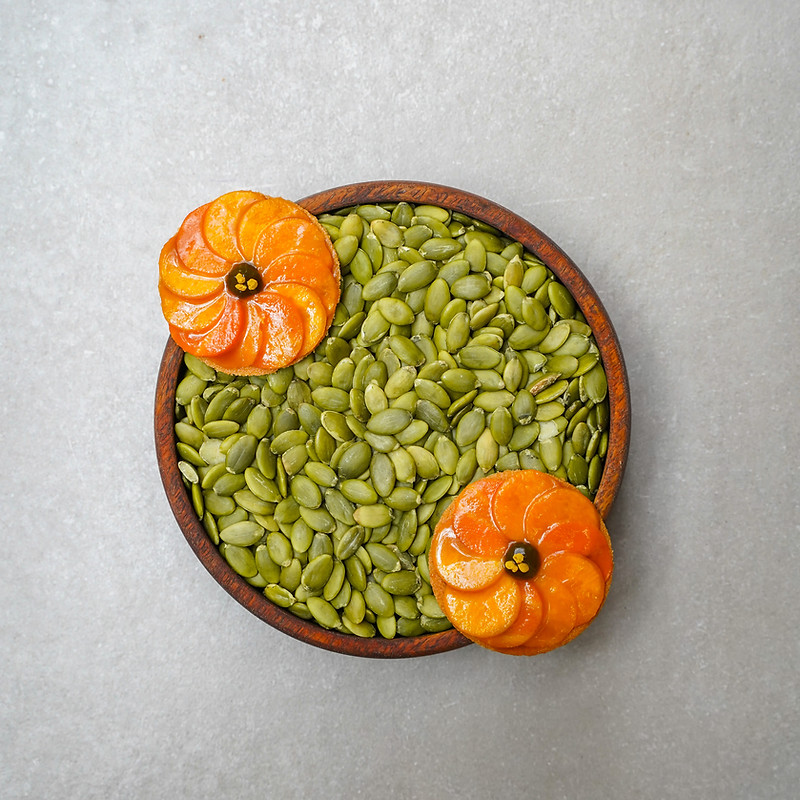
Image context: the lead image uses an official Ekaa food photograph focused on one composed dish rather than a wide room view.[1] That choice fits the article because Ekaa's central argument is not spectacle. It is concentration. The restaurant keeps returning to the idea that a single ingredient, or a very small cluster of them, can carry narrative weight if the form around it stays disciplined enough.[1][5]
1. Ingredient names are not a gimmick here; they are the restaurant's anti-shortcut
The official site gives away Ekaa's deepest conviction in a single sentence: it believes ingredients in their purest form hold infinite potential.[1] That sounds like standard fine-dining piety until you place it beside the Discovery profile and the more reported 2025 coverage. Discovery says the menu resists stereotypical Indian dishes and instead moves through a broader subcontinental frame built from local produce.[3] Restaurant Times, in a profile centered on Rao and the restaurant's development, describes a menu that tells diners the ingredient they are about to experience rather than the cuisine they are supposed to recognize.[4] Put together, those sources suggest that Ekaa is not hiding its references. It is removing the fastest route to recognition.
That is why the restaurant feels more interesting than a simple fusion narrative. Fusion usually asks diners to admire combination: this region with that technique, this memory with that imported grammar. Ekaa seems more interested in delaying recognition long enough for form to matter. The diner is nudged toward an ingredient, then toward a sensation, then toward a memory that may or may not arrive with the comfort of a named classic. The result is not abstraction for its own sake. It is a refusal to let the menu do all the thinking in advance.[1][3][4]
The official site's current "Awakening" description strengthens that reading.[1] It calls the tasting menu a journey that challenges perceptions, then points to elements such as Indian sea asparagus and grape caramel as markers of its present 20-course form.[1] Those are not random curiosities. They show the restaurant working at the line where familiarity gets thinned out but does not disappear. Indian produce stays central; the emotional effect comes from seeing it reorganized without being flattened into novelty.
2. The room slows you down so the cuisine can stay quiet
If the food side of Ekaa is about stripping away easy national shorthand, the room is about stripping away hurry. A recent Indulge Express review of the tapas format is useful here because it notices things that official copy rarely bothers to spell out: the bar programme begins with scent, touch, and tactile prompts; dishes arrive in glass and hand-built ceramic bowls; some water vessels are visibly repaired in a kintsugi manner; plating stays spare enough to keep attention on texture and pacing.[5] That article's most valuable observation is not that the food is inventive. It is that the entire evening is calibrated toward sensory patience.[5]
The restaurant's own presentation of Dwadash says much the same in a different register.[1] The cocktail menu is described as being inspired by Ayurveda's forgotten botanicals, with ingredients such as wormwood and khus transformed into carefully sourced, technically controlled drinks.[1] On the reservation page, Dwadash is not hidden as a bar add-on; it stands as one of the main experiences a guest can book.[2] That tells you something important about Ekaa's self-understanding. Drinks are not a profitable annex. They are part of the argument about how memory and material can be staged.
This is where Ekaa begins to separate itself from restaurants that talk constantly about storytelling. Most restaurant storytelling is verbal. Servers explain, guests nod, and the emotional work is done by anecdote. At Ekaa, the stronger version seems physical. Texture, vessel weight, restrained plating, and the order in which sensation arrives all do narrative work before anyone says very much.[1][5] The restaurant becomes readable not as a lecture on Indian ingredients, but as a system for making attention feel pleasurable.
3. Why Ekaa matters now
Ekaa matters in 2026 because it is moving outward without losing definition. The official site no longer presents the restaurant as a sealed temple of one tasting menu; it shows a larger set of activities, from the Awakening sequence to Dwadash, from the private-dining and curation logic to research-led explorations in Odisha and Nagaland, and even Niyati Rao's guest-chef appearance at Dark Mofo Winter Feast in Hobart in June 2025.[1] That expansion could easily blur a young restaurant's voice. Here it seems to have done the opposite. The more formats Ekaa adds, the clearer its operating principle becomes: one ingredient, one memory trace, one carefully managed tactile situation at a time.[1][2]
The 50 Best Discovery profile helps explain why this matters beyond Mumbai.[3] It positions Ekaa among a generation of restaurants trying to break assumptions around Indian gastronomy without abandoning Indian produce.[3] That is a narrow path. Lean too hard into familiarity and the restaurant becomes heritage reassurance. Lean too hard into cosmopolitan cleverness and it becomes placeless. Ekaa's most convincing achievement is that it keeps both risks in view. It allows India to appear as a field of ingredients, climates, and remembered textures rather than as a set of compulsory signatures.[1][3][4][5]
That is why the best way to read Ekaa is not as a restaurant that has found the next fashionable Indian fine-dining template. It is more specific than that. It is a restaurant trying to build an ingredient grammar for Indian memory without making memory loud. In a dining culture where menus often fight for attention with bigger claims than the food can actually carry, Ekaa's quietness is not restraint for its own sake. It is the condition that lets the food think in full sentences.[1][3][5]
Sources
- Ekaa official homepage, covering the restaurant's ingredient-first philosophy, the "motherland, people and seasons" framing, the current Awakening and Dwadash descriptions, and its recent curations.
- Ekaa official reservations page, covering the current bookable formats including the 20-course Awakening tasting, Dwadash cocktail tasting, Terroir mystery flights, operating hours, and closure on Mondays.
- 50 Best Discovery, "Ekaa" - profile covering Niyati Rao's positioning, the restaurant's resistance to stereotypical Indian plating, its local-produce focus, and the three-part tasting-menu framing.
- Restaurant Times, "How Ekaa, Mumbai, Is Redefining the Way India Thinks About Its Own Food" (October 1, 2025), covering Rao's background, the menu's ingredient-first naming logic, and the restaurant's R&D-heavy sourcing story.
- Indulge Express, "This tapas menu in Mumbai grounds innovation in texture, memory, and place" (July 23, 2025), covering the recent tapas evolution, Dwadash bar ritual, tactile serveware, and the room's quiet precision.