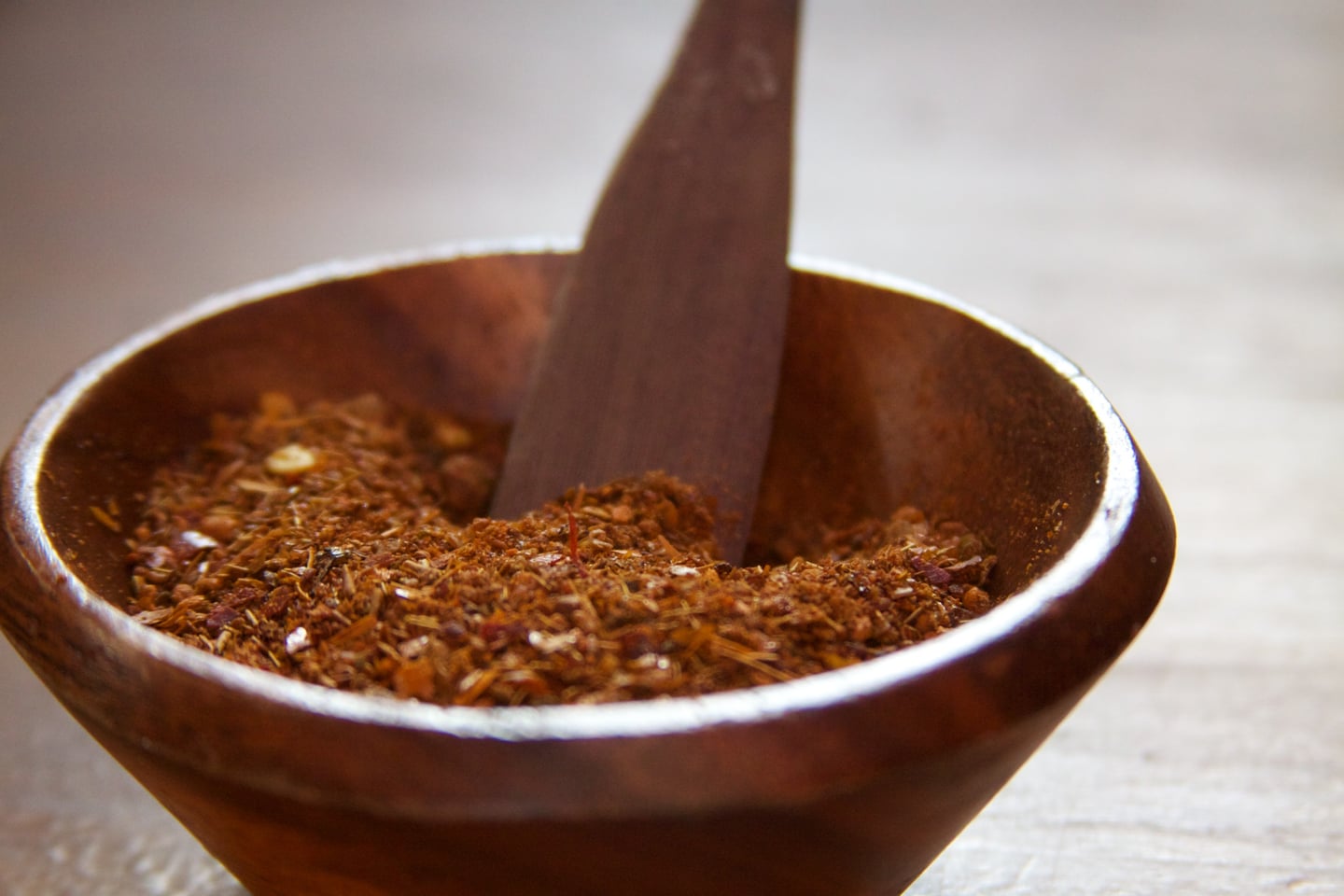
A spoonful of potato purée offers a small stage for merkén: smoke, chilli heat and the soft background of the potato. Chilean chef and teacher Carlos Beltrán recommends the seasoning for purées, broths and dipping sauces, with a restrained hand so that heat leaves room for aroma.[1] Even before a restaurant devises an elaborate dish, there is plenty to pay attention to in that first taste.
Merkén is a Mapuche preparation built around dried, smoked ají cacho de cabra. Salt and, in many preparations, coriander seed join the ground chilli.[1][2] The name on a jar gives a cook a starting point. Finding out who grew and processed its contents makes that starting point much more useful.
The fire has a job
Beltrán traces the preparation to preserving chilli through prolonged drying and smoking. His fellow UCSC teacher Paolo Zamorano describes a flavour whose intensity depends on the maker, the chilli, smoking time and the wood used.[1] Those variables give a buyer several things to ask about before reaching for a tasting spoon.
One unusually vivid account appears in the agricultural innovation foundation FIA's 2016 survey of food heritage in Chile's Biobío region. María Clementina Pucol Aniñir, a farmer from Pangueco in Cañete, describes a practice learned from her mother and grandmother. Her account begins with an April harvest and strings of peppers. One method hangs them beside the household fire to dry and smoke for roughly two months.[2]
That is her recorded method, with its own place and rhythm. It helps explain why the word “smoked” on a packet leaves so much unsaid. There is a crop to bring in, space to keep it and a period of tending before the seasoning reaches a mill. A restaurant's finishing pinch can contain work spread across a season.
The same account describes toasting the dried, smoked peppers while keeping them moving to prevent burning. Once brittle and cooled, they can be ground on stone or in a hand mill. Pucol Aniñir's listed ingredients are chilli and salt; coriander does not appear in that preparation.[2]
This is a useful boundary for anyone tempted to turn a familiar ingredient list into a universal authenticity test. A documented family practice deserves to be read on its own terms.
Follow the seed back to the grower
In Ranquilco Alto, in the commune of Nueva Imperial, Juana Isabel Levio Curiqueo and her husband make the seasoning sold as Kelü Milla. Chile's agricultural development agency INDAP describes them selecting cacho de cabra seeds, raising their own plants and smoking the harvest according to a family recipe.[3]
The story starts before the smoke. Selection and cultivation belong to the same household work as processing, giving the buyer a named producer and a specific place to follow. For a chef writing a menu, that offers a more substantial introduction than an adjective such as “ancestral.” It also leaves room to ask the producer how this particular batch was made.
INDAP places Kelü Milla within its Mundo Rural network, intended to bring smallholder and Indigenous family farmers' products closer to urban customers. Its account records the brand reaching markets elsewhere in Chile and abroad.[3] The supply chain has people and institutions in it; the seasoning does not simply materialise in a specialist shop.
A kitchen can carry that specificity forward. Ask for the maker's name, the growing area and the actual blend. Keep those details with the sample when tasting it. Otherwise, even a carefully sourced ingredient can become an anonymous tub as soon as it reaches the pantry.
Read the blend as carefully as the origin
Merkén also has a contemporary commercial life full of deliberate variations. In December 2025, ProChile profiled Melissa Beecher's Temuco business, Cacho Cabra, founded in 2017. The report listed six varieties, including smoked, garlic-and-coriander, basil, hazelnut, almond and ginger versions.[4]
That range changes what a buyer needs to know. Ordering by the word merkén alone could bring a kitchen a different aromatic composition from the one it tested. The useful comparison is between identifiable products: which chilli, whose preparation, what added ingredients and which version of the blend.
A nut-flavoured variation may be exactly what a dish needs. A simpler chilli-and-salt preparation may suit another. Reading the full ingredient list allows the cook to make that choice intentionally and record it accurately for the people serving dinner. Origin and composition answer different questions, and both belong beside the supplier's name.
Give the smoke room at the table
Beltrán's serving advice offers a good first encounter: add merkén to a broth or stew shortly before eating, or work it into a dipping sauce. He emphasises controlling the quantity so the chilli's heat does not obscure the smoke.[1]
For a restaurant assessing a new delivery, a small comparison is more revealing than immediately scattering it over a finished course. Try modest, measured additions to the same plain preparation and note what changes. Does the seasoning bring the intended aroma? How much salt does the dish still need? Does the blend fit the food already on the spoon? These are tasting questions, to be answered with the product actually purchased.
A menu can preserve that attention in a few precise words: the maker, the place, the ingredient. Then the kitchen has to preserve it in the food. Enough merkén to make its presence clear, enough room around it for the guest to notice what the maker has done.
Sources
- Verónica Milla Figueroa, “Merkén: el condimento de mapuche que conquista a la cocina internacional,” Universidad Católica de la Santísima Concepción, 14 December 2024 — chefs Carlos Beltrán and Paolo Zamorano on preservation, variation and culinary use.
- Fundación para la Innovación Agraria, Patrimonio Alimentario de Chile: Productos y Preparaciones de la Región del Biobío, 2016, pp. 76–79 — María Clementina Pucol Aniñir's accounts of smoked cacho de cabra chilli and merkén.
- Instituto de Desarrollo Agropecuario, “Rural World Store Network” — the network's purpose and its profile of Juana Isabel Levio Curiqueo and Kelü Milla in Nueva Imperial.
- ProChile, “ProChile distingue a emprendedora de La Araucanía por liderazgo exportador en merkén gourmet,” 10 December 2025 — Melissa Beecher's Cacho Cabra business and its six reported varieties.
- Photograph licensed under CC BY 2.0: McKay Savage, “Chile - Cochamó climbing 95 - merken spice,” 26 January 2012, via Wikimedia Commons — the article photograph, reproduced at reduced resolution.