Some great restaurants feel monumental from the first sentence. Maison Pic is more interesting because it feels inhabited.[1][2][3] The address in Valence carries more than prestige. It carries household memory, regional memory, roadside memory, and the very French habit of turning a family name into a culinary institution. Yet the house would have become a shrine long ago if the people inside it had mistaken inheritance for repetition. The real Pic achievement is harder than conservation. Each generation kept the address alive by changing its language.[1][4][5]
That is why Maison Pic belongs in fine-dining history as a lineage story rather than a simple star-counting story. The official Pic biography compresses the family line into one striking sentence: more than a century of heritage begins with Sophie Pic, passes through Andre Pic, regains full prestige under Jacques Pic, and reaches a new chapter when Anne-Sophie Pic regains the third Michelin star in 2007.[1] The Michelin account of Anne-Sophie Pic adds the crucial detail that Andre did not merely preserve the house. He made dishes that became signatures, including crayfish-tail gratin and bladder chicken, while the current Michelin restaurant listing shows that Anne-Sophie's room still serves with ritual, on porcelain under cloches, even as the cuisine has moved into a much more personal aromatic vocabulary.[2][4][5]
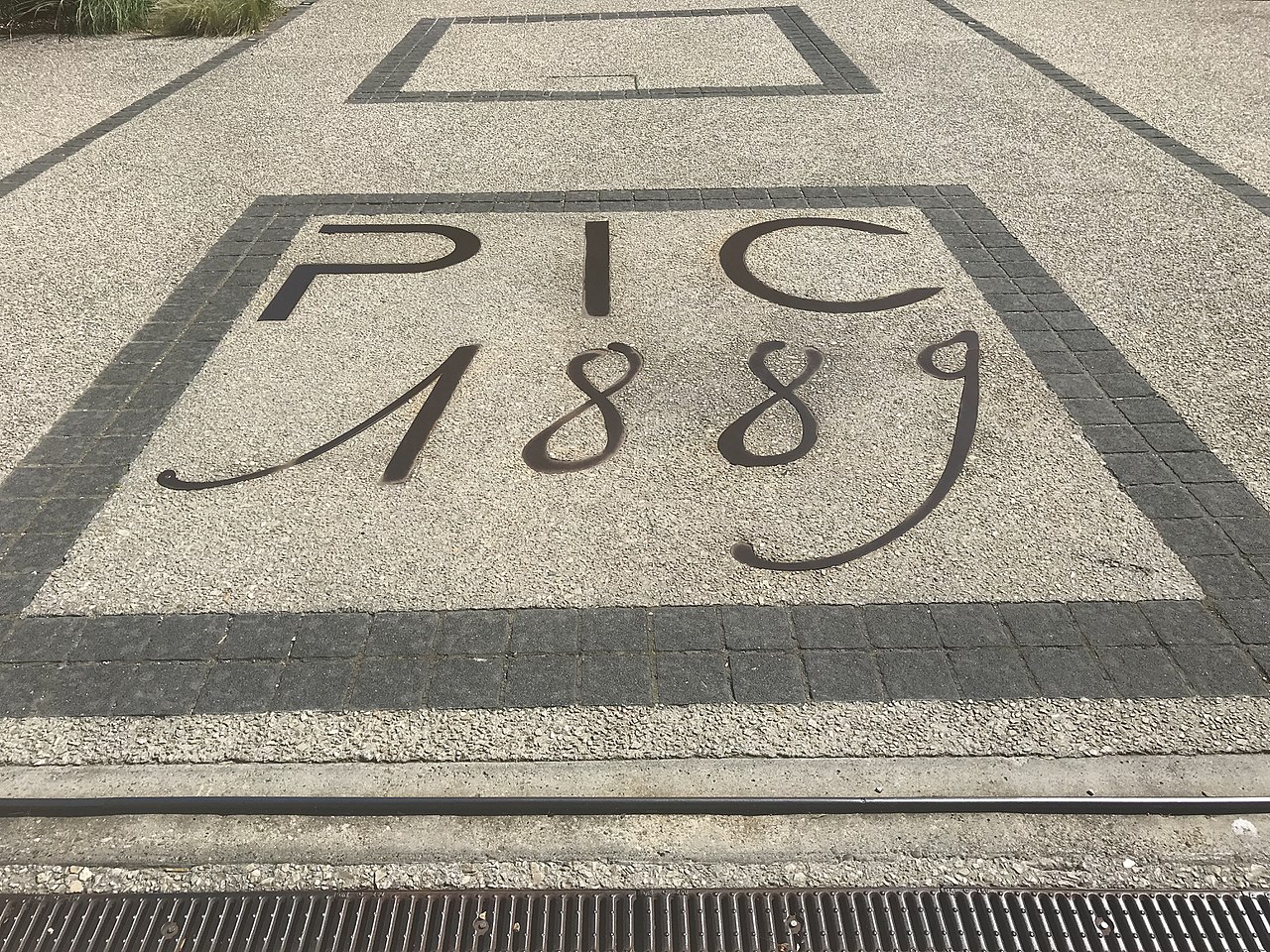
Image context: I chose a real exterior photograph of Maison Pic from Wikimedia Commons instead of a plated dish because this article is about continuity at one address. The hedge, low white facade, and "depuis 1889" sign make the restaurant read as a lived house first and a luxury symbol second, which is exactly the historical point.[6]
1. Sophie Pic built a house before the dynasty had a myth
The easiest way to flatten Maison Pic is to start with modern celebrity and read backward. The house makes more sense the other way around. On the official site, Anne-Sophie Pic says the family foundation begins with her great-grandmother Sophie Pic, founder of L'Auberge du Pin in Ardèche.[1] That detail matters because it puts a woman at the origin of the line before the story becomes one of famous male chefs and Michelin chronology. Maison Pic begins not as a museum object but as roadside hospitality, an auberge logic where feeding travelers, reading appetite, and making a stop feel memorable mattered before global gastronomic prestige entered the frame.[1][5]
The 50 Best Discovery profile still lets you feel some of that house logic in the present. Even while describing a flagship tasting-menu destination, it stresses the muted interior, linen tablecloths, mirrored walls, and hand-painted murals, then sets that against food that arrives as a sensory journey rather than a didactic menu list.[3] That tension is important. Pic is elegant, but not abstractly sleek. The room is still arranged like a place that expects people to stay, to be looked after, and to be drawn into a sequence. That is an auberge instinct refined upward, not erased.[3]
2. Andre Pic turned the family address into classical French capital
Dynasties become real when a later generation does more than inherit a stove. On Anne-Sophie Pic's official page, Andre Pic is the first decisive consolidator: he obtained three stars in 1934.[1] Michelin's Anne-Sophie profile gives that victory texture by naming the dishes that made him memorable: crayfish-tail gratin, bladder chicken, lobster Newburgh, and hare on the spit.[5] In other words, Andre transformed family hospitality into canonical French luxury. He gave the house the kind of signatures that allow a restaurant to travel by reputation before a guest has even booked.[5]
That older grandeur still survives in the ecosystem around the flagship. The Bistrot Andre page is unusually revealing because it treats memory as something to be eaten, not merely displayed. The restaurant explicitly pays tribute to Andre Pic and keeps Jacques Pic's memory alive through dishes inspired by earlier family recipes; the wall portraits, stone fountain, and traditional room are described as a journey through the Pic generations.[2] This is not nostalgia for its own sake. It is the house admitting that its past has to remain edible. If a dynasty cannot turn inheritance into present-tense hospitality, then the family story becomes decorative.[2]
3. Jacques Pic proved prestige could be restored, not just received
Family mythology often skips over the vulnerable middle, the generation that has to prove the inheritance was not a one-time miracle. The official biography does not skip it. It says Jacques Pic restored the full prestige of Maison Pic in 1973.[1] That is a very revealing verb. Restore is not the same as preserve. Preservation implies static custody. Restoration implies that something can dim, drift, or lose force, then recover shape through work.[1]
The Bistrot Andre page again helps here because it credits Jacques with bringing the family's culinary excellence to international prominence and still keeps some of his dishes in circulation, including a mosaic of red mullet and foie gras with bouillabaisse jelly and an orange frozen souffle.[2] That detail makes the lineage feel less like bloodline mystique and more like editorial renewal. Jacques did not simply guard Andre's house. He widened its imaginative range. He made Valence speak outward.[2]
This part of the history matters for Anne-Sophie Pic, because it means she inherited not one obligation but two. She had to honor the older house and also honor the precedent that the house could be renewed. The Pic line had already taught her that continuity was active work.[1][2]
4. Anne-Sophie Pic saved the house by refusing imitation
Anne-Sophie Pic's strongest move was not recovering three stars in 2007 by cooking like her father or grandfather more perfectly than anyone else.[1] It was deciding that the house could remain itself only by changing register. The official biography defines her style through Suffusion, an aromatic philosophy that begins with a framework of preparations and then sequences flavors so products can enter into dialogue; it names Berlingots ASP, Millefeuille blanc, and blue lobster as emblematic results.[1] The 50 Best Discovery profile notices the same turn from the dining-room side: the menu describes concepts rather than blunt dish labels, and Japanese influence runs alongside French lineage rather than underneath it.[3]
That is the real break that keeps the house alive. Anne-Sophie Pic does not present family prestige as a locked classical canon. She treats it as permission to become stranger, more aromatic, and more internally authored.[1][3] The official site says her cuisine pursues emotion, texture, and flavor association, and ties it to a broader artistic imagination involving perfumery, music, poetry, and sculpture.[1] Meanwhile, the current Michelin listing still frames the room as ceremonious and almost old-fashioned in service style, with dishes arriving under cloches and a seven- or ten-port-of-call sequence.[4] Put those together and Maison Pic's present becomes legible: the shell remains a grand French house, but the language spoken inside it is no longer grand French orthodoxy. It is Anne-Sophie's own aromatic syntax.[1][4]
5. Why Maison Pic still matters in 2026
In fine dining, family houses often fail in one of two ways. They either freeze themselves into heritage theatre, or they modernize so aggressively that the old address becomes a brand shell with no emotional residue. Maison Pic looks durable because it has chosen a harder third option. It lets each generation sound recognizably different while insisting that the address itself still matters.[1][2][3][5]
You can see that in how the house distributes memory across its properties. The flagship remains the site of highest formal intensity. Bistrot Andre carries the edible archive of earlier generations. The official biography keeps the chronology straight without pretending chronology is enough. The 50 Best and Michelin framings both register the same paradox: Anne-Sophie Pic belongs to a dynasty, but the restaurant's energy comes from the fact that she does not cook as a curator.[1][2][3][4][5]
That is why Maison Pic is worth reading as a lineage piece rather than a biography of one star chef. The house did not stay alive because the family guarded a relic. It stayed alive because Sophie built hospitality, Andre built monumentality, Jacques rebuilt prestige, and Anne-Sophie made inheritance porous enough to admit new aromas, new references, and a new grammar of emotion.[1][2][5] Plenty of famous restaurants can tell you when they were founded. Fewer can show that founding date on the wall and still make it feel like the beginning of a sentence rather than the end of one.[6]
Sources
- Anne-Sophie Pic, "The Chef Anne-Sophie Pic" - official biography covering Suffusion, emblematic dishes such as Berlingots ASP, local sourcing and gardens, the family line from Sophie Pic to Andre and Jacques Pic, and Anne-Sophie's 2007 third star.
- Anne-Sophie Pic, "Le Bistrot Andre" - official page covering Andre Pic's symbolic role, Jacques Pic's continued presence through dishes and memory, and the way the Valence property stages family history as present-tense hospitality.
- 50 Best Discovery, "Restaurant Anne-Sophie Pic" - profile covering the Valence flagship's dynasty framing, Japanese influence, interior atmosphere, and ten-course sensory-journey menu structure.
- MICHELIN Guide, "Pic - Valence - a MICHELIN Guide Restaurant" - restaurant listing describing the room's atmosphere, old-fashioned cloche service, and seven- or ten-course "ports of call" format.
- MICHELIN Guide, "Inspiration of the Star: Maison Pic's Anne-Sophie Pic" - profile covering the 1889 origins, Andre Pic's signature dishes, and the family route into Anne-Sophie Pic's current leadership.
- Wikimedia Commons, "File: Maison Pic, Valence - depuis 1889.JPG" - 2018 exterior photograph of Maison Pic in Valence by Benoit Prieur, used here as the article image.