
The lazy way to talk about Maaemo is to call it a nature restaurant in the city and leave the contradiction there.[2][3] That description catches the mood but misses the mechanism. Visit Norway's short Table Tales: Oslo film is more useful because it shows that the restaurant's power does not come from pretending the city disappears.[1] Esben Holmboe Bang opens with the opposite claim: Oslo works for him because it keeps making progress while staying close to nature.[1] That sentence is the key to the whole restaurant. Maaemo is not selling escape from urban life. It is selling the unusually short distance between urban infrastructure, foraging ground, and cultural memory.
That distinction matters because fine dining often uses landscape as a backdrop instead of a working condition. Restaurant websites fill up with forests, coastlines, and old farms while the actual meal depends on the same global luxury flows found anywhere else. Maaemo's own homepage points in a stricter direction. The restaurant says it wants to highlight the relationship between raw produce and finished product, which implies a chain of handling rather than a vague Nordic atmosphere.[2] The 50 Best Discovery profile sharpens that logic from the outside, describing the room's industrial setting near Oslo's old dock while stressing that the whole concept is built around connection to nature, even down to the Old Norse name for "Mother Earth."[3]
Seen through that frame, the video stops being a pleasant city-profile short and starts functioning like a concise operating note. Coffee in town, nettles gathered by hand, ants used for acidity, foreign staff taken to the Viking Museum, then service in a room that treats Norwegian ingredients and culture as one continuous system: those details are not random color.[1] They explain how Maaemo keeps "local" from turning into a slogan. The city supplies energy, logistics, labor, and context. The nearby landscape supplies the ingredients. The restaurant's job is to reduce the distance between the two until the tasting menu feels inevitable.
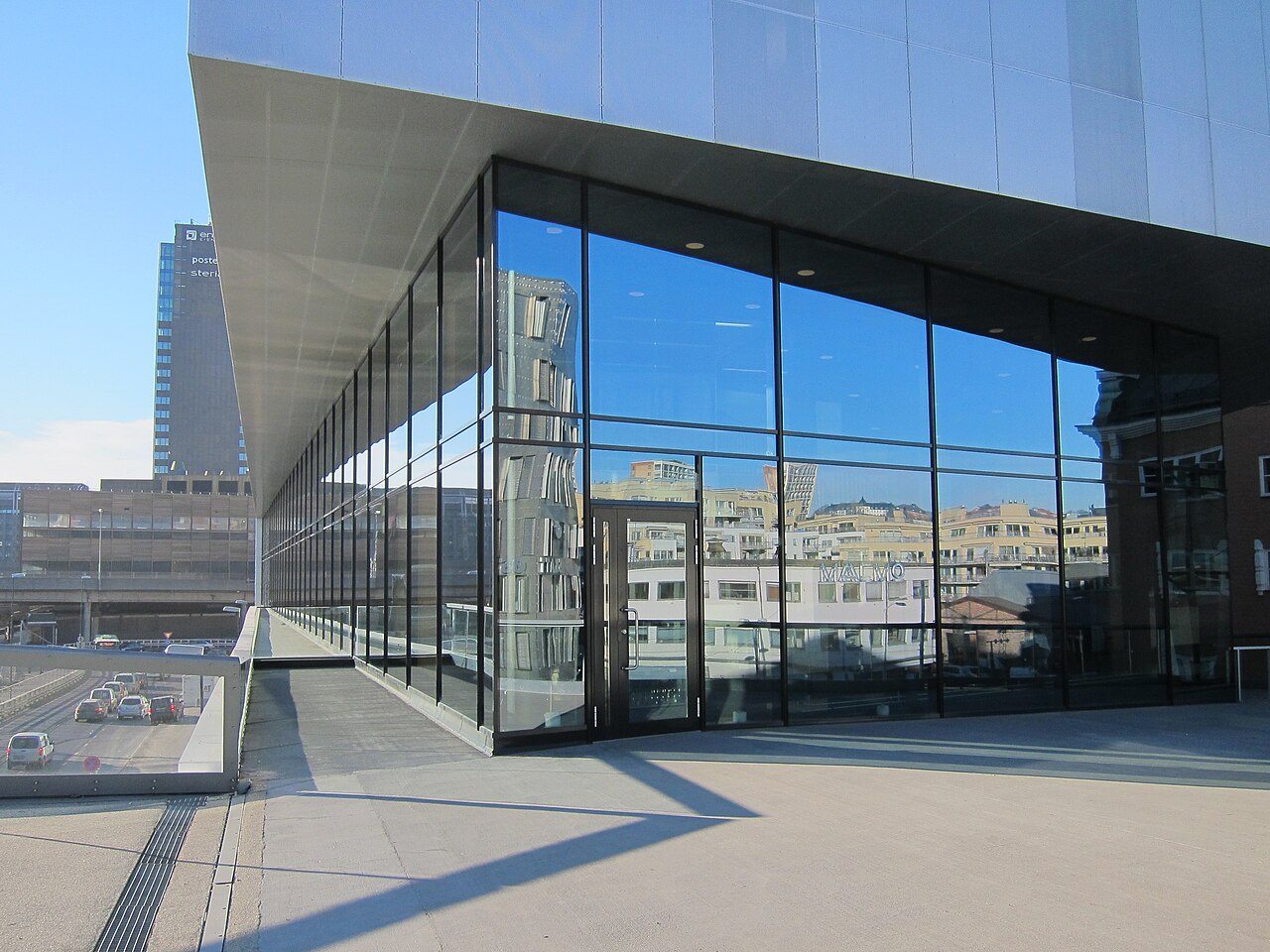
Image context: the cover uses a Wikimedia Commons exterior photograph of Maaemo in Oslo rather than a dish close-up. That choice fits the article because the video's strongest point is location. The restaurant's argument begins with where it sits and what that position makes possible, not with one isolated plate photographed out of context.[5]
The opening line turns Oslo itself into kitchen equipment
The film's first thirty seconds do more than introduce a chef.[1] Bang says the combination of constant progress and closeness to nature makes Oslo the perfect place to run a restaurant.[1] That is a surprisingly concrete statement. He is not praising scenery in the abstract. He is describing a working environment where a chef can move quickly between urban routines and wild product. The CNN profile on Maaemo helps explain why that mattered so much to the restaurant's rise: Bang's cooking became globally visible not because he imitated an old Nordic template, but because he made Oslo itself useful as a modern base for an intensely local cuisine.[4]
That is also why the exterior matters. 50 Best Discovery describes Maaemo as sitting in a stark, almost industrial context near the old docklands rather than in an insulated rural retreat.[3] The contrast is part of the point. Maaemo stages Norwegian nature inside a city that remains visibly contemporary. The restaurant does not erase that friction; it works with it.
The nettle sequence shows that produce is a contact sport
The middle of the video is where the restaurant's philosophy becomes practical.[1] Bang grabs coffee, heads out to gather what the kitchen needs, then pauses over nettles with the simple warning that visitors should bring gloves.[1] It is an ordinary moment, which is why it matters. High-end restaurants often speak reverently about ingredients that arrive already purified by a supply chain. Here the ingredient still behaves like something from the ground. You touch it, you get stung, you learn the boundary with your hands first and your palate second.
That sequence is the best visual gloss on Maaemo's homepage language about the relationship between raw produce and finished product.[2] The phrase can sound polished on a website. In the video it becomes literal. The product is not valuable only when it reaches the plate. It is valuable as an encounter, and the finished dish is one more stage in that encounter rather than a total replacement for it.
The ant line explains the house better than a luxury ingredient ever could
The film's strongest teaching moment comes when Bang says Norway does not have lemons, but it does have ants, which share some of the same qualities while being more aggressive.[1] That line could easily be clipped for novelty. Read carefully, it explains the restaurant's actual palate logic. Maaemo is not chasing localness as a moral badge. It is asking what local ecosystems can do formally. If citrus does not belong to the place, the kitchen finds an indigenous path to brightness and then builds technique around that decision.
This is where Maaemo feels more rigorous than many restaurants that talk about terroir while quietly relying on imported flavor defaults. The ant is not there because it is weird. It is there because it lets the restaurant construct acidity from within Norwegian conditions.[1] That is a much more demanding move. It forces the menu to become a translation of place instead of a globally legible luxury script with local garnish attached.
The Viking Museum detour is really about staff calibration
Another seemingly casual passage in the video deserves more weight than it first appears to carry.[1] Bang says it is important to give foreign employees a sense of Norwegian ingredients and culture, then takes the conversation through the Viking Museum because history in Oslo can still be encountered at close range.[1] That is not tourism filler. It is a staffing philosophy.
Restaurants built around place usually focus on product first and team culture second. Maaemo's video suggests the two are inseparable. If the restaurant wants its cooks and servers to express Norwegian culture rather than merely repeat dish descriptions, they need access to something older and deeper than a prep list. The 50 Best Discovery profile points in the same direction by emphasizing that Maaemo is about more than pristine ingredients alone; it is about a broader bond to nature and identity.[3] The museum visit simply makes that bond teachable.
In that sense, history at Maaemo functions like another seasoning. It does not sit beside the food as background knowledge. It changes how the team understands what the food is trying to say.
What the video clarifies about Maaemo now
The short film never shows the full tasting menu, and that limitation is part of its value.[1] Because it stays selective, the structure becomes clearer. Maaemo's real luxury is not remoteness for its own sake, and it is not severity dressed up as Nordic purity. It is engineered proximity: a city with enough movement to support an ambitious modern restaurant, enough access to nature that foraging remains alive, and enough historical density that the kitchen can train its team in cultural reference rather than decorative storytelling.[1][2][3][4]
That is why the article is worth anchoring to this video instead of treating the clip as decoration. In three minutes, the film supplies a durable reading of the restaurant. Maaemo works because Oslo gives Bang a rare compression ratio. Coffee, nettles, ants, museum pieces, dockland architecture, and a finished tasting menu all sit inside one workable loop.[1][3] The restaurant's brilliance lies in how little distance it leaves between those layers. Nature is present, but never sentimental. The city is present, but never merely logistical. At Maaemo, terroir is not outside the building. The city itself helps make it legible.[1][2][3]
Sources
- Visit Norway, "Maemo | Table Tales: OSLO," YouTube video.
- Maaemo Restaurant, official homepage with the restaurant's current statement on the relationship between raw produce and finished product.
- 50 Best Discovery, "Maaemo" — current profile covering the dockside setting, the restaurant name's "Mother Earth" meaning, and its nature-facing identity in Oslo.
- CNN Travel, "Maaemo: Norway's only three-Michelin-star restaurant" — profile of Esben Holmboe Bang and the restaurant's place in Oslo's dining scene.
- Wikimedia Commons, "The restaurant Maaemo in Oslo, Norway.JPG" — source page for the exterior photograph used as this article's lead image.