Plenty of Nordic fine dining still sells a familiar story. The room is pale, the ingredients are local, the tone is serious, and the meal asks you to admire restraint as an ethical achievement in itself.
AIRA is more persuasive than that. It is restrained, but not as self-denial. It is calm, but not neutral. As of April 3, 2026, AIRA's official menu shows a house that currently runs both a full tasting menu at lunch and dinner and a shorter prix fixe at weekday lunch, while the Michelin Guide continues to list the restaurant at two stars.[2][3] That combination matters because it clarifies what Tommy Myllymaki has built on Royal Djurgarden: not a Nordic shrine, but a highly edited Stockholm restaurant where architecture, produce, and seasoning all move in the same direction.[1][2][3][5]
The right way to read AIRA in 2026 is as a restaurant profile, not as a generic accolade summary. The key point is not simply that it is elegant or highly ranked. The key point is that it has turned waterside stillness into a working dining format, then used global spice and acid to stop Swedish luxury from hardening into museum glass.[1][3][4][5]
1. The building is doing real culinary work
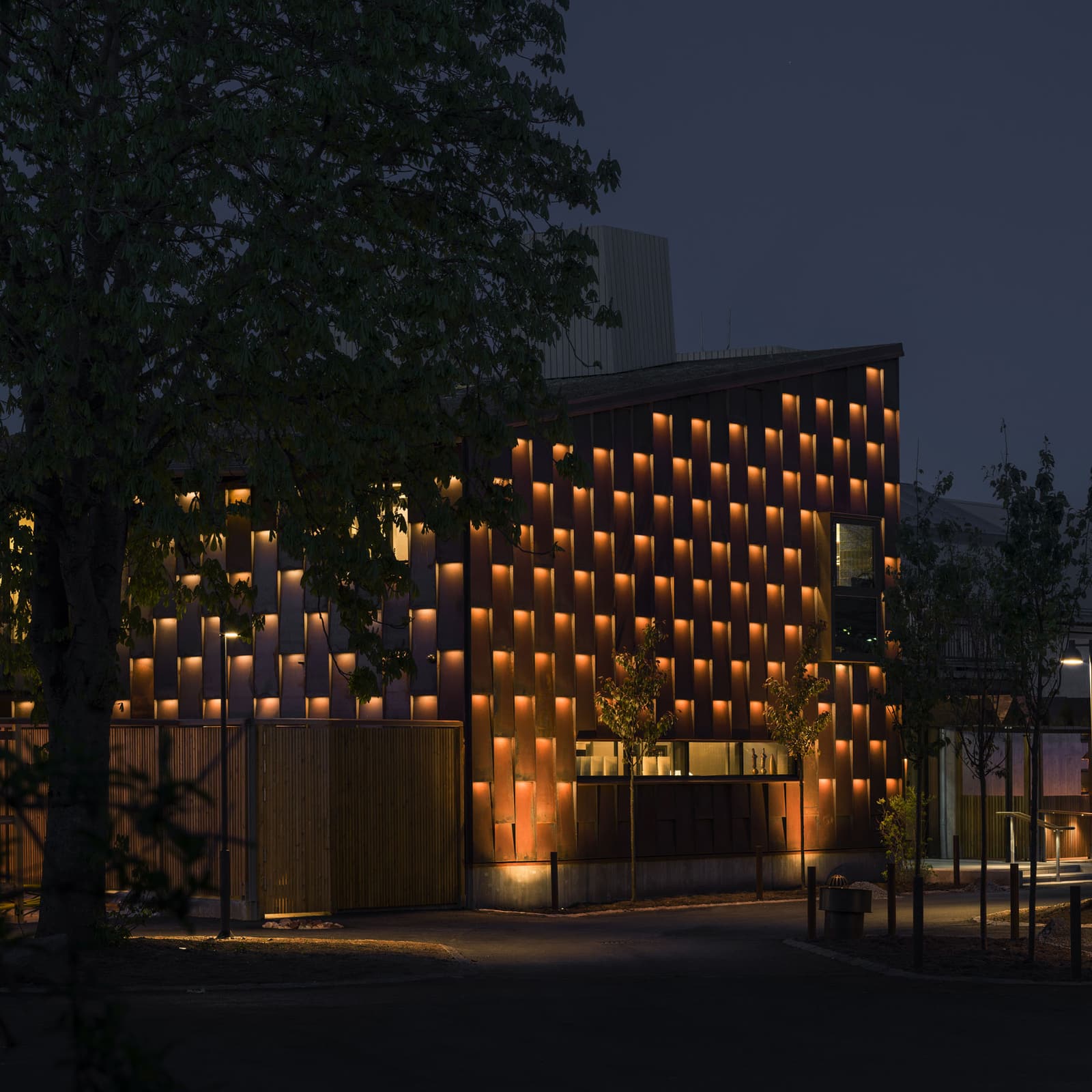
The official restaurant page is unusually direct about AIRA's physical idea. It says the restaurant sits in a boatyard-inspired building built in 2020, designed by Jonas Bohlin, with an exterior dominated by light concrete, glass, and rusted metal.[1] It also says the lighting and color scheme inside are meant to resemble the seasonal shifts of the Stockholm archipelago.[1] Those details are not decorative footnotes. They explain the whole emotional temperature of the meal.
Visit Stockholm helps sharpen the location argument by placing the restaurant on Royal Djurgarden and dating the opening to March 2020.[5] Signature Places pushes the same reading in more atmospheric language, describing the structure as a kind of boat shed by the water and emphasizing that every detail, from open-kitchen choreography to material finish, is designed to hold the senses in one field.[4] Read together, those sources suggest that AIRA does not want Stockholm to function as brand wallpaper. It wants the waterline, the weather, and the industrial-maritime shell to become part of how guests interpret luxury.
That matters because Nordic fine dining can sometimes become placeless while claiming the opposite. Local wood, muted color, and expensive ceramics can start to look like an international premium template. AIRA escapes that trap by making the room feel specifically coastal and specifically Stockholm. The harbor edge is not a backdrop. It is the first course.[1][4][5]
2. The menu now proves the restaurant trusts two tempos
The strongest current evidence sits on the official menu page. AIRA states that it offers a tasting menu during all services and a shorter prix fixe menu during weekday lunches, and that the menu evolves constantly with the seasons.[2] That sounds simple, but it marks a real difference in confidence. Many luxury rooms still behave as if seriousness requires a single long format. AIRA now publishes two clear lanes.
The current tasting menu begins with dill croustade, langoustine, browned butter, moves into scallop, white asparagus, creme cru and caviar, follows with langoustine in two servings and then langoustine, kumquat, lemon thyme and grapefruit, before landing dessert on forced rhubarb, rose, hibiscus and champagne.[2] The shorter prix fixe keeps some of that same grammar while reducing the overall commitment.[2] The point is not only access. The point is that the kitchen knows its style well enough to compress it without losing identity.
That is a useful sign in 2026 because it suggests maturity rather than expansion for its own sake. AIRA is not trying to become casual. It is trying to prove that concentration can survive at more than one scale. Even the beverage structure reinforces that. The current menu lists a non-alcoholic pairing at 1100 SEK and a combined pairing at 1800 SEK for the tasting menu, with lower pairing prices attached to the prix fixe lane.[2] The restaurant is telling guests, in public, that pacing is part of the design.
3. Nordic produce matters here because spice keeps it from going static
If the room establishes the setting, the food establishes the deeper argument. Signature Places describes Myllymaki's cooking as rooted in the Nordic pantry while drawing flavor and technique from farther afield.[4] Michelin says something similar with more plate-level precision, describing cooking that combines Swedish ingredients with influences from around the world and pointing to dishes such as halibut with fermented melon, sesame, and jalapeno.[3] That is exactly the right place to look.
Those combinations reveal why AIRA feels more alive than restaurants that lean too heavily on purity language. The current official menu is full of signals that Swedish luxury does not have to mean muted flavor: kumquat, grapefruit, hibiscus, champagne, browned butter, caviar, and rose all show up without breaking the house style.[2] The logic is neither maximalist nor fusion-for-its-own-sake. It is precision through contrast. Clean Nordic produce is being sharpened rather than buried.
This is where AIRA's restraint becomes convincing. The restaurant does not reject richness. It organizes richness with acid, bitterness, and aromatic lift. The result, at least on paper and in Michelin's current description, is a house that can stay elegant without going soft-focus.[2][3][4]
That distinction matters for Stockholm specifically. AIRA is not trying to out-wild the old New Nordic script or out-theatrical the international tasting counter. It is doing something more durable: letting Swedish ingredients keep their clarity while giving them enough external pressure to stay surprising.[3][4]
4. Service is designed to keep the room social, not priestly
The official restaurant page gives another useful clue by laying out the formats around the main dining room: a Chef's Table, a community kitchen table for parties of up to eight, and a private dining room for up to fourteen.[1] Michelin's current guide page complements that with a more guest-facing image of a waterside terrace and a small chef's-table environment.[3] These are not minor logistics. They show how AIRA wants prestige to feel.
Some luxury restaurants use architecture to increase distance from the kitchen. AIRA appears to do the opposite. Signature Places emphasizes the open kitchen and the continuity between room, service, and cooking.[4] The effect is not noisy theatricality. It is controlled permeability. Guests are meant to feel held inside one coherent system rather than escorted through a hierarchy of sealed zones.
That is also why the shorter prix fixe matters so much. It is not only a pricing or lunch policy. It keeps the house from becoming a once-a-year monument. AIRA still asks for attention, but it offers that attention in more than one duration.[2] That is a smart correction to the way contemporary fine dining can confuse exclusivity with rigidity.
5. Why AIRA feels especially persuasive right now
AIRA's persuasive power in 2026 comes from alignment. The building, the menu, and the seasoning strategy are all saying the same thing.
- Stockholm should stay visible in the meal, not disappear behind generic luxury architecture.[1][4][5]
- Seasonality should shape the menu concretely, not survive as a slogan.[1][2]
- Global accents should tighten Nordic produce, not overwhelm it.[2][3][4]
- Service should preserve seriousness while loosening the social posture of the room.[1][3]
That is why AIRA reads as more than another destination restaurant by the water. It has moved beyond the early-stage burden of proving legitimacy. The current menu shows a house comfortable enough to publish both long-form and compressed versions of itself; the room still feels tied to Stockholm's harbor edge; and the two-star Michelin status confirms that the kitchen has held its line while refining it.[2][3]
For diners, that makes AIRA best suited to a specific appetite. If what you want from fine dining is maximal spectacle, relentless novelty, or a meal that treats localism as ideological theater, there are louder addresses. But if what you want is a restaurant where water, architecture, produce, and spice all resolve into one calm but sharply tuned argument, AIRA looks unusually complete in 2026.[1][2][3][4][5]
Sources
- AIRA, "Restaurant" - official page covering the 2020 boatyard-inspired building by Jonas Bohlin, the light-concrete/glass/rusted-metal exterior, archipelago-inspired interior palette, and the Chef's Table / community table / private dining formats.
- AIRA, "Menu" - official page covering the current tasting-menu and weekday prix-fixe structure, current dishes, and current pairing prices.
- MICHELIN Guide, "AIRA" - current Stockholm listing describing the two-star status, waterside terrace, Swedish ingredients with global accents, and dishes such as halibut with fermented melon, sesame, and jalapeno.
- Signature Places, "AIRA, an experience for all senses" - profile on the boat-shed-like building, open kitchen, and Tommy Myllymaki's balance of Nordic ingredients with flavors from farther away.
- Visit Stockholm, "Aira" - destination profile covering the Royal Djurgarden setting and March 2020 opening.