Kjolle's selling point is easy to summarize and hard to execute. On paper, it is a contemporary Peruvian fine-dining restaurant in Barranco built around native ingredients, biodiversity, and the independent vision of Pía León.[1][4] In practice, that kind of pitch can create its own problem: the more a restaurant asks guests to care about geography, botany, fermentation, and research, the easier it is for dinner to start feeling like coursework.
What makes Kjolle stronger than many research-heavy tasting rooms is that it has built an operating system to prevent that collapse. Official materials present not just a tasting menu but also Theobromas Lab, and the current public schedule is tightly bounded to Tuesday-Saturday lunch and dinner windows.[2] The broader 50 Best coverage fills in the more interesting part: Casa Tupac is used as a sequence, not just an address.[3][5] Garden, welcome drink, research context, dining room, and final dessert room are arranged so that knowledge arrives in stages instead of all at once.
That is why Kjolle's real edge in 2026 looks less like abstract creativity and more like room discipline.
1. Casa Tupac does the first half of the service before the first course lands
Many fine-dining restaurants still treat the dining room as the whole product. Kjolle works differently. The restaurant sits at Casa Tupac in Barranco and shares that building ecosystem with Central and Mater, the research arm that connects the projects.[2][5] That matters operationally because it gives the team multiple thresholds to manage guest attention.
The 50 Best hospitality profile describes a sequence that begins in the garden, moves to a welcome-drink room, passes through Mater, and only then reaches the upstairs dining room.[5] That routing is not decorative. It solves a basic hospitality problem: how do you introduce a dense intellectual menu without dropping the entire explanatory burden on the first three plates?
Kjolle's answer is to spread orientation across space. By the time a guest sits down, the restaurant has already established tone, pace, and subject matter. The garden acts as decompression from the street. The welcome drink frames liquids as part of the story rather than an add-on. Mater gives the research backbone a physical home. The dining room can then focus on eating, not on catching the guest up from zero.[5]
For a restaurant built around Peru's biodiversity, that is a major advantage. The room never has to begin from cold.
2. The schedule is narrow enough to keep the room readable
Kjolle's current public reservation page is unusually clear about operating windows: Tuesday to Saturday, with lunch from 12:45 to 14:00 and dinner from 19:00 to 20:30.[2] Discovery coverage aligns with the same Tuesday-Saturday rhythm and positions the tasting menu in an upper-tier global context, including current 2025 rankings at No.9 in the world and No.2 in Latin America.[3]
Those facts matter together. A restaurant at this level could chase volume through broader service patterns, but Kjolle instead keeps a relatively legible calendar. That helps in three ways.
First, it protects pre-service setup for a menu that depends on explanation and pacing, not just technical cooking.[2][5] Second, it lets the dining room avoid the frantic mood that appears when a restaurant tries to run too many lanes at once. Third, it keeps the guest promise simple: there is one main logic to the visit, not a patchwork of formats.
This is also why the restaurant's atmosphere reads differently from some of its peers. Discovery describes a more relaxed and informal feeling in the warming, open dining room rather than a severe temple of gastronomy.[3] That softness is easier to maintain when the service calendar itself is controlled.
In other words, the calm is not an aesthetic bonus layered on after the fact. It is partly a scheduling result.
3. Kjolle compresses information instead of performing it
The hardest service problem at a biodiversity-driven restaurant is explanation density. If the menu is full of unfamiliar tubers, flowers, roots, cacao relatives, or region-specific ingredients, the temptation is to compensate with long table speeches. That usually backfires. Guests stop hearing the distinctions, and the room starts sounding like it is translating itself too aggressively.
Kjolle appears to understand that risk better than most. The hospitality profile's most useful operational detail is not simply that the team explains the food. It is that the transition from garden arrival to the upstairs dining room is kept fast, and the explanatory style is described as clear and concise rather than exhaustive.[5] That is a sophisticated choice.
It means the restaurant is not trying to prove seriousness by making every course verbally heavy. Instead, it is managing cognitive load. Mater carries part of the educational burden before the tasting begins. The dining room then only has to deliver what is necessary for appetite, recognition, and memory.[5]
This matters especially at Kjolle because the food itself is already visually and conceptually active. 50 Best's list page calls the restaurant a colourful showcase of Peruvian biodiversity, while Discovery highlights the famous Many Tubers dish as an example of how familiar Andean ingredients can be reintroduced through new textures and forms.[3][4] When the plate is already doing that much work, service improves by editing, not by expanding.
4. Drinks are integrated into the same system, not sold as a parallel upsell
Another common fine-dining weakness is structural drift between food and beverage. The kitchen tells one story, while the wine or non-alcoholic program tells another, and the guest experiences the two as adjacent departments rather than one coordinated evening.
Kjolle's public material suggests a tighter design. The reservation page does not just push tables; it also points guests toward Theobromas Lab.[2] The hospitality profile then makes clear that beverage pairings and soft pairings are built from the same research logic as the food, with textures, temperatures, colours, plants, ferments, and presentation all treated as part of one arc.[5]
That tells you something important about staffing. Diego Vásquez Luque's role is framed not as traditional wine-service support for the chef, but as head of hospitality and beverages within the core concept itself.[5] In operating terms, that reduces handoff friction. Drinks do not arrive as interruptions to the menu's meaning. They continue it.
The final dessert movement is the strongest example. Rather than leaving dessert to function as a generic sweet ending, the guest is taken to a separate room to learn about theobromas before returning to the table for the transformed course.[2][5] That is textbook sequencing discipline: move the guest, narrow the focus, then let the last plate land after context has been established.
5. The room is built for personalization, not monologue
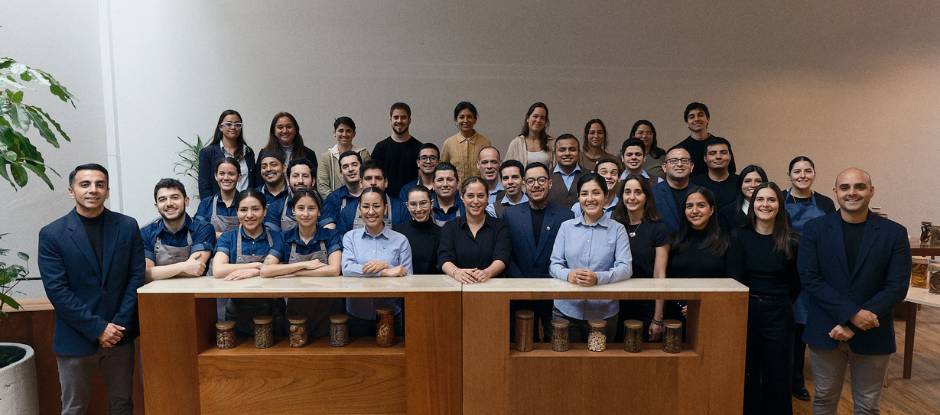
Kjolle won the Art of Hospitality Award as part of Latin America's 50 Best Restaurants 2025, and the best explanation is not charm by itself.[5] It is that the team seems to treat hospitality as adaptive interpretation.
The hospitality story emphasizes that different diners are guided differently depending on interest: some may want more on Mater, others more on drinks, others simply the meal itself.[5] That is a harder skill than giving everyone the same polished script. It requires staff who can read curiosity, restraint, fatigue, and tempo in real time.
This is where Casa Tupac again becomes useful. Because the experience has multiple spaces and multiple narrative checkpoints, personalization can happen by emphasis rather than by disruption. The team does not need to derail the dinner to deepen one aspect for the right guest. It can simply shift weight inside an already structured route.
That also helps explain why Kjolle's service identity feels more durable than restaurants that rely on maximal ceremony. Ceremony is scalable only to a point. Interpretation is harder, but it ages better.
6. Who should book, and why the model works
Book Kjolle if you want a Lima fine-dining meal where research-heavy content has already been translated into a calm guest path.[2][5] Book it if you care about biodiversity as an operating system, not just as sourcing language.[1][4] Book it if you want a room that uses softness, routing, and concise explanation to make an ambitious menu feel breathable.[3][5]
Think twice if your ideal luxury dinner is built on pure spectacle, maximal tableside performance, or endless optionality. Kjolle appears more interested in clarity than in overload. Its system is narrow by design: bounded schedule, guided route, integrated beverages, and a team trained to interpret rather than bombard.[2][5]
That is precisely why it stands out. In 2026, plenty of elite restaurants can claim deep sourcing, technical range, or cultural seriousness. Kjolle is more convincing because it has turned those ambitions into a guest journey people can actually absorb.
Sources
- Kjolle official homepage. Brand positioning, Barranco location, native-ingredient and sustainability framing.
- Kjolle official reservations page. Current booking framing, Theobromas Lab mention, address, and Tuesday-Saturday lunch and dinner windows.
- 50 Best Discovery, "Kjolle, Lima." Current rankings context, relaxed dining-room description, Many Tubers dish note, service-hours summary, and location details.
- The World's 50 Best Restaurants 2025, "Kjolle." Ranking context, founder details, and biodiversity framing.
- 50 Best Stories, "14 reasons why you'll have the time of your life at Kjolle in Lima." Art of Hospitality Award context and the detailed guest-journey description through garden, welcome drink, Mater, dining room, beverages, and theobromas dessert sequence.