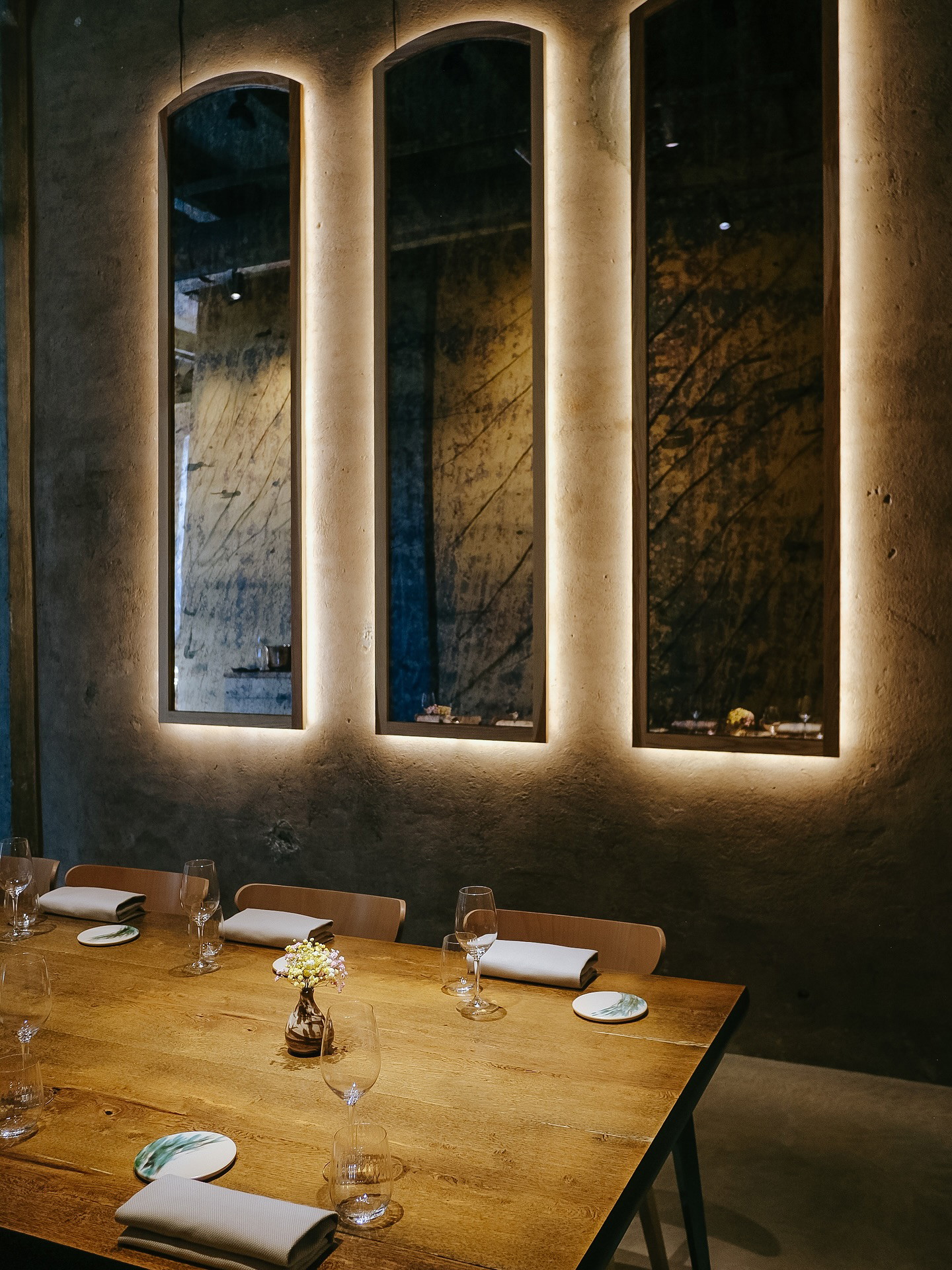
Kíce matters because it does not behave like a victory lap. Max Cekot already has the harder trophy: Max Cekot Kitchen is one of Riga's two one-Michelin-star restaurants in the 2026 Latvia guide, and it helped make Latvian fine dining legible to travelers who previously knew the city more through Art Nouveau facades, black bread, smoked fish, and a cold-weather pantry than through tasting-menu pilgrimage.[3][4] The obvious move would have been to make the flagship grander. Kíce does something more useful. It turns the same authorship sideways, into an à la carte room where precision can breathe.
The restaurant opened in Riga in 2026 as a new contemporary project by Cekot, positioned by Falstaff as a relaxed counterpart to Max Cekot Kitchen rather than another formal tasting-menu machine.[2] Kíce's own site describes the place as an à la carte restaurant by chef Max Cekot, built around modern comfort food, a warm atmosphere, and a small, seasonal, changing menu.[1] That wording could sound soft in another city. In Riga, it is the interesting part. The city has moved quickly from "will Michelin notice Latvia?" to "what happens after Michelin notices?" Kíce is one answer: the star system can pull attention in, but a serious dining culture needs rooms that locals might use without treating every booking like a once-a-year ceremony.
The Pressure Valve
Max Cekot Kitchen is built on trust. Its official menu page lists a 15-course set menu at EUR220, a 16-course Chef's Table at EUR350, wine pairing at EUR150, juice pairing at EUR105, and a 12.5 percent service fee added to the second bill.[5] The restaurant is open Thursday, Friday, and Saturday evenings, and the flagship describes its own format as seasonal, locally rooted, open-kitchen storytelling.[4][5] That is a powerful contract, but it is also a narrow one: the guest gives the room a whole evening, accepts the sequence, and lets the kitchen decide the pace.
Kíce loosens that contract. Its official page gives the hard room details: 180 square meters, Jelgavas str. 42/5, an emerging industrial district, and capacity for up to 60 guests.[1] Falstaff adds the operational shape: a 60-seat space, 21 individual dishes, and a menu designed to be combined by appetite and mood instead of divided into conventional starters and mains.[2] In other words, the sibling is not "cheaper tasting menu" as apology. It is a different social machine.
That distinction matters. A city does not become a better eating city merely by adding more locked menus. It becomes better when the techniques learned in formal rooms migrate into formats with less pressure: a weekday table, a late glass, a shared dish that can be excellent without demanding surrender. Kíce seems designed for that middle zone. It keeps the signals of seriousness: seasonality, product respect, a chef with a known fine-dining vocabulary, and a room composed with care.[1][2] But it removes the single-file procession that makes a tasting menu feel like a train you boarded before reading the timetable.
Why Riga Is Ready For This
Latvia's Michelin timeline is short enough that every new move still feels structural. LIAA's account of the guide's arrival says the first Latvia selection, announced in 2024, included 26 restaurants, with 19 in Riga and seven outside the capital; the 2025 guide included 31 Latvian restaurants, including two one-star restaurants, three Bib Gourmands, and one Green Star.[6] Michelin's own 2026 winners article says JOHN Chef's Hall and Max Cekot Kitchen, both in Riga, retained one-star status.[3]
That creates a new kind of diner. Some are visitors who now add Riga to a Baltic eating route. Some are locals who have watched the city acquire an external vocabulary for what was already changing. Some are industry people trying to decide whether Latvia's next step is more destination formalism or a broader restaurant ecology. Kíce is interesting because it points to the third possibility: a star chef can use his reputation to make a less rigid room feel serious, not secondary.
The address helps. Jelgavas str. 42/5 is not the postcard Riga of church towers and Old Town cobbles.[1] It sits in the same wider geography that made Max Cekot Kitchen surprising: across from the tourist center, in an industrial setting rather than a gilded heritage dining room.[4] That physical displacement is not just branding. It changes how the food reads. The restaurant does not need to imitate Parisian polish or Nordic severity. It can make Riga's own late-industrial textures part of the meal: warm wood, raw surfaces, tall windows, a little distance from the obvious route.
The Chef's Second Grammar
Cekot's flagship language is specific. The main restaurant describes a 15-course seasonal menu, local produce from nearby farmers and its own garden, handcrafted soft-drink pairings, and an open kitchen where guests hear stories behind the plates.[4][5] It also describes new dishes arriving every three weeks and the full tasting set changing every two months.[4] Those details tell you the chef is not merely plating Latvian ingredients for an international audience. He is building a controlled system: season, garden, room, service, drink pairing, and story all tuned to the same pitch.
Kíce appears to borrow the discipline but lower the ceremony. The official language emphasizes flavor, balance, product respect, comfort, and returnability.[1] Falstaff's report frames the food as seasonal, shareable, and flexible, with 21 dishes rather than a fixed procession.[2] That is not a small edit. It shifts the guest from recipient to composer. Instead of asking, "What will the chef show me next?" the room asks, "How do we want this table to move?"
That is where the profile becomes more than opening news. The most durable fine-dining cities have several speeds. They have the temple, the counter, the bistro, the wine room, the after-work plate, the birthday table, and the place where a serious cook can cook plainly without losing authority. Riga's Michelin era will feel thin if it only produces temples. Kíce is useful because it suggests the star room can generate a more casual grammar without diluting itself.
The risk is that "relaxed" becomes a marketing word and nothing more. A 60-seat room still needs consistency. A 21-dish menu can feel generous or unfocused depending on how sharply it is edited. Shareable food can either create convivial momentum or blur every plate into polite sameness.[2] Kíce's test, therefore, is not whether it looks less formal than Max Cekot Kitchen. It is whether the kitchen can keep Cekot's sense of balance while letting guests make more of the evening themselves.
The Better Kind Of Expansion
The best reason to watch Kíce is that it expands Riga's fine-dining story horizontally. Max Cekot Kitchen tells one version: Latvia as a precise, garden-aware, tasting-menu destination, serious enough to sit inside the Michelin map.[3][4][5] Kíce tells another: Latvia as a place where the same ambition can be warmer, more repeatable, and more socially elastic.[1][2]
That second version may matter more in the long run. Stars can validate a scene, but they can also narrow attention until every new room is judged by whether it is climbing the same ladder. Kíce seems to step off the ladder without rejecting it. It is still chef-led, still seasonal, still visibly designed, still attached to a name that helped change Riga's dining reputation.[1][2][3] But its promise is less about awe than use.
That is a quietly strong proposition for a city in its early Michelin years. The point is not that every fine-dining chef should open a casual sibling. The point is that a maturing restaurant scene needs places where technique exits the showcase and enters the table's normal rhythm. If Kíce works, it will not make Max Cekot Kitchen less special. It will make Riga feel more complete.
Sources
- Kíce Restaurant official site - concept, chef attribution, seasonal à la carte positioning, 180-square-meter room, 60-guest capacity, and Jelgavas str. 42/5 location.
- Ugne Vedeikaite, "Max Cekot Opens New Restaurant Kíce in Riga," Falstaff, May 5, 2026 - opening report, 60-seat room, 21-dish flexible menu, and Restaurant Kíce photo source.
- Michelin Guide, "The Michelin Guide Latvia 2026: All The Winners" - current Latvia 2026 award context, including JOHN Chef's Hall and Max Cekot Kitchen retaining one star.
- Max Cekot Kitchen official site - flagship restaurant background, 15-course tasting menu framing, local produce, garden, three-floor room, opening days, and Riga industrial-location context.
- Max Cekot Kitchen official menu page - set-menu, Chef's Table, wine-pairing, juice-pairing, service-fee, and seasonal-menu details.
- Investment and Development Agency of Latvia, "MICHELIN 2026 guide names Latvia's best restaurants" - Latvia guide timeline, 2024 and 2025 selection counts, and tourism context.