
On a Tuesday night, Kalaya's chef de cuisine reads out 246 covers in five waves. A cook answers a fire call. Woks flare behind the pass. Across the rest of Eater's film, the numbers keep arriving: a 60-quart massaman batch, 60 pounds of beef chuck, dozens of river prawns sorted before service, and hundreds of flower- and bird-shaped dumplings made for service.[1] This is not the scale normally suggested by the phrase home cooking.
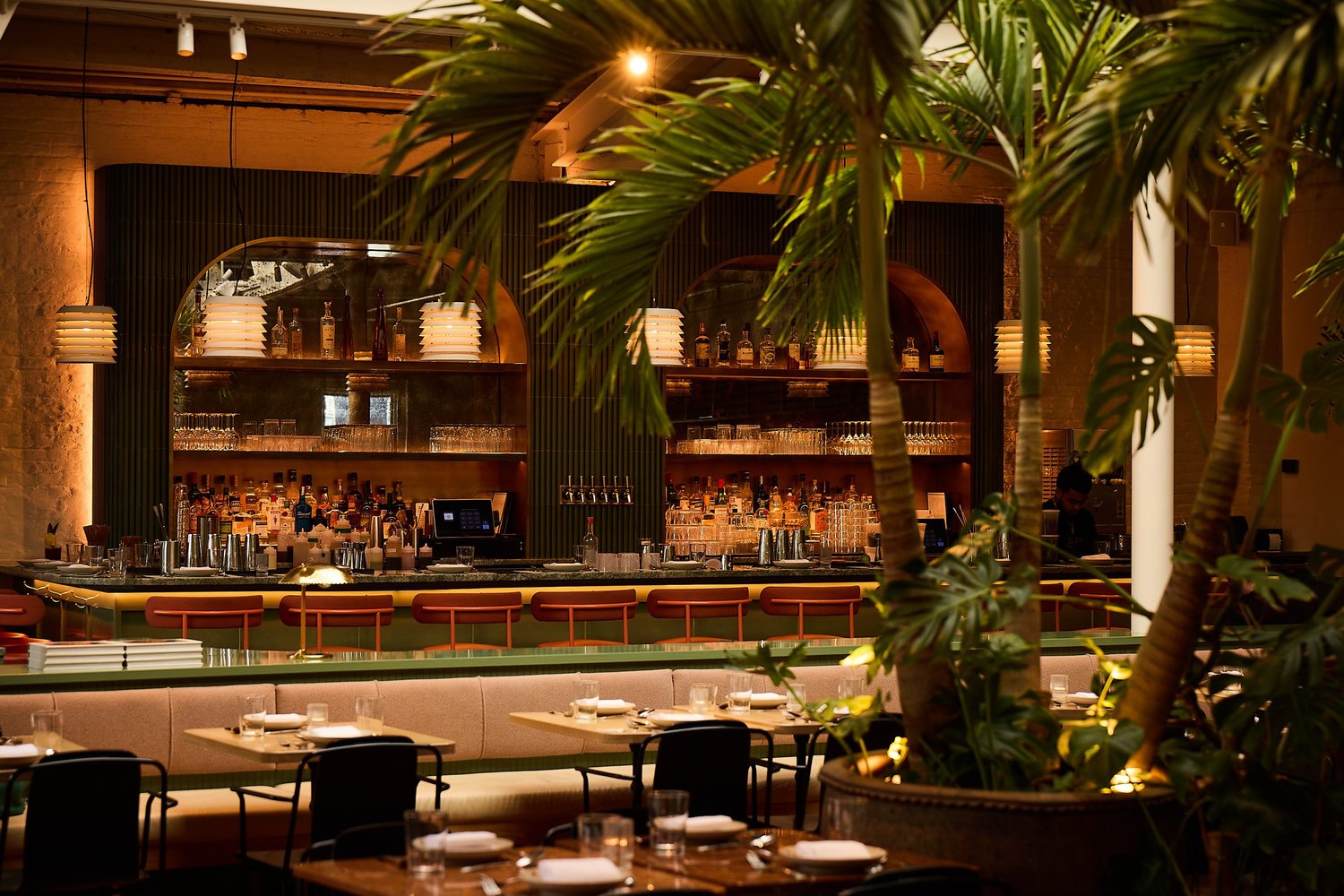
Yet chef-owner Chutatip "Nok" Suntaranon uses exactly that phrase for her food. Kalaya began in 2019 as a 30-seat BYOB and moved in 2022 into a Fishtown room with roughly 140 seats; published counts vary slightly by source, but every account agrees that the leap was dramatic.[1][3][4][6] The interesting question is therefore not whether a beloved small restaurant became big. It is how a bigger restaurant can keep the distinctions that made its cooking legible in the first place.
Eater's 17-minute Mise En Place episode is worth watching for its answer: Kalaya does not scale one generalized idea of "Thai flavor." It scales a set of separate decisions. Different curries retain different pastes. Imported ingredients and local substitutions follow different rules. Handwork is concentrated where the guest can read it, while grinders, portion bags, combi ovens, and large woks absorb repetition. The film turns restaurant growth from a branding story into something more tactile: texture, batch size, burner space, training, and the order in which work happens.[1]
Image context: Kalaya's own dining-room photograph shows the Fishtown scale without reducing the restaurant to a plate close-up. The palms, long bar, set tables, and visible depth establish the room whose kitchen systems this viewing examines.[2]
The Unit of Growth Is Not "Thai Curry"
Around 2:40, Suntaranon begins the massaman by identifying it as one of her mother's best curries. The family memory matters, but the operational detail immediately following it matters just as much. Kalaya serves five or six curry dishes, she explains, and each uses a different paste and a different cooking technique.[1] That refusal of a universal mother sauce is the article's key.
Watch what the kitchen modernizes and what it does not. The cooks toast chiles for aroma and color, grind coconut into a butter-like paste, and combine a prepared paste with ingredients specific to this batch. A stone grinder now simulates mortar-and-pestle action more quickly than hand pounding. Then the mixture moves into a broad lotus-leaf wok large enough for about 60 quarts of curry and 60 pounds of chuck. Automation has entered, but recipe boundaries have not disappeared.[1]
That distinction protects the cooking from two opposite mistakes. A restaurant could romanticize labor and insist that every motion remain manual, making volume exhausting and inconsistent. Or it could chase efficiency by turning several curries into variations on one base. Kalaya mechanizes the repeated motion while preserving dish-specific proportions and seasoning. Suntaranon's cookbook introduction reinforces the point: her project is built around Southern Thai recipes remembered from Trang, but also around years spent locating workable ingredients and adapting technique in Philadelphia.[3] The stone grinder is not a betrayal of memory. It is the equipment that lets a specific memory survive a Tuesday batch.
Consistency Has a Border
The film's ingredient choices are equally selective. Kalaya imports jumbo river prawns because their head fat is central to the tom yum's richness, and the kitchen sorts larger specimens for the wok from smaller ones destined for soup. The heads build stock; the tails are cut into shareable pieces. Specialty Thai ingredients, including palm sugar, are imported directly.[1]
But not every substitution is forbidden. At about 7:55, the kitchen portions barramundi because it is the closest dependable match it can source for the large white fish used in Thailand. Later, local Philadelphia mushrooms enter the tom yum. This is not a loose "local when possible" slogan. It is a boundary drawn ingredient by ingredient: preserve the river prawn because its fat defines the dish; choose a consistent local-market fish for service; let nearby mushrooms join a stock whose galangal, lemongrass, chile jam, and prawn heads already establish its flavor frame.[1]
Suntaranon's publisher excerpt describes the slower version of that work. After moving to Philadelphia, she had to rebuild a network of produce markets, a butcher, and a fishmonger, testing what could carry the flavors she remembered.[3] Seen against that history, consistency does not mean making Philadelphia impersonate Trang. It means knowing which substitutions change a dish's identity and which leave it intact.
Handwork Becomes Countable
The bird dumplings offer the film's clearest close-up of luxury under volume. Their cod filling is steamed, caramelized with aromatics, reduced until dry enough to hold, cooled, and rolled. The filling is frozen before shaping so the dough can be pinched into a bird without collapsing. Chile becomes the beak; black sesame becomes the eyes. Depending on the day, the team makes roughly 150 to 200 birds, alongside 400 to 450 flower-shaped dumplings.[1]
Those counts do not diminish the craft. They reveal what the restaurant has chosen to protect. The guest notices the silhouette, the fine pinching, and the fact that a namesake dumpling—Nok means little bird—arrives intact. The kitchen therefore spends hand labor on form, but uses sheet trays, freezing, staged filling, and a brief combi-oven steam to make that form reproducible at service.[1] Fine dining here is not "everything made slowly." It is a decision about where slowness remains perceptible.
The same principle explains why the Fishtown move did not simply enlarge the old menu. Suntaranon's own account says the first restaurant's dumplings began partly as a way to turn a tiny room's tables, then became signatures.[1] Eater's report on the relocation describes a 30-seat BYOB becoming a 145-seat restaurant with a bar and a new operating partner.[6] What began as a small-room tactic had to be rebuilt as prep choreography. The object stayed recognizable because the system around it changed.
Training Is an Ingredient
At roughly 9:10, the film shifts from recipes to transmission. Suntaranon describes taking chef de cuisine Will Flemming to Thailand: they cooked, ate, visited her hometown, and met her mother. She says she could see a difference after they returned.[1] The claim is modest but important. A written recipe can specify grams and minutes; it cannot fully specify which aroma signals that a paste is ready, how one curry should differ from another, or when a texture is tender but not falling apart.
The current James Beard Foundation profile of Kalaya makes the team dimension explicit. It describes Suntaranon's belief that hospitality begins inside the organization and notes that the open kitchen was designed so the back-of-house team would feel part of the dining room.[5] That context prevents the travel anecdote from reading as chef mythology. Training is not only inspiration gathered by an auteur. It is a way to distribute judgment so the restaurant does not depend on one person touching every pot.
Read the Room at 14:29
The best moment to test the whole argument arrives when the pre-service count is broken into waves: 57 covers, then 56, 64, 44, and 25.[1] Those numbers are not background noise. They explain the morning's stock pot, the pre-portioned fish, the cooled dumpling filling, the curry held just short of falling apart, and the large-batch prep. A 246-cover service is survivable because demand has been translated into timed packets of work.
The dining room, meanwhile, is deliberately theatrical. Suntaranon compares entering Kalaya to entering a theater; the open kitchen supplies flame, smoke, calls, and motion.[1] North America's 50 Best describes the move as a roughly fivefold increase in seats and emphasizes that the grander room did not make reservations easy.[4] But the spectacle works because the hidden organization is calmer than the view. The guest sees the wok fire, not the early use of free burner space for tom yum stock.
This film is an editorial portrait, not an operations audit. It cannot tell us everything about margins, scheduling, retention, or whether every service lands equally well. It does, however, show enough of the work to support a precise lesson. Scaling a personal cuisine does not require refusing machines, large batches, or substitutions. It requires deciding which distinctions carry identity, then building equipment, sourcing, training, and service around those distinctions.
Kalaya got bigger because "curry" never became one interchangeable thing. The pastes remain plural; the team learns the reasons; the tools take over repetition without taking over judgment. By the time the dining room fills, growth no longer looks like a larger copy of the original restaurant. It looks like hundreds of separate choices arriving together, hot.
Sources
- Eater, "Inside One of the Best Thai Restaurants in America — Mise En Place" — YouTube kitchen film on Kalaya's prep, batch sizes, training, and dinner service.
- Kalaya, official restaurant website — current description of the Southern Thai restaurant, chef-owner Nok Suntaranon, Philadelphia location, and the dining-room photograph used as the article image.
- Penguin Random House Retail, Kalaya's Southern Thai Kitchen: A Cookbook — publisher page and author introduction on Trang, curry-paste memory, Philadelphia sourcing, and the move from 30 seats to a larger Fishtown restaurant.
- North America's 50 Best Restaurants, "Kalaya" — 2026 profile of the restaurant's Fishtown expansion, menu, family roots, and position on the list.
- Layla Khoury-Hanold, "Kalaya's Spirit of Generosity." James Beard Foundation, 2026 — profile of the Outstanding Restaurant winner's team culture, open kitchen, and hospitality ethos.
- Ernest Owens, "How Philly Restaurants High Street, Pod, and Kalaya Found Success." Eater Philly, 2024 — report on Kalaya's transition from a 30-seat BYOB to a 145-seat Fishtown restaurant.