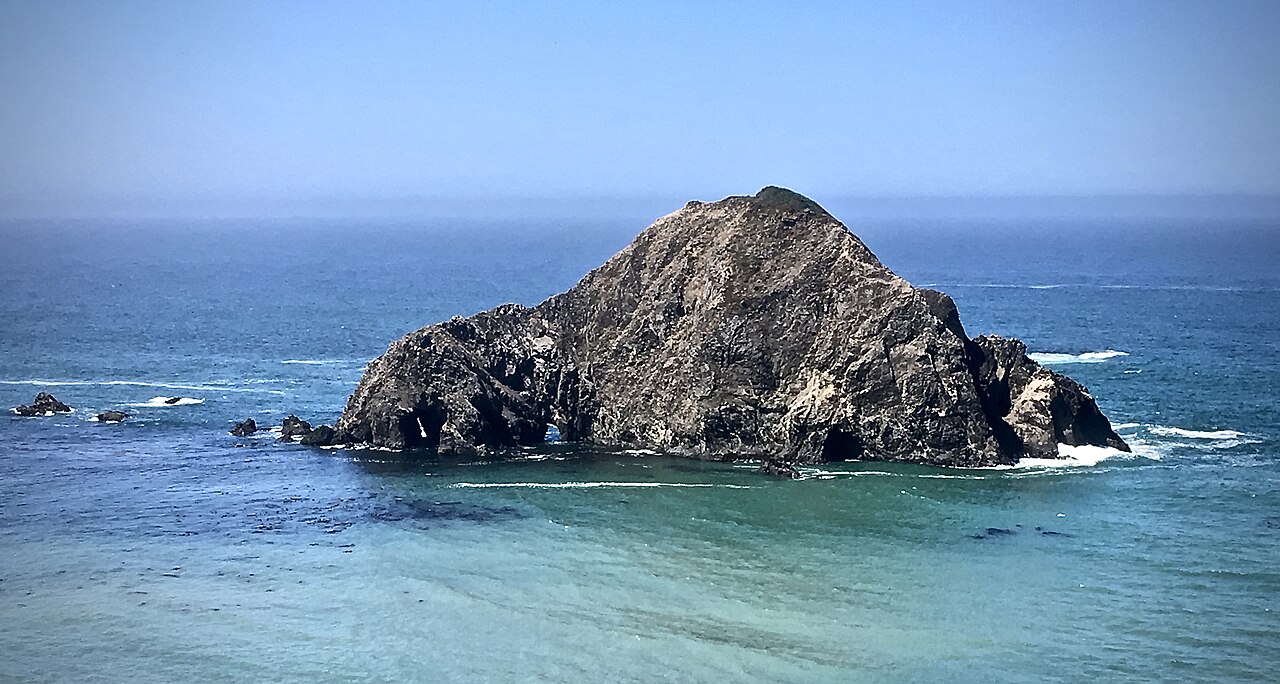
Harbor House is easiest to misunderstand as an escape restaurant: a beautiful inn on the Mendocino Coast, a long drive north from San Francisco, a dining room over the Pacific, dinner as reward for reaching the edge of the map. That reading catches the romance and misses the system. The more useful way to read Harbor House is as a service operation built around remoteness. Distance is not a mood. It is the constraint that decides staffing, pacing, procurement, preservation, guest arrival, and what the kitchen can ask from the coast.[4][5][6]
The public menu already shows how tightly the room is run. Lunch is listed at $150 plus tax and gratuity, dinner at $325 plus tax and gratuity, with separate beverage, non-alcoholic, and hybrid pairings; the same page notes that no automatic service charge is applied in the dining room.[1] That price structure matters because Harbor House is not selling a flexible restaurant visit. It is selling a controlled piece of time. The SFGATE report describes a 20-seat dining room with one seating per night, a setup that gives each table the evening but also raises the cost of every empty chair, late arrival, storm closure, or product failure.[5]
This is why the restaurant's most interesting luxury is not softness. It is coordination. The inn has 11 guest quarters, with six rooms in the main house and five cottages, and the official site frames dining as something inn guests can coordinate through the concierge.[3] Visit Mendocino adds the historical shell: the Harbor House Inn was originally built in 1916, later renovated over eight years, and now sits as an intimate lodging-and-tasting-menu property in tiny Elk.[6] In many urban restaurants, the guest arrives from a taxi, eats, and leaves. At Harbor House, the guest may sleep above or beside the same system that feeds them. Lodging, cove, farm, kitchen, and room are closer together than the usual fine-dining supply chain admits.
The menu reads like a logistics map
Harbor House's sample dinner does not list dishes as generic coastal luxury. It names work streams. A "savory infusion of sea vegetables" opens the sequence, followed by chilled vegetables with yuzu and cow parsnip seed, Dungeness crab with dulse and chawanmushi, abalone poached in sake with calhikari rice and offal, maitake mushroom with lace lichen, black cod smoked over bay laurel with turnip and seaweed, lamb with farm thinnings, and sweets that move through amazake, candy cap mushroom, Douglas fir, toasted kombu, spent coffee, umeboshi, marigold, and mugwort.[1]
The ingredients sound poetic, but the underlying structure is operational. Sea vegetables need harvesting, cleaning, drying, and restraint. Farm thinnings are not a luxury commodity; they are by-products of crop management that become useful only when the kitchen and farm speak often enough. Lace lichen, cow parsnip seed, Douglas fir, sea lettuce, and spent coffee do not behave like stable bought-in prestige ingredients. They ask for identification, timing, storage, and judgment. The meal depends on whether the house can keep small, local materials precise instead of merely local.
50 Best Discovery describes Harbor House as a terroir-led tasting menu shaped by the Pacific, forest, kitchen garden, fire, steam, and smoke, with eight- or 12-course formats and a garden often affected by coastal fog.[4] The fog detail is more than atmosphere. Fog changes the garden. It alters humidity, salinity, plant texture, and the way herbs and vegetables arrive in the kitchen. A normal restaurant can buy around weather. Harbor House has chosen to make weather part of the input.
The farm is not decoration
The Harbor House Ranch page is unusually specific for a restaurant farm. It says the ranch south of Point Arena covers 320 acres, with the cultivated farm expanding from an initial half acre after February 2021 to a full acre, supported by a 750-square-foot greenhouse and a movable high tunnel.[2] It also says all harvests are used by the kitchen for dinner service, lunch service, in-room dining, and fermentation projects.[2]
That last sentence is the heart of the operation. A restaurant garden becomes decorative when it only supplies a few herbs, tour photos, or moral vocabulary. Harbor House describes a loop. Growers and chefs discuss what product should become; plant life cycles are used more completely; intercropping, companion planting, water management, cover crops, nutrient recycling, and biodiversity are part of the farm's stated method.[2] The dining room sees the polished end of that work, but the service model starts earlier, with crop planning and menu planning learning to tolerate each other.
SFGATE's reporting makes the same system feel less smooth and more real. It describes the farm in Point Arena, a farmer who works around what is available, and local sourcing that still has boundaries: some produce changes seasonally, some citrus and mushrooms are purchased, and meat and seafood require relationships beyond the property.[5] That is the credible version of locality. A weaker restaurant story would pretend the coast solves everything. Harbor House's stronger story is that locality requires constant routing.
Sustainability becomes a backstage discipline
The official sustainability page says Harbor House has been 100% powered by renewable local energy resources since 2023, including geothermal and solar through Sonoma Clean Power, and that the property provides EV charging stations.[3] It also describes kitchen water reuse for gardens, a filtration system to reduce single-use plastic, coastal foraging, nearby farming, fryer oil repurposed into candles, and leftover butter solids used in sauces and other components.[3]
Those details matter because sustainability in fine dining often becomes a visible label attached to an invisible operation. Harbor House's public materials point toward the backstage version: energy, water, waste, foraging, farm use, and kitchen by-products all have to be designed into the day's work. None of those moves is glamorous at the moment of execution. They are repeated, slightly boring decisions that become impressive only when a guest realizes the meal would taste different without them.
SFGATE adds the harder edge: remote conditions also mean repairs can take months, storms can close service, power outages require evacuation and rebooking, and perishable food may need to be moved when refrigeration is threatened.[5] That is not romantic coastal language. It is risk management. The same place that gives Harbor House seaweed, cove access, fog, and a dining-room view also gives it fragile utilities, long drives, supply limits, and emergency planning.
One seating changes the hospitality contract
A single seating can sound like indulgence for the guest, and it is. The table is not under pressure to turn. The room can breathe. The kitchen can pace the meal as an evening rather than as a throughput problem.[5] But one seating also makes the restaurant more exposed. There is no second wave to recover from a mistake. If a storm blocks roads, if a table cancels late, if a critical ingredient fails, the night has fewer buffers.
That exposure explains the tone of the menu. Harbor House does not read like a restaurant trying to overwhelm diners with luxury signifiers. It reads like a house trying to keep the field of inputs legible: HH Ranch cucumber, sea lettuce, sea vegetables, dulse, abalone, lace lichen, bay laurel, farm thinnings, Douglas fir, kombu, spent coffee.[1] The meal works when those inputs feel inevitable rather than clever.
The inn structure supports that pacing. Visit Mendocino emphasizes the redwood ceiling, local ceramic plateware, foraged black trumpet mushrooms, wild borage, and uni as parts of a "sense of place."[6] The phrase can become vague in restaurant writing, but here it has physical consequences. Redwood, ceramics, cove, garden, coast, and room all narrow the guest's field of attention. By the time the first savory infusion arrives, the diner has already been placed inside the argument.
What the remoteness buys
Harbor House's remote position buys three things that a city restaurant struggles to fake. First, it buys silence around the meal. The guest has made a commitment before sitting down: the drive, the weather, the stay, the lack of casual drop-in energy. Second, it buys proximity to inputs that would look theatrical elsewhere: sea vegetables, saltwater, foggy herbs, farm thinnings, cove references. Third, it buys operational clarity. A 20-seat, one-seating, inn-linked dining room cannot hide behind volume. It has to know what it is doing tonight.[2][3][5]
The tradeoff is that the same remoteness makes the house brittle. Staffing requires people who want that life. Sourcing requires fallback logic. Storms and outages are not background possibilities. The kitchen has to preserve and repurpose because waste is both an ethical issue and a logistical failure. Service has to feel calm while the system behind it is negotiating weather, tide, crop, power, and road.
That is why Harbor House is more interesting as an operations story than as a scenic splurge. The view is real, and the romance is real, but the restaurant's achievement is that it turns the view into discipline. The Pacific is not scenery after the fact. It is a supplier, a risk, a smell, a salt source, a menu grammar, and a reason the whole evening has to be designed carefully from the beginning.[3][4][5]
Sources
- The Harbor House Inn, "Menu" - current public sample menu, lunch and dinner prices, pairing prices, service-charge note, and listed dishes.
- The Harbor House Inn, "Farm" - official description of Harbor House Ranch acreage, farm expansion, greenhouse and high-tunnel infrastructure, chef-grower dialogue, and harvest use.
- The Harbor House Inn, "Sustainability" - official description of renewable energy, EV charging, farm-and-forage practices, kitchen water reuse, filtration, and upcycling.
- 50 Best Discovery, "Harbor House Inn" - profile covering Matthew Kammerer, the Pacific and forest setting, kitchen garden, 11 suites and cottages, tasting-menu format, and service days.
- Anh-Minh Le, "It's one of the hardest restaurants to reach in California. It's also world famous," SFGATE, September 5, 2024 - reported feature on remoteness, one seating, team size, farm, cove, sourcing, outages, and operating risk.
- Visit Mendocino County, "Harbor House Inn" - tourism profile covering the inn's 1916 origin, 11-room format, renovation, bluff setting, redwood details, local tableware, and foraged ingredients.
- Wikimedia Commons, "Island offshore of Elk, California.jpeg" - 2019 photograph by Peter D. Tillman of a sea stack offshore from Greenwood State Beach in Elk, California, used as the article's lead image.