Garum sounds ancient enough to sit behind glass, but the modern restaurant version is more like a hidden stove. A few drops can make a sauce feel roasted, a broth feel longer, a vegetable taste less polite, or a piece of meat seem to echo itself. The trick is that the diner should not always notice the condiment. If a plate arrives shouting "fish sauce," the kitchen has used the tool too bluntly. At its best, modern garum is a quiet amplifier.
That is why it has become such a useful fine-dining technique. It gives chefs a way to turn scraps, trim, shellfish parts, mushrooms, meat, or vegetables into a liquid register of savoriness. The old Roman word still matters, because the idea begins with fish and salt. But the contemporary version has moved from sun-warmed vats toward controlled enzymatic work: protein, water, salt, koji, temperature, patience, and careful tasting. The result is not nostalgia. It is pantry engineering.
From Vat To Flavor System
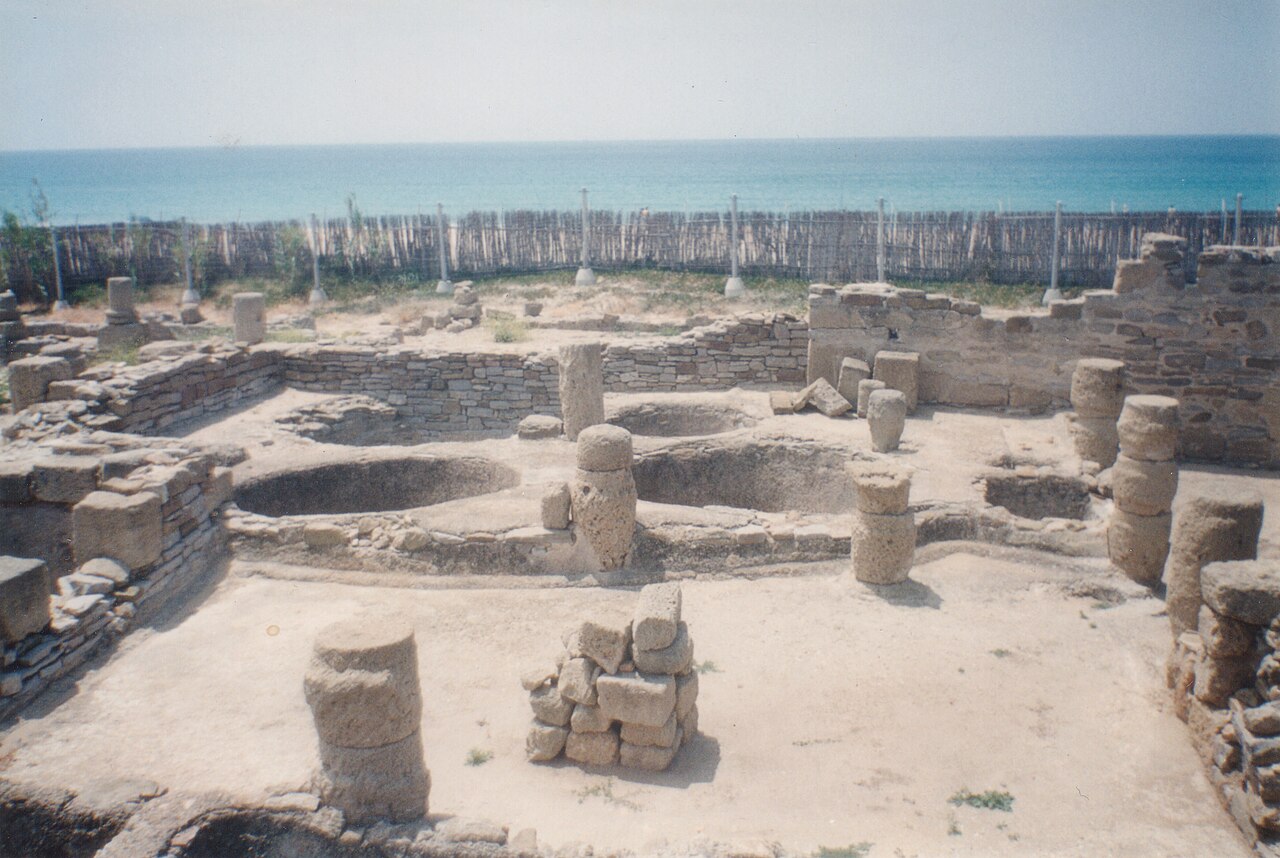
The archaeological image is useful because it strips away romance. At Baelo Claudia, on the Atlantic edge of southern Spain, garum was not a chef's flourish. It was an industry. Google Arts & Culture's exhibition on the site describes Baelo Claudia as a research laboratory for salted fish and garum, with functional urban salting factories, cleaning rooms, warehouses, dolia used to ferment fish, and a production history stretching across centuries.[3] Those stone vats are not decorative ruins. They are storage technology.
That industrial past explains why garum keeps returning. The method solves a problem that kitchens still recognize: how to capture the value of perishable protein before it spoils, and how to convert that value into something stable, salty, transportable, and intensely flavorful. Ancient producers used fish, salt, ambient heat, and time. Modern chefs inherit the same practical question but ask it with tighter controls and a wider ingredient vocabulary.
Noma Projects lays out the decisive modern shift. Traditional garum relies on autolysis and fermentation, with fish guts and enzymes breaking down protein into amino acids. Noma's version keeps the goal but changes the lever: koji supplies protease enzymes that can break down proteins in beef, squid, mackerel, clams, and other sources, producing deep umami with a cleaner aroma than gut-driven fish sauce.[1] That is the fine-dining move. The kitchen is not merely reviving a Roman condiment. It is separating the useful mechanism from the historical baggage.
Koji Changes The Clock
Koji matters because it turns garum from a passive waiting game into a managed process. The mold grows on a grain substrate and produces enzymes that can cut proteins into smaller pieces. Those pieces include amino acids and peptides, which are central to the savoriness, depth, and lingering taste associated with fish sauces and related ferments. A review of fish sauce processing in Food Research describes fish sauce as a long high-salt fermentation in which enzymes from fish muscle and digestive tracts, followed by halophilic microbial activity, break fish proteins into soluble proteins, peptides, and amino acids; it also identifies glutamic acid and other amino acids as important taste contributors.[4]
Modern koji garum borrows that biochemical logic without requiring every batch to behave like an ancient fish vat. Noma Projects says its faster garums are held at 60°C/140°F, a temperature that favors enzymatic activity and Maillard development while limiting microbial activity. In that environment, the team says a bucket of meat can become finished garum in roughly 10 to 12 weeks, with about 12 percent salt by weight helping make the system hostile to most food-borne pathogens.[1]
Those numbers are not trivia. They explain the texture of the modern result. A long, cool, uncontrolled fermentation can produce romance, but it can also produce mud. A warm, salty, enzyme-rich environment gives the kitchen repeatability. Repeatability is what allows garum to leave the fermentation lab and become serviceable: a lamb garum for lamb, a lobster garum in butter, a mushroom garum under vegetables, a chicken-wing garum in a jus, a shellfish garum folded into a sauce that wants depth without heaviness.
The Point Is Not Funk
The most common misunderstanding is to treat garum as a dare. Funk is part of the story, but it is not the whole story and often not the most interesting part. Noma Projects is explicit that the smell can be misleading: the foundation is glutamate-rich savoriness rather than mere stink.[1] Eater's reporting makes the same modern distinction through chefs who use garum not as a historical reenactment but as a flexible seasoning made from seafood, animals, vegetables, salt, and koji.[2]
This matters at the table. A tasting menu has little patience for blunt salt. If a kitchen adds soy sauce, fish sauce, miso, or bouillon where it does not belong, the dish can slide sideways into someone else's cuisine. Garum can be more specific. A lobster garum can reinforce lobster rather than turning the course generically marine. A beef garum can make a sauce taste more beef-like rather than more soy-like. A mushroom garum can deepen roasted vegetables without requiring meat stock. The condiment becomes a shadow of the ingredient, not a foreign accent pasted on top.
That is why the best use is often invisible. A diner may notice that the carrot tastes darker, the broth has more floor, or the sauce seems to carry roast notes without extra butter. They may not identify garum. In many dining rooms, that is the success condition. The technique has done its work when the plate tastes more complete, not when the waiter has to announce the cleverness of the ferment.
Waste Becomes A Second Pantry
Garum also appeals to modern fine dining because it gives trim a second life without making sustainability taste like obligation. The value is culinary first. A fish head, a roasted bone, mushroom stems, shellfish shells, or meat trim may be awkward in a composed course, but each still contains flavor. Koji garum lets the kitchen extract that flavor, stabilize it, and redeploy it later as a seasoning layer.
That is different from simply saying "zero waste." A waste slogan can become moral wallpaper. Garum demands craft. The kitchen must decide what deserves a batch, how much salt to use, whether the protein should be cooked or raw, what koji substrate makes sense, how warm the chamber should be, when the aroma turns from promising to tired, and whether the final liquid needs filtering, aging, blending, or restraint. Bad garum is not virtuous. It is just salty confusion.
The better version changes the restaurant's pantry logic. Instead of building flavor only from purchased luxury ingredients, the kitchen builds flavor from its own history. Yesterday's roasted poultry trim can become a future glaze. Shellfish work can return as a butter emulsion. A mushroom course can carry an earlier mushroom batch in liquid form. Time stops being a storage problem and becomes a compositional tool.
Why It Feels Cooked Twice
The phrase "cooked twice" gets at garum's deepest appeal. First, the original ingredient has its own culinary identity: beef, squid, mackerel, clam, mushroom, chicken wing, pea, or shellfish. Then enzymes take that identity apart and reassemble it as a liquid. Heat can add roasted tones; salt clarifies; filtration removes the sludge; service puts the result back into a dish. The ingredient has been translated, not merely preserved.
That translation is why modern garum can feel luxurious even when it begins with scraps. Luxury here is not rarity. It is concentration plus control. The sauce condenses labor, time, memory, and ingredient specificity into something small enough to disappear into a spoonful. It is the opposite of spectacle: a private architecture of flavor that supports the public plate.
The old Roman vats at Baelo Claudia still belong in the story because they remind us that garum was always infrastructure before it was fashion.[3][5] Fine dining did not invent the pleasure of fermented savoriness. What it has done is shrink the factory into the fermentation room and give the sauce a new precision. Koji provides the blade, salt provides the boundary, heat adjusts the clock, and the chef decides when the liquid has stopped being a process and become an ingredient.
Used well, modern garum does not make food taste ancient. It makes food taste resolved. The sauce carries a little shadow, a little roast, a little sea, a little cellar, a little memory of the ingredient it came from. That is why chefs keep reaching for it. Garum is not merely a condiment. It is a way of making flavor accountable to time.
Sources
- Noma Projects, "Garum: Got to Have the Funk" - primary account of Noma's modern garum method, including koji proteases, 60°C/140°F temperature control, 10-12 week timing, and salt level.
- Eater, "What Is Garum? And How to Use It for Cooking" - reporting on contemporary restaurant uses of garum, including Noma's fermentation lab and chef applications beyond fish.
- Google Arts & Culture and Conjunto Arqueológico de Baelo Claudia, "The Roman City of Baelo Claudia and the Secrets of Garum" - archaeological context for Roman garum production, salting factories, dolia, and trade.
- Syarul Hakimi et al., "A review on fish sauce processing, free amino acids and peptides with sensory properties," Food Research, 2022 - review of high-salt fish sauce fermentation, enzymatic protein breakdown, amino acids, peptides, and sensory properties.
- Wikimedia Commons, "File:Baelo claudia factoria.jpg" - 1995 real photograph of the Roman fish-salting and garum factory at Baelo Claudia used as the article image.