The easiest way to misunderstand Gaa is to reduce it to a slogan such as "modern Indian in Bangkok" and stop there.[3][4][7] That description is directionally correct, but it misses the restaurant's real technical achievement. Gaa is not compelling because it makes Indian flavors more expensive, or because it adds Thai ingredients to an already legible fine-dining template. Its stronger move is narrower and harder: it organizes intensity. Heat, acid, smoke, bitterness, umami, and fragrance are all pushed forward, but rarely in a way that feels punishing or macho. The meal reads as vivid rather than aggressive because Garima Arora keeps using structure to stop intensity from turning blunt.[1][2][5][6]
That is why Video Collection is the right mode for this restaurant. One short chef profile cannot fully explain the house grammar.[1] A stage talk about spice cannot do it alone either.[2] Watched together, though, the two videos reveal the logic beneath the tasting menu. The first clip explains why Bangkok matters, why Indian techniques remain central, and why vegetable umami, fire, oils, and hand-eating all sit inside Gaa's identity rather than around it.[1][5] The second explains Arora's deeper theory of flavor: spice is not only memory or comfort, but a way of pairing unlike ingredients so they sharpen one another without collapsing into sameness.[2][6] Put those together and Gaa stops looking like a fashionable fusion project. It starts to look like a restaurant built around controlled contrast.
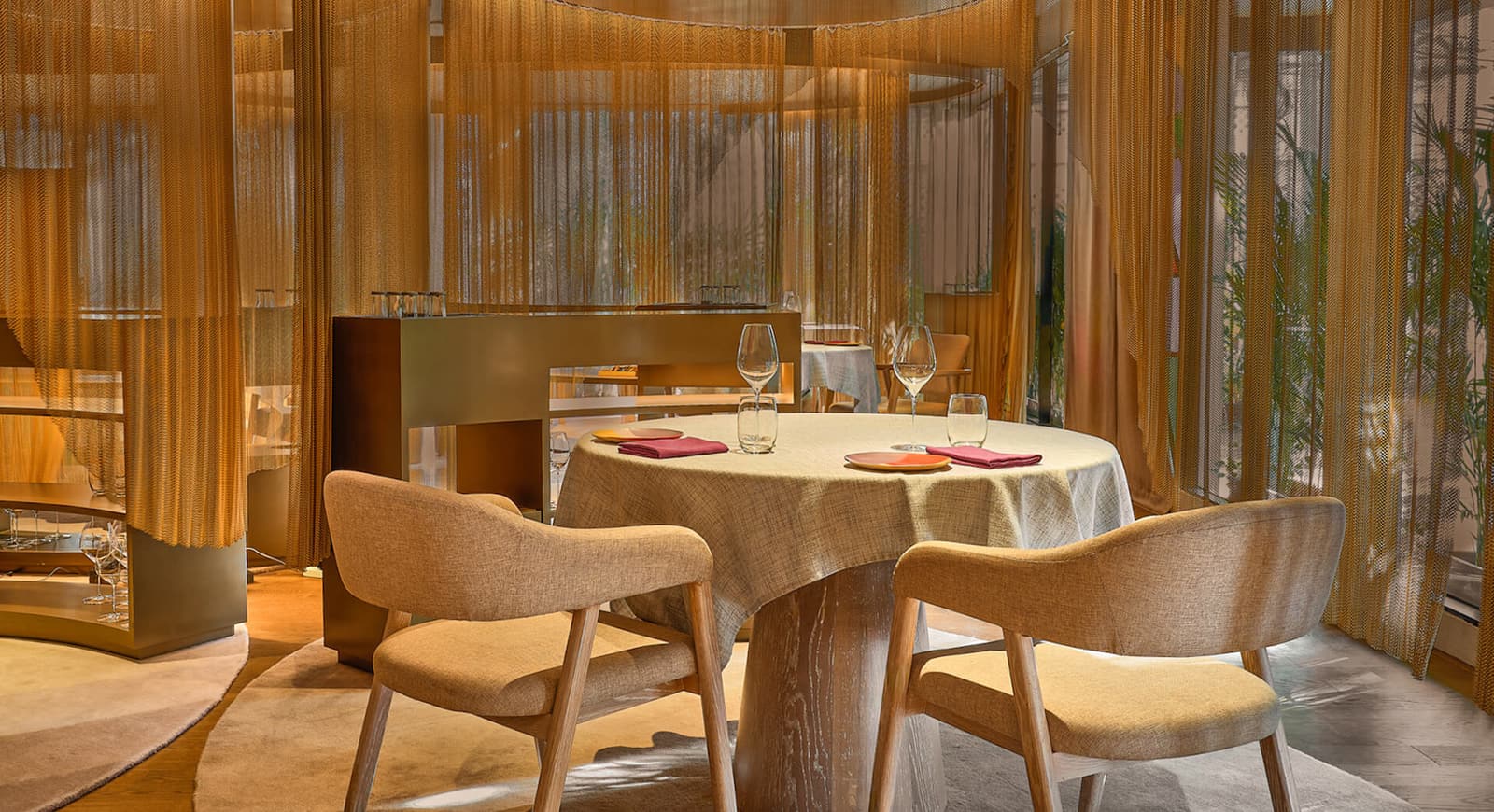
The room matters just as much as the theory. Gaa's own site defines it as a modern Indian fine-dining restaurant in a traditional Thai house in the heart of Bangkok.[3] Michelin's listing and 50 Best Discovery both reinforce the sense that the house is part of the proposition, not a decorative shell pasted onto it.[4][7] That physical setting is important because restaurants built on flavor intensity often make a category mistake: they push the plates harder and harder, then place diners in rooms that also feel hard. Gaa appears to understand the counter-rule. If the menu is going to be aromatic, spicy, and high-contrast, the room has to absorb some of that pressure.
Image context: the cover uses an official Gaa dining-room photograph from the restaurant website. A real room photograph is the right lead image here because this article's argument is that Gaa's cuisine only lands fully when the atmosphere is taken seriously: the house softens the force of the food without diluting it.[3]
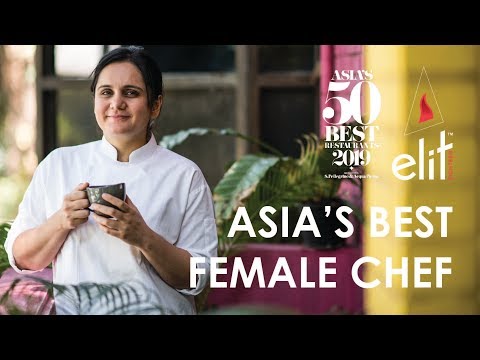
Video 1: the chef profile makes clear that Bangkok is part of the recipe
The 50 Best chef profile is only a few minutes long, but it gives away the whole first principle.[1] Arora says Gaa is not an Indian restaurant in the traditional sense, yet it relies heavily on Indian techniques to create a completely modern tasting menu.[1] That sentence matters because it rejects two lazy readings at once. Gaa is not offering museum-style authenticity, but it is also not treating Indian technique as a loose inspiration board. Technique remains the backbone. The menu's modernity is built through it, not in opposition to it.
What follows in the video makes that claim more concrete. Arora talks about drawing umami from vegetables through Indian methods, then points to a jackfruit dish whose final bite depends on grill flavor, caramelized onions, pickles, and the act of eating with the hands.[1] This is already enough to separate Gaa from a lot of upscale "global Indian" cooking. The point is not merely plating Indian references more elegantly. The point is to preserve forms of contact and extraction that carry social memory with them. Hand-eating is not a gimmick in that context. It is part of how the dish keeps its emotional temperature.
The profile becomes even more useful when Arora starts talking about fats and fire.[1] She remembers a childhood kitchen stocked with many different oils and says Gaa borrows that same logic, using fat to pull different flavors from herbs and vegetables.[1] She also calls cooking on fire a cheat code because fire makes almost anything taste better.[1] That could sound like a simple chef's aside, but it is actually a statement about control. When a kitchen works with strong materials such as smoke, char, pickles, and multiple infused fats, it has to know exactly where intensity is coming from and how those intensities will stack. This is not maximalism for its own sake. It is editing.
The clip's most important line may be the one about Bangkok. Arora says she could not imagine a better backdrop for Gaa because the connection between India and Thailand runs deep through people, language, food, mythology, and culture.[1][5] That line reframes the whole restaurant. Bangkok is not just where Gaa happens to be located. Bangkok is the medium that allows the restaurant's Indian techniques and Thai produce to converse without feeling forced. Read next to the official site's emphasis on a traditional Thai house and 50 Best Discovery's account of the restaurant's place in the city, the effect becomes easier to name: Gaa is building a modern tasting menu in which geography behaves like voltage, but architecture behaves like a regulator.[3][7]
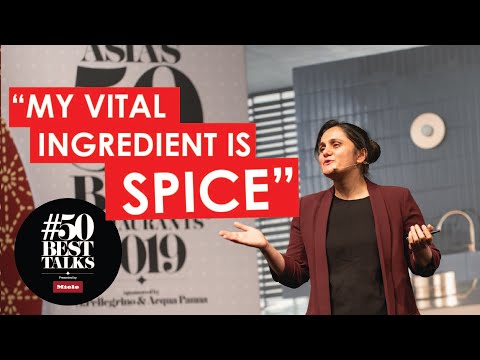
Video 2: the spice talk explains why Gaa's dishes feel surprising instead of loud
The second video, Arora's #50BestTalks presentation on spice, is where Gaa's deeper logic comes into focus.[2] The talk begins with family memory and domestic ritual: nutmeg on a baby's lip, clove for toothache, turmeric in wedding ceremonies, the masala box in every Indian household.[2] Those stories matter because they keep spice tied to life rather than spectacle. Yet the real turn in the talk is analytical. Arora says the beauty of that spice box is not speed or abundance, but instinctive combination: ingredients that do different jobs, used together with enough judgment to become harmonious.[2][6]
From there she moves into the concept that matters most for reading Gaa: negative food pairing.[2][6] Instead of assuming ingredients should share many flavor compounds, she is interested in combinations that have less in common and therefore highlight each other's best qualities while covering undesirable edges.[2] That idea explains why Gaa's food does not have to choose between comfort and surprise. Surprise is engineered through difference, but difference is organized so carefully that the diner still experiences a complete flavor sentence rather than a stunt.
Her example in the talk is memorable for exactly that reason: strawberry, caviar, and a Thai herb oil, brought together because they share one compound in unusually high quantities.[2][6] On paper, it sounds like the sort of combination that lesser fine dining would use as proof of cleverness. In Arora's telling, though, the point is not weirdness. The point is that the ingredients work together without blending into a mush of consensus.[2] Each one stays itself. That is a much stronger ambition. It also explains why Gaa feels more rigorous than restaurants that simply intensify spice or acidity until diners register boldness.
The talk's closing lesson is even broader. Arora says spice gave her an amazing resource for creating something new, something delightful, something previously untasted, precisely by asking why older techniques developed the way they did.[2] That question links the talk back to the first video's discussion of oils, fire, vegetables, and the India-Thailand connection.[1][2] Gaa's novelty is therefore not built on novelty-chasing. It is built on interrogating inherited methods until they release new pairings and new emotional effects. The restaurant sounds modern because it keeps asking historical questions under pressure.
What the collection reveals when watched together
Seen together, these two videos make a sharper claim than either can make alone. Gaa's real luxury is not bravery, and it is not simply spice. Its luxury is control over intensity. The chef profile shows where that control begins: Indian technique, vegetable extraction, multiple oils, fire, and a Bangkok setting where Thai ingredients and Indian memory can meet naturally.[1][5] The spice talk shows how that control is intellectually maintained: through pairings built on contrast, friction, and selective overlap rather than on easy similarity.[2][6]
That is also why the house matters so much. A restaurant built on this kind of flavor logic could easily become exhausting. Gaa appears to avoid that outcome by letting the room perform the opposite register. The traditional Bangkok house, the warm curtains, the soft lighting, and the measured service environment all give the diner somewhere to land while the food keeps asking sharper questions.[3][4][7] Fine dining often confuses seriousness with severity. Gaa looks smarter than that. It lets the plate be forceful and the room be humane.
This is what makes the restaurant worth watching now. Gaa is not important because it proves Indian food can survive fine dining; that argument is too old and too small.[1][5] It is important because it shows a more durable path for contemporary luxury cooking in Asia: use deep technique, use local geography, use strong flavor, but never let force become the only language. The best moments at Gaa, at least in these videos, come from restraint inside intensity. Spice does not bully the palate. It shapes the architecture of the meal.[1][2][3][7]
Sources
- 50 Best, "Garima Arora of Gaa in Bangkok is elit Vodka Asia's Best Female Chef 2019," YouTube video.
- 50 Best, "The Magic Of Spice - Garima Arora at #50BestTalks," YouTube video.
- Restaurant Gaa official website - restaurant description and traditional Thai house setting in Bangkok.
- MICHELIN Guide, "Gaa - Bangkok - a MICHELIN Guide Restaurant."
- The World's 50 Best Restaurants, "Garima Arora on the Indian chef's cheat code, eating with the hands and the key to success at Gaa."
- The World's 50 Best Restaurants, "The spice is right - discover how Garima Arora of Gaa in Bangkok uses science to enhance flavour."
- 50 Best Discovery, "Gaa" - profile on the restaurant's house setting, menu identity, and Bangkok positioning.