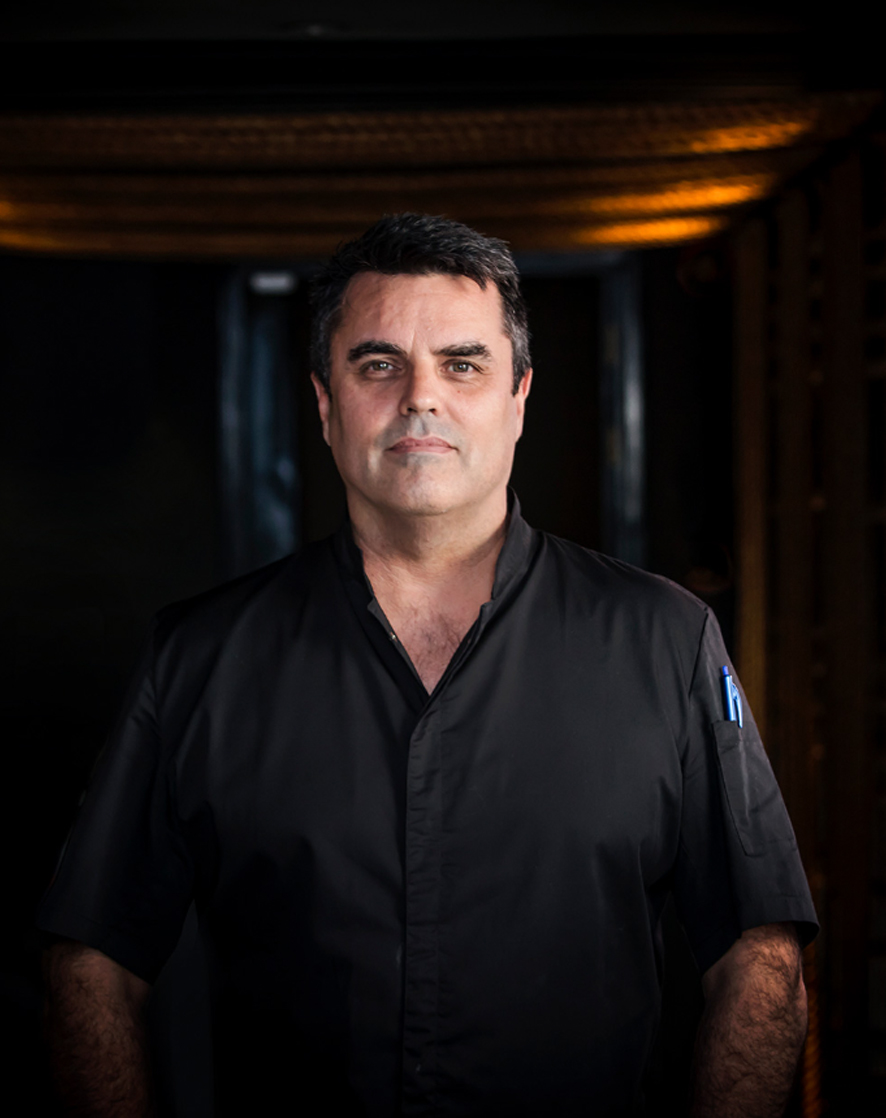
Many restaurants get described as fusion when critics do not know where else to place them. FYN deserves a narrower and more useful description. What its public material and outside coverage make clear is that the Cape Town restaurant does not simply mix Japanese and South African references on the plate. It builds a whole dining room around that conversation: the fifth-floor setting above Parliament Street, the open view into service and kitchen work, the partnership between Peter Tempelhoff, Ashley Moss, and Jennifer Huge, and a menu structure that lets the same house logic travel across standard, pescatarian, and plant-based formats. [1][2][3]
That whole-house coherence is why FYN matters now. A lot of ambitious tasting-menu restaurants can explain their ingredient philosophy. FYN's stronger move is that it can explain the room, the pacing, the beverage thinking, and the sourcing in the same breath. When a restaurant can do that, "concept" stops sounding like marketing copy and starts sounding like operating method.
The room makes the city part of the meal
FYN's own site places the restaurant on the fifth floor of Speaker's Corner in central Cape Town and describes the room as suspended between stillness and energy, expansive yet intimate, raw yet refined. [1] That is the right place to begin because the restaurant is not trying to create pastoral distance from the city. It is trying to elevate the city into a dining frame.
Condé Nast Traveler's review helps clarify what that looks like in practice. Jane Broughton describes a glass-walled fifth-floor space with views toward Table Mountain and Lion's Head, and notes that the boundaries between kitchen and dining room are deliberately blurred, with the pastry section set right in the middle of the room. [3] That detail matters. Plenty of ambitious restaurants talk about transparency. FYN turns transparency into layout.
So the room's "vertical" feeling is more than architecture. It is the sense that Cape Town has been pulled upward and tightened. The city remains visible, but the restaurant does not dissolve into panorama dining. The view supplies lift; the room keeps concentration. That is a hard balance, and it is one of the reasons FYN feels more resolved than places that lean on scenery as a substitute for structure. [1][3]
The cooking is disciplined enough to avoid vague fusion
FYN's homepage describes the food as an emotive reflection of land and sea, following Japan's culinary philosophy through seasonality, restraint, and respect for the inherent character of ingredients. It also calls the cuisine modern African. [1] On paper, that could read like a polished slogan. The useful part is that outside reporting points in the same direction.
Condé Nast describes the cooking as African-inspired but shaped by Tempelhoff's long fascination with Japan, especially in the restaurant's kaiseki-style sequencing and attention to texture. [3] The official menu structure reinforces that the restaurant is not hanging everything on one fixed chef's-menu script. The public menu page currently offers an experience menu alongside pescatarian and plant-based variants, with lunch routes as well as dinner routes. [2] In other words, FYN has built more than one door into the same house.
That is a meaningful design choice. Many restaurants with strong authorial identities become brittle when they have to translate themselves for different diners. FYN's menu architecture suggests the opposite ambition: keep the central grammar stable while allowing several dietary lanes to carry it. That is a stronger sign of maturity than a single heroic tasting menu that only works in one format. [2][3]
The result is that "Japanese-Cape" reads less like a mash-up label and more like a discipline of editing. Japan supplies sequence, restraint, and a respect for product character; Cape Town and the wider South African pantry supply terrain, climate, and flavor memory. [1][3] When those two forces are held tightly enough, the food escapes the common fusion problem, which is abundance without focus.
Service and beverage are a second kitchen
FYN's site is unusually explicit about leadership: the experience is driven by chef-founder Peter Tempelhoff, culinary director Ashley Moss, and sommelier and service director Jennifer Huge. [1] That triad is important because the restaurant does not present front of house as a support department. It presents service and beverage as equal authors of the experience.
The strongest evidence for that comes from Relais & Chateaux's March 2026 award page honoring Jennifer Huge as its Woman of the Year with Pommery. The organization describes her as co-founder and service-and-beverage director, credits her with mentoring managers and sommeliers across Cape Town, and emphasizes her work with exclusive wine, cocktail, and mocktail lists that combine French finesse with South African hospitality. [4] Condé Nast arrives at a similar conclusion from a review angle, describing her as the person who runs a tight ship and oversees highly original pairings. [3]
This matters because a lot of fine-dining restaurants still behave as if wine service exists to decorate the chef's story. FYN's public profile suggests a different hierarchy. Beverage here looks like a parallel kitchen: another place where selection, sequencing, and local knowledge get turned into structure. If that reading is correct, FYN's real luxury is not simply ingredient cost or tasting-menu labor. It is the density of interpretation available at the table.
Its local claim is ecological, not decorative
The newest and most convincing part of FYN's public story is not aesthetic at all. In a January 29, 2026 Relais & Chateaux article about joint UNESCO initiatives, Peter Tempelhoff's pilot project is described as a partnership with the Kogelberg Biosphere Reserve and the Cape Floral Region Protected Areas UNESCO World Heritage Site. The focus is on indigenous species: integrating them into the restaurant, cultivating them on FYN's farms, and discouraging illegal foraging through education and stewardship. [5]
That is exactly the kind of detail that keeps locality from turning into table-side theater. Too many restaurants use biodiversity as a mood board word. This project gives the term operational content. It suggests that FYN wants local ingredients to be tied to continuity and protection, not only to novelty on a menu card. [5]
Read together with the restaurant's Japanese philosophical language, the biodiversity work sharpens the house logic. Restraint stops being a stylistic import and starts looking like an ecological ethic as well. Respect for ingredients gains a second meaning once the restaurant's public story includes cultivation and anti-foraging awareness rather than extraction alone. [1][5]
Why the restaurant feels timely now
FYN feels timely because it looks settled without looking static. The room is established, the leadership structure is legible, the menu formats are multiple, and the latest outside recognition has gone to service and biodiversity work rather than to shock-value invention. [2][4][5] That combination is unusual. It suggests a restaurant moving deeper into its identity rather than louder about it.
If you are deciding whether FYN is worth the attention, the clearest reason is this: the restaurant seems to understand that a modern flagship has to do more than plate beautiful food. It has to choreograph city, room, menu, beverage, and ingredient ethics into one readable experience. Cape Town already has spectacular scenery. FYN's achievement is that it turns a slice of that city into a tighter, more deliberate dining instrument. [1][3][5]
Sources
- FYN, homepage and restaurant overview - concept statement, location, team roles, and operating hours.
- FYN, "Experience Menu" - current menu structure showing experience, pescatarian, plant-based, lunch, and dinner pathways.
- Jane Broughton, "Fyn Restaurant - Restaurant Review." Condé Nast Traveler - fifth-floor room, open-kitchen layout, kaiseki framing, and Jennifer Huge's service/wine role.
- Relais & Châteaux, "Women of the Year Trophy 2026" - Jennifer Huge's mentoring profile and the beverage program's positioning inside FYN.
- Relais & Châteaux, "Biodiversity starts on our plates" (January 29, 2026) - FYN's UNESCO-linked indigenous-species stewardship project in the Cape Floral region.