Auguste Escoffier is too often reduced to a marble bust in the corridor of classical French cooking: Peach Melba, mother sauces, grand hotels, the phrase "king of chefs." That version is not wrong, but it is too still. The more interesting Escoffier is an operator. His real fine-dining invention was a way to make luxury reliable at scale without making it feel industrial at the table.
That matters because modern tasting rooms, hotel restaurants, chef's counters, and culinary schools still live with the problem he helped define. How do you make a meal feel personal when dozens or hundreds of covers move through the building? How do you make creativity survive timing, procurement, staffing, hygiene, and memory? Escoffier's answer was not one dish. It was a system: a brigade, a menu grammar, a supplier network, a calmer command style, and written standards that could travel beyond one charismatic chef.[1][2][3]
The lineage begins modestly. The Escoffier Museum traces him from apprenticeship at thirteen in Nice through Paris restaurants, wartime army cooking, Monte Carlo, Lucerne, London, Paris, and the Carlton.[1] That path matters because it gave him both ends of the profession: the heat and disorder of the working kitchen, and the exacting social theater of hotels built for aristocrats, artists, financiers, and travelers. By the time he partnered with Cesar Ritz, fine dining was no longer only a restaurant question. It was a hospitality question.[1][2]
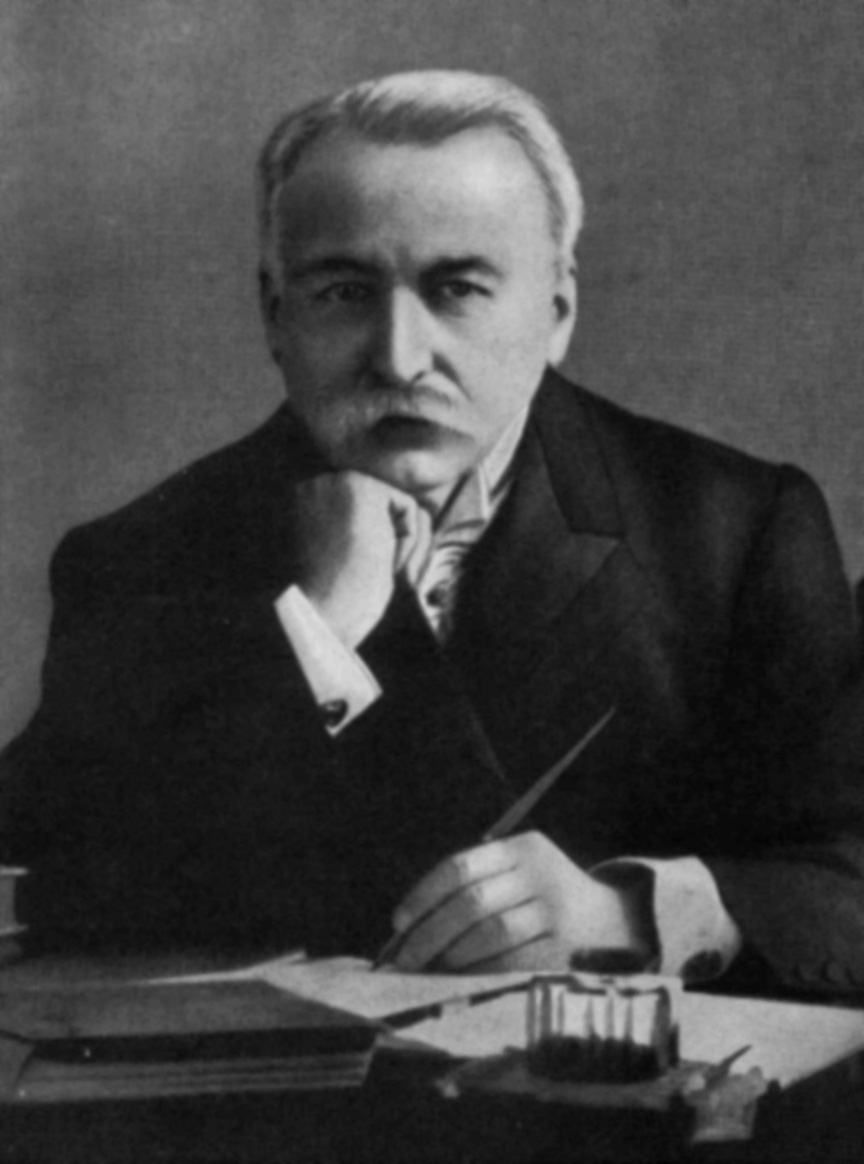
Image context: the cover uses a late nineteenth-century photographic portrait of Auguste Escoffier from Wikimedia Commons. The picture is restrained rather than dramatic, which suits the argument. Escoffier's revolution was less about looking flamboyant than about making complex service behave with polish, discipline, and repeatability.[5]
The Hotel Changed The Kitchen
Escoffier and Ritz met in the Monte Carlo hotel world in 1884, then moved through Lucerne and London as rail travel and luxury tourism were expanding.[1] The museum's biography frames their collaboration as a key step in the creation of international luxury hospitality, not simply as a chef-plus-manager partnership.[1] That distinction is everything. A private aristocratic table could depend on household custom, a trusted cook, and a relatively closed audience. A grand hotel had to welcome strangers, impress them quickly, remember preferences, and make the machinery disappear.
At the Savoy in London, Ritz entrusted Escoffier with the kitchens and restaurant. The museum describes the Savoy's cuisine as gaining international fame, with European aristocracy, American industrial wealth, artists, and Nellie Melba moving through the room.[1] That audience helped create the Escoffier myth, but the workload created the Escoffier method. A dining room full of famous people does not forgive confusion just because the sauce is elegant. The whole building has to know what is happening.
That is why the professional-school version of Escoffier still matters. The Auguste Escoffier School of Culinary Arts frames him as the figure behind many concepts that became foundational to modern cuisine, including the kitchen brigade, the elevation of dining-room service, and the codification of recipes and methods that could be taught beyond one kitchen.[2] The language is educational, but the underlying claim is sharp. Escoffier made luxury legible as workflow.
The Brigade Was A Service Technology
The brigade system can sound militaristic in the dullest possible way: ranks, station names, obedience. In practice, its importance was more practical and more sensual. It divided the kitchen so that timing, repetition, and responsibility could be held by specialists. The saucier, rotisseur, garde-manger, entremetier, pastry section, and chef did not merely occupy a hierarchy. They gave a complicated meal a map.
At the Carlton, Escoffier had the scale to prove the model. The museum says he remained there until 1920 and worked with a team of sixty cooks, perfecting his organization.[1] His colleagues described a day that reads less like culinary romance than like operations management: morning inspection, menu work, dining-room intelligence, movement between room and kitchen during service, evening menu preparation, dinner service stretching deep into the night, and a final midnight check to avoid waste.[1]
That final detail matters. Waste control sits beside grandeur. In a bad luxury kitchen, extravagance becomes license for chaos: over-order, over-produce, throw away the evidence. Escoffier's authority went the other direction. He wanted polish, but polish had to come from discipline. The meal could feel abundant because the system behind it was exact.
The best modern comparison is not a factory line. It is a theater company with a technically demanding show. The guest sees pace, warmth, and ease. Behind that ease are marks on the floor, cues, backups, and people who know which decision belongs to whom. Escoffier's brigade did not remove craft from the kitchen. It gave craft a structure sturdy enough to survive volume.
The Menu Became A Promise
Escoffier's food also changed because the menu had to do more work. The museum credits him at the Savoy with inventing fixed-price menus for a minimum of four people, successful with demanding and busy Carlton clients.[1] That sounds like a small format choice until you think about what it solved. A fixed menu lets a kitchen promise sequence, cost, pacing, and procurement before the guest starts negotiating with the room.
The same logic applies to the movement from ornate excess toward cleaner cuisine classique. Escoffier did not make French cooking simple in the casual sense. He made it more readable. A dish could still be luxurious, but it had to justify its place in a sequence. Sauce, garnish, temperature, and plate shape had to work as parts of an intelligible meal rather than as a parade of abundance.
Le Guide culinaire is the written form of that promise. The 1903 French edition is preserved online by the Internet Archive, with its metadata listing Escoffier as author and recording the book as a practical culinary aide-memoire.[3] Project Gutenberg's page for the English A Guide to Modern Cookery describes it as developed from Escoffier's work at the Savoy and Ritz, built from more than 5,000 recipes in concise professional form.[4] In other words, the book was not prose for home fantasy. It was a compression tool for trained cooks.
That is why the book still matters even to restaurants that no longer cook in his style. Modern fine dining has moved far beyond Escoffier's recipe canon: Nordic preservation, Japanese counter grammar, Latin American biodiversity menus, Korean fermentation, West African fire and spice, zero-waste kitchens, plant-led menus, and radically shorter formats all live outside the old hotel frame. But the need for a shared internal language remains. If the team cannot name a sauce, a cut, a pickup, a garnish, a station, a sequence, or a standard, the guest eventually tastes the confusion.
Suppliers Were Part Of The Room
Escoffier's system did not end at the kitchen door. The museum biography notes his efforts to source French products for the Savoy: butter from Normandy and Brittany, green asparagus from Provence, peaches from the Rhone valley, Rouen duck for London poultry suppliers, and tinned crushed tomatoes from a preserving company.[1] This is one of the most modern parts of the story. The luxury kitchen was already a supply-chain argument.
That sourcing work complicates the common caricature of classical French dining as only sauce and status. Escoffier understood that a grand room could not be better than its inputs, and that inputs had to be organized. The chef's job was not simply to stand at the pass and bless plates. It was to make the outside world arrive in usable condition.
Here the lineage runs directly into today's fine-dining language. When a restaurant now talks about a farm, a fishing boat, a forager, a miller, or a fermentation room, it may sound anti-classical. In one sense it is: the aesthetics are often leaner, less French, less hotel-bound. But the operational problem is familiar. Excellence requires a dependable relationship between product, storage, preparation, staffing, and menu. Escoffier's butter, asparagus, duck, and tomatoes belong to the same family of thought as a modern chef building a grower network or preserving a short season for winter service.[1]
His Legacy Is The Calm Behind The Meal
The most surprising thing in the Escoffier sources is not a recipe. It is the repeated emphasis on steadiness. The museum's quoted biographical account has him imposing discipline without raising his voice, moving between office, dining room, kitchen, suppliers, and service with almost bureaucratic attention.[1] The culinary-school retelling presents his legacy as teachable discipline rather than shouting or mystique.[2]
That matters now because fine dining has spent years questioning the old kitchen's human cost. The brigade can create clarity, but it can also excuse brutality if hierarchy becomes performance. Escoffier's own world was not modern labor utopia, and no nineteenth-century hotel system should be romanticized. Still, the most durable lesson is not that kitchens need harsher command. It is that hospitality collapses when responsibility is vague. The healthier version of the brigade is not fear. It is precision, training, memory, and a chain of care that runs from supplier to cook to server to guest.
Seen that way, Escoffier's importance is less nostalgic and more useful. He did not merely codify old French food. He made an operating system for luxury dining at the moment when hotels, railways, international travel, professional manuals, and mass elite tourism were changing what a restaurant could be.[1][3][4] Every ambitious dining room still faces his question: can the meal feel effortless without hiding from the labor that makes effortlessness possible?
The answer, when it works, is Escoffier's living inheritance. The room glows. The courses arrive in rhythm. The sauce is hot, the cold dish is cold, the server knows the table, the kitchen knows the room, and the guest never has to see the map. Fine dining becomes memorable not because chaos was overcome by force, but because many people shared one precise language long enough for dinner to feel inevitable.
Sources
- The Escoffier Museum of Culinary Art, "Auguste Escoffier" - biographical chronology, Savoy/Ritz/Carlton timeline, Carlton brigade details, supplier practices, publications, and later humanitarian work.
- Auguste Escoffier School of Culinary Arts, "How Important Is Auguste Escoffier?" - overview of Escoffier's culinary legacy, brigade system, service standards, and codification of professional methods.
- Internet Archive, Le guide culinaire: aide-memoire de cuisine pratique by A. Escoffier (1903) - digitized French edition and catalog metadata.
- Project Gutenberg, A guide to modern cookery by A. Escoffier - English public-domain edition metadata and summary of the book's professional recipe format.
- Wikimedia Commons file page for the late nineteenth-century Auguste Escoffier portrait used as the article image.