Ms. So carried a stamp with her own number on it. When a diner at Hong Kong’s Metropol took a basket from her cart, she marked the order card at the table. By the time the ink dried, lunch was already in the customer’s hands. In Billy Potts’s 2024 account of the restaurant, deputy manager Eleanor Shek reckoned that sending a waiter to take an order and return with the food could use up another fifteen or twenty minutes. Some of her customers had an hour for lunch. [1]
It takes a considerable act of faith on the kitchen’s part to save someone those minutes. With a cart, the cooks have already peeled the shrimp, folded the dumplings and committed them to the steamer before anybody in the dining room has agreed to buy a single basket. A table can afford to be spontaneous because somebody behind the kitchen door has made a fairly exact bet on what a whole room will eat.
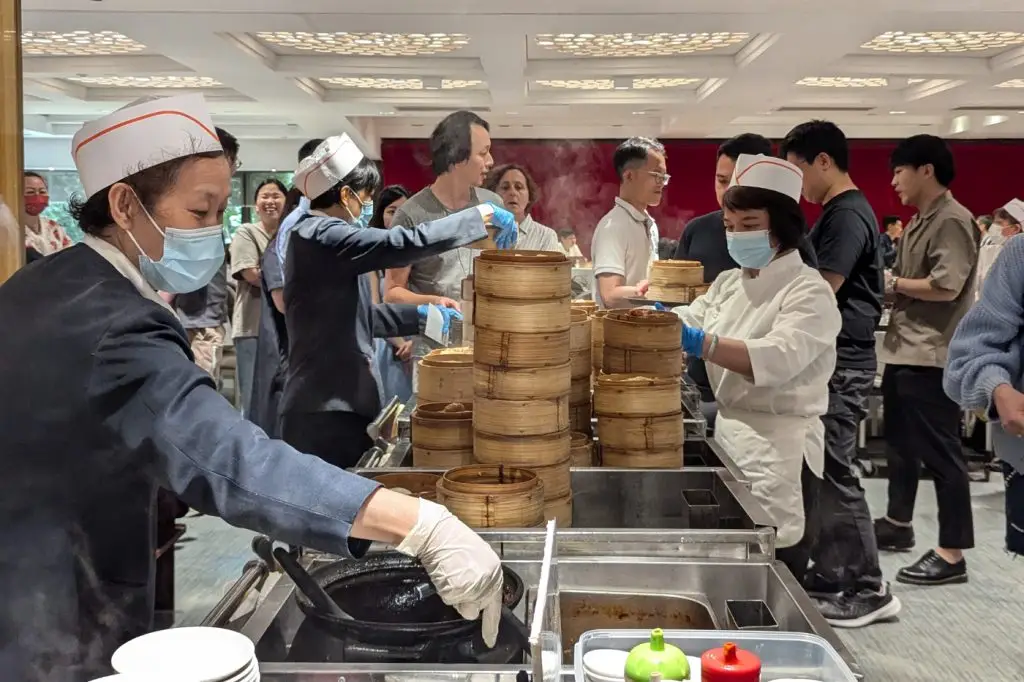
At Metropol, even the wheels look more interchangeable than they are. Beneath the bamboo baskets on a steamer cart sits a shallow bath of hot water. The cart for barbecued meats has unheated shelves behind clear panels. Each gives a cook a different answer to the awkward question of what happens to a dish between leaving the kitchen and finding a taker. There is a limit to what good equipment can do. Shek reported moving some six hundred har gow, the translucent shrimp dumplings, in a lunch rush. A cook can send out another batch with some confidence when people are eating the last one at that pace. [1]
Cross the Pacific to San Francisco’s Yank Sing and consider the same transaction from a chair. The family restaurant describes a repertoire of more than a hundred dishes in rotation. A diner encounters that abundance a few baskets at a time. Chef Brandon Rice, recalling his New Year’s Day lunches there for Resy, could name his favorites, among them the Shanghai dumplings, yet part of what he remembered was how often another cart came by carrying something different. There’s pleasure in being able to let a basket go. Another choice is already making its way across the room. [2][3]
Sometimes the best evidence of a well-run floor is dessert. When SFGATE’s Madeline Wells visited Yank Sing with a group in 2022, they ordered green beans and noodles from the menu as well as dumplings from the carts. By the time they were ready for sweets, a cart delivered sesame balls still hot from frying. Think of the distance that little ball of red bean paste and chewy rice dough had to travel. Its sesame crust was ready on the kitchen’s schedule. Eight people finishing their tea were on their own. For that bite, the two came together. [4]
Back at Metropol, Ms. So had a way of improving the odds. After twenty-four years on the floor, she knew which regulars wanted which dishes and would steer their favorites over to them. A stranger could get lunch by pointing. A regular might look up from the tea to find that lunch had come looking for them. [1]
Sources
- Billy Potts, “The Last Dim Sum Carts: Metropol Restaurant,” Zolima CityMag. Interviews with the floor staff and management, and photographs of service.
- Yank Sing, the family restaurant’s account of its rotating pushcart selection.
- Momo Chang, “The Resy Guide to Bay Area Dim Sum, According to Local Chefs and Experts,” including Brandon Rice’s account of Yank Sing.
- Madeline Wells, “Famous San Francisco dim sum restaurant Yank Sing is where tourists, co-workers and locals collide,” SFGATE, September 2022.