Most fine-dining restaurants ask you to admire the kitchen first and trust the sourcing story later. De Nieuwe Winkel works in the opposite direction. The restaurant's public language makes a stronger claim than most ambitious tasting-menu rooms are willing to make: the menu should change the landscape that feeds it.[1] That is why the right way to profile Emile van der Staak's Nijmegen flagship in 2026 is not as a novelty vegan counter or a moral lecture in expensive form. It is as a restaurant that has tried to move luxury upstream, into plant systems, harvest timing, and the discipline of staying smaller than the idea could probably sell.[1][2][4]
Michelin's relationship with the restaurant helps explain why that framing matters. In 2022, De Nieuwe Winkel was one of three Dutch restaurants elevated to two Michelin stars, with inspectors explicitly linking the award to the house's botanical direction.[6] The current Michelin listing continues to treat the restaurant as a destination in Nijmegen and keeps the Green Star alongside the star rating.[5] In other words, the proposition has moved beyond the novelty stage. The useful question now is not whether a vegan fine-dining restaurant can attract attention. It is whether De Nieuwe Winkel has built an operating system strong enough to turn ecological conviction into repeatable pleasure. The answer, judging from its own materials, is yes, but only because the whole house is arranged around patience rather than abundance.[1][3][5]
Botanical gastronomy is not a garnish policy
Van der Staak's key phrase is "botanical gastronomy," and on the official page the restaurant defines it with unusual directness: the menu is a response to a food system that depletes land through animal-feed agriculture, while the restaurant tries to build another path by centering edible plants.[1] Plenty of restaurants say similar things in softened, lifestyle language. De Nieuwe Winkel does not soften it. It says the menu defines the landscape.[1]
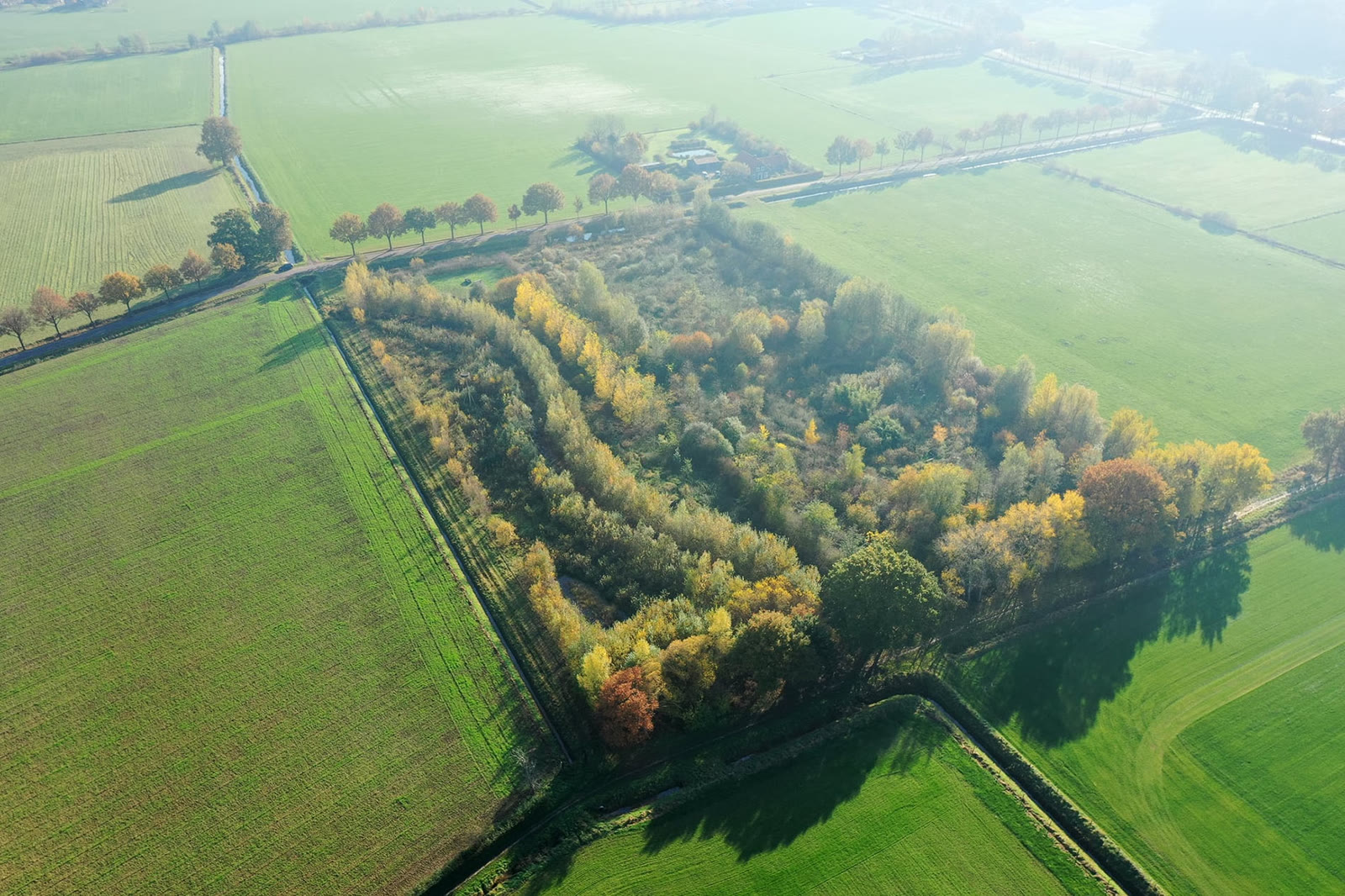
That sentence would be empty if the sourcing remained abstract. It does not. The food-forests page names the upstream partners and the production logic behind them. Ketelbroek is described as a food forest where there is no ploughing, sowing, weeding, fertilizing, or spraying, and De Ommuurde Tuinen is presented as a walled garden where more than 400 edible crops have been grown for over 25 years.[2] Read beside the botanical-gastronomy page, those details do something important: they make the restaurant's plant-first stance sound less like menu branding and more like a procurement architecture.[1][2]
That is the first reason De Nieuwe Winkel feels serious. A lot of fine-dining sustainability language begins with restraint but ends with replacement: remove one luxury product, insert a virtuous local one, keep the rest of the format unchanged. De Nieuwe Winkel appears to be attempting something harder. It is trying to let a different growing system rewrite what counts as luxury in the first place. The luxury is not scarcity by price; it is specificity by season, and the confidence to let a perennial landscape decide what the kitchen gets to say.[1][2]
The menu behaves like a calendar, not a catalogue
The menu page reduces the structure to a simple sentence: three seasons, a different menu every season, dishes that move with nature.[3] The FAQ makes the operating consequence explicit. The restaurant opens Tuesday through Saturday from 6:00 PM, serves dinner only, changes the menu three times a year, and serves no animal products at all.[4] That sounds straightforward until you put it back into a fine-dining context. Most luxury restaurants sell breadth even when they preach seasonality. De Nieuwe Winkel sells narrower timing.
That narrower timing is part of the appeal. If the kitchen is drawing from food forests and long-grown perennial systems, then a broad all-weather menu would undercut the argument at the center of the room. A three-season structure tells diners that the restaurant prefers accuracy to abundance. It also changes how you read the meal. The point is not to ask whether one signature dish can carry the whole reputation. The point is to see whether a whole seasonal language can stay coherent when the ingredients are allowed to age, flower, toughen, sweeten, or vanish on their own schedule.[2][3][4]
This is where De Nieuwe Winkel separates itself from the more predictable lane of vegan luxury. The restaurant is not merely substituting plants for animal products while preserving the old hierarchy of prestige ingredients. It is asking diners to accept a different clock. Young vegetables grow up. Perennials return. Seeds, buds, nuts, blossoms, and stored roots each have their moment.[1][2][3] That is a riskier promise than "plant-based fine dining," because it invites judgment on rhythm, not only on ideology.
The room stays small so the philosophy can survive contact with service
The FAQ is revealing here in the way practical documents often are. De Nieuwe Winkel notes that it works in a small kitchen, seats groups of up to six in the main restaurant, and uses a separate private-dining room for groups up to ten.[4] Reservations for coming seasons are pushed through the newsletter and waitlist, and deposits are refunded only when cancellations arrive more than three days in advance.[4] These are not glamorous details, but they tell you what kind of restaurant this actually is.
It is not trying to scale a manifesto into a mass-premium product. The small kitchen matters because the house logic would get weaker if the room got much larger. A menu built around delicate plant timing, fermentation, and seasonal compression needs service conditions that can stay exact. The reservation friction is part of the same story. When a restaurant changes its menu only three times a year and narrows service to dinner, it cannot pretend to be infinitely available without betraying its own premise.[3][4]
There is also a more basic fine-dining point here. Plant-led luxury fails when the room feels apologetic or sermon-like. Nothing in De Nieuwe Winkel's materials reads that way. The language is declarative, the operating rules are firm, and the dietary position is presented as the foundation of pleasure rather than a compromise around it.[1][4] That matters. Diners can disagree with the philosophy and still recognize the strength of the format. The room is not asking permission to be vegan. It is asking whether you believe that patience, flavor, and hospitality can all be organized around plants without the atmosphere becoming austere.
Why this profile matters now
By 2026, De Nieuwe Winkel looks less like an outlier and more like a finished argument. Michelin's 2022 upgrade gave the restaurant external authority, and the continued current listing suggests the house has held that level rather than flashing past it.[5][6] But the deeper reason the restaurant matters is that it has found a way to make ecological restraint feel luxurious instead of punitive. That is a difficult conversion. In food writing, "sustainable" often arrives dressed as duty. At De Nieuwe Winkel, the ambition is to make it arrive as appetite.
That is why the profile resolves around patience. The farmers wait. The kitchen waits. The menu waits for the right season rather than trying to dominate it. The diner is asked to enter that rhythm for one night in Nijmegen and judge whether pleasure can be intensified by narrower choice rather than by endless options.[2][3][4] Many restaurants now borrow the vocabulary of regeneration. De Nieuwe Winkel is more interesting because it seems willing to let that vocabulary determine the actual shape of the evening.
If the modern fine-dining room still has a future, it probably looks more like this than like a louder version of twentieth-century luxury. Not more products, more precision. Not more spectacle, a better growing system. De Nieuwe Winkel's strongest move is that it makes those ideas feel edible.[1][2][5]
Sources
- De Nieuwe Winkel, "Botanical Gastronomy" - the restaurant's statement of plant-centered fine dining and its claim that menus shape landscapes.
- De Nieuwe Winkel, "Food Forests" - sourcing context on Ketelbroek and De Ommuurde Tuinen, including perennial cultivation methods and the 400-crop garden.
- De Nieuwe Winkel, "Menu" - the restaurant's three-season structure and its short description of dishes moving with nature.
- De Nieuwe Winkel, "Frequently Asked Questions" - opening hours, dinner-only service, vegan menu, group-size limits, waitlist flow, and cancellation policy.
- MICHELIN Guide, "De Nieuwe Winkel - Nijmegen - a MICHELIN Guide Restaurant" - current Michelin restaurant listing for De Nieuwe Winkel.
- MICHELIN Guide, "Three new restaurants receive Two Stars in The MICHELIN Guide Netherlands 2022" - Michelin's announcement covering De Nieuwe Winkel's two-star promotion.