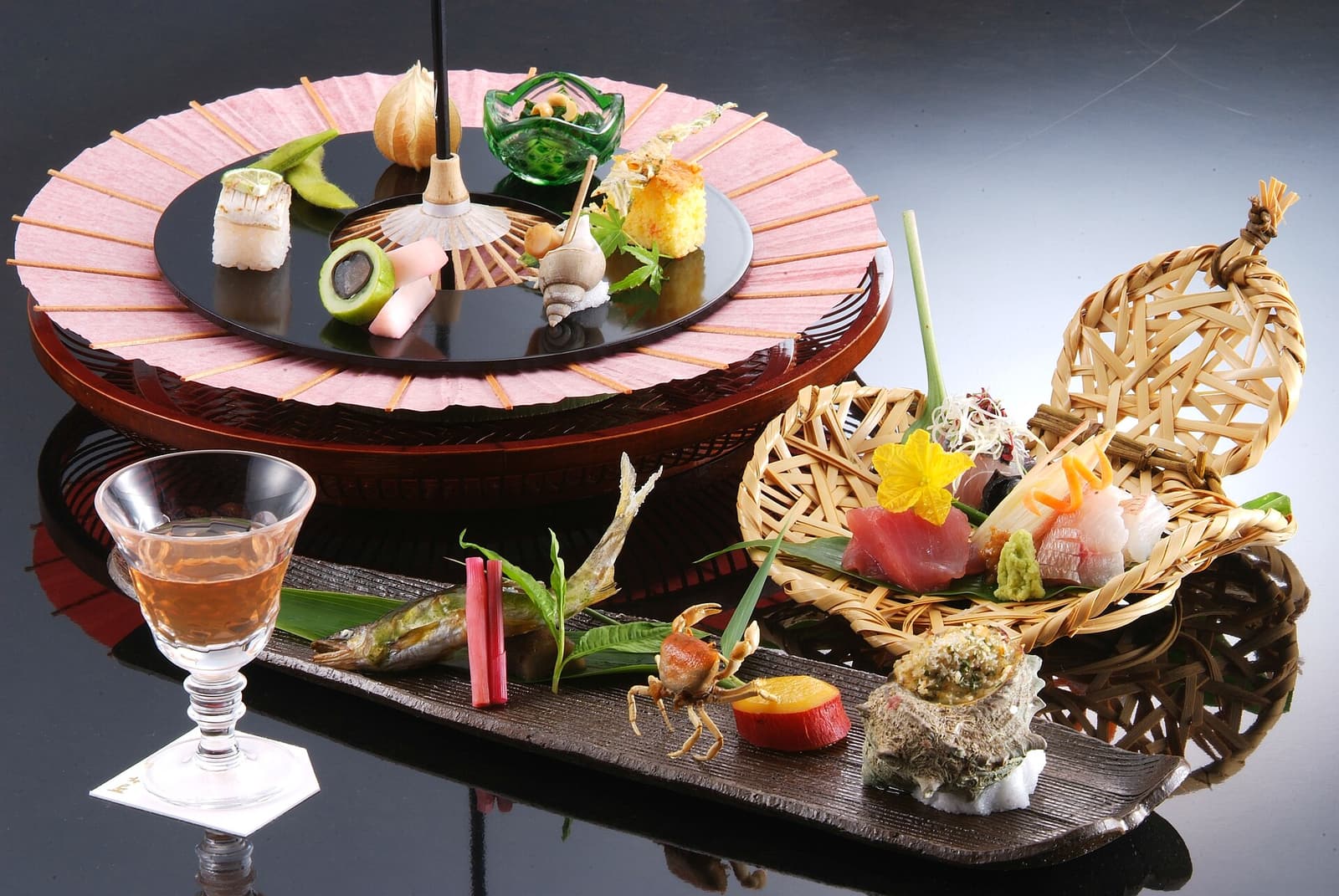


Japanese counter dining is often sold abroad as intimacy: a few seats, a visible chef, expensive ingredients, and the promise that the meal is being made for you in real time. That is true, but it undersells the harder part. The counter is also a discipline machine. It gives the diner a front-row view, and therefore removes many places where a kitchen can hide weak timing, muddy technique, careless pacing, or borrowed luxury language.
The three videos below look, on the surface, like separate restaurant portraits: a tempura craftsman in New York, a kappo chef explaining why he prefers a more flexible counter format, and two Shuko chefs adapting kaiseki and omakase into a New York tasting menu. Watched together, they tell a sharper story about fine dining. The Japanese-derived counter meal is not simply "chef's choice." It is a format where heat, knife work, dashi, sequencing, sound, aroma, and guest attention are all part of the operating system.[4][5][6]
That matters because many expensive tasting menus can become theater without accountability. The diner receives a procession of objects and stories, but the actual craft happens somewhere else. Counter dining changes the proof structure. If tempura is soggy, the diner saw the oil, batter, and handoff. If a kappo menu feels scattered, the diner saw whether flexibility produced coherence or only variety. If a kaiseki-inspired omakase claims seasonality, the diner can test whether the courses actually build a rhythm or merely stack premium seafood.
Tempura as a timing test
The Wall Street Journal video embedded through Eater's 2016 writeup follows Kyoshi Chikano of Tempura Matsui, a New York restaurant dedicated to a form that punishes almost every shortcut.[1][4] Tempura can look simple because the visible motions are small: batter, lift, oil, drain, serve. The difficulty is that the dish gives the chef very few decorative buffers. There is no heavy sauce to rescue bad frying. There is no long rest period where texture can be corrected. The finished bite has to arrive while the shell is light and the interior is still expressing its own moisture.
The useful way to watch this first video is to stop thinking of tempura as deep-fried food and start thinking of it as a controlled moisture event. Eater's note emphasizes that tempura depends on execution because seasoning cannot compensate for weak batter or inferior ingredients.[4] The Michelin Guide's description of Tempura Kondo makes a similar point from Tokyo: Fumio Kondo treats tempura as a kind of steaming, working backward from frying time so the coating and ingredient merge while the food's own moisture does the quiet work.[7]
That is why the counter matters. The chef is not only cooking in public; he is making timing visible. A server walking a plate from a closed kitchen can preserve the romance of "perfectly fried." A counter chef has to show the mechanics: the stillness before the lift, the decision to leave something in the oil a few seconds longer, the immediate handoff. Fine dining often talks about precision after the fact. Tempura at the counter turns precision into the main event.
Kappo as controlled range
The second video shifts from a single technique to a broader counter format. Eater's Hirohisa piece describes chef Hirohisa Hayashi as trained in Kyoto's kaiseki tradition before choosing kappo, a less formal counter style that lets him move among sashimi, sushi, tempura, wild game, and meat.[2][5] The important distinction is not that kappo is casual in the ordinary sense. It is casual relative to a ryotei-style script. The chef gets more range, but that range creates its own test: can one room hold many techniques without feeling like a sampler platter?
Around the center of this video, the useful tension is between freedom and obligation. Kappo gives the chef permission to respond to product, appetite, and room energy. It also denies the chef the safety of a single technical identity. A sushi counter can be judged mainly by rice, fish, knife work, temperature, and handoff. A tempura counter can focus on oil, batter, ingredient moisture, and service timing. Kappo widens the contract. The chef has to make variety feel authored.
That is where this format becomes a fine-dining lesson rather than only a Japanese dining term. Many modern tasting menus advertise flexibility, seasonality, and the chef's personality. Kappo asks whether that personality has an internal grammar. If wild game appears beside sashimi, the move needs more than surprise value. If tempura appears after a raw course, the temperature jump needs to reset the palate rather than merely add another station's skill. The counter lets diners watch not only the chef's hands but also the chef's sequencing logic.
Kaiseki-inspired omakase as a sensory arc
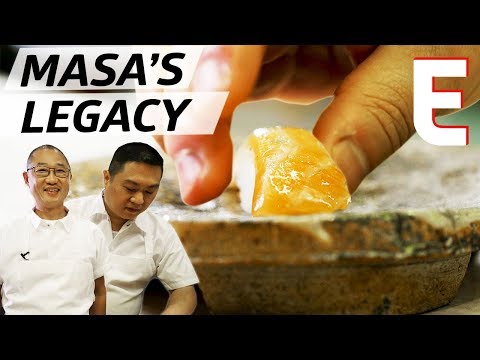
The Shuko video gives the collection its third shape: a New York omakase that borrows from kaiseki's multi-course structure while making its own local and restaurant-specific moves.[3][6] Eater's 2017 article notes that Nick Kim and Jimmy Lau, both trained under Masa, built a meal attentive to color, aroma, sound, richer courses, a dashi reset, sushi progression, and a dessert that deliberately breaks expectation.[6] That description is useful because it frames kaiseki less as a fixed historical costume than as a discipline of sequence.
MAFF's Washoku materials describe Japanese cuisine through season, tableware, knives, cha-kaiseki, tempura, sushi, and itamae kappo, which is a reminder that the form is not just a menu length but a set of relationships among product, vessel, gesture, and occasion.[8] Shuko's version matters because it shows how those relationships can survive translation only if the restaurant understands what it is translating. A course can be luxurious and still fail the kaiseki test if it interrupts the meal's seasonal or sensory movement. A surprising dessert can work if it resolves the restaurant's own arc rather than mocking the tradition it borrows from.
The strongest thing in this third video is not any single premium ingredient. It is the pressure of progression. Chawanmushi, toast, bluefin, beef, dashi, sushi, and dessert could become a list of expensive pleasures. The counter format asks them to become a rhythm. The guest sees the handwork, but more importantly, the guest feels whether the sequence has a pulse.
Taken together, these videos argue for a better way to judge high-end counter meals. Do not ask only whether the chef is close, whether the room is small, or whether the ingredients are rare. Ask what the counter makes legible. In tempura, it should reveal timing. In kappo, it should reveal range disciplined by taste. In kaiseki-inspired omakase, it should reveal a sensory arc that would weaken if the chef hid behind a wall.
That is the promise and the risk of the counter. It flatters the diner with proximity, but it also exposes the restaurant. The best counter meals are not compelling because the chef performs constantly. They are compelling because the format makes craft, judgment, restraint, and hospitality impossible to separate.
Sources
- Wall Street Journal, "The Secrets of a Tempura Master" - YouTube video source for the embedded Tempura Matsui segment.
- Eater, "Michelin-Starred Chef Hirohisa Hayashi Does Much More than Sushi - Omakase" - YouTube video source for the embedded kappo segment.
- Eater, "How a Duo of Master Sushi Chefs Run New York's Most Exciting Omakase" - YouTube video source for the embedded Shuko segment.
- Chris Fuhrmeister, "Watch: How to Achieve Complete Tempura Perfection," Eater, 2016 - written context on Kyoshi Chikano, Tempura Matsui, and tempura technique.
- Eater Video, "Watch: Why This New York Sushi Chef Prefers Japan's Kappo Style," Eater, 2018 - written context on Hirohisa Hayashi, Kyoto kaiseki training, and kappo range.
- Eater Video, "Watch: Shuko in NYC Puts Its Own Spin on the Japanese Kaiseki Tradition," Eater, 2017 - written context on Shuko's kaiseki-influenced omakase structure.
- MICHELIN Guide, "Tempura Kondo - Tokyo" - restaurant-guide context on Fumio Kondo's vegetable tempura and tempura-as-steaming philosophy.
- Ministry of Agriculture, Forestry and Fisheries of Japan, "The Washoku Way: Japan's Nuanced Approach to Food" - official PDF context on washoku, cha-kaiseki, knives, tempura, sushi, and itamae kappo.
- Wikimedia Commons, "File:Seasonal Kaiseki (28478172816).jpg" - photographic source for the article image.