Bread service is easy to underestimate because it often arrives before the meal has formally begun. The server sets it down, the guest tears a piece, butter softens, and attention moves toward the first composed course. In a serious room, that small interval can reveal the whole operation. A restaurant-service note from Deep Plate makes the practical point directly: bread often becomes the diner's first experience and can set the tone for the meal.[4]
The bread cart is the louder version of the same test. It takes something that could be a courtesy and makes it visible: loaves, rolls, crusts, slices, butter, oil, salt, knives, explanations, and guest choice all enter the dining room before the kitchen's main argument starts. Done well, it feels generous without becoming disorderly. Done badly, it is a rolling buffet that exposes stale product and nervous service.
Steirereck's own account is useful because it refuses to treat the cart as a prop. The restaurant describes the bread basket as a trolley, driven by Andreas Djordjevic, known in the room as Brot-Andi, and traces its return after the move to Stadtpark in 2005.[1] That detail matters. The cart was not simply kept because grand restaurants need old gestures. It was brought back because guests wanted a specific form of welcome, and because the house found a staff member able to turn that welcome into a role.
The cart is a hosted choice
A basket gives the table one answer. A cart asks a question. Rye, white, seeded, dark, spiced, regional, sour, tender, crisp, warm, sliced thin, cut thick: the guest has to choose, and the room has to make choosing pleasant rather than self-conscious.
That is why the person steering the cart matters as much as the bread. Steirereck's article says colleagues call Djordjevic a bread sommelier because of his knowledge.[1] The phrase could sound comic, but it names the real job. A sommelier does not merely point at bottles; they translate a cellar into a decision that fits appetite, mood, budget, and sequence. A bread server has a smaller stage but a similar problem. Which bread should open the meal? Which one is better saved for a sauce-heavy course? Which piece will overwhelm the first bite if it is too smoky, sweet, or dense?
The World's 50 Best Restaurants makes the operating side clearer. Its trolley-service feature says Steirereck's bread trolley has been a crowd-pleaser for more than 20 years and that Andreas works with specialist producers, adapting varieties to time and season.[2] That turns the cart from abundance into editing. The important fact is not that many breads exist. The important fact is that the visible selection has been chosen, refreshed, explained, and matched to the calendar.
Baking cadence is part of service
Bread is unforgiving because it has a short window between alive and tired. A great crust softens. A sliced loaf dries. Warmth becomes steam in the wrong place and staleness in the next. Butter can be too cold to spread or too warm to hold shape. Olive oil can taste vivid or anonymous. Salt can sharpen the bite or make the course feel like a snack bar.
This is why the bread cart belongs in service operations rather than decoration. A restaurant that shows many breads is also showing confidence in production cadence. Someone has to decide how many loaves to bake, when to cut them, what stays whole, what can return for a second pass, and which item should disappear before it becomes tired. The guest sees romance; the back of house sees forecasting.
Deep Plate's service guidance gives the general operating frame: in-house breads let a restaurant show pastry skill, and a variety of breads from a dedicated bread server can signal premium service.[4] That sounds simple until the cart enters the room. Variety needs a handler. Skill needs timing. A strong cart succeeds only when the restaurant knows which promise it is making: regional identity, fermentation craft, generosity, pairing logic, or a first bite that tells the guest the room is awake.
Free bread is not free to operate
The economic pressure around bread has been visible for years. INDY Week's reporting on bread service in North Carolina restaurants describes the same basic problem from the operator's side: gluten-free demand can leave bread uneaten, scratch baking consumes labor and space, and one Raleigh restaurant priced its six-roll basket at six dollars after calculating that labor and ingredients came to about one dollar per roll.[5]
Those numbers should not make bread service less generous. They should make the generosity more honest. A fine-dining bread cart is not valuable because the guest can eat unlimited starch before the menu begins. It is valuable because the restaurant has decided that first contact deserves craft. If the house charges for it, the bread has to justify the price. If the house includes it, the cost still has to be designed into the meal.
Waste is the hidden boundary. Steirereck's story says leftover white bread becomes crumbs, black bread becomes croutons, and bread returned from tables is collected and sent to the Pogusch property for sheep and pigs.[1] That is not a sentimental footnote. It is the system that keeps abundance from turning vulgar. A cart loaded for show but careless about leftovers is not hospitality; it is theater with a disposal problem.
Butter and oil are not accessories
Bread service often fails in the accompaniments. A beautiful loaf with frozen butter creates friction before the meal starts. A strong flavored bread with too much compound butter becomes a pre-menu course the kitchen never meant to serve. A sourdough with harsh oil can dull the palate instead of waking it.
The best bread carts treat butter, oil, salt, and slicing as part of the same sentence. Deep Plate notes that bread-and-butter plates can be used as a deliberate part of the table setting, not merely as peripheral hardware.[4] Steirereck's reputation, reinforced by Michelin's note that its house bread trolley is almost world-famous, rests on the sense that bread is not an afterthought to the cuisine but a little room of its own inside the meal.[3]
That little room still needs boundaries. A guest should leave bread service more attentive, not full. The cart should help the diner read the restaurant's values: regional sourcing, fermentation discipline, generosity, humor, technical seriousness, or local grain identity. It should not steal the structure of the menu. Bread is a welcome, a pacing tool, and sometimes a memory hook. It is not an excuse to start dinner twice.
The fine-dining test
The strongest bread cart does five things at once.
It gives the guest agency without abandoning them to choice. It makes product freshness visible. It lets the dining room demonstrate knowledge before luxury ingredients arrive. It connects the restaurant to producers, grain, region, butter, oil, and waste loops. And it creates a first bite that feels personal without slowing the whole room.
That is why bread service can be more revealing than a prestige course. Caviar can impress by existing. A bread cart has to keep proving itself through timing. The loaf was mixed, proofed, baked, held, cut, described, paired, and served before the guest had a chance to think about it. When that chain works, the room feels cared for before it feels expensive.
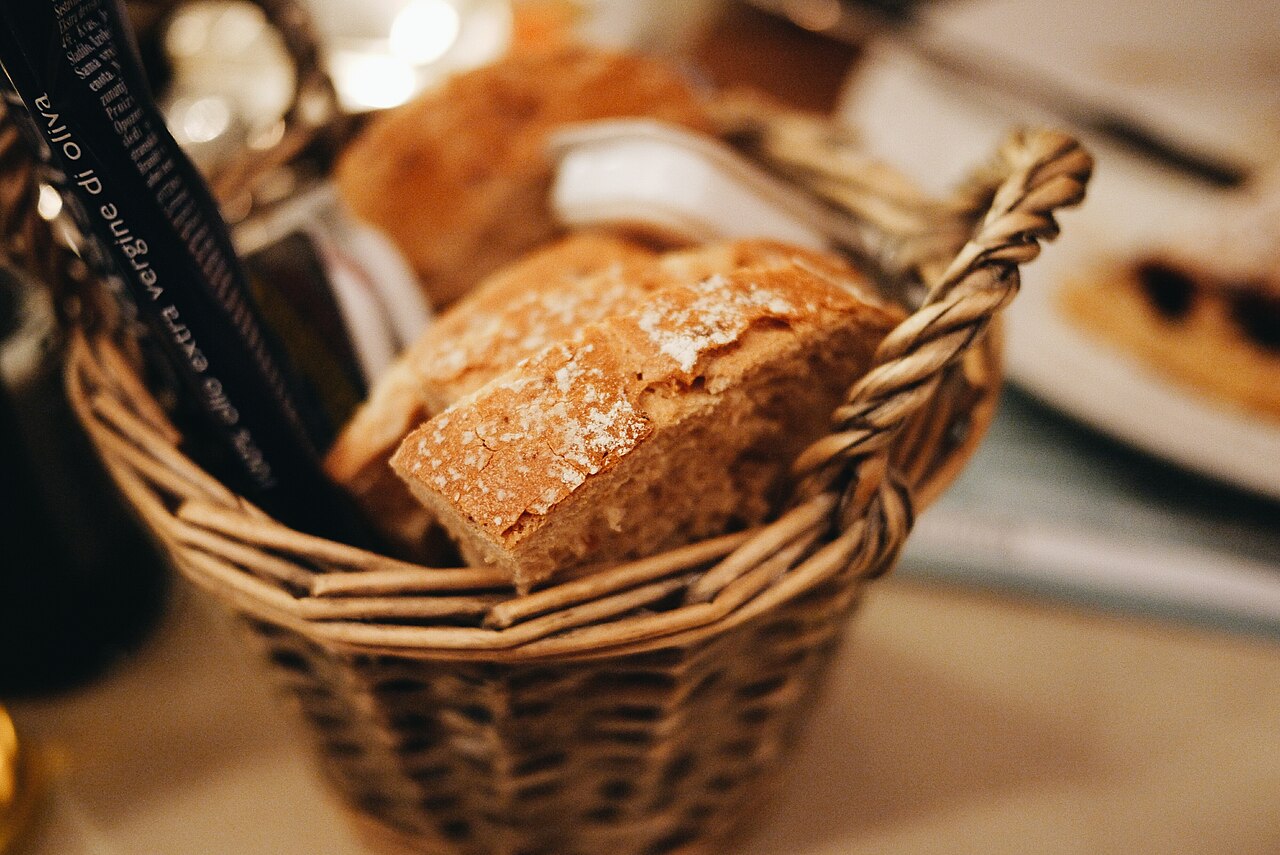
The photograph here is deliberately simple: a basket of bread on a restaurant table, not a monumental trolley.[6] It is a reminder that the cart is only the magnified version of an old hospitality question. What does the restaurant choose to put in the guest's hand first, and has it done the work to make that first bite mean something?
Sources
- Steirereck, "The Starter before the Starters" - official house story on Brot-Andi, the return of the bread trolley after the Stadtpark move, bread-sommelier service, and waste handling.
- The World's 50 Best Restaurants, "The world's most impressive trolley services" - feature noting Steirereck's bread trolley, Andreas "Bread Andi," specialist producers, seasonality, and more than 20 years of trolley service.
- MICHELIN Guide, "Steirereck in Vienna is Austria's New Three-MICHELIN Star Restaurant" - Michelin context for Steirereck's 2025 Austrian three-star award and the restaurant's famous house bread trolley.
- Deep Plate / BauscherHepp, "Why Bread Service Is Important to Restaurants" - restaurant-service note on bread as first impression, in-house bread as skill signal, dedicated bread servers, variety, and bread-and-butter plate choices.
- INDY Week, "Dish: What the Hell Happened to Complimentary Bread Service?" - reporting on restaurant bread-service costs, gluten-free waste, scratch-baking labor, pricing, and local-bakery sourcing.
- Ken Lawrence, "Bread Basket (Unsplash).jpg," Wikimedia Commons - real 2015 restaurant bread-basket photograph used as the article image.