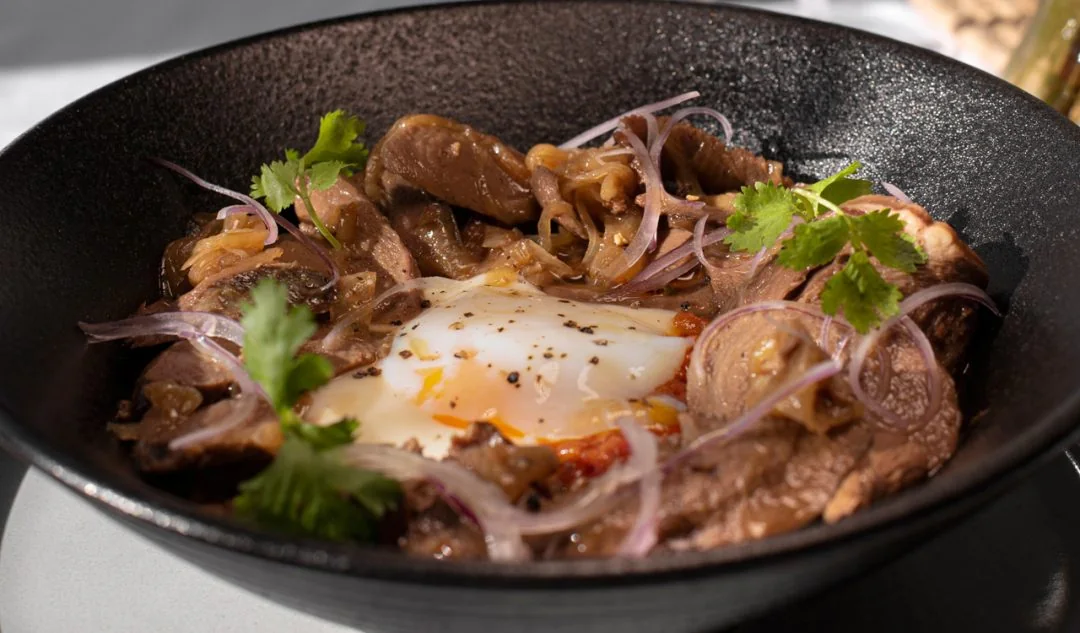
In Asunción, “modern Paraguayan” does not have to mean twelve tweezed courses and a speech for every crumb. It can be asado a la olla settling into soft, cheesy rice; river fish sharpened by a cook who has spent years widening the local pantry; or beef leaving the grill beside cassava that has been mashed, fried, or stirred until its edges catch. The ambition is real. The format can still feel like dinner.
Three rooms make that range unusually clear. Táva Comedor brings the everyday table into a bright old-center dining room. Cocina Clandestina treats the national larder as an open vocabulary rather than a sealed canon. Toro makes the parrilla—not imported luxury—the evening's center of gravity. This is a choice guide, not a ranking or a report from anonymous visits. It reads the restaurants through current guide listings and recent local profiles, and it keeps published prices and hours as reference points rather than promises.
| Book | Best when you want | Build the meal around | Published practical baseline |
|---|---|---|---|
| Táva Comedor | Familiar Paraguayan dishes made playful without losing their appetite | One house staple, one less-obvious cut, and something fresh | About US$37 per person; lunch and dinner Tuesday–Saturday[1] |
| Cocina Clandestina | A small, chef-led room and the broadest look at the local larder | River fish or sweetbreads, cassava, and one changing seasonal idea | About US$25 per person; dinner Tuesday–Saturday[3] |
| Toro | Flame, beef, red wine, and a generous shared table | One carefully chosen cut plus two contrasting sides | About US$52 per person; weekend lunch and dinner Tuesday–Saturday[5] |
Táva: begin with the food that already knows the way home
Táva sits in Asunción's historic center, where a green door, black-and-white floor, white cloths, and mismatched wooden chairs make the room feel more like a sharpened memory of a comedor than a luxury set. Its name means “community” in Guaraní, and the restaurant's published address—México 453—places that promise away from the eastern neighborhoods where polished dining is often expected.[1][2]
Chef Luis Paredes does not begin by breaking a national dish into luxury components. He begins with its appetite. Pausa's January 2026 profile found asado a la olla with arroz kesu among the fixtures, alongside an empanada whose hand-cut beef filling keeps vegetables and protein in equal proportion. Then the menu bends: tongue becomes a milanesa; chicken hearts become ceviche; and beef heart becomes bife koygua after 36 hours at 65°C, served with a creamy cassava aligot.[2] Technique enters as a way to make an overlooked cut tender and inviting, not as a reason to make dinner unrecognizable.
That is also the ordering clue. Start with one dish that carries the comfort-food structure intact—whatever currently fills the role of the asado and rice—then add one plate that reveals Paredes's sense of play. If the beef-heart bife koygua, tongue milanesa, or another offal preparation is available, it will say more about the kitchen than ordering the safest steak twice. Put something green, raw, or acidic between the two. The local profile describes separate lunch and dinner cards and seasonal movement, so its January dishes are examples, not a permanent checklist.[2]
Choose Táva when the table includes someone who worries that “contemporary” means leaving Paraguayan food behind. Here, the surprise tends to arrive inside a known sentence: cassava becomes aligot; a familiar cut changes; pororó supplies crunch; soy or miso joins the pantry without claiming to replace it. The smartest first reservation is the one that lets both sides of that sentence appear.
Cocina Clandestina: follow the ingredient the city usually overlooks
Cocina Clandestina is the smaller, more hidden proposition. The current 50 Best Discovery entry describes a softly lit room behind railings and a foliage-filled garden, with chef-owner Sergio González working through sweetbreads, roast cassava, and local surubí in an à la carte format.[3] The effect is closer to joining a private city supper than entering a ceremonial dining hall.
The restaurant's name carries its origin story. González opened it in 2015 after training at the Institut Paul Bocuse and working abroad; according to a local High Class profile, the first version behaved like a pop-up, with a changing set menu and a desire to cook the ingredients that polished restaurants around him tended not to notice.[4] He names products from the Chaco, cactus fruit and algarrobo, lesser-used local fish, cedrón, and cocido as part of that early search. The international experience matters here not because the room imitates Lyon, Paris, Shanghai, or Denmark, but because it gave him more verbs for local nouns.
Order for that verb-noun tension. Ask what fish, herb, fruit, or cut is doing the most interesting work that night. Pair a river or offal dish with cassava or another grounding starch, then stop before every rich preparation lands at once. Sweetbreads, creamy yucca, and a forceful sauce may each be excellent; together, without a fresh counterweight, they can erase one another. This is the room where a question to the server—“Which local ingredient would be hardest to taste elsewhere?”—is more useful than asking for the most luxurious item.
Book Cocina Clandestina when curiosity outranks ceremony. It is the best of these three choices for diners who want to understand contemporary Paraguayan cooking as research in public: a decade-long practice of testing what belongs on a city menu, not a single definitive plate. The published average of US$25 also makes it the least expensive of the three guide references, though the live bill will depend on the current menu, drinks, and exchange rate.[3]
Toro: let the parrilla be specific
It would be easy to treat a steakhouse as the conservative choice after two chef-driven rooms. Toro is more useful when read differently. Paraguay's beef culture does not need to be decorated into relevance; it needs a grill that makes the differences between cuts legible and sides that keep the meal attached to place.
Toro makes that intention literal. The current Discovery listing describes a glass cabinet of beef, a bull mural, a palm-shaded terrace, and a cut list that moves through rib-eye, ribs, flank, skirt, T-bone, sirloin, and rump. The side dishes are not an afterthought: cassava purée, mandió chyryry—stir-fried cassava—roasted vegetables, potatoes, and creamy mushroom rice give the table several ways to manage smoke and fat.[5] Paraguay's national tourism portal likewise frames the restaurant around selected cuts, the parrilla, and a wine-and-drinks program rather than a tasting-menu procession.[6]
The common mistake is to order breadth where the restaurant offers depth. Three similar steaks do not make a better parrilla lesson. For two diners, choose one cut whose texture you both actually want, confirm its size and preferred doneness, and add two sides with opposing jobs: mandió chyryry or cassava purée for comfort, roasted vegetables or a salad for lift. For a larger table, vary the cuts rather than multiplying the same one. Red wine may be the obvious partner, but water and something acidic are what keep the last bites as vivid as the first.
Choose Toro when fire is the occasion, not merely a cooking method. It is the most expensive published reference here—about US$52 per person—and the narrowest choice for a vegetarian.[5] Those boundaries are useful. A good guide should not pretend that every room suits every table.
Three doors, three meanings of modern
If there is only one dinner, choose by desire. Pick Táva for the broadest bridge between familiar dishes and playful technique. Pick Cocina Clandestina for a quieter room and a cook's long investigation of local ingredients. Pick Toro when the table wants beef, flame, wine, and cassava without apologizing for the directness of that pleasure.
Taken together, the restaurants refuse a lazy equation between modernity and imported form. Táva modernizes by changing the treatment while keeping the dish's social memory. Cocina Clandestina modernizes by expanding which Paraguayan products the restaurant considers worthy of attention. Toro modernizes by tuning the parrilla experience rather than disguising it.
Menus move, exchange rates move, and restaurant hours are particularly capable of changing between planning and arrival. Use the dollar figures above to compare the three published guide positions, not to calculate a final bill. Reserve directly, confirm the service window, mention dietary restrictions in advance, and ask what the kitchen is proudest of that week. The best Asunción dinner is not the one with the longest sequence. It is the one that lets you taste which version of the city you came to meet.
Sources
- 50 Best Discovery, “Táva Comedor” — current concept, location, published average spend, service days, and dining-room description.
- Patricia Luján Arévalos, “Táva, o cómo volver a divertirse en la cocina.” Pausa, January 12, 2026 — chef and founder context, seasonal menu examples, old-center setting, and Javier Valdez's source photograph.
- 50 Best Discovery, “Cocina Clandestina” — current à la carte framing, local-ingredient examples, location, published average spend, and service days.
- High Class, “Sergio González” — chef profile covering his training, international kitchen experience, 2015 opening, pop-up origins, and search for underused Paraguayan products.
- 50 Best Discovery, “Toro” — current grill focus, cuts, side dishes, location, published average spend, and service days.
- Secretaría Nacional de Turismo de Paraguay, “Toro Restaurante” — official tourism listing for the parrilla concept, drinks program, services, and current contact details.