Argentina is one of those food countries that gets flattened by its own success. The flattening mechanism is obvious: steak, parrilla, red wine, then a vague assumption that the rest of the country's culinary imagination lives in the margins. Aramburu matters because it pushes against that compression without turning dinner into a lecture. Michelin's first Argentina announcement in 2024 framed Gonzalo Aramburu's project as a deliberate effort to explore the full extent of the country's produce while pointedly avoiding beef as the central story.[6] Two years later, that still looks like the right way to read the restaurant. The point is not anti-beef provocation. The point is scale. Aramburu tries to make Argentina feel larger than its export stereotype.
The operating facts support that reading. The official site describes a multiple-course seasonal menu built from local and seasonal products, a program Gonzalo Aramburu has been leading since 2007.[1] Michelin's Buenos Aires listing says the restaurant offers a single surprise tasting menu of around 18 courses, combining innovation, technique, and aesthetics through the use of the best Argentinian ingredients, with the chef often visible from the dining room working alongside his team.[3] Latin America's 50 Best adds the next layer: after opening in 2007, the restaurant relocated in 2019 to Recoleta, at the end of a cobbled passage, where floor-to-ceiling views into the kitchen and an upstairs dessert room give the meal a more architectural rhythm.[2] The result is a restaurant that does not merely plate luxury. It stages a national pantry as sequence.
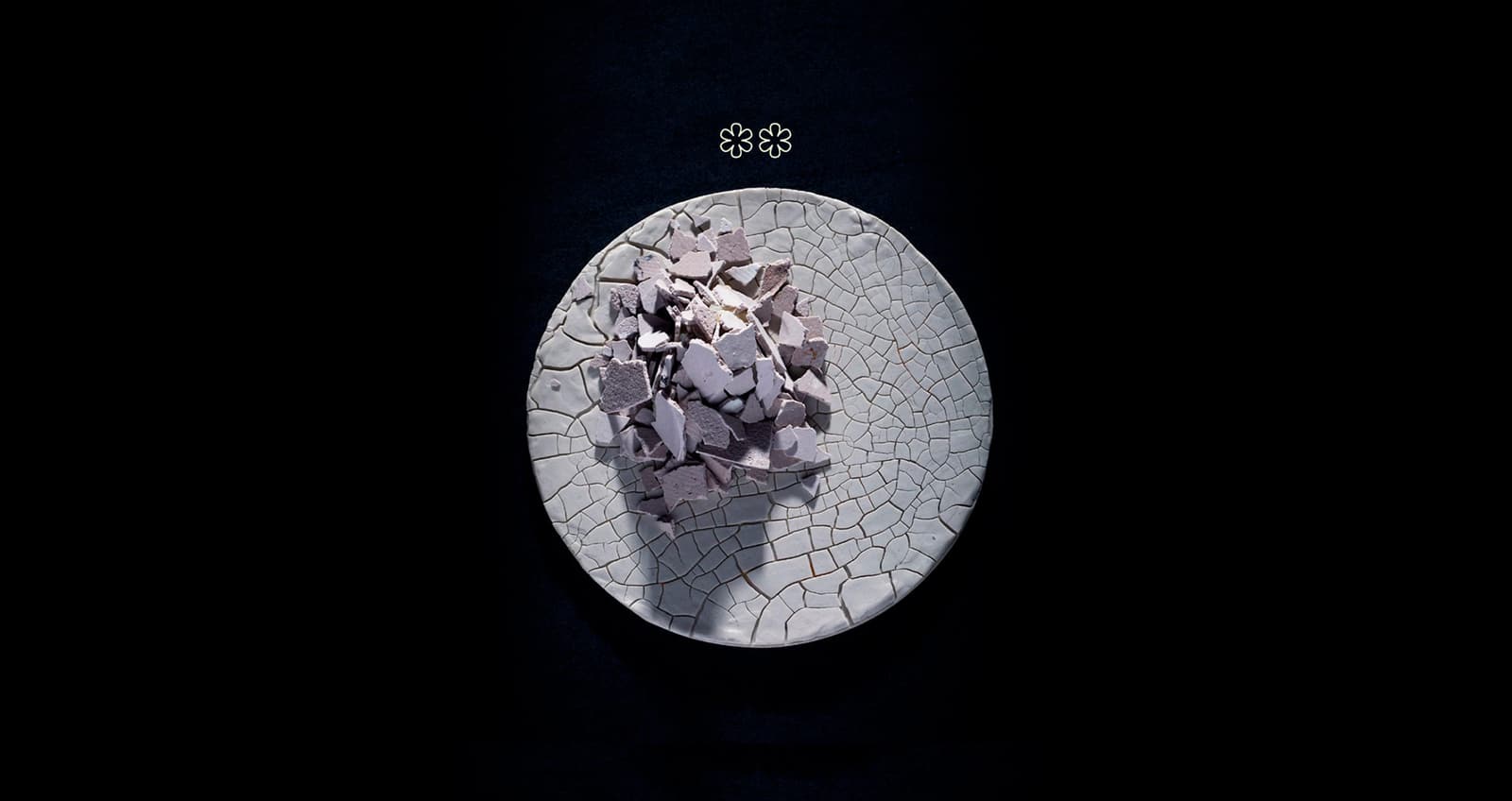
Image context: the lead image uses an official Aramburu dish photograph instead of a dining-room shot. That choice matches the argument. This profile is not chiefly about Buenos Aires glamour or service choreography in the abstract. It is about what happens when highly controlled technique meets a broad, country-sized ingredient map and tries to turn that map into elegance rather than folklore.[1]
The menu is designed to widen Argentina, not summarize it
Michelin's 2024 announcement remains the clearest statement of intent. It says Aramburu aims to introduce guests to the full breadth of Argentina's produce and deliberately avoids making beef the expected anchor, even though beef dominates the country's international dining image.[6] That sounds like a branding line until other sources start filling in the actual product range. Michelin's profile of the chef's favorite Buenos Aires spots describes Aramburu's tasting menu as a journey through ingredients that run from Tierra del Fuego king crab to San Juan saffron, from Misiones cassava to Tandil Jerusalem artichokes.[4] That is not a decorative sourcing note. It is the restaurant's underlying grammar. The menu is trying to move diners across climates, coastlines, and agricultural zones rather than reassuring them with one national cliché.
Latin America's 50 Best makes the same point from the plate outward. Its 2025 profile describes a creative 16-course menu anchored in research and technique, then emphasizes seafood and coastal product: sea snail, crab, scallop, clams, langoustines, and one signature snack built from Patagonian spider crab and squash.[2] Even the wine pairing is described as drawing labels from across Argentina.[2] Put next to Michelin's country-spanning produce note, the picture becomes sharper. Aramburu is not simply a fine-dining room located in Buenos Aires. It is a Buenos Aires room trying to keep the whole country in play.
That matters because plenty of high-end restaurants speak the language of terroir while staying narrow in practice. Aramburu's public descriptions suggest a broader and more demanding task. The menu changes with the season, but seasonality here is not just freshness rhetoric.[1][2] It is a way of continually rerouting the restaurant through a different set of regional materials. That is why the restaurant can feel both highly technical and unexpectedly expansive. Its refinement is not built on shrinking the pantry. It is built on making a very large pantry readable course by course.
Technique is visible, but the room keeps the meal from becoming mechanical
The danger of a long tasting menu built around technical precision is obvious: the meal can become a demonstration of control. Aramburu seems aware of that risk and manages it spatially. Michelin's listing notes that Gonzalo Aramburu is often visible from the dining room, cooking alongside his team.[3] Latin America's 50 Best says diners watch execution through floor-to-ceiling windows, then later move upstairs for dessert in a room that changes the pace.[2] Condé Nast Traveler, from the guest side rather than the institutional one, describes the open kitchen as theater with the noise dialed down and the upstairs dessert room as a deliberate relaxation after the intensity of the early courses.[5]
Those details are not incidental. They explain why Aramburu feels more like a composed experience than a mere endurance test. Visibility into the kitchen lets the restaurant claim precision openly. Nothing is hidden behind a closed door myth of genius. At the same time, the room does not force diners to sit in one emotional register for three hours. The dessert handoff matters because it breaks the night into movements: concentration first, release later.[2][5] The meal can stay exacting without becoming stern.
The official site supports that reading in quieter ways. It lists an exclusive private dining room for up to 14 guests and presents the menu, pairings, and booking structure with almost spare directness.[1] There is no elaborate manifesto about experience design. That restraint suits the house. Aramburu's style appears to be less about maximal sensory theater than about creating just enough stagecraft for the food's precision to land cleanly. The room frames the cuisine, but it does not compete with it.
Why the restaurant matters now
The blunt answer is recognition. Michelin's 2025 Buenos Aires and Mendoza coverage says Aramburu retained its Two MICHELIN Stars, with inspectors finding the same exceptional standards intact in Recoleta.[7] Michelin's broader 2025 roundup calls it Argentina's only two-star restaurant and describes the cooking as elegant and precise, grounded in Gonzalo Aramburu's own journey.[8] Latin America's 50 Best placed it at No. 35 in 2025, keeping it inside the regional conversation even as Buenos Aires dining grows more crowded and stylistically diverse.[2]
But those accolades matter less as trophies than as proof that Aramburu's original wager has held. A long tasting menu in Buenos Aires could easily drift into imported luxury language: Frenchified polish, generic rarity, expensive calm detached from place. Aramburu seems to have done something more difficult. It kept the formal discipline of global fine dining while refusing to let Argentina collapse into meat, Malbec, or gaucho theater.[2][4][6][7] The country appears instead as a moving pantry of coasts, roots, shellfish, aromatics, and seasonal shifts.
That is why the restaurant reads as current in 2026. It offers a version of national fine dining that is neither rustic cosplay nor placeless luxury. The Michelin sources keep returning to technique, aesthetics, and quality.[3][6][7] The 50 Best profile keeps returning to research, seasonality, seafood, and the sequencing of the room itself.[2] Put together, those signals describe a restaurant that has become legible at exactly the right scale. Not a museum of Argentine identity. Not a steakhouse upgraded for awards voters. A precise Buenos Aires machine built to show how wide the country's edible map really is.
What dinner is really selling
The most useful way to think about Aramburu is this: it sells Argentine breadth under conditions of fine-dining compression. Eighteen courses is not much space when the subject is a country.[3] The achievement is that the meal appears to make that space feel larger. A crab, a root, a citrus note, a saffron thread, a cassava reference, a glass from another province, a dessert upstairs after the kitchen spectacle below: together they turn dinner into a series of geographic expansions rather than a narrow luxury tunnel.[2][4][5][6]
That is why Aramburu is worth profiling now. It is not simply important because Michelin certified it, or because Latin America's 50 Best still ranks it highly. It is important because it offers a disciplined answer to one of fine dining's oldest temptations: reducing a place to the one thing outsiders already expect to find there. Aramburu keeps choosing the harder route. It takes Argentina's size, diversity, and seasonality, then serves them not as a slogan but as a sequence.
Sources
- Aramburu Restaurante, official website - seasonal menu, local and seasonal product framing, pairings, private dining, and official image asset context.
- Latin America's 50 Best Restaurants 2025, "Aramburu" - chef background, 2019 Recoleta move, 16-course menu, upstairs dessert room, seafood emphasis, and national wine-pairing context.
- MICHELIN Guide, "Aramburu - Buenos Aires - a MICHELIN Guide Restaurant" - single surprise tasting menu, around 18 courses, visible kitchen presence, and best Argentinian ingredients.
- MICHELIN Guide, "Inside Buenos Aires: Chef Gonzalo Aramburu's Favorite Spots" - country-spanning ingredient examples from Tierra del Fuego king crab to San Juan saffron, Misiones cassava, and Tandil Jerusalem artichokes.
- Condé Nast Traveler, "Aramburu" review - dining-room feel, open-kitchen theater, service pace, and upstairs dessert-room shift.
- MICHELIN Guide, "Argentina's restaurants shine brightly with the announcement of its first-ever MICHELIN Stars!" - 2024 announcement describing Aramburu's country-spanning produce focus and deliberate move away from beef as the main story.
- MICHELIN Guide, "Three New MICHELIN Stars Brighten Buenos Aires & Mendoza in Argentina" - 2025 renewal note on Aramburu retaining two stars in Recoleta.
- MICHELIN Guide, "All 10 MICHELIN-Star Restaurants in Argentina" - 2025 roundup describing Aramburu as Argentina's only two-star restaurant, with open-kitchen views and an upstairs dessert setting.