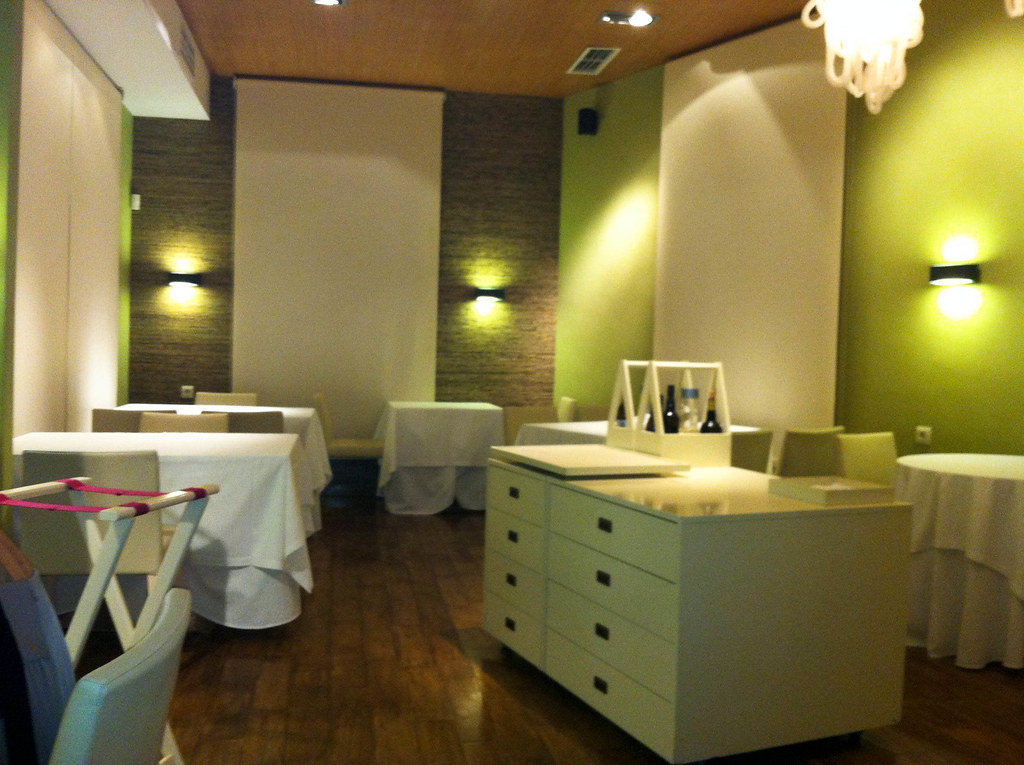
Many luxury seafood restaurants still sell the same old promise: rarer shellfish, cleaner fillets, more expensive imports, greater polish. Aponiente is more interesting because it is trying to sell a different thing entirely. The restaurant does not frame the sea as a premium shopping list. It frames the sea as an upstream food system.[1][3]
That distinction matters in 2026 because the current Aponiente story is still not mainly about status, even if the status is real. Michelin's current guide continues to list the restaurant at the three-star and Green Star level, and The World's 50 Best Restaurants placed it at No. 84 in the 2025 extended ranking.[4][8] Those signals explain why diners travel to El Puerto de Santa Maria. They do not explain the operating mechanism. The mechanism is the more valuable part: how a tasting-menu restaurant keeps turning marshland restoration, discarded species, marine botany, and research-lab work into dinner.[1][3][8]
1. The pantry begins where most luxury seafood menus stop
The official sustainability page is unusually blunt about Aponiente's direction. Since opening in 2007, it says, the restaurant has introduced more than 40 ingredients from the sea, along with new techniques and marine species or elements not previously used in cuisine.[1] That is not a decorative sustainability statement. It is a sourcing thesis.
Instead of building prestige around globally standardized luxury products, Aponiente keeps widening the definition of what counts as edible marine value. Its own examples make the point clearly: mackerel sobrasada, sea bass mortadella, sea ham from bluefin belly, moray eel skin turned into something like crisp pork skin, hake collagen prepared as noodles, and plankton used as a flavoring medium rather than a publicity trick.[1][3]
The current menu still reads that way. The 2025 English menu PDF moves from salty snacks into a long "Salty Sea" chapter and then a "Sweet Sea" finish, with dishes built around shrimp fritter, tuna top neck, murex snails, fish livers, sea urchin, hake, razor clams, squid stew, fish jowl with caviar and chickpeas, saltmarsh herbs, and seaweed pastry.[2] This is not seafood luxury as caviar-plus-lobster shorthand. It is a kitchen trying to make overlooked marine material feel inevitable once it reaches the plate.
That is why Aponiente remains distinctive. The restaurant is not just sourcing better fish. It is expanding the category of what serious diners learn to desire.[1][2][7]
2. The marsh is not scenery, it is production infrastructure
The second useful Aponiente fact is geographical. The restaurant's press book places it in a historic tide mill in El Puerto de Santa Maria, inside the Bahia de Cadiz natural-park system, and ties the project directly to marshes, estuaries, and coastal wetlands rather than to a generic "Andalusian terroir" story.[3] The building is not a romantic shell around the meal. It is part of the sourcing argument.
That argument becomes concrete in the environmental numbers. The press book says Aponiente has helped recover more than 70 hectares of marine-terrestrial ecosystem in the park, where more than 300 species of terrestrial and marine invertebrates, flora, and fauna reproduce in restored habitats.[3] Read as restaurant information, those figures are unusual. Read as sourcing information, they tell you what the kitchen is actually protecting: not one supplier, not one flagship species, but a wider ecological field that can keep producing edible and non-edible value over time.
This is where Aponiente separates itself from restaurants that use sustainability as a moral footnote. Here the marsh is not a virtue signal attached after the menu is written. The marsh is the condition that makes the menu possible.[1][3]
3. Research changes what the restaurant is able to buy from the future
Aponiente's strongest sourcing idea may be that research is part of procurement. The restaurant's sustainability material and press documentation repeatedly tie the menu to applied R&D: phytoplankton, marine charcuterie, fish-protein processing, marine sugars and fats, and the domestication of Zostera marina into what it calls a "marine cereal."[1][3]
The press book says Aponiente has carried out more than 30 research projects over the last 11 years, and that its experimental Zostera marina cultivation area covers 3,000 square meters in the Bahia de Cadiz natural park.[3] Those numbers matter because they move the project out of metaphor. "Sea cereal" can sound like futuristic branding until you see that it sits inside a real cultivation and restoration program.
TIME's feature on Angel Leon's eelgrass work helps explain why the idea matters beyond the dining room. The point was not simply to discover a novel grain for a few tasting menus. It was to test whether a saltwater plant with edible seed could become part of a broader food system in a region historically shaped by marsh and salina economies.[7] That larger ambition explains why Aponiente's research portfolio feels unusually coherent. The restaurant is not inventing marine products one by one for spectacle. It is trying to assemble a new pantry logic.
4. Dinner works because the menu translates the lab into sequence
A research-heavy restaurant only matters if the theory survives contact with service. Aponiente's current public materials suggest that it does.
The 50 Best Discovery profile describes two tasting menus, the 12-course "Calm Sea" and the 15-course "Groundswell," both seasonal and centered on sustainable ocean produce such as goose barnacle, fiddler crab, albacore, and plankton.[5] The FAQ document adds the practical rhythm: expect roughly 3 to 3.5 hours, be punctual, and understand that there is no vegetarian menu because the proposal is based entirely on sea products.[6]
That practical detail is important. Plenty of restaurants speak grandly about nature, then serve a menu that could be transplanted almost anywhere with enough purchasing power. Aponiente's service documents do the opposite. They narrow the guest's choices so the marine argument remains intact. The result is a meal that behaves less like an open-ended luxury catalog and more like a controlled editorial sequence.[2][5][6]
You can see the discipline in the menu's structure. The snacks move through saline brightness and halophytes; the savory core deepens into organs, shells, stews, and collagen-rich cuts; the dessert section keeps the marsh present through salty plants, seaweed pastry, and herbarium-like finishing gestures.[2] In other words, the marine pantry does not disappear when the meal turns elegant. It becomes legible.
5. What Aponiente is really selling now
The lazy way to read Aponiente is to call it one of Spain's great seafood temples and stop there.[4][5][8] The better reading is stricter.
Aponiente is selling a fine-dining version of marine systems thinking:
- underused and historically discarded species reclassified as serious product[1][7][8]
- restored marshland treated as living infrastructure rather than backdrop[3]
- research projects used to widen the edible map of the sea[1][3][7]
- a tasting format disciplined enough to translate that upstream work into one coherent dinner[2][5][6]
That does not make the restaurant universally right for every high-spend diner. If your ideal seafood luxury meal depends on pristine familiarity, canonical shellfish, and globally legible prestige ingredients, Aponiente may feel more demanding than reassuring. But if you want to see what happens when sourcing, ecology, and experimentation are treated as one operating system, very few restaurants remain this clear about the point.
That is why Aponiente still matters in 2026. The wow factor is there, the rankings are there, and the chef mythology is firmly established. The deeper value sits elsewhere. This restaurant keeps asking whether the sea can be more than a place that elite kitchens extract from. At its best, Aponiente makes dinner feel like an argument that marine abundance has to be rebuilt before it can be plated.[1][3][7]
Sources
- Aponiente, "Sustainability / R&D+Sea." Official overview of Aponiente's marine ingredients, research agenda, sea cereal, marine charcuterie, and product examples.
- Aponiente, "Menu 'APONIENTE'25'" PDF. Current menu structure and dish list, including salty snacks, "Salty Sea," and "Sweet Sea" courses.
- Aponiente, "Press Book Aponiente 2022" PDF. Background on the tide-mill site, restored marsh hectares, biodiversity figures, research-project count, and experimental sea-cereal cultivation area.
- MICHELIN Guide, "Aponiente." Current Michelin listing for the restaurant in El Puerto de Santa Maria.
- The World's 50 Best Discovery, "Aponiente." Current profile covering the tasting-menu formats, seasonal ocean produce, and the tidal-mill setting.
- Aponiente, "FAQs Reservas" PDF. Reservation terms, meal duration, punctuality rules, and the restaurant's statement that its menus are based exclusively on sea products.
- Time, "Seeding the Ocean: Inside a Michelin-Starred Chef's Revolutionary Quest to Harvest Rice From the Sea." Context on Angel Leon's eelgrass research, discarded-species logic, and the broader food-system ambition behind sea cereal.
- The World's 50 Best Restaurants, "The World's 50 Best Restaurants 2025: 51-100 list." Current ranking context for Aponiente at No. 84.