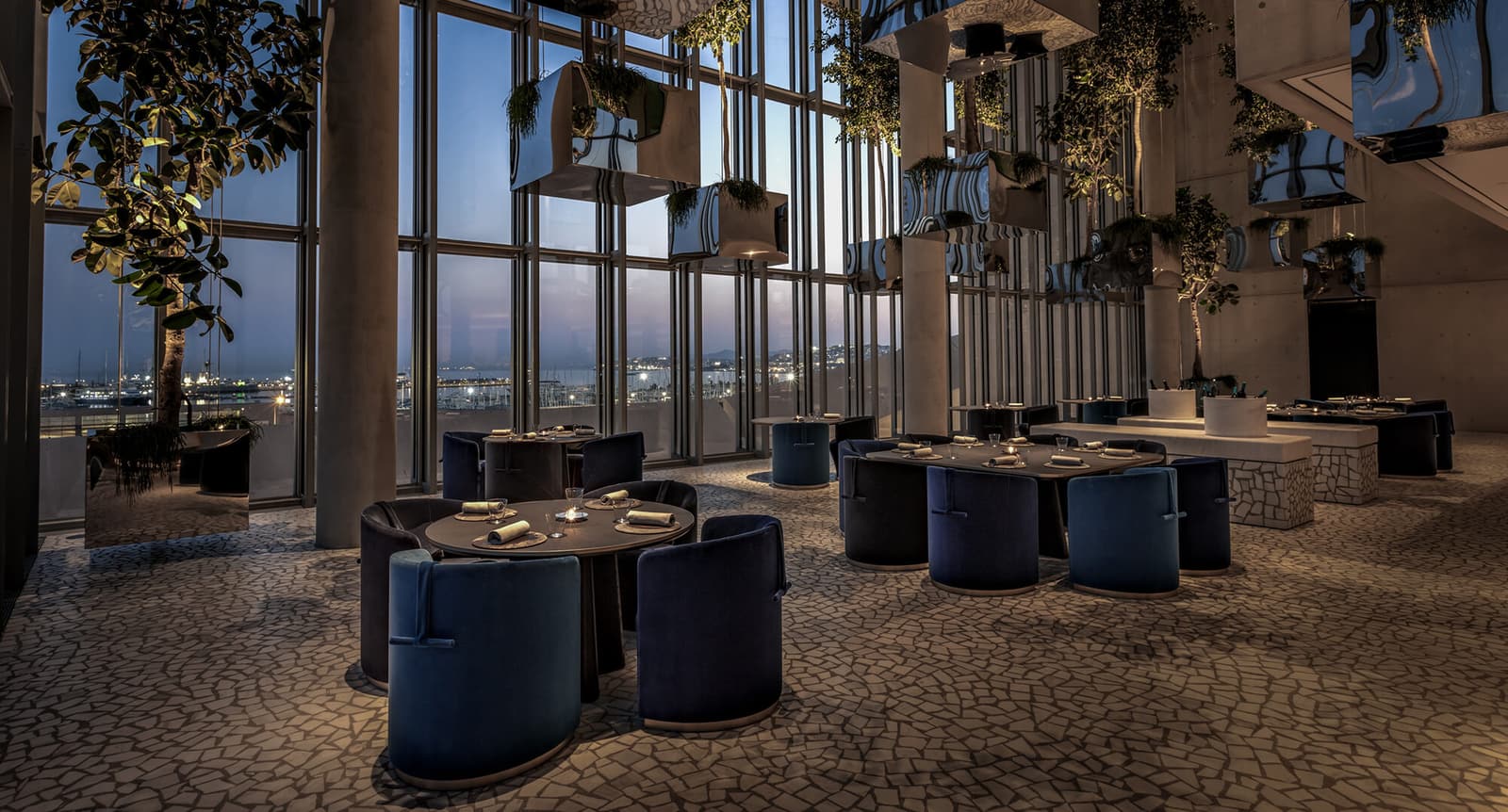
Athens serious dining makes more sense when you read it through buildings. That is the city's advantage. The strongest nights are not minor variations on one luxury script; they are three different spatial arguments about what a high-end Greek dinner should feel like. Delta turns dinner into a civic rooftop event at the Stavros Niarchos Foundation Cultural Center. Soil compresses the evening into a neoclassical house in Pangrati, where the garden story begins before you sit down. CTC takes a more urban line, asking you to surrender to an 11-stage blind-taste sequence in an elegant room with a verdant garden and a late-night city pulse.[1][2][3][4][5][6]
That difference matters for trip design. In too many cities, a "fine dining weekend" means stacking interchangeable tasting menus until the third reservation blurs into the second. Athens gives you cleaner contrast. The choice is not simply which restaurant is best. The useful question is which dinner register suits the night you actually want.
1) Delta is the destination-scale booking
If you want one Athens dinner that behaves like an arrival shot, Delta is the obvious anchor. The restaurant's own description is unusually direct: it presents itself as a two-Michelin-starred destination on the 5th floor of the Stavros Niarchos Foundation Cultural Center, built around sustainability, surprise, and world-class ambition.[1] 50 Best Discovery sharpens the scene with the details that matter for travelers: a panoramic view over the Saronic Gulf, a hand-hammered copper bar, suspended trees, zero-waste discipline, and tasting menus built in 10 or 14 courses with ingredients sourced in part from an organic farm in nearby Mesogeia.[2]
That set of signals tells you how to use the restaurant. Delta is not the night for a casual slot between museums and bars. It is the night you give Athens your full evening. The room is designed to widen the frame. You book it when you want the city, the sea, the architecture, and the food to land together as one formal event.[1][2]
This is also why Delta works best as a final-night reservation. Its scale is outward-facing. The view, the cultural-campus setting, and the length of the tasting structure all push the dinner toward crescendo rather than warm-up.[1][2]
2) Soil is the intimacy slot
Soil is the corrective if you want Athens to feel closer to the hand than to the skyline. The official story begins not in the dining room but in chef Tasos Mantis's private garden in Alepochori, which the restaurant treats as the starting point for its whole gastronomic logic.[3] The same page frames the house in Pangrati as a beautiful neoclassical home where farm-to-table sourcing, handmade ceramic plates, and what it calls "ultra-premium hospitality" are fused into a personal choreography for guests.[3]
50 Best Discovery makes that intimacy legible in traveler's terms. Soil sits just behind the Panathenaic Stadium, inside a two-floor neoclassical mansion; warm nights move into a courtyard shaded by century-old orange trees, while cooler evenings shift back into a beamed dining room with soft-colored chairs. The menu backbone comes from heritage vegetables and unusual Greek herbs, reinforced by techniques Mantis refined in kitchens such as Hof Van Cleve, The Fat Duck, and Geranium.[4]
Put differently: Soil is the dinner for readers who want Athens filtered through touch, garden memory, and domestic scale. It is less about panoramic statement than about compression. The city narrows into one house, one courtyard, one sequence of flavors that keeps pulling you back to herbs, vegetables, and the feeling of being hosted rather than staged.[3][4]
Because of that, Soil is often the best first serious dinner in the city. It tunes your palate toward Athens rather than away from it. After Soil, you are primed to notice the city's quieter textures.
3) CTC is the urban-sequence night
CTC works when you want the clearest bridge between contemporary Greek cooking and urban night energy. The restaurant's own "Place" page insists that the project has always been about experience, and its current home translates that into an elegant room with a "magically verdant garden" where chef Alexandros Tsiotinis and his team tell a gastro-story through modern Greek cuisine.[5] The same material is useful because it names the emotional goal without evasion: the house wants guests to walk out feeling the night was well spent.[5]
The menu page gives the operational shape. CTC runs a Blind Taste Menu called Voyage in 11 stages, built around surprise, modern Greek gastronomy, and pairing logic; dietary requests need 48 hours notice, and dinner service runs Tuesday to Saturday, 19:00-00:30.[6] That is a strong travel signal. CTC is the booking for the evening when you do not want rooftop grandeur or country-house calm. You want movement, sequence, and a city dinner that still feels theatrical after dark.[5][6]
Tsiotinis's chef page reinforces that identity by linking his cooking to major French kitchens and to a generation of modern Greek gastronomy that treats the plate as a canvas.[7] That lineage matters because it explains why CTC feels less pastoral than Soil and less monumental than Delta. Its center of gravity is composition.
4) The cleanest Athens sequencing logic
If you are building only one dinner, choose by mood rather than prestige shorthand.
- Choose Delta if you want the biggest visual frame, the strongest destination feeling, and a night built like a formal finale.[1][2]
- Choose Soil if you want the most intimate hospitality, the strongest garden-to-table thread, and a house that feels rooted in Pangrati rather than elevated above the city.[3][4]
- Choose CTC if you want the clearest modern-Greek tasting arc, a later urban rhythm, and an evening that moves through surprise and pairing logic.[5][6][7]
If you have two dinners, the strongest pairings are not hard to see.
- Soil -> Delta is the most elegant contrast: first the close-grained garden house, then the wide civic rooftop.[1][2][3][4]
- CTC -> Delta is the best rising-scale route for travelers who want to move from urban night energy into full destination drama.[1][2][5][6]
- Soil -> CTC works if you want Athens kept at street level: one night of rooted calm, one night of metropolitan modernism, no panoramic climax required.[3][4][5][6]
A three-dinner stay can do all three, but the point is not accumulation. The point is preserving contrast. Athens rewards diners who leave air between experiences and let each room keep its own tempo.
5) The useful booking discipline
The common Athens mistake is over-reading "Greek fine dining" as one thing. Delta is architecture and civic scale. Soil is garden intimacy translated into a house. CTC is the city speaking in a more overtly contemporary tasting-menu grammar.[1][2][3][4][5][6][7]
That is why this city works well for a short high-end trip. You are not flying in for three versions of the same luxury ritual. You are choosing between three different ways of staging Greek culinary ambition. Once you see that, the routing becomes simpler and the dinners get better.
Sources
- Delta Restaurant official homepage, covering its two-Michelin-star status, SNFCC location, sustainability framing, and overall positioning.
- 50 Best Discovery, "Delta - Athens - Restaurant," on the Saronic Gulf panorama, copper bar, suspended trees, zero-waste ethos, 10- and 14-course tasting menus, and Mesogeia farm sourcing.
- Soil Restaurant official "Our story" page, covering the Alepochori private garden, Pangrati neoclassical home, and farm-to-table hospitality philosophy.
- 50 Best Discovery, "Soil - Athens - Restaurant," on the Panathenaic Stadium location, two-floor mansion, courtyard with orange trees, and vegetable-and-herb backbone.
- CTC official "The Place" page, covering the verdant garden, modern Greek gastro-story, Alexandros Tsiotinis, Michelin-star framing, and opening hours.
- CTC official "The Menu" page, covering the 11-stage Blind Taste Menu, beverage pairings, 48-hour dietary notice, and dinner schedule.
- CTC official "The Chef" page, covering Alexandros Tsiotinis's training lineage and his view of the plate as a compositional canvas.