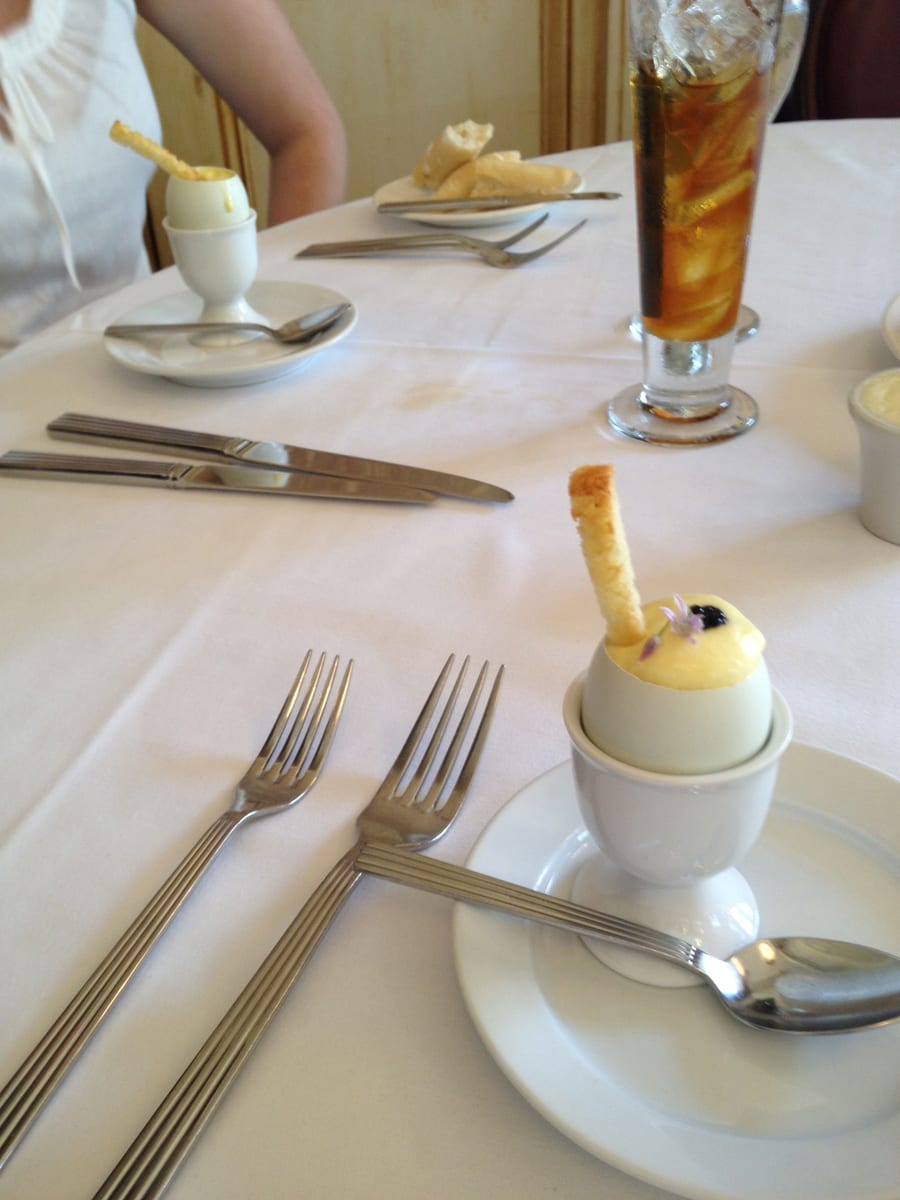
The amuse-bouche is tiny, but it changes the room before the menu has truly begun. A good one does not behave like a snack. It behaves like a handshake with flavor: the kitchen chooses it, the diner receives it, and both sides learn something about the terms of the evening.
That is why the form still matters in fine dining. The first listed course may be the official start of the tasting menu, but the amuse-bouche is where the restaurant first tests trust. If the bite is sharp, warm, generous, and legible, the diner relaxes. If it is fussy, cold, underseasoned, or merely expensive-looking, suspicion enters early. In a long meal, that first suspicion is hard to erase.
The word history is useful because it keeps the bite from floating away into luxury theater. Larousse defines amuse-bouche in restaurant terms as an amuse-gueule, while CNRTL's entry for amuse-gueule points toward the older idea of a small sweet or savory thing served outside the meal, meant to occupy or stir appetite.[1][2] The modern fine-dining version narrows that older hospitality gesture. It is not simply something to nibble with a drink. It is a chef-selected opening move.
That selection is the crucial difference. An appetizer is chosen by the guest. A canape tray can be taken or ignored. An amuse-bouche arrives as an unsolicited statement from the kitchen. Penguin Random House's page for Rick Tramonto and Mary Goodbody's Amuse-Bouche frames the form as a small bite before the meal, one that moved from a relatively unfamiliar French culinary feature into standard fine-dining vocabulary.[3] That shift matters because it turned a courtesy into a course with a job.
The job is not to impress by being miniature. The job is to compress the restaurant's grammar.
The welcome has to taste like the house
The weakest amuse-bouche is a logo in food form: a little spoon of foam, a dot of puree, a premium garnish, a brittle chip, and no real appetite behind it. It looks like fine dining because it is small and staged, but it does not teach the diner how to read the kitchen.
The strongest examples do the opposite. They make the restaurant's values edible in one or two bites. A seafood room might open with a warm shellfish custard that says the kitchen understands stock, salinity, and temperature. A vegetable-led room might use a broth, tartlet, or fermented bite that proves restraint before the vegetables are asked to carry a whole menu. A classic French restaurant might send a gougere, not because cheese puffs are novel, but because warmth, pastry, salt, and timing tell the truth quickly.
That is the hidden severity of the format. There is nowhere to hide. A big course can recover from one muted element because sauce, garnish, texture, and story can share the load. An amuse-bouche has almost no redundancy. If it is meant to be hot, it must arrive hot. If acidity is the point, it cannot be vague. If the vessel is awkward, the diner notices before the flavor lands.
Smallness makes logistics visible. The kitchen has to prepare the bite for every diner, fast enough that the welcome does not become a delay, but carefully enough that it does not feel like banquet garnish. The dining room has to place it, identify it, and remove it without turning the opening minutes into choreography for its own sake. The service team has to know whether the bite contains shellfish, nuts, dairy, gluten, alcohol, or raw fish. In other words, the amuse-bouche is not free. It spends labor, mise en place, dishware, explanation, and allergy attention before the first course earns applause.
Keller's cornet works because it is a joke with discipline
Thomas Keller's salmon tartare cornet is a useful modern reference because it shows how an amuse-bouche can become iconic without becoming large. Vanity Fair's publication of the recipe, excerpted from The French Laundry Cookbook, gives the essential mechanism: salmon tartare, sweet red onion creme fraiche, a sesame tuile shaped as a tiny cone, and a service method that can be eaten standing up without a plate or silverware.[4]
The cleverness is not only that the cornet looks like an ice cream cone. The cleverness is that the joke is structurally useful. The cone makes the guest pick up the first bite. The form relaxes the table before the serious progression begins. The salmon and creme fraiche keep the luxury register intact. The tuile has to be rolled, crisped, held, filled, and served before it loses its snap. A playful object becomes a precision test.
That is the lesson many restaurants miss when they copy the gesture. The cornet is not successful because it is cute. It is successful because every part of the joke does work. Shape, temperature, texture, portion, service, and memory all point in the same direction. The diner smiles, but the kitchen has already announced discipline.
The best amuse-bouche often lives in that double register. It can be generous without being heavy, witty without being unserious, luxurious without becoming a supplement preview. It can also be local without turning into a brochure. A coastal restaurant does not need to explain its shoreline if the first spoonful already tastes of shell, smoke, tide, or cold butter. A city restaurant does not need to claim cosmopolitan energy if the first bite moves fluently between techniques without confusion.
The first bite is a contract, not a gift
Restaurants like to describe the amuse-bouche as complimentary, and in a narrow menu sense it is: the guest does not order it as a priced item. But in a tasting-menu economy, complimentary is not the most honest word. The bite is part of the meal's contract. It is included in the price, the labor model, the expectation, and the emotional pacing of the evening.
That contract has two obligations. The kitchen's obligation is to make the bite meaningful rather than decorative. The diner's obligation is to receive it as an opening argument, not as a random free snack. This does not mean every amuse-bouche must be solemn. Some of the best are funny. But even the funny ones need intent. A savory cone, a hot gougere, a chilled custard, a radish with cultured butter, a tiny tart with bitter greens: each can work if it tells the diner how to pay attention.
The form also clarifies a restaurant's relationship to generosity. A stingy amuse-bouche feels worse than no amuse-bouche because it turns hospitality into signaling. A bite overloaded with caviar can feel insecure if the luxury arrives before appetite. A technically dazzling bite can fail if it makes the guest admire the kitchen instead of wanting dinner. The right amuse-bouche does not try to win the meal in the first minute. It opens the appetite and establishes the house's tempo.
That tempo is why the old lineage still feels alive. The amuse-bouche descends from pre-meal hospitality, but the modern fine-dining version has become something sharper: the tasting menu's opening sentence. It tells the reader what kind of syntax to expect. Is the restaurant direct or ornate? Warm or cerebral? Product-led or technique-led? Classical, local, playful, severe, abundant, restrained?
The answer does not have to be complete. It only has to be true. A first bite cannot carry the whole meal, but it can make the meal believable.
Sources
- Larousse, "amuse-bouche" - French dictionary entry defining the restaurant term in relation to amuse-gueule.
- CNRTL, "amuse-gueule" - French lexical entry and etymology for the related small pre-meal bite.
- Penguin Random House, Amuse-Bouche: Little Bites of Delight Before the Meal Begins by Rick Tramonto with Mary Goodbody - publisher page on the form and its fine-dining role.
- Vanity Fair, "Thomas Keller's Salmon Cornets" - excerpt from The French Laundry Cookbook with the salmon tartare cornet recipe and service note.
- kerinin, "Amuse-bouche at Restaurant August.jpg," Wikimedia Commons - real 2012 photograph of truffled egg custard with caviar and crouton used as the article image.