Water utilities already trade on the easy part of the story: people cannot defer clean water the way they defer a discretionary purchase. The harder 2026 question is whether that safety can still compound through rate-base growth when bills, financing costs, PFAS compliance, and merger approvals all sit in the same public-utility hearing room.[1][2][3][4]
That is the priced-vs-new gap. Priced is the essential-service premium. New is the conversion test: a utility has to turn pipes, treatment plants, storage, acquisitions, and regulatory filings into allowed earnings without making affordability the reason commissions slow the machine.
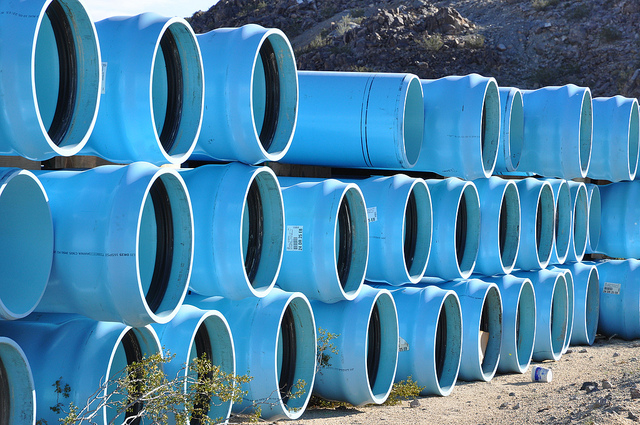
Image context: the cover uses a real U.S. Army Corps of Engineers photograph of water treatment plant pipes published by NIST. It fits this piece because the valuation mechanism is tangible: regulated earnings follow infrastructure that gets built, placed in service, reviewed by regulators, and recovered from customers over time.[5]
The Valuation Frame
A regulated water utility is not valued like a normal industrial company. Volume growth matters, but it is not the center. The center is rate base: the pool of approved utility assets on which the company is allowed to earn a regulated return. When a company replaces mains, upgrades treatment facilities, buys a local system, or expands wastewater assets, the spending can become earnings power if regulators allow it into rates.[1][2]
That creates a clean valuation ladder. First, identify the infrastructure need. Second, ask whether management has enough capital plan, balance-sheet capacity, and project execution to meet part of that need. Third, test whether regulators let that spending earn returns fast enough to avoid regulatory lag. Fourth, ask whether customer bills stay politically acceptable.
The public need is large enough to support the first step. EPA's seventh drinking-water infrastructure survey put the 20-year need at $625 billion for pipe replacement, treatment upgrades, storage tanks, and related assets.[3] EPA's clean-water survey separately reports $630.1 billion of wastewater, stormwater, and other clean-water needs over 20 years.[4] Those numbers do not automatically become investor returns, but they explain why water utilities can present multi-decade capital programs without sounding promotional.
Why American Water Is The Clean Test Case
American Water gives the valuation problem a focused screen. The company reported $5.69 of 2025 GAAP EPS, $5.64 of adjusted EPS excluding merger transaction costs and HOS seller-note interest, and 8.9% adjusted EPS growth on that comparable basis.[1] It also invested $3.2 billion of capital in 2025, delivered 8.2% dividend growth, and reaffirmed long-term EPS and dividend growth targets of 7% to 9%.[1]
Those figures support the safety premium, but they do not finish the argument. The next layer is scale. American Water and Essential Utilities are pursuing an all-stock merger that would create a combined water and wastewater platform with about 4.7 million connections across 17 regulated states and about $29.3 billion of combined water and wastewater rate base as of year-end 2024, excluding Essential's gas rate base.[2] The transaction terms also state that Essential shareholders would receive 0.305 American Water shares for each Essential share, with American Water shareholders owning about 69% and Essential holders about 31% of the combined company.[2]
In valuation terms, that merger is not just bigger-for-bigger's-sake. It is a claim that scale, geographic diversity, acquisition pipelines, and regulatory credibility can keep the rate-base engine running after close. The merger site says shareholder approvals arrived in the first quarter of 2026, state regulatory applications were filed in the fourth quarter of 2025, and the approval window runs through the first quarter of 2027.[2] That timeline makes the near-term stock question less about whether water demand is durable and more about whether regulatory approvals preserve the economics.
Six Numeric Anchors
- Infrastructure runway: EPA estimates $625 billion of drinking-water infrastructure need over 20 years.[3]
- Clean-water parallel: EPA reports $630.1 billion of clean-water needs over 20 years.[4]
- Current earnings base: American Water reported $5.69 of 2025 GAAP EPS and $5.64 of adjusted comparable EPS.[1]
- Capital conversion: American Water invested $3.2 billion in capital during 2025.[1]
- Growth target: the company reaffirmed long-term EPS and dividend growth targets of 7% to 9%.[1]
- Merger scale: the American Water-Essential platform would have roughly 4.7 million connections and about $29.3 billion of combined water and wastewater rate base.[2]
These anchors point to the same conclusion: the water-utility premium is defensible, but it is not free. The market should pay for predictable capital conversion, not just for the fact that water is essential.
What The Multiple Is Really Paying For
The bull case pays for three things.
First, it pays for unusually visible reinvestment. Unlike a cyclical manufacturer, a water utility can point to pipes, treatment standards, storage, lead service line work, PFAS compliance, and wastewater capacity as concrete reasons to keep spending. That does not remove execution risk, but it makes the spending case legible.[3][4]
Second, it pays for regulatory recoverability. A dollar of capital spending has different value depending on how quickly and cleanly it enters rate base. The best water-utility earnings stories are not the ones with the largest gross capex number. They are the ones where capex becomes approved assets with manageable lag, fair allowed returns, and limited disallowance risk.[1][2]
Third, it pays for consolidation discipline. Fragmented municipal and small private systems often need capital, compliance support, and operating expertise. Acquisitions can therefore add rate base and customers. But acquisitions only create value if purchase price, approval conditions, integration costs, and customer bill treatment leave enough return after the public-interest test.[2]
The Counterweight
The strongest counterweight is affordability. Water infrastructure is necessary, but household bills are visible, local, and politically sensitive. A utility can have the right engineering answer and still face a slower earnings path if regulators decide the bill trajectory is too steep.
That is why the American Water-Essential merger matters as a live test. The companies say the combined platform can support safe, reliable, affordable service while maintaining long-term growth targets.[2] Regulators will still judge local customer effects, service commitments, financing structure, and any conditions attached to approval. A bigger platform may improve operational capacity, but bigger scale does not exempt the company from local bill politics.
Financing is the second counterweight. Higher debt costs do not destroy the model, but they increase the importance of timely recovery and capital structure treatment. A long capital plan funded at expensive rates can still work if commissions allow adequate returns and construction timing stays controlled. It gets less attractive if regulatory lag lengthens just as borrowing costs and compliance spending rise.
Falsifier
This valuation frame is wrong if water utilities can no longer translate infrastructure need into recoverable earnings at a reasonable pace. The concrete falsifier would be a pattern of rate orders, merger conditions, or affordability interventions that materially reduce allowed returns, stretch recovery timelines, or force more capital spending to sit outside earning rate base.[1][2]
That would not mean the infrastructure need disappeared. It would mean the public need shifted from a shareholder compounding engine into a slower, lower-return funding burden.
Watchlist
- American Water-Essential approvals through Q2 2026 to Q1 2027: the transaction timeline is the cleanest near-term test of whether scale is treated as a public benefit or a customer-bill risk.[2]
- Rate-case language: watch whether commissions emphasize timely infrastructure recovery or affordability constraints when approving capital-heavy filings.[1][2]
- Capital plan execution: American Water's $3.2 billion 2025 investment level needs to keep converting into placed-in-service assets and approved recovery, not just higher construction work in progress.[1]
- EPA-driven compliance spending: lead, PFAS, treatment upgrades, wastewater, and stormwater needs support the capital runway, but they also raise the bill-sensitivity floor.[3][4]
Takeaway
Water utilities deserve a safety premium, but safety is not the whole valuation. The real asset is the regulated ability to turn unavoidable infrastructure spending into earning rate base. In 2026, American Water is the cleanest screen because it combines ordinary capital execution with a pending merger that tests regulatory trust at larger scale. If the company can keep capex, approvals, customer affordability, and dividend growth moving together, the premium has a mechanism. If affordability becomes the binding variable, the same pipe-replacement runway becomes a slower compounding story.
Sources
- American Water, 2025 Annual Report (posted March 2026).
- American Water and Essential Utilities merger site, transaction overview and timeline (accessed April 22, 2026).
- U.S. EPA, "EPA's 7th Drinking Water Infrastructure Needs Survey and Assessment."
- U.S. EPA, "Clean Watersheds Needs Survey."
- NIST Image Gallery, "Water treatment plant pipes," photo credited to the U.S. Army Corps of Engineers.