Chocolate equities and suppliers are no longer trading only on the old shortage story. The new 2026 question is narrower: lower cocoa beans can release working capital, but they do not automatically rebuild profits if volumes stay weak, price lists lag the futures move, and customers wait for cheaper inventory to pass through.[1][2][3]
That distinction matters because the cocoa shock has changed shape. In 2024 and 2025, the dominant fear was raw-material scarcity. By April 2026, the more investable issue is the handoff from commodity relief to margin repair. The market can see the bean price decline; what it still needs to underwrite is whether chocolate companies can turn that decline into cleaner cash flow without giving too much of the benefit back through discounting, retailer pressure, or lower factory utilization.
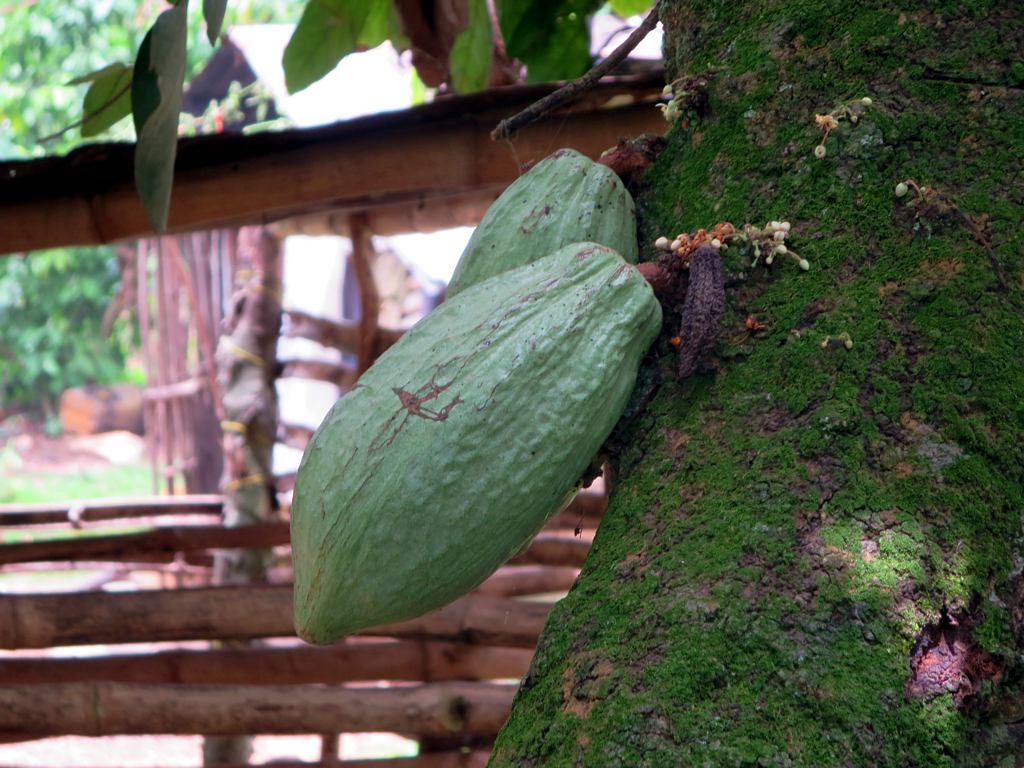
Image context: the cover uses a real 2015 Wikimedia Commons photograph of cocoa pods in the Plateaux Region around Kpalime, Togo. It is the right visual anchor because the finance story starts with a farm crop before it becomes a working-capital problem for processors and a pricing problem for branded confectionery companies.[5]
Priced vs new
Priced: the worst raw-bean squeeze has eased. ICCO's February 2026 bulletin revised the 2024/25 cocoa year to a 75,000-tonne surplus, with production at 4.728 million tonnes, grindings at 4.606 million tonnes, and the stocks-to-grindings ratio improving to 29.2% from 26.4% in 2023/24.[1]
New: demand and margin timing are now the bottleneck. European Cocoa Association data show Q1 2026 European grindings at 325,895 tonnes, only 92.2% of the prior-year quarter, while Barry Callebaut still reported a -6.9% group volume decline in H1 FY2025/26 even as cocoa bean prices fell fast enough to support cash generation.[2][3]
That is the gap. A commodity chart can make the relief look immediate. The income statement arrives with a delay. Processors, branded chocolate makers, retailers, and consumers are sitting at different points in the same pipeline, and the profit benefit does not move through those points at the same speed.
Mechanism: the relief first hits cash, then fights its way into earnings
The first place lower cocoa helps is the balance sheet. Barry Callebaut is the clean public example because it sits close to the physical bean flow. The company said cocoa prices fell 61% during the first half of FY2025/26, closed the period at GBP 2,057 on its cited terminal-market basis, and helped produce CHF 801.8 million of free cash flow despite peak harvest season.[3] That is not a small operational change. A lower bean price reduces inventory value, financing needs, and the cash tied up in a volatile procurement cycle.
But the same release shows why the equity read is less simple. Barry Callebaut's H1 recurring EBIT fell 4.2% in local currencies, and management cut the profit outlook to a mid-teens decline in recurring EBIT even while improving the full-year volume outlook to a -1% to -3% decrease.[3] The company was explicit about the problem: lower bean prices are supportive for future market recovery, yet a fast decline can pressure price lists, Gourmet margins, and competitive behavior before volumes fully return.[3]
The second place lower cocoa must travel is the demand channel. ICCO's revised balance sheet is not only a supply recovery story; it is also a demand-softness story. Global grindings were estimated down 4.2% year on year in 2024/25, and European grindings kept weakening into Q1 2026.[1][2] Grindings are an imperfect demand proxy, but they are hard to ignore because they measure the industry converting beans into butter, powder, and liquor rather than merely talking about future consumer resilience.
The third place is branded pricing. Hershey's full-year 2025 release shows the other side of the same cycle: sales rose to $11.69 billion from $11.20 billion, but cost of sales jumped to $7.77 billion from $5.90 billion, leaving gross profit down sharply year over year.[4] That tells investors why retail chocolate pricing does not instantly fall when beans fall. Companies are still absorbing, hedging, and working through earlier cost layers. At the same time, if shelf prices stay high too long after input relief, volume elasticity becomes the new tax.
Five numeric anchors
- The market balance eased but did not normalize fully: ICCO moved 2024/25 to a 75,000-tonne surplus after the prior season's deficit, with stocks/grindings at 29.2%.[1]
- Demand is still soft: global grindings were estimated at 4.606 million tonnes, down 4.2% year on year.[1]
- Europe remains the weak processing region: Q1 2026 European grindings were 325,895 tonnes, or 92.2% of Q1 2025.[2]
- Processor cash flow is improving before earnings quality fully heals: Barry Callebaut generated CHF 801.8 million of H1 free cash flow, while recurring EBIT still fell 4.2% in local currencies.[3]
- Branded confectionery is still digesting the old cost layer: Hershey's 2025 cost of sales rose to $7.77 billion from $5.90 billion even as net sales rose by a much smaller amount.[4]
Together, these anchors support a split view. The raw-material panic has faded, but the profit recovery is not automatic. Cocoa has moved from a scarcity trade to an execution trade.
Who benefits first
The first beneficiaries are companies with cocoa-linked working capital, transparent financing, and enough customer leverage to adjust price formulas without destroying relationships. That points toward processors and ingredient suppliers before it points toward every branded chocolate stock. When beans fall, physical inventory becomes cheaper to finance and margin calls become less punishing. Barry Callebaut's deleveraging progress, including net debt/EBITDA recurring moving to 3.9x from 6.5x a year earlier, shows how quickly the balance-sheet picture can improve when the commodity releases pressure.[3]
The second group is branded confectionery companies with pricing power and clean inventory discipline. They need a slower but more durable bridge: keep enough price to recover the 2024-2025 cost hit, avoid shocking consumers with visible shrinkflation or quality trade-downs, and let lower input costs flow into gross margin over several quarters. Hershey's 2025 numbers show the stakes. Revenue growth did not stop the cost line from overwhelming gross profit, so the recovery case now depends on whether price, mix, and cost relief can align without further volume damage.[4]
The weakest position belongs to companies stuck between falling spot inputs and customers who expect immediate relief. A processor or gourmet supplier that bought high, published high price lists, and then faces customers with lower commodity screens can lose competitiveness before accounting profits catch up. That is the awkward branch Barry Callebaut flagged in Gourmet.[3]
Strongest counterweight
The bullish counterargument is that the market is being too slow. If cocoa prices stay lower, European grindings stabilize, and retail volumes respond by the second half of 2026, investors may have to move from "damage control" to "margin rebound" quickly. Lower working capital, lower finance costs, and less aggressive customer resistance can produce a visible earnings inflection once the pipeline clears.[2][3]
The bearish counterargument is that the demand hit is not only a timing issue. If high chocolate prices trained consumers to buy fewer units, trade down, or accept reformulated products, lower cocoa may repair cash flow without restoring the old volume base. In that branch, the sector gets relief but not a full multiple reset.
Falsifier
This margin-handoff thesis is wrong if the next two grindings updates show clear volume recovery, Barry Callebaut's June strategy update points to stable price realization without heavier discounting, and branded confectionery companies show gross-margin repair without renewed volume pressure.[2][3][4] That combination would mean lower cocoa is moving through the system faster and cleaner than the cautious case assumes.
Watchlist
- European Cocoa Association Q2 2026 grindings in July: the key test is whether Q1's 92.2% year-on-year run rate was a trough or a new demand baseline.[2]
- Barry Callebaut's June Focus for Growth update: watch whether volume recovery requires price concessions that dilute the cash-flow benefit.[3]
- Hershey's next gross-margin bridge: the useful signal is not only price realization, but whether cost relief arrives without another consumer-volume penalty.[4]
- ICCO's next supply-demand revision: a larger surplus would help cash costs but may also confirm that demand destruction, not only supply recovery, is balancing the market.[1]
Takeaway
The cocoa trade has become less dramatic and more demanding. Shortage risk has eased, yet the equity question has moved into the plumbing of working capital, price lists, inventories, and consumer elasticity. Cheaper beans are good news. They are not the same thing as easy chocolate profits.
Sources
- International Cocoa Organization, "February 2026 Quarterly Bulletin of Cocoa Statistics" (February 27, 2026), revised 2024/25 production, grindings, surplus, and stocks estimates.
- European Cocoa Association, "European Cocoa Bean Usage" Q1 2026 statistics PDF (April 16, 2026).
- Barry Callebaut Group, "Half-Year Results Fiscal Year 2025/26" (April 16, 2026).
- The Hershey Company, "Hershey Reports Fourth-Quarter and Full-Year 2025 Financial Results; Provides 2026 Outlook" (February 5, 2026).
- Wikimedia Commons, "File:Cocoa Pods (21163342514).jpg" by David Stanley, photographed in Togo on April 15, 2015.