Rail investors keep getting tempted by the same shortcut: a healthier port print shows up, a few freight indicators stop looking miserable, and the whole rail-intermodal complex gets read as a clean soft-landing trade. That shortcut misses the handoff that actually matters.
As of 2026-04-01 11:12 UTC, the useful split is this. Priced is that the import side no longer looks broken: Port of Los Angeles loaded imports rose 5% in February, inventories look leaner than a year ago, and industrial production is at least inching forward.[2][3][4] New is that those signals still have to survive an inland translation test. U.S. intermodal volumes remain softer than total carloads on a year-to-date basis, and J.B. Hunt's latest intermodal read shows exactly where the friction sits: eastern network loads are growing, but transcontinental loads and revenue per load are still under pressure.[1][5]
That is why the finance call here is narrower than "freight is back." A port rebound is a necessary condition for a rail rerate. It is not yet a sufficient one.
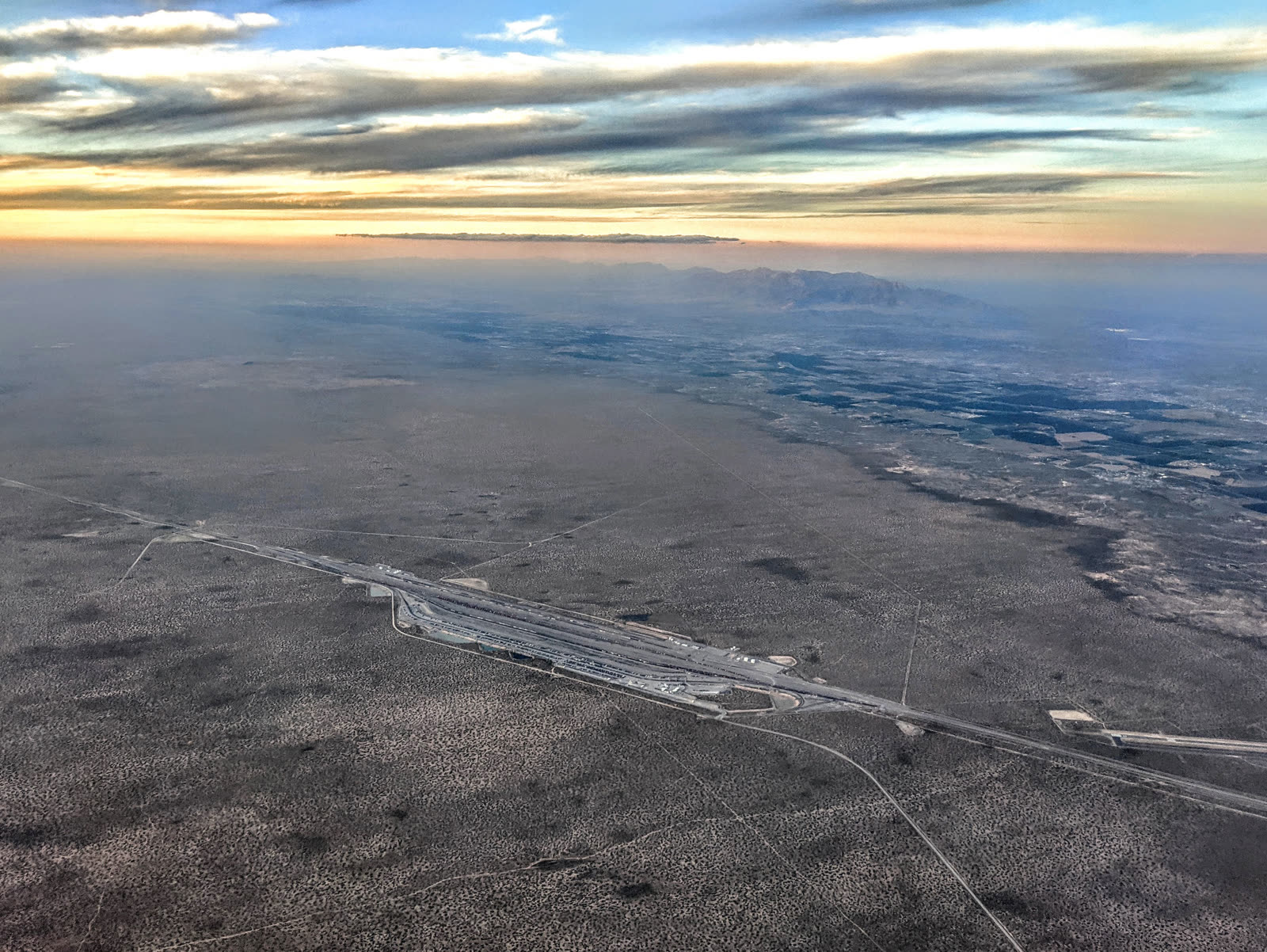
Image context: the cover shows Union Pacific's intermodal terminal in Santa Teresa, New Mexico. It works because the article is about inland transfer and monetization, not about a symbolic freight graphic.[6]
Priced vs new
Priced: investors already understand the constructive pieces. December 2025 total business inventories/sales fell to 1.36 from 1.39 a year earlier, which means shelves and warehouses are not carrying the same excess buffer they were before.[4] February industrial production rose 0.2%, manufacturing output also rose 0.2%, and total industrial production stood 1.4% above a year earlier.[3] If you want to build a restocking story, the macro scaffolding is there.
New: the operating chain is still uneven. Port of Los Angeles loaded imports reached 433,812 TEUs in February, up 5% year over year, but the port's total throughput for the first two months of 2026 was still 1,636,324 TEUs, down 5% from the same stretch last year.[2] At the rail level, U.S. carloads for the first 11 weeks of 2026 are up 4.7%, while intermodal units are down 0.4%.[1] That is the key mismatch. The broad rail system is moving more freight, but the container-heavy lane that investors often use as the cleanest consumer-and-import readout is not yet giving an unambiguous all-clear.
Mechanism: why the port-to-rail handoff still decides the equity story
The mechanism is short and practical.
First, ports tell you whether boxes are arriving. They do not tell you whether those boxes will clear through inland networks at the right speed, lane mix, and price.[2]
Second, intermodal earnings depend on what kind of network demand shows up after the dock. J.B. Hunt's fourth-quarter numbers are useful precisely because they separate the lanes. Intermodal segment revenue was $1.55 billion, down 3% year over year; overall intermodal volume fell 2%; transcontinental loads fell 6%; eastern network loads rose 5%; and revenue per load fell 1%.[5] In plain English, rail-conversion and eastern network demand are real, but the long-haul import corridor still has not turned into clean pricing power.
Third, that lane mix matters because rail equities get rerated on conversion quality, not on box count alone. If import recovery stays concentrated at the coast, or if inland distributors keep replenishment light and selective, the rail operator can still move more freight without getting the full earnings torque investors want.
Fourth, leaner inventories are supportive, but they are not self-executing. The Census release says December 2025 shipments rose 3.2% from a year earlier while inventories rose 1.6%, which is why the inventories/sales ratio improved.[4] That gives the economy less cushion and more potential sensitivity to restocking. It does not guarantee that retailers and manufacturers will rebuild inventories quickly enough to restore transcontinental pricing.
Six numeric anchors
- Port of Los Angeles loaded imports: 433,812 TEUs in February 2026, up 5% year over year.[2]
- Port of Los Angeles year-to-date throughput: 1,636,324 TEUs through two months of 2026, down 5% from the same period last year.[2]
- AAR U.S. intermodal traffic: 274,669 units for the week ending March 21, up 1.2% year over year; 3,029,315 units for the first 11 weeks of 2026, down 0.4%.[1]
- AAR U.S. carloads: 227,583 for the week ending March 21, up 1.2%; 2,450,275 for the first 11 weeks, up 4.7%.[1]
- Federal Reserve industrial production: total IP up 0.2% in February, manufacturing up 0.2%, with total IP 1.4% above year-earlier levels; capacity utilization 76.3%.[3]
- Restocking and monetization check: total business inventories/sales ratio at 1.36 versus 1.39 a year earlier, while J.B. Hunt's intermodal revenue was $1.55 billion with volume down 2%, transcontinental loads down 6%, eastern network loads up 5%, and revenue per load down 1%.[4][5]
Those anchors point to the same conclusion from different angles. The freight economy is no longer in a simple contraction script. But the most market-sensitive rail lane still needs a better inland conversion.
Strongest counterweight
The best pushback is that the setup can improve faster than it looks. Lean inventories reduce slack.[4] J.B. Hunt also says eastern network growth continues to be driven by highway-to-rail conversion and that operating income improved 16% because network balance and drayage efficiency got better.[5] That matters. If conversion remains active and import flows stabilize, earnings can improve even before a dramatic industrial rebound shows up in macro data.
That is a real counterweight, and it is why this is not a bearish freight call. It is a sequencing call. The first leg is operational repair and conversion. The second leg, which still needs proving, is broad inland replenishment strong enough to improve transcontinental loads and price realization.
Falsifier
This thesis fails if the next two reporting windows show the handoff already happening. Concretely, if AAR intermodal turns clearly positive on a sustained year-to-date basis, port volumes keep recovering, and J.B. Hunt's intermodal business shifts from volume pressure plus weaker revenue per load to simultaneous load growth and firmer yield, then the "wait for inland restocking" caution would be too conservative.[1][2][5]
Watchlist
- AAR's weekly Wednesday traffic releases: the cleanest near-term check is whether U.S. intermodal stops lagging carloads on a year-to-date basis.[1]
- The next Port of Los Angeles cargo briefing: investors should watch whether loaded imports stay firm and whether the year-to-date TEU deficit begins to close.[2]
- The next Federal Reserve G.17 release: the rail bull case gets stronger if manufacturing output does more than grind forward by a few tenths.[3]
- J.B. Hunt's next quarterly results: the decisive micro signal is not only volume, but whether transcontinental loads and revenue per load finally improve together.[5]
Takeaway
The U.S. rail-intermodal story is better than the 2023-2024 freight slump, but it is still not a one-headline rerate. Ports can print well, inventories can look lean, and manufacturing can stabilize, yet the real earnings question remains inland: are boxes becoming replenishment, network balance, and better transcontinental economics? Until that second handoff is visible, rail intermodal remains a recovery story with one important proof step left.
Sources
- Association of American Railroads, "AAR Reports Weekly Rail Traffic for the Week Ending March 21, 2026."
- Port of Los Angeles, "Port of Los Angeles February Cargo Volume Second Best on Record" (March 12, 2026).
- Federal Reserve, "Industrial Production and Capacity Utilization - G.17" current release.
- U.S. Census Bureau, Manufacturing and Trade Inventories and Sales, December 2025 release (March 6, 2026).
- J.B. Hunt Transport Services, "Q4 2025 Earnings Release."
- Wikimedia Commons, "File:Union Pacific Railroad Intermodal Terminal, Santa Teresa NM.jpg."