Uranium already has the easy story: nuclear power is back in policy favor, mine supply is slow, and the commodity can move violently when buyers return. The priced part is that spot uranium is tight. The new question is whether utilities turn fuel-security anxiety into long-term contracts fast enough to make higher prices durable rather than another thin-market squeeze.[1][2][4]
That distinction matters because uranium is not oil. The spot quote is visible, but the industry's cash flows are built through multi-year procurement, conversion, enrichment, fabrication, inventories, and regulatory lead times. The most useful 2026 trade is therefore not "uranium up" in the abstract. It is a three-branch test: term contracting accelerates, contracting stalls, or fuel-cycle bottlenecks tighten even while mined uranium looks adequate on paper.
Mechanism
The mechanism starts with an awkward mismatch. Utilities do not want to speculate in uranium; they want fuel assurance years ahead of reactor loading. Producers do not want to commit scarce future pounds too cheaply if replacement supply is costly, delayed, or politically exposed. The result is a market where a thin spot price can make headlines, but the more important signal is whether utilities accept higher long-term prices and whether producers are willing to sign into those terms.
World Nuclear Association's market overview is blunt about the structure: most uranium trade happens through 3- to 15-year term contracts, while spot activity represents only a minority of the market.[2] That is why a price spike can be both real and insufficient. A spot rally can mark scarcity, but a term-contracting cycle decides whether the scarcity is bankable for miners, converters, and fuel-service providers.
The U.S. procurement data shows why the issue is not theoretical. In 2024, U.S. civilian reactor owners and operators signed 21 new uranium purchase contracts covering 3 million pounds U3O8e for 2024 delivery at a weighted-average price of $86.20 per pound.[1] At year-end 2024, maximum contracted deliveries for 2025-2034 totaled 234 million pounds, while unfilled uranium market requirements totaled 184 million pounds; combined, that made 418 million pounds of maximum anticipated requirements over the next decade.[1]
That 184 million-pound unfilled line is the fulcrum. It does not mean utilities are uncovered tomorrow. U.S. commercial inventories were still 167 million pounds U3O8e at the end of 2024, and reactor-owner inventories rose 11% from 2023.[1] But it does mean the market has a visible window where future requirements can become future bids. If those bids arrive in a clustered way, term pricing matters more than today's trading tape.
Three Branches
Base case: term contracts catch up, but not in a straight line. In this branch, utilities accept that security of supply has a higher clearing price, producers add contracts without overcommitting, and the equity market starts rewarding companies with credible future pounds rather than only high spot sensitivity. Cameco's 2025 annual report is a useful benchmark: after 2025 deliveries, it reported about 230 million pounds of uranium under long-term commitments, including an average of about 28 million pounds per year over the next five years.[3] It also disclosed a Dec. 31, 2025 UxC spot price of $81.40 per pound and a long-term indicator of $86.00 per pound for market-related contracts not yet priced for 2026 delivery.[3] The signal to watch is not whether spot moves every week. It is whether contract floors, ceilings, and market-related terms keep migrating upward.
Upside case: fuel security becomes procurement urgency. This is the branch where the market stops treating uranium as merely a commodity and starts treating it as insurance for baseload power. Sprott's 2026 uranium note argues that the spot price had begun leading the term price again and that contracting is the confirming signal for the cycle.[4] The independent demand backdrop supports the setup: World Nuclear Association's reference scenario cited a 28% increase in uranium demand over 2023-2030, with reactor capacity rising 18% over the same period.[2] If utilities conclude that under-contracting is no longer acceptable, term prices can rise even if inventories prevent an immediate physical scramble.
Downside case: inventories and financing delay the squeeze. The bearish branch is not "nuclear demand disappears." It is that utilities keep using inventory, financial uranium vehicles lose their bid, and producers sign enough volume to remove the fear premium without proving a large sustained price step-up. World Nuclear Association's supply note makes the long-term resource picture less apocalyptic than the bull narrative sometimes implies: measured resources of 5.9 million tonnes in the relevant cost category are described as enough for about 90 years of conventional reactor use at current conditions.[5] That does not solve permitting, enrichment, geopolitics, or decade timing, but it does warn against confusing geological scarcity with near-term procurement stress.
The Enrichment Pinch
The strongest counterweight to a simple mined-uranium story is enrichment. U.S. reactor operators bought 15 million separative work units in 2024, and EIA reported that 20% of foreign-origin SWU came from Russia.[1] The U.S. Russian uranium import ban, effective August 11, 2024, restricts imports of Russian low-enriched uranium, with waiver guidance because the industry still needs continuity while alternative supply develops.[7]
That matters for investors because enrichment scarcity can change the natural-uranium equation. If enrichment capacity is tight, utilities may choose lower tails assays or different inventory strategies, which can alter how much natural uranium is needed for the same fuel outcome. A mined-uranium bull case that ignores conversion and enrichment can be right on direction and still wrong on timing. The fuel cycle is a queue, not a single warehouse.
What Is Priced
The market already understands three things. First, nuclear policy support has improved. Second, mine supply cannot be switched on like shale. Third, uranium spot prices can move sharply in thin conditions. None of those is enough by itself.
What is less fully priced is the quality of contracting. A producer with future pounds and disciplined contracts is different from a producer that sells too much optionality too early. A physical trust that removes spot pounds is different from utility procurement that underwrites future mine supply. A utility signing a 10-year fuel arrangement is different from a trader marking a screen quote higher. The same headline price can mean very different cash-flow durability.
The cleaner investment lens is therefore contract conversion. If 2026 brings higher long-term prices, larger signed volumes, and less producer discounting, the bull case moves from narrative to earnings. If spot rallies without a term follow-through, uranium equities risk trading like optionality again: exciting, convex, and easy to derate when the marginal buyer steps back.
Falsifier
The constructive scenario is wrong if three things happen together: term-contract volumes remain modest, long-term indicators stop rising despite spot volatility, and utilities satisfy near-term needs from inventories or waiver-supported fuel-cycle workarounds instead of signing materially higher multi-year contracts.[1][3][7] In that branch, the market has priced procurement urgency that does not actually arrive.
Watchlist
- New utility contracts: the next EIA uranium marketing data should be read less for spot drama and more for signed volumes, pricing mechanisms, and unfilled requirements.[1]
- Producer discipline: Cameco and peers need to show contract additions without giving away too much future upside through weak floors or excessive fixed-price exposure.[3]
- Term-versus-spot relationship: spot leading term can be bullish, but only if the term market follows; otherwise the move is mostly financial tightness.[2][4]
- Enrichment and Russian-exposure updates: waiver use, domestic enrichment progress, and non-Russian SWU availability will shape whether uranium demand appears as natural uranium, enrichment scarcity, or both.[1][7]
The takeaway is that uranium's 2026 setup is constructive but not simple. The bull case is strongest when fuel-security pressure becomes contracted demand, not when the spot chart alone looks exciting. The right question is not whether uranium is scarce in a timeless sense. It is whether utilities are now willing to pay enough, early enough, and for long enough to turn a strategic supply problem into durable producer cash flow.
Sources
- U.S. Energy Information Administration, "Uranium Marketing Annual Report" - 2024 U.S. utility purchases, contracts, unfilled requirements, enrichment purchases, and inventories.
- World Nuclear Association, "Uranium Markets" - term-contract structure, spot-market context, and demand growth reference scenario.
- Cameco, "2025 Annual Report" - uranium deliveries, long-term commitments, fuel-services volumes, and Dec. 31, 2025 pricing indicators.
- Sprott, "Uranium Enters 2026 with Renewed Strength and Strategic Tailwinds" - market-cycle view, spot-versus-term discussion, and contracting signal.
- World Nuclear Association, "Supply of Uranium" - resource base, annual reactor requirements, inventories, and secondary supply context.
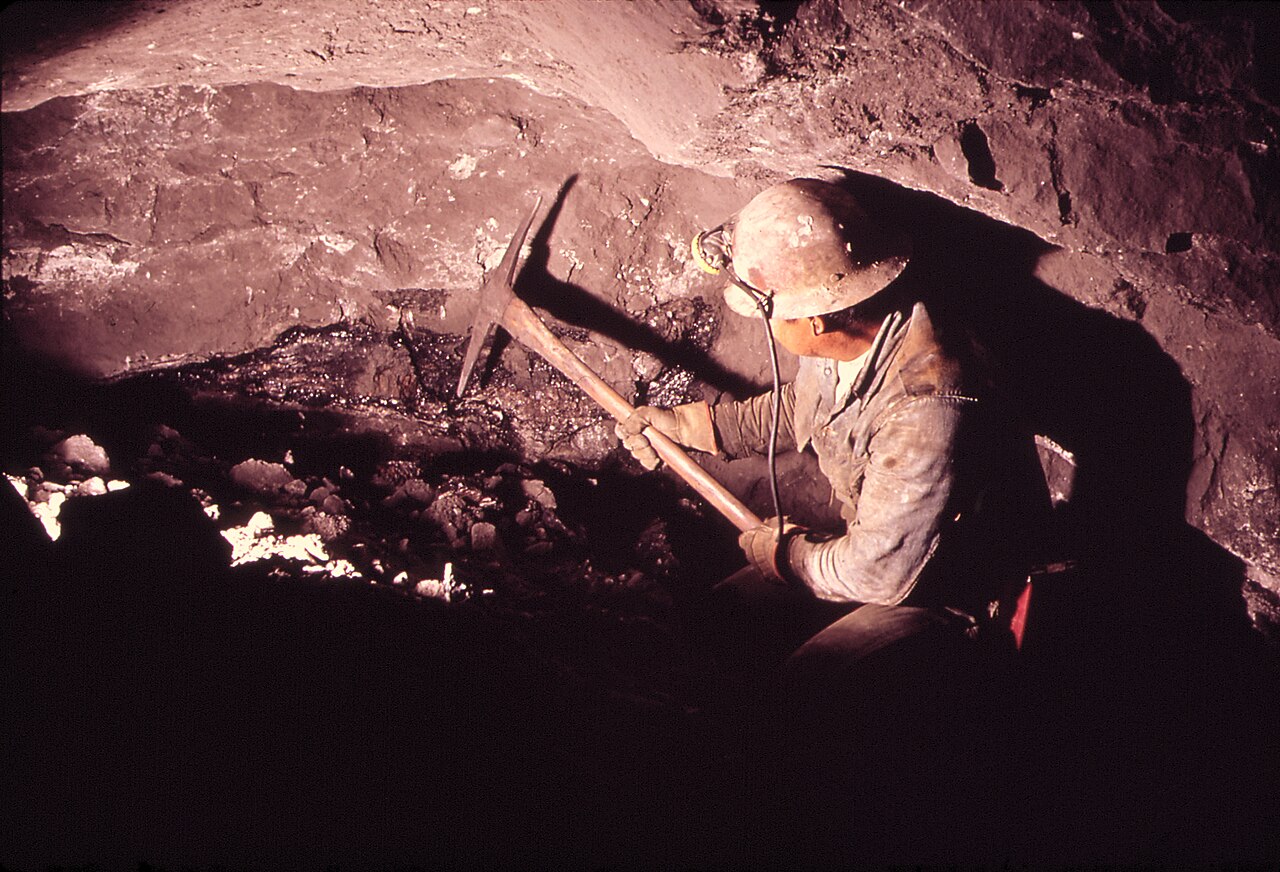
- Wikimedia Commons, "File:Underground uranium mining.jpg" - National Archives photograph used as the article image.
- U.S. Department of Energy, "Russian Uranium Ban Waiver Guidance" - Russian low-enriched uranium import-ban timing and waiver process.