As of 2026-05-15 UTC, the U.S. IPO market is no longer shut. That is the easy part. Renaissance Capital's live 2026 stats page shows 63 U.S. IPOs priced this year, $28.4 billion of proceeds raised, 93 filings, and 88 SPAC IPOs.[2] PwC's first-quarter read was already pointing in the same direction: 22 traditional IPOs raised more than $9.4 billion through March 31, the strongest first quarter in five years.[1]
The harder market question is not whether the window exists. It is who can actually pass through it without giving up too much valuation. Priced is that public investors are willing to fund scaled companies again after the 2022-2024 freeze. New is the selectivity: the bid is strongest for visible revenue, real operating maturity, AI infrastructure rather than vague AI application stories, healthcare niches with a clear readout path, and issuers willing to price below peak private-market memory when needed.[1][3]
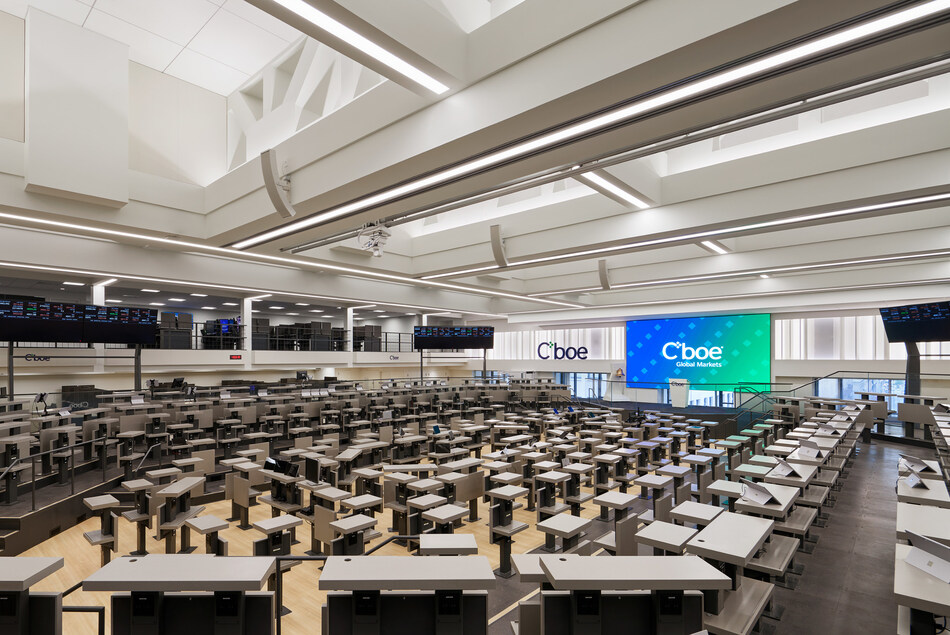
Image context: the cover uses a real Wikimedia Commons photograph of the New York Stock Exchange trading floor.[5] That documentary choice is intentional. This wrap is about public-market reception: books, allocations, trading, and the first months of proof after a company stops being a private valuation story.
What Actually Reopened
PwC's Q1 data gives the cleanest baseline. Traditional IPO proceeds were not merely above a depressed trough; they were the best opening-quarter proceeds since 2021, and the cohort was not confined to one sector. PwC noted successful offerings across industrials, healthcare, technology, consumer, fintech, crypto, and aerospace-related businesses.[1] That breadth matters because a one-sector IPO thaw can close as soon as the favored theme stumbles. A multi-sector market is more durable.
Aftermarket performance was not euphoric, which is probably healthy. PwC said the average 2026 IPO was down roughly 1% by March 31, versus about a 5% decline for the S&P 500 over the same span.[1] That is not a bubble print. It says investors were still doing price discovery, but the early cohort did not immediately trade like failed paper.
Renaissance's current YTD stats sharpen the point. A market with 63 priced IPOs and $28.4 billion of proceeds is functioning again, while 93 filings show that private companies and sponsors are testing the queue.[2] The recovery is real enough for capital-markets desks to staff; it is not yet broad enough for investors to stop caring about quality.
The Quality Filter Is Narrow
The best description of the tape is "open but not generous." EY's global Q1 report says capital is gravitating toward larger, scaled issuers with resilient fundamentals and a clear path to value creation as uncertainty rises.[3] PwC uses nearly the same language for the U.S. market: companies need appropriate scale, durable growth, a credible path to profitability, and operational maturity from day one.[1]
That wording is not boilerplate. It is the pricing mechanism. In 2020 and 2021, a fast-growing private company could often sell a public-market dream before public-market discipline had arrived. In 2026, the buyer base is asking a different set of questions: does revenue repeat, does gross margin survive competition, is cash burn shrinking, is the AI claim tied to infrastructure or monetizable workflow, and can the company live with quarterly disclosure rather than curated private-market updates?[1][3][4]
This is why the IPO market can improve while still feeling harsh to late-stage venture holders. A stronger window does not automatically validate peak private marks. It gives issuers a route to liquidity, but it also forces a public comparison set. A company that raised in a zero-rate environment may now be judged against profitable software, industrial automation, data-center equipment, or medical-device companies with cleaner cash-flow paths.
SPACs Are Back, But Not As A Clean Risk-On Signal
The SPAC count is the number that deserves the most caution. Renaissance lists 88 SPAC IPOs in 2026, the largest sector count on its stats page.[2] PwC similarly found first-quarter SPAC issuance had reached its highest level since 2021, with 62 SPAC IPOs raising more than $11.8 billion, compared with 20 SPACs and about $3 billion in the same period of 2025.[1]
That sounds like animal spirits. The better read is more mechanical. SPAC issuance can revive before operating-company IPO risk truly broadens because the first transaction is often a cash-shell raise, not the final test of a business model. PwC noted that de-SPAC activity remained muted, with only nine transactions completed year to date in its Q1 frame.[1] In other words, sponsors can raise vehicles faster than they can prove high-quality mergers.
For investors, that makes SPAC volume a liquidity signal, not a full confidence signal. It says risk capital is willing to fund search vehicles again. It does not prove that public buyers will absorb a large wave of speculative targets at sponsor-friendly economics.
Five Anchors For The Tape
- Traditional Q1 strength: 22 U.S. traditional IPOs raised more than $9.4 billion through March 31, the strongest first quarter in five years.[1]
- Current YTD scale: Renaissance's live stats show 63 priced U.S. IPOs and $28.4 billion of proceeds in 2026.[2]
- Filing pipeline: Renaissance shows 93 IPO filings this year, meaning the queue is being tested rather than abandoned.[2]
- SPAC resurgence: PwC counted 62 SPAC IPOs raising more than $11.8 billion in Q1, while Renaissance's current sector count shows 88 SPAC IPOs for the year.[1][2]
- Aftermarket discipline: PwC said average 2026 IPO performance was about -1% by March 31, better than the S&P 500's roughly -5% but still not indiscriminate enthusiasm.[1]
The anchors all point in the same direction: access is better, selectivity is still high, and the reopening is strongest for issuers that arrive with a public-company operating case already built.
Strongest Counterweight
The bullish counterargument is that selectivity is exactly what makes this reopening investable. A healthier IPO market should not look like every marginal issuer clearing at 2021-style terms. It should look like scaled companies coming first, weak stories waiting, and private holders accepting that liquidity has a price.[1][3]
That is especially true if the next wave includes large AI infrastructure, fintech, defense, healthcare, or industrial technology names with real revenue bases. EY notes that investors are focused on a small group of large scaled companies in favored sectors such as aerospace and defense and AI-related infrastructure.[3] If those issuers price cleanly and trade well, the market can widen without losing discipline.
Falsifier
This wrap is wrong if the IPO market turns from selective reopening into broken reception. The clearest invalidation would be a sequence in which filings keep rising but high-quality operating-company deals are postponed, downsized, or trade poorly after pricing, while SPAC issuance remains the only visibly active lane. That would mean the market is supplying shell capital and optionality, not durable public equity demand.[1][2][3]
Watchlist
- Operating-company mix: traditional IPO count and proceeds matter more than the headline number if SPACs keep dominating filing activity.[1][2]
- First-30-day trading: a modest first-day pop is less important than whether deals hold after stabilization support fades and the first public updates approach.[1][4]
- Lock-up calendar: FINRA describes lock-ups and other transfer restrictions on officers and directors as important factors for IPO investors, so supply overhang can arrive after the celebratory listing window.[4]
- Use of proceeds: stronger offerings should show a funding plan tied to growth investment, balance-sheet repair, or a clear operating need, not just private-holder exit.
Takeaway
The 2026 IPO window is open, but it is not forgiving. That is a better market than a shut one and a better market than a manic one. Proceeds are recovering, filings are live, and investors are willing to buy new issues when the company arrives with scale, defensible growth, and a valuation that leaves room for public owners.[1][2][3]
The mistake is to treat "IPO market open" as a single green light. It is closer to a filter. Scaled, prepared issuers can pass. Overvalued private stories, thin profitability paths, and SPAC targets that cannot survive post-merger scrutiny still have to wait or reprice. For finance readers, that makes the IPO tape useful less as a sentiment thermometer than as a discipline test: watch which companies choose to list, what haircut they accept, and whether public buyers still own the stock after the first month.[1][3][4]
Sources
- PwC, "US Capital Markets Watch Q1 2026" (April 9, 2026) - U.S. traditional IPO count, proceeds, sector breadth, aftermarket performance, SPAC issuance, and selectivity framing.
- Renaissance Capital, "2026 IPO Market Stats" - live U.S. IPO count, proceeds, filing activity, and industry breakdown.
- EY, "Global IPO Trends Q1 2026" (April 23, 2026) - global selectivity, favored sectors, geopolitical volatility, and issuer-readiness framing.
- FINRA, "Regulatory Notice 10-60" - lock-up restrictions, investor relevance, and notice requirements around certain lock-up releases or waivers.
- Wikimedia Commons, "File:Trading Floor at the New York Stock Exchange.jpg" - source page for the lead photograph.